"All Grown Up" Isn't as Grown-Up as You Think
Jami Attenberg's Bestseller Is Sharp, Yes, But It Mistook Familiarity for Profundity. You Deserve More from Your Contemporary Fiction.
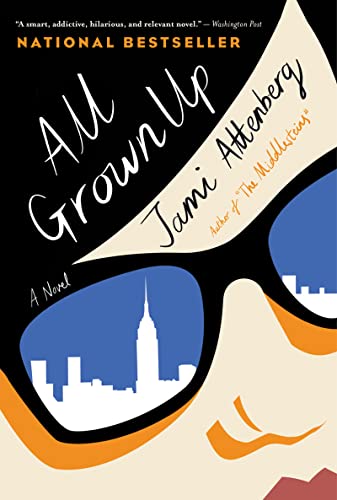
The literary world, bless its heart, has fallen head over heels for All Grown Up by Jami Attenberg. Critics laud it as a "bracingly honest" portrait of modern womanhood, a "bitterly funny" exposé of the anxieties of being single and childless in your late thirties. It’s hailed as a brave, unfiltered look at the messy reality beyond the Instagram filters, a novel that finally gets it. And sure, it's readable, even witty at times. But let's be blunt: popular opinion has mistaken a well-observed sketch for a profound masterpiece, and the hype is, frankly, exhausting.

Beyond the Buzz: Why "All Grown Up" Falls Short
This isn't just contrarianism for its own sake; it's a call for deeper engagement with what we deem 'essential' contemporary fiction. Here's what the consensus often misses:
- Challenging the 'relatability' myth: Why familiar anxieties aren't always profound insights.
- The illusion of raw honesty: When surface-level angst masquerades as unflinching truth.
- Why superficiality isn't bravery: Demanding more than witty observations from our literary heroes.
- A truly thought-provoking alternative: What to read when you crave real intellectual heft.
The Problem with Perpetual Adolescence
Andrea Bern, Attenberg's protagonist, is indeed "all grown up" in years, but her emotional landscape often feels stubbornly adolescent. She’s a successful artist, yet her internal monologue revolves in a relentless loop of self-absorption, missed opportunities, and a vague, generalized discontent. While it's true that adulting is hard, and life rarely follows a neat trajectory, the novel often celebrates this stasis rather than interrogating it with genuine curiosity or offering even a glimmer of evolved perspective. We spend hundreds of pages inside Andrea's head, witnessing her self-destructive patterns, her sharp-edged observations of others, and her casual cruelties, but the narrative rarely pushes her—or us—beyond the initial setup. It feels less like a journey of self-discovery and more like watching someone pace nervously in a well-decorated room, complaining about the wallpaper. For truly transformative storytelling that grapples with existential malaise without getting bogged down in it, see our earlier piece, Beyond the Buzz: Why 2026's Fiction Demands Deeper Meaning.
Sharp Observations, Shallow Depths
Let me be clear: Jami Attenberg can write. Her prose is undeniably sharp, her observations of New York life and the tribulations of creative work are often spot-on, and there are moments of genuinely dark humor that sparkle. The dialogue crackles, and her ability to capture a mood is undeniable. This is what the enthusiastic reviews get right; Attenberg has a gift for concise, witty description. However, these sharp observations too often feel like isolated diamonds rather than parts of a cohesive, illuminating mosaic. They rarely build to a cumulative insight that feels earned or transformative. The raw honesty everyone praises often feels like an unedited stream of consciousness rather than a carefully sculpted narrative designed to expose a deeper truth. It’s a performative vulnerability that ultimately leaves the reader feeling like they've seen a lot of clever snapshots, but no complete picture, let alone one that challenges the reader to think beyond the immediate experience.
The Real Literary Gold You're Missing
Instead of another trip down the well-trodden path of contemporary angst, I urge you to seek out works that truly expand your horizons. Skip the well-meaning but ultimately hollow praise for what's merely "relatable" and delve into something that demands more from its reader and offers more in return. My recommendation? Departures by Harry Turtledove.

Yes, it's a collection of alternate history stories, a genre often unfairly relegated to the "nerd corner," but Turtledove is a master. His stories are not just clever intellectual exercises; they are profound explorations of cause and effect, human nature, and the vast, unsettling tapestry of what might have been. From a Roman Empire that never fell to a radically different outcome for World War I, Turtledove forces you to engage with history and humanity in a way that All Grown Up simply can't. It's imaginative, thought-provoking, and demands a level of intellectual engagement that makes Attenberg's introspective loops feel, well, a little small. For more on finding overlooked gems, check out Stop Chasing Hype: Why Backlist Books Are Your Real Literary Gold.
Do yourself a favor this April. Demand more from your reading list than a mirror reflecting your own anxieties, however wittily. Reach for something that challenges, expands, and truly transports you. You might just find that the real literary gems are waiting where you least expect them. Like this post if you agree!
FAQ
Is "All Grown Up" a good book for women in their 30s?
While it speaks to many anxieties of modern womanhood, Lit-Pop argues its appeal often lies in its familiarity rather than offering truly fresh perspectives or deep insights into the challenges it presents.
What makes Harry Turtledove's "Departures" a compelling read?
"Departures" is a collection of alternate history stories that boldly re-imagine pivotal moments, offering intellectual stimulation and a vast imaginative scope rarely found in contemporary realist fiction.
Is Jami Attenberg a bad writer?
Not at all. Attenberg is a skilled prose stylist with a sharp wit. Our critique is not of her talent, but of the narrative's ultimate impact and the popular perception that it delivers groundbreaking emotional depth when it often remains at the surface.