Beyond the Page: Living in Fictional Worlds
Ever wondered why some book worlds feel more real than your own? We dive into the magic of immersive storytelling in trending fantasy and sci-fi.
In the bustling reality of February 2026, where digital screens often dominate our attention, there remains an undeniable, primal allure to escaping into the meticulously crafted pages of a good book. But not just any book—we're talking about those extraordinary fantasy and sci-fi novels where the setting isn't just a backdrop, but a living, breathing character in itself. What is it about these fictional worlds that makes us, the readers, yearn to step through the portal, board the spaceship, or wander down a cobblestone alleyway just beyond our grasp? At Lit-Pop, we're decoding the magic behind the world-building that transforms mere stories into unforgettable experiences.
The Alchemy of Immersion: Crafting a Universe
World-building is more than just drawing a map or inventing a magic system; it's the alchemy of weaving together history, culture, geography, and unique rules into a coherent, believable tapestry that envelops the reader. A truly immersive world feels vast and ancient, even if only glimpses are revealed. It has its own logic, its own struggles, and its own unique charm, making it a powerful character that shapes the narrative and its inhabitants. As we look at trending books, it's clear that the authors who master this craft are the ones who capture our imaginations most completely.
Welcome to Hogwarts: J.K. Rowling's Enduring Legacy
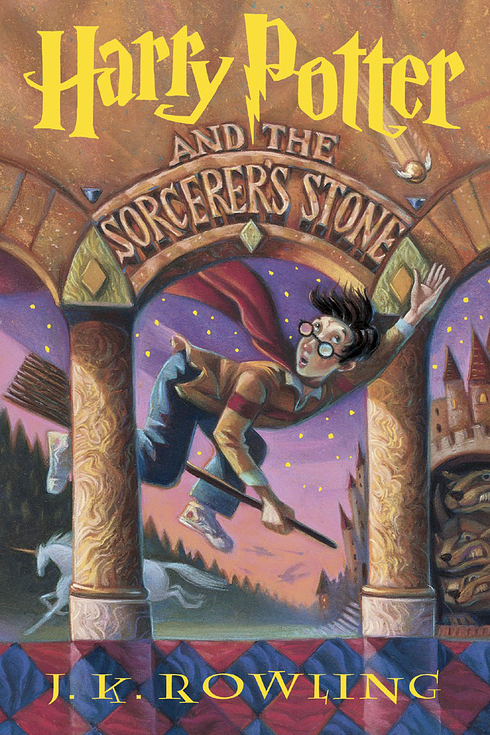
Perhaps no modern fantasy world has captured the collective imagination quite like the wizarding world of Harry Potter and the Philosopher's Stone by J.K. Rowling. From the moment young Harry receives his letter, readers are swept away into a hidden society pulsating with magic, wonder, and danger.

Rowling's genius lies in her ability to ground the extraordinary in the familiar. We begin in mundane Privet Drive, making the reveal of Diagon Alley and Hogwarts itself all the more breathtaking. This contrast immediately establishes the 'rules' of the world: magic exists, but it's largely concealed from the Muggle world, adding an exclusive, secret appeal. The details are what truly sell it: the quirky shops of Diagon Alley, from Ollivanders to Gringotts; the whimsical, yet logical, layout of Hogwarts Castle with its shifting staircases and secret passages; the elaborate, often hilarious, rules of Quidditch; and the complex history of witches and wizards, complete with ancient rivalries and magical creatures. Each element, no matter how small, contributes to the feeling that this world existed long before Harry arrived and will continue long after his story concludes. Readers aren't just observing; they're experiencing, learning, and dreaming of their own Hogwarts acceptance letter.
The world of Harry Potter doesn't just present a magic system; it presents a magical culture. The traditions, the etiquette, the food (pumpkin juice and Bertie Bott's Every Flavor Beans!), the fashion, even the wizarding economy—all contribute to a deeply textured reality. It's a world brimming with personality and a clear sense of identity, making it endlessly re-readable and a benchmark for fantasy world-building.
The Spectrum of Stellar World-Building
While Hogwarts offers a magical escape, other trending titles showcase different facets of world-building genius, proving that immersion isn't limited to spells and wands. Authors employ diverse techniques to draw readers into their unique visions.
Consider Dune by Frank Herbert, a masterclass in ecological sci-fi. Herbert crafts the desert planet Arrakis with such meticulous detail—from the colossal sandworms to the Fremen's intricate survival techniques and political structures—that the environment itself becomes a protagonist. It's a world where every drop of water, every grain of spice, and every cultural nuance plays a crucial role, creating a setting that is both alien and profoundly logical. The harsh beauty of Arrakis and its profound influence on its inhabitants make it a truly unforgettable setting.
Then there's the chilling, omnipresent surveillance state of 1984 by George Orwell. This dystopian masterpiece builds its world not through grand landscapes but through psychological oppression and institutional control. Oceania, with its Thought Police, telescreens, and Newspeak, is an expertly crafted society where every aspect of life, thought, and even language is meticulously controlled. The world-building here is subtle but devastating, demonstrating how environment can shape—and crush—the human spirit, making it a powerful, albeit terrifying, place for readers to inhabit mentally.
And for those who prefer their immersion grounded in hard science, Andy Weir's Project Hail Mary delivers a meticulously detailed interstellar journey. Weir's world-building focuses on scientific accuracy and problem-solving, creating a universe where ingenuity and logic drive the narrative. The alien species, the technological solutions, and the vastness of space are all rendered with such believable detail that readers feel like they're right there, solving cosmic puzzles alongside Ryland Grace.
The Anatomy of an Irresistible World: Why We Want to Live There
So, what are the common threads that bind these disparate, yet equally captivating, worlds? Why do readers feel such an intense connection, a desire to 'live' within their pages? It boils down to a few key elements:
1. Coherence and Consistency: A well-built world operates under its own consistent rules, whether they're laws of magic, physics, or society. This internal logic allows readers to suspend disbelief and fully invest in the narrative. In Harry Potter, for example, the rules of magic, while fantastical, are consistently applied, making the wizarding world feel real.
2. Rich History and Lore: Even if only hinted at, a sense of deep history gives a world weight and authenticity. The ancient rivalries in Hogwarts, the long struggle for water on Arrakis, or the historical revisions in Oceania—these backstories provide depth and context that enrich the present narrative.
3. Sensory Details: Authors use vivid descriptions to engage all five senses. The smell of potions brewing, the taste of butterbeer, the sound of a sandstorm, the metallic taste of fear in a totalitarian regime—these details transport the reader directly into the setting.
4. Relatable Characters within Extraordinary Settings: While the worlds are fantastical, the characters often grapple with universal human emotions and challenges: friendship, fear, love, loss, ambition. Seeing these relatable struggles play out in an extraordinary setting deepens our connection to both the characters and their world.
5. A Sense of Wonder and Discovery: The best worlds leave room for exploration and surprise. Readers delight in uncovering new aspects of the world alongside the characters, whether it's a hidden room in Hogwarts or a new scientific principle in space. This continuous revelation fuels curiosity and engagement.
Ultimately, the desire to live in these fictional worlds stems from a deep-seated human need for escapism, wonder, and connection. Authors who master world-building don't just tell us a story; they invite us to experience an entirely new reality, making February 26, 2026, or any date, a little more magical. What world are you escaping to tonight?