Wuthering Heights: A Toxic Obsession, Not a Love Story
Emily Brontë's gothic masterpiece isn't a romance to aspire to; it's a chilling exposé of possessive love, class warfare, and the brutal legacies we refuse to outgrow, still haunting us in April 2026.
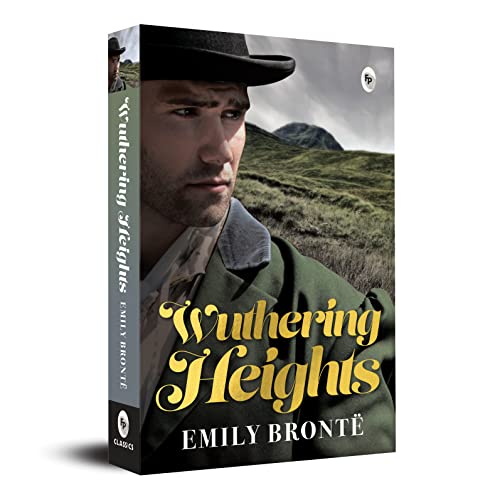
Let's get one thing straight: if you're holding Emily Brontë's Wuthering Heights up as the gold standard for romantic love, you've fundamentally misunderstood the assignment. This isn't a story of star-crossed lovers; it's a chilling, visceral dissection of obsession, class warfare, and the terrifying consequences of unchecked ego. As we navigate the complex social currents of April 2026, Brontë's lone novel feels less like a dusty relic and more like an urgent, unblinking mirror held up to our own capacity for self-destruction, disguised as passion.

Brontë didn't write a fairy tale; she penned a psychological horror dressed in period costume, a brutal testament to how love, when poisoned by ego and societal pressures, can become the most destructive force imaginable. It's time we stopped romanticizing the sheer, unadulterated toxicity at its core and instead appreciated it for the masterful, unsettling critique it truly is.
Unpacking the Enduring Darkness of Wuthering Heights
For those brave enough to look beyond the surface, Wuthering Heights offers a literary experience unlike any other. This deep dive will explore:
- The true nature of Catherine and Heathcliff's 'love story' as a force of destruction.
- Brontë's masterful use of gothic architecture, landscape, and psychological dread.
- The groundbreaking, multi-layered narrative structure that keeps readers debating.
- Why this 19th-century classic continues to provoke and resonate in contemporary culture.
The Unhinged Romance: Love as a Scarring Weapon
To label the bond between Catherine Earnshaw and Heathcliff as 'romantic' is to dilute the very essence of its power and perversity. This isn't a love that lifts or enriches; it's a parasitic attachment that consumes everything in its path. Catherine's infamous declaration, "I am Heathcliff," is often cited as the pinnacle of romantic devotion, yet it's a terrifying assertion of codependency, an inability to define self without the other, a spiritual death wish. Her betrayal, choosing the socially acceptable, financially secure Edgar Linton over her wild, untamed soul-mate, is driven by vanity and the crushing weight of societal expectation. It's a calculated move, not a passionate mistake, and it sets in motion a chain reaction of unimaginable cruelty.
Heathcliff's subsequent transformation into a monstrous, vengeful tyrant isn't the noble suffering of a tragic hero; it's the calculated, ruthless manifestation of a love curdled into pure hatred and possessive dominance. His "love" is about absolute control, not tenderness or mutual respect. He doesn't seek happiness with Catherine; he seeks to destroy everything she touched, twisting every bond into a weapon of retribution. This is why Wuthering Heights stands in stark opposition to the superficial 'happily ever afters' that too often dominate the genre. If you're looking for genuine depth and a nuanced understanding of connection, you're better off with contemporary works that truly embrace what it means for Romance to Grow Up: Why Depth Trumps Fluff in 2026. Brontë forces us to confront the uncomfortable truth: sometimes, the most profound connections are also the most destructive.
Gothic Grandeur & Psychological Desolation
Brontë's genius extends beyond her characters to the very landscape they inhabit. The wild, desolate Yorkshire moors are not merely a backdrop; they are a living, breathing character, reflecting and amplifying the elemental, untamed passions of the Earnshaws and Heathcliff. The isolation enforced by the bleak expanses breeds a primal wildness, a raw brutality that civil society cannot penetrate. The very weather – the howling winds, the driving rain – are extensions of the characters' tumultuous inner lives, a constant storm mirroring the psychological torment within.
The stark dichotomy between Wuthering Heights and Thrushcross Grange is crucial. The Heights, a place of raw passion, elemental violence, and untamed spirits; the Grange, a facade of civility, delicate sensibilities, and refined manners that ultimately proves too fragile to withstand the storm unleashed by Heathcliff. This isn't just about setting; it's about the inherent conflict between nature and nurture, between primal impulse and societal restraint. The pervasive sense of foreboding, the psychological breakdown of its inhabitants, and the literal and metaphorical hauntings (ghosts of the past, specters of unresolved trauma) create an atmosphere of dread that defines gothic literature. Brontë blurs the line between the supernatural and the psychological, making us question if the vengeful spirits are real or merely projections of guilt, longing, and Heathcliff's obsessive, deranged mind.
Narrative Structure: A Web of Unreliable Whispers
One of the most radical and enduring aspects of Wuthering Heights is its intricate, multi-layered narrative structure. Brontë doesn't give us a straightforward account; she presents a story filtered through at least two highly subjective, often biased, narrators. We begin with Mr. Lockwood, the effete, prejudiced, and often comically obtuse outsider, whose initial repulsion and simultaneous fascination set the stage. He is a proxy for the reader, trying to comprehend an alien world through his own limited, polite society lens.
However, the bulk of the story comes from Nelly Dean, the long-serving housekeeper who witnessed most of the events firsthand. Nelly is not an objective historian; she is a participant, an observer, a judge, and, at times, a manipulator. Her practical, often moralistic perspective colors every detail, her biases shaping our perception of Heathcliff and Catherine. She chooses what to tell, when, and how, carefully curating a narrative that aligns with her own understanding and moral code. This makes Wuthering Heights a proto-example of the "unreliable narrator" – a device that has since become a staple in modern thrillers, as we explored in The Unsettling Reign of the Unreliable Narrator. The reader is forced to become a detective, sifting through fragmented, emotionally charged accounts to piece together a truth that remains elusive, making the experience intellectually challenging and endlessly debatable.
Enduring Cultural Echoes: Why It Still Matters
More than a century and a half after its publication, Wuthering Heights continues to provoke, challenge, and resonate. Its unapologetic portrayal of anti-heroes and dark, morally ambiguous themes was groundbreaking for its time and serves as a powerful precursor to the complex protagonists we demand today. Heathcliff is not meant to be liked, but he is undeniably compelling, a testament to Brontë's courage in embracing darkness and complexity when many others shied away.
The novel's exploration of the cycle of trauma and abuse, where the sins of the first generation directly impact and often corrupt the second, remains startlingly relevant. In April 2026, as discussions of intergenerational trauma and the imperative to break cycles of harm gain traction, Brontë’s unflinching portrayal of how unresolved pain echoes through families feels particularly prescient. Furthermore, its examination of class and social mobility – Heathcliff's status as an outsider, his brutal rise and fall, and Catherine's fatal choice rooted in social ambition – exposes the harsh realities of 19th-century England, themes that, regrettably, still echo in our own stratified societies.
Finally, Wuthering Heights gleefully defies easy categorization. Is it a romance? A tragedy? A gothic horror? A social critique? It is all these things and more, refusing simple labels, much like the Genre is Dead: The Books You NEED Defy All Labels we celebrate in contemporary literature. Its enduring power lies in its raw artistic force, its willingness to delve into the uncomfortable, and its profound understanding that sometimes, the most beautiful art emerges from the most brutal truths. It's a classic that demands to be read, not for comfort, but for its unsettling, unforgettable insight into the human heart's capacity for both profound connection and devastating cruelty.
Editor's Verdict
Editor's Rating: 9/10
Editor's Verdict: Forget hearts and flowers; Wuthering Heights is a masterclass in psychological torment, a brutal testament to how love, when poisoned by ego and societal pressures, can become the most destructive force imaginable.
FAQ
Is Wuthering Heights a true romance novel?
Not in the conventional sense. It challenges romantic ideals by portraying a love that is obsessive, destructive, and deeply rooted in ego and social frustration, rather than mutual respect or happiness. It's more a tragic exploration of passion's darker side.
Why is Wuthering Heights still relevant today?
Its exploration of class struggle, inherited trauma, toxic relationships, and the dark side of human passion remains startlingly resonant. It forces us to confront uncomfortable truths about human nature and societal constraints that still echo in contemporary society.
Who narrates Wuthering Heights?
The novel employs a frame narrative, primarily told by Mr. Lockwood, a newcomer to the area, who then relays the story he hears from Nelly Dean, the long-serving housekeeper who witnessed most of the events firsthand. Both narrators offer subjective and often biased accounts.