The Dog Stars: Can Hollywood Film a Whisper?
Peter Heller's post-apocalyptic masterpiece is a novel of interiority and quiet survival. As it heads to the screen, we ask if cinema can possibly capture a story whose soul lives in its prose.
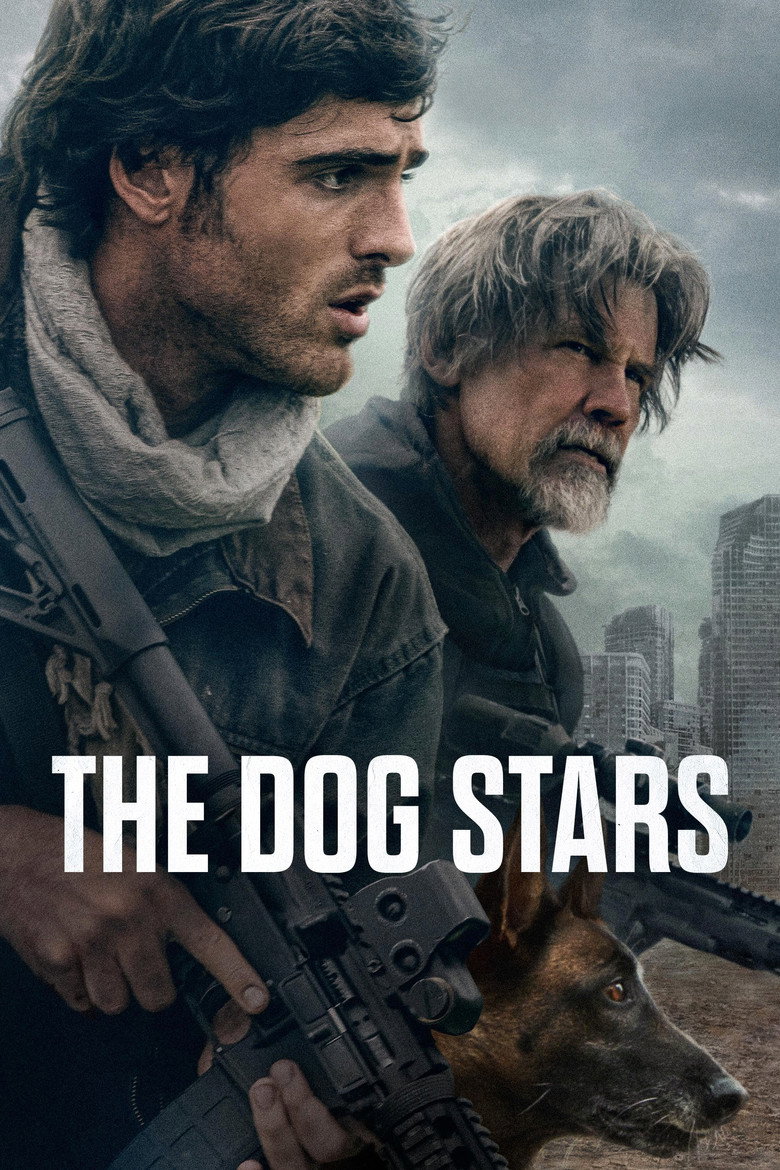
How do you film a thought? Not just an action or a line of dialogue, but the quiet, fractured, poetic internal monologue of a man who believes he is the last of his kind? You risk translating a whisper into a shout, losing its soul in the process. This is the central, terrifying challenge facing the film adaptation of Peter Heller’s magnificent 2012 novel, The Dog Stars, a book that stands as one of the most profound and lyrical entries in the post-apocalyptic canon. As we await its arrival, the question isn't just whether the movie will be 'good,' but whether it can even approximate the source material's singular genius, which is rooted not in its plot, but in its voice.
'The Dog Stars' Book vs. Movie: A Crossover Analysis
This essay explores the upcoming adaptation of Peter Heller's beloved novel. We'll cover:
- Why a quiet, contemplative apocalypse story resonates in our current cultural moment.
- The unique strengths of the book's prose versus the potential visual power of the film.
- The major hurdles the adaptation must overcome to avoid betraying its source material.
- A final verdict on which version you should experience and why.
Why We Crave the Quiet Apocalypse
We are living in the aftershock. The last several years have rewired our collective understanding of societal fragility, isolation, and the ambient hum of existential dread. It’s no wonder, then, that our fiction is grappling with the end of the world. But the dominant strain of apocalypse—the zombie hordes, the alien invasions, the nuclear winter—feels increasingly cartoonish. What resonates now is the quiet apocalypse, the story of what happens after the cataclysm, when the noise stops and the survivors are left with the deafening silence of memory and loneliness.
This is the cultural space that The Dog Stars inhabits and, in many ways, defines. Heller’s novel isn’t about the pandemic that wiped out 99.6% of the population; it’s about Hig, a pilot who survived, living in an abandoned airport hangar with his dog, Jasper, and a gun-toting survivalist named Bangley. It’s a story about the mundane rituals of survival—fishing, flying patrols, tending a garden—and the immense psychological weight of being left behind. The cultural appetite for this kind of story, seen in the success of shows like Station Eleven and The Last of Us, reveals a deep-seated need for narratives that find hope not in saving the world, but in saving a single connection, in finding a reason to keep going when all seems lost. The Dog Stars is the apotheosis of this subgenre, a story that suggests the greatest battle isn't against mutants or warlords, but against the despair that settles in the stillness.
The Prose of Solitude vs. The Cinema of Silence
To understand why adapting The Dog Stars is so fraught with peril, one must first understand that it is a novel about its own language. The story isn't just told through its prose; it is the prose. Heller writes in a clipped, fragmented, and breathtakingly poetic style that mirrors Hig's own fractured psyche.

Sentences are short, often lacking subjects. They read like entries in a logbook written by a man who has forgotten the conventions of grammar because he has no one left to speak to. Consider this passage:
“The friend. The one who kills. The one who watches the perimeter. The one who has a scoped rifle and a cheap cigar clamped between his teeth. He is not a friend. He is a force of nature. He is a man with a beef. With the world. And a gun.”
This isn't just description. It’s characterization delivered as pure voice. The rhythm, the repetition, the stark declarations—they tell us more about Hig's worldview and his relationship with Bangley than a chapter of conventional exposition ever could. The entire novel functions this way. Hig's grief for his deceased wife, Melissa, manifests in imagined conversations that are woven into the narrative without quotation marks, blurring the line between memory and reality. His love for his dog is expressed in the simple, repeated phrase, "He is a good dog." His connection to the natural world is rendered in stunning, imagistic poetry. The book's power is that it locks you inside Hig’s head, forcing you to experience the world through his lonely, hopeful, traumatized perspective. This is a uniquely literary achievement. No camera can film a subordinate clause that has been deliberately omitted.
By contrast, the film adaptation of The Dog Stars will have to find a different language. Its greatest potential strength lies in its ability to render the novel's setting as a character in its own right. The vast, empty, and achingly beautiful landscapes of the Colorado Rockies are the canvas for Hig’s solitude. Cinema, as a visual medium, is perfectly suited to this.
Imagine sweeping aerial shots from Hig's 1956 Cessna, the 'Beast,' as it soars over the ruins of civilization, the silence of the cabin broken only by the engine's drone. Imagine the masterful sound design: the whisper of wind through pines, the gurgle of a trout stream, the sudden, shocking crack of a rifle shot that shatters the peace. A skilled director could use long, patient takes and a minimalist score to evoke the same meditative, melancholic mood that Heller’s prose builds. The film can make the loneliness environmental. Where the book tells you how Hig feels, the film can make the audience feel the world as Hig does: immense, quiet, and haunted. The success of this approach will rest almost entirely on the central performance. The actor playing Hig will need to convey a universe of internal conflict, memory, and longing with little more than a glance or a gesture. It's a monumental task, but it's where the film could find its own kind of poetry.
The Perils of Translation: What the Movie Must Get Right
Every adaptation is an act of translation, and some things are always lost. For The Dog Stars, the line between a faithful, moving companion piece and a disastrous betrayal of the source material is razor-thin. There are several key areas where the filmmakers could easily go wrong.
The Voiceover Trap
The most obvious and catastrophic error would be to rely on voiceover narration to convey Hig's internal monologue. It’s the easiest solution and also the laziest. Plastering Heller’s beautiful prose over images of a man looking pensively at a mountain would reduce its power to sentimental Hallmark card wisdom. It would violate the core principle of filmmaking—show, don't tell—and rob the audience of the opportunity to interpret the character's state of mind for themselves. The book’s voice is powerful because it is the story; in a film, that same voice, delivered by an omniscient narrator, would feel like a crutch. The actor, the camera, and the sound design must do the work.
Flattening the Characters
Hig’s relationship with Bangley is the novel's crucial human dynamic. Bangley is not a sidekick. He is a deeply pragmatic, misanthropic, and brutal survivalist who is, in his own way, as broken as Hig. He is the embodiment of pure, unsentimental survival, a necessary counterpoint to Hig's lingering humanism. A lesser adaptation would sand down his rough edges, turning him into a gruff-but-lovable mentor figure, or worse, a one-dimensional antagonist. The film must preserve his complexity. He is the friend who is not a friend, the man who keeps Hig alive but also represents a philosophy of life Hig can't fully accept.
The Hollywood Ending
The narrative is driven by a faint radio transmission—a voice that gives Hig a sliver of hope that a better community might exist beyond his valley. His journey to find that voice is the plot's engine. In the book, what he finds is not a perfect utopia, but something messy, complicated, and real. The resolution is tentative, earned, and deeply uncertain. The temptation for a Hollywood production will be to tidy this up. To make the romance with Cima, the woman he finds, a grand, curative love story that solves all his problems. To make the new community a definitive safe haven. This would betray the novel's core thesis: that hope is not the promise of a perfect future, but the courage to take the next step into an unknown one.
Most importantly, the book has no central villain. The antagonist is the world itself: disease, starvation, the harshness of nature, and the random, desperate violence of other survivors. Hollywood abhors a vacuum of villainy. Inventing a cartoonish warlord for Hig to vanquish in the third act would be the ultimate act of cowardice, transforming a profound meditation on survival into a generic post-apocalyptic action flick.
Editor's Verdict
Peter Heller’s The Dog Stars is a rare and precious thing: a perfect marriage of style and substance where the way the story is told is inseparable from what the story is. It is a masterpiece of literary fiction that happens to be set after the world has ended. For this reason, you must read the book first. It is not merely the source material; it is the definitive version of the story. Its power is rooted in the intimacy of the written word, a private communion between the reader and Hig's consciousness.
The film adaptation of The Dog Stars has the potential to be a visually stunning, atmospheric, and deeply moving piece of cinema. It can be a worthy companion, a different interpretation of the same beautiful song. But it cannot be the song itself. The film can show you the lonely mountains; the book makes you feel them in your bones.
The Book Rating: 9/10. An absolute triumph of voice and style. It loses a single point for a middle section where the meditative pace occasionally borders on static, but the prose is so transcendent it hardly matters.
The Film (Speculative) Rating: 7/10. It has the potential for greatness if it trusts its audience, embraces silence, and resists the urge to conventionalize its plot and characters. The points are lost not for what it might do wrong, but for what it simply cannot do: replicate the literary experience of living inside Hig’s head.
The film's success will hinge entirely on its restraint. Its power must come from what is unsaid, and it will fail if it uses more than five minutes of total voiceover narration.
FAQ
What is the book 'The Dog Stars' about?
'The Dog Stars' by Peter Heller is a post-apocalyptic novel about Hig, a man who survives a devastating flu pandemic. He lives in an abandoned airport hangar in Colorado with his dog, Jasper, and a cynical survivalist named Bangley, flying his small plane to patrol the area and searching for other signs of life.
Is 'The Dog Stars' a typical zombie or action-heavy apocalypse story?
No, it is very different. 'The Dog Stars' is a character-driven, literary novel focused on themes of loneliness, grief, memory, and hope. It is known for its unique, poetic prose style and its quiet, meditative tone rather than constant action.
Who is set to star in or direct 'The Dog Stars' movie?
As of early 2026, casting and directorial announcements for the film adaptation of 'The Dog Stars' are still pending. The project is in development, with fans of the book eagerly awaiting news on who will bring the contemplative story to the screen.