Animation's Soul: The IP Security Blanket vs. The Blank Canvas
While sequels like 'TMNT 2' offer safe returns, Charlie Kaufman's 'Orion and the Dark' proves that the artistic future of animation lies in dangerous, original ideas.
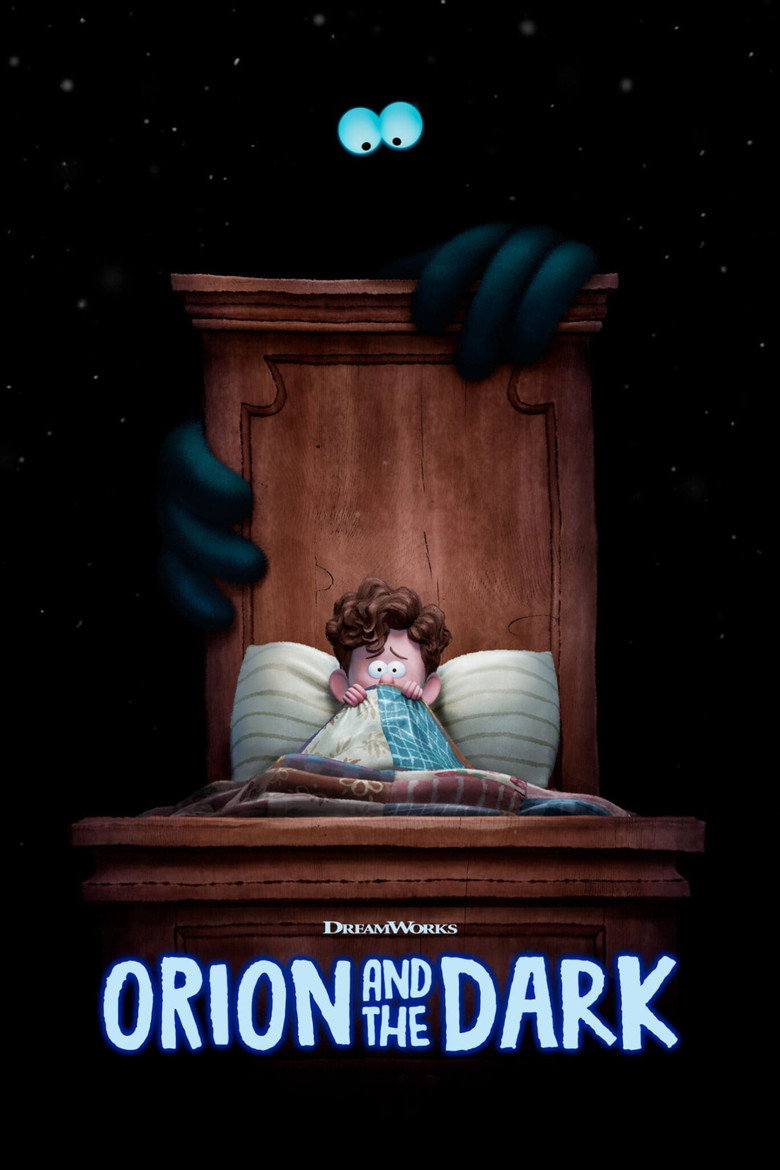
The blue light of the tablet illuminates a parent's face at 11:30 PM. The kids are finally asleep, but tomorrow is Saturday, a day that will demand a constant stream of entertainment. Scrolling through the endless grid of a streaming service, their thumb hovers over familiar, comforting faces: a gang of prehistoric mammals on yet another adventure, a squad of turtles gearing up for a sequel. These are the known quantities, the cinematic babysitters guaranteed to buy two hours of peace. But then, a new thumbnail appears. It’s a boy, looking terrified, standing next to a hulking, smiling creature made of pure shadow. The title is unfamiliar: Orion and the Dark. The description mentions anxiety, existential dread, and the nature of storytelling. It feels... different. Risky. The parent hesitates, caught in the central dilemma facing not just families on a Friday night, but the entire animation industry in 2026: do you stick with the devil you know, or take a chance on the dark?
This choice between the IP security blanket and the terrifyingly blank canvas has become the defining cultural tug-of-war in modern animation. For every blockbuster sequel that promises a billion-dollar return on a pre-existing emotional investment, there is a quieter, stranger original that asks audiences to invest in something new. While studios chase the financial certainty of established universes, they risk starving the very creativity that builds those universes in the first place. The real battle for animation's soul isn't being fought in box office returns, but in the willingness of creators and executives to embrace the artistically necessary, commercially perilous journey into the unknown.
The Animation Tug-of-War: Sequels vs. Originals
This analysis explores the critical balance between franchise extensions and new creative works in the animation industry. We will cover:
- A deep dive into the thematic ambition of Charlie Kaufman's original film, Orion and the Dark.
- The strategy behind successful reboots earning sequels, like Teenage Mutant Ninja Turtles: Mutant Mayhem 2.
- The cultural fatigue and creative decay of long-running franchises like Ice Age.
- What the divide between these films says about modern audience appetites and the future of animated storytelling.
The Kaufman Conundrum: 'Orion and the Dark' as High-Concept Experiment
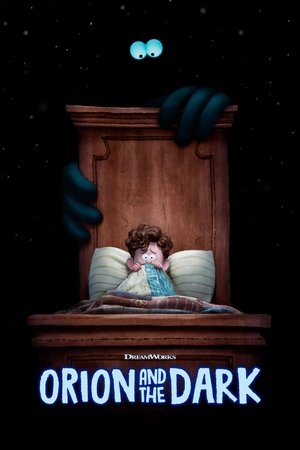
To understand the value of the 'blank canvas,' look no further than Netflix’s Orion and the Dark, a film that feels less like a product and more like a glorious, messy, and deeply personal experiment. Penned by the master of meta-melancholy, Charlie Kaufman, the film isn't merely a story about a kid who's afraid of the dark. That’s the Trojan horse. The film is actually a complex, multi-layered meditation on the function of narrative itself as a coping mechanism for the paralyzing anxieties of existence. Try putting that on a lunchbox.
Where a lesser film would offer platitudes about bravery, Kaufman gives us a protagonist whose fear isn't a simple obstacle to be overcome, but a fundamental part of his being. Orion’s laundry list of phobias—bees, dogs, the ocean, murderous gutter clowns—is a source of comedy, but it’s rooted in a genuine, palpable sense of childhood terror that most family films sand down into a single, easily solvable problem. The film’s genius is in literalizing the abstract. The entity Dark isn't a villain; he’s an insecure, affable being exhausted by his bad reputation. He’s joined by a cohort of other Night Entities: Sleep, a silent, lumbering giant; Insomnia, a hyperactive gremlin stoking the fires of late-night worry; Quiet, a mouse-like creature who mutes the world's sounds; and Unexplained Noises and Sweet Dreams. This isn't just clever character design; it's a profound externalization of a child's internal world, treating complex feelings with the seriousness they deserve.
The film’s most Kaufman-esque flourish is its nested narrative structure. We eventually learn that the story of Orion we are watching is being told by an adult Orion to his own scared daughter, Hypatia, who actively critiques and influences the story as it unfolds. This meta-commentary elevates the film from a simple adventure to an exploration of how we sanitize and shape our own histories to make them palatable for our children. When Hypatia finds a plot development unbelievable, she forces her father to revise it, revealing the collaborative, unstable nature of memory and storytelling. It’s a move of staggering intellectual ambition for a family film, directly challenging the passive consumption of stories and instead inviting the audience to consider the why behind the what. It suggests that the stories we tell aren’t just entertainment; they are the fundamental tools we use to build a framework for understanding a chaotic world. While its third act arguably gets tangled in its own cleverness, the sheer audacity of the attempt is what makes the film vital. It trusts its audience, young and old, to keep up with its philosophical pirouettes, a trust rarely afforded by studios fixated on four-quadrant appeal.
The Reimagined Past and the Guaranteed Future
On the opposite end of the spectrum lies the gilded cage of the pre-sold franchise, and the smartest inmates are the ones who redecorate. Enter Teenage Mutant Ninja Turtles: Mutant Mayhem 2. The first film was a resounding success precisely because it wasn't a cynical cash-in. It was a revitalization, a project that dripped with the authentic passion of its creators, Seth Rogen and Evan Goldberg. The upcoming sequel isn't just a foregone conclusion; it's a reward for a job well done.
What made Mutant Mayhem feel so electric was its commitment to its own title. For the first time in the franchise's cinematic history, the turtles felt authentically teenage. Their dialogue was a messy, overlapping, enthusiastic jumble of slang and inside jokes, performed by actual teenagers. This wasn't the focus-grouped coolness of earlier iterations; it felt like eavesdropping on real kids. This authenticity was mirrored in the film's groundbreaking visual style, a chaotic, energetic blend of 2D and 3D animation that looked like a high schooler's sketchbook come to life. The scribbled lines, asymmetrical designs, and graffiti-inspired textures gave the film a tactile, rebellious energy that perfectly matched its heroes.
The sequel represents the ideal version of IP exploitation. It's a continuation born from creative success, not just brand recognition. The studio trusted a team with a distinct voice to rebuild a beloved property from the ground up, and the audience responded to the care and specificity of that vision. The challenge for the sequel, of course, will be to maintain that spark. The first film was an underdog story, both in its narrative and its production. The sequel arrives with the weight of expectation. Can it still feel rebellious and fresh when it's now the established, bankable vision of the franchise? This is the core tension of the successful reboot: it uses originality to get in the door, but it must then live in the house that conformity built. It’s a far safer bet than Orion, but it still requires a level of creative integrity to avoid the pitfalls of the truly moribund franchise.
When the Well Runs Dry: The Cautionary Tale of Endless Franchises
If Mutant Mayhem 2 represents the best-case scenario for a sequel, then Ice Age: Boiling Point, the announced seventh film, represents the exhausted, inevitable endpoint of a franchise that has long since run out of creative ice to break. The original Ice Age from 2002 was a surprise hit, a charming, character-driven road trip movie with a surprising amount of heart, particularly in its largely silent subplot about a human baby. It was a story with a clear beginning, middle, and end. But its financial success doomed it to an eternity of diminishing returns.
Over the course of five sequels and numerous spin-offs, the core emotional stakes have evaporated. Manny, Sid, and Diego are no longer characters on a journey; they are brand assets deployed in increasingly ludicrous, high-concept scenarios involving dinosaurs, pirates, and continental drift. The narrative focus shifted almost entirely to the slapstick antics of Scrat, the saber-toothed squirrel whose Sisyphean quest for an acorn provided diminishingly funny interstitial gags. The franchise has become a content-delivery system, a recognizable brand that can be relied upon to occupy children for 90 minutes. It doesn't need to be good; it just needs to be. Each new installment feels less like a film and more like a contractual obligation.
This is the ultimate danger of the IP security blanket: it smothers creativity. When the primary goal is simply to extend the brand's lifespan, the storytelling becomes secondary. The films exist not because an artist has a burning story to tell, but because a studio has a Q3 slot to fill. This approach breeds cynicism in audiences and devalues the medium of animation as a whole. It sends the message that animated films are disposable products, interchangeable widgets designed for maximum market penetration and minimal artistic risk. It’s the polar opposite of the ethos behind a film like Orion, which, for all its flaws, is defiantly, unapologetically a work of personal expression. The existence of an Ice Age 7 is a testament to the industry's addiction to the familiar, even when the familiar has become creatively bankrupt.
What Audiences Really Want: Authenticity in a Sea of Sameness
The easy conclusion to draw is that audiences want the safety of sequels over the risk of originals. But the data doesn't fully support that. Instead, it suggests that audiences are craving authenticity, regardless of the package it comes in. The common thread linking the success of an original like Spider-Man: Into the Spider-Verse, the revitalization of an IP like TMNT: Mutant Mayhem, and the cult appreciation for a strange gem like Orion and the Dark is a palpable sense of authorship. These films feel like they were made by people, not by a committee following a four-quadrant-pleasing algorithm.
Audiences are more media-savvy than ever. They can sense a project born of passion versus one born from a marketing meeting. The unique voice performances celebrated in a film like Hoppers, for instance, highlight this desire for specificity and craft over generic, star-studded stunt casting. A film can be based on a 40-year-old comic book or a brand-new idea, but if the execution feels hollow, calculated, and soulless, viewers will reject it. The creative decay of the Ice Age franchise is a direct result of its loss of a central, guiding voice. It's a series of notes from different departments, but it no longer has a conductor.
This is why a film like Orion can co-exist with a juggernaut like TMNT. They serve different needs but are both validated by the passion of their creators. One is an intimate, neurotic fireside story, the other is a raucous, city-wide pizza party. Both feel true to themselves. The audience's desire isn't a simple binary of new versus old. It's a hunger for stories, of any kind, that have a clear point of view and a reason to exist beyond shareholder satisfaction.
A Prediction for the Pixelated Future
Looking ahead, the economic pressures of the streaming wars and a risk-averse theatrical market will likely bifurcate the animation landscape even further. The middle ground—the original, mid-budget animated feature designed for a wide theatrical release—is becoming an endangered species. Instead, we will see a landscape of two extremes.
On one end, the megabudget, IP-driven theatrical event. Films like Teenage Mutant Ninja Turtles: Mutant Mayhem 2 and whatever Disney cooks up next will dominate the box office, serving as bomb-proof tentpoles that justify the theatrical experience. On the other end, the streaming services will become the de facto home for the ambitious, the personal, and the downright weird. This is where the next Charlie Kaufmans will play, given smaller budgets but greater creative freedom to produce films like Orion and the Dark for a global audience at home.
While this ensures that unique voices won't be extinguished, it also risks ghettoizing them, creating a perception that 'real' animated movies are the franchise spectacles in theaters, while the more interesting, adult-facing, or thematically complex work is 'content' for the small screen. The greatest challenge for the future of American animation will be to resist this stratification, to fight for a world where an Orion is seen as just as cinematically valid as an Ice Age, and to remind studios that the security blanket, while warm, can quickly become a straitjacket.
Editor's Verdict
Orion and the Dark is a beautiful, necessary anomaly. It’s a children’s film that trusts its audience with adult anxieties, wrapping a deeply philosophical core in a charming, visually inventive package. Its ambition is both its greatest strength and its primary weakness; the narrative architecture occasionally wobbles under the weight of its own meta-commentary, particularly in a rushed third act that tries to tie everything together a little too neatly. The film loses a few points for a finale that doesn't quite live up to the brilliance of its setup, but it earns every point back for daring to exist at all. It’s a testament to the idea that a story for children can be intellectually rigorous without sacrificing warmth or wonder.
Charlie Kaufman's script for Orion and the Dark presents a more sophisticated and honest depiction of childhood anxiety than any Pixar film has ever attempted, even if its narrative collapses under its own cleverness.
FAQ
Is 'Orion and the Dark' based on a book?
Yes, it's based on the 2014 children's book of the same name by Emma Yarlett. The screenplay by Charlie Kaufman, however, significantly expands on the original story's plot, characters, and thematic depth.
Why are animation studios making so many sequels?
Sequels are generally seen as a safer financial investment for major studios. They leverage built-in brand recognition and a pre-existing fanbase, which reduces marketing costs and increases the probability of a profitable box office run compared to an entirely new, unproven concept.
Will there be a sequel to 'TMNT: Mutant Mayhem'?
Yes, a sequel, officially titled 'Teenage Mutant Ninja Turtles: Mutant Mayhem 2', has been announced by Paramount Pictures and is currently in development following the first film's critical and commercial success.