Addie LaRue vs. Force of Such Beauty: Battle of the Gilded Cage
V.E. Schwab's immortal darling faces Barbara Bourland's trapped princess. We dissect two tales of cursed women to declare which story of survival truly reigns supreme.
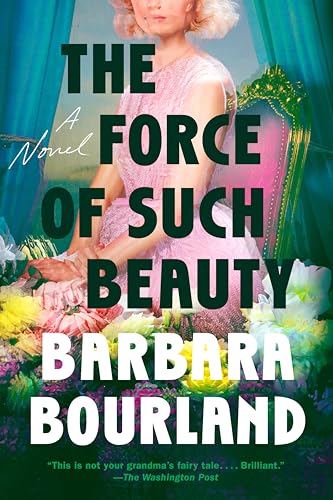
For 102 consecutive weeks, V.E. Schwab’s The Invisible Life of Addie LaRue remained on the New York Times Bestseller list. That’s nearly two full years—a geologic age in the frantic churn of the publishing world. It became more than a book; it became a cultural touchstone, a shorthand for a certain brand of lyrical, melancholic fantasy. But longevity is not the same as invincibility. In the literary arena, every champion eventually faces a challenger, and a new contender has emerged from the opposite corner of the bookshelf: Barbara Bourland’s acerbic, brilliant novel The Force of Such Beauty. Both novels are about young women trapped in gilded cages by powerful, possessive men. Both explore the erosion of identity under suffocating circumstances. But one is a sprawling romantic fantasy, the other a tightly coiled social horror story. It's time to pit them head-to-head to see which narrative lands the more powerful blow.
Which Novel About Cursed Women Is Worth Reading?
This article breaks down the ultimate literary showdown between two modern classics that explore female survival and identity. We will dissect:
- The fundamental premises and plot mechanics of each novel.
- The character development of the protagonists, Addie and Caro.
- The distinct prose styles and thematic depth of Schwab and Bourland.
- A final scoring and verdict declaring the superior novel.
The Contenders: Two Women, Two Cages
First, let's meet our combatants. In one corner, we have the behemoth, the BookTok darling, the book that launched a thousand fan-cams: The Invisible Life of Addie LaRue.

Schwab’s 2020 novel tells the story of a young French woman in 1714 who makes a Faustian bargain with a dark god to escape a stifling arranged marriage. She gains immortality and freedom, but at a terrible price: she is cursed to be forgotten by everyone she ever meets. For 300 years, she wanders through history, a ghost unable to leave a mark, until one day, in a small New York City bookshop, a young man says three impossible words: “I remember you.” It’s a sweeping, century-spanning romance about art, memory, and what it means to truly live.
In the other corner, the challenger: a sharp, searing novel that trades supernatural curses for the all-too-real prison of modern royalty, The Force of Such Beauty.

Barbara Bourland’s 2022 novel follows Caroline "Caro" Luxten, a former elite marathon runner who falls in love with the handsome prince of a small, obscure European principality. After a whirlwind romance, she marries him, only to discover that the fairytale is a meticulously constructed prison. Stripped of her career, her passport, her name, and her bodily autonomy, she becomes a state asset, her worth measured only in her ability to produce an heir and maintain a flawless public image. It's a claustrophobic, incisive critique of celebrity, misogyny, and the brutal mechanics behind the princess myth.
Round One: The Architecture of Imprisonment
Every story of entrapment lives or dies by the design of its cage. The rules must be clear, the stakes high, and the logic internally consistent.
Addie LaRue's prison is metaphysical. The curse is brilliantly simple in its cruelty: she can’t hold a job, own a home, or form lasting relationships. She is a whisper, a fleeting muse. Schwab excels at exploring the implications of these rules. Addie learns to survive moment to moment, to influence the world indirectly by planting ideas in the minds of artists and poets. The plot, spanning 300 years, is less a propulsive narrative and more a collection of poignant vignettes showcasing her resilience. The central conflict—her centuries-long chess match with the handsome, manipulative god, Luc—gives the story its romantic and philosophical core. The arrival of Henry, the boy who remembers, serves as the catalyst that threatens to shatter this long-established equilibrium. It’s a high-concept premise executed with dreamy, emotional precision.
The Force of Such Beauty, by contrast, builds its cage from concrete, paparazzi lenses, and constitutional law. Caro’s prison is terrifyingly plausible. After marrying Prince Finn, she is confined to the palace grounds of Eldoria. Her diet is controlled, her exercise regimen is state-mandated, and her sole purpose is to become pregnant. Bourland meticulously details the mundane horror of this life: the endless paperwork, the security protocols, the crushing weight of public expectation. The plot is a slow, methodical strangulation of Caro’s spirit. The tension doesn't come from a dark god, but from a smiling, gaslighting husband and a nation that views her as property. The narrative brilliantly dissects the economics of monarchy, revealing it as a grim, patriarchal business. Where Addie’s curse is an act of dark magic, Caro’s is the result of a thousand bureaucratic and societal cuts.
The Verdict: While Bourland's realism is chillingly effective, Schwab's premise is a masterstroke of speculative fiction. The curse of being forgotten is a profoundly original and emotionally devastating concept that allows for a broader exploration of history, art, and the human condition. Bourland’s cage is one we recognize; Schwab’s is one we could never have imagined.
Score: Addie LaRue 1 — The Force of Such Beauty 0
Round Two: The Will of the Prisoner
A cage is only as interesting as the person rattling its bars. The strength of these novels rests on the shoulders of their protagonists.
Addie LaRue is defined by her defiance. She is a survivor. For 300 years, she refuses to yield to Luc, to surrender her soul. She finds loopholes. She becomes a secret patron of the arts, a seven-freckled constellation appearing in paintings and songs throughout history. Her character arc is one of endurance. She learns and adapts, but her core self—stubborn, hopeful, artistic—remains largely intact. She is an inspirational figure, a symbol of resilience against impossible odds. However, this unwavering defiance can sometimes make her feel more like an archetype than a person. After three centuries, her reactions can feel a bit polished, her pain romanticized. She is an idea of a woman more than a flesh-and-blood one.
Caroline Luxten, on the other hand, is painfully, viscerally real. We meet her at the peak of her physical and professional power, a woman whose identity is forged in discipline and motion. The novel’s central tragedy is the systematic dismantling of that woman. Bourland charts Caro’s decline with excruciating detail. We see her athletic body soften, her mind fog over from the blandness of her life, her ambition curdle into despair. Her struggle is not the grand, romantic defiance of Addie’s, but a desperate, internal battle to hold onto a single shred of her former self. Her arc is not about enduring, but about being erased. It’s a devastating portrait of what happens when a woman’s power is seen as a threat and systematically neutralized. It’s less inspiring than Addie’s story, but it’s infinitely more complex and psychologically astute.
The Verdict: Addie is a character you admire. Caro is a character you are. Her struggle feels more urgent, more terrifying, and more relevant. She is a blistering indictment of a world that still demands women shrink themselves to be acceptable. Schwab gives us a fantasy of defiance, but Bourland gives us the cold, hard truth of the fight. This round goes to the princess.
Score: Addie LaRue 1 — The Force of Such Beauty 1
Round Three: The Power of the Prose
Finally, we must judge the novels on the quality of the writing itself—the language used to build these worlds and tell these stories.
Schwab's prose is her signature. It is lush, lyrical, and unabashedly romantic. The writing in Addie LaRue is designed to sweep you away. It’s filled with memorable, quotable lines and a deliberately repetitive, almost incantatory rhythm. Phrases like “a story is an idea, wild and fragile” or the constant refrain of Addie’s seven freckles create a cohesive, dreamlike atmosphere. It’s beautiful, effective, and a huge part of the book’s appeal. The only drawback is that this style can sometimes feel overwrought, prioritizing aesthetics over precision. The emotional beats are occasionally hammered home too forcefully, leaving little room for reader interpretation. It's a style that tells you exactly how to feel.
Bourland's prose in The Force of Such Beauty is the antithesis of Schwab's. It is stark, clinical, and brutally precise. The language is as controlled and suffocating as Caro's life. Bourland writes with the sharp eye of a journalist and the cold heart of a surgeon, dissecting the fairytale with terrifying clarity. The novel is filled with technical jargon about marathon training, nutrition, and finance, which serves to ground the story in a harsh reality. This clinical style makes the moments of emotional horror—Caro realizing her husband bugged her fitness tracker, or the cold indifference she faces after a miscarriage—land with the force of a physical blow. The prose isn't trying to be beautiful; it's trying to be true, and in doing so, it achieves a different, more chilling kind of power. The style perfectly mirrors the subject matter, creating a seamless and devastating reading experience.
The Verdict: This is the decisive round. While Schwab’s writing is undeniably gorgeous, Bourland’s is more ambitious and intellectually rigorous. She weaponizes her prose, making its very structure a part of the book’s central argument. It’s a masterclass in using form to amplify theme, a feat of authorial control that is as impressive as it is unsettling. The writing in Addie is a beautiful window dressing; the writing in Beauty is the very architecture of the prison.
Score: Addie LaRue 1 — The Force of Such Beauty 2
Editor's Verdict
The Force of Such Beauty is a Trojan horse of a novel. It arrives disguised as a frothy royal romance and proceeds to unleash a devastating critique of patriarchal power structures from within. While Addie LaRue offers a beautiful, comforting fantasy of female resilience, Bourland’s book is a bucket of ice water, a necessary shock to the system that exposes the rot beneath the fairytale’s gilded floorboards.
My Rating for The Force of Such Beauty: 9/10. The novel earns its points for its razor-sharp prose, its flawlessly constructed atmosphere of dread, and its unforgettable protagonist. It loses a single point for a slight sag in the middle, where the meticulous detailing of Caro's routine momentarily slows the narrative momentum before its absolutely breathtaking final act.
The Final Judgment: A New Champion is Crowned
By a score of 2 to 1, the winner is The Force of Such Beauty.
The Invisible Life of Addie LaRue is a phenomenon for a reason. It's a sweeping, inventive, and emotionally resonant novel that provides a powerful sense of romantic escapism. It is a book about surviving. But The Force of Such Beauty is a book about dismantling. It is more than a story; it is an argument, a polemic delivered with the elegance of a literary novel and the cold fury of a manifesto. It doesn't ask us to escape our world; it demands we look closer at the cages it builds around women, cages of celebrity, expectation, and tradition. In 2026, as we continue to dissect the legacies of real-world princesses and the cultural obsession with powerful women, Bourland's novel feels less like fiction and more like essential commentary. Addie LaRue may be immortal, but The Force of Such Beauty has the power to endure.
FAQ
Is 'The Invisible Life of Addie LaRue' a standalone novel?
Yes, V.E. Schwab has confirmed that 'The Invisible Life of Addie LaRue' is a standalone novel with a complete story arc. While she has occasionally mentioned the possibility of exploring the world further, the book itself is a self-contained narrative.
Is 'The Force of Such Beauty' based on a real royal?
While not officially based on any single person, Barbara Bourland's novel draws clear inspiration from the lives of several modern royals, including Princess Diana, Meghan Markle, and Princess Charlene of Monaco. The fictional nation of Eldoria serves as a composite to critique the institution of monarchy itself.