Romantasy's Big Lie: Power-Ups Aren't Character Growth
The genre, led by behemoths like 'Fourth Wing,' has traded the hard work of personal evolution for the cheap thrill of magical power-ups. It's time to demand more.

Modern fantasy is selling you a lie. Specifically, the brand of hyper-viral “romantasy” that has seized the zeitgeist is peddling a hollow, counterfeit version of personal transformation. It has convinced a legion of readers that a character acquiring magical powers, bonding with a fated beast, or discovering a secret lineage is the same as character growth. It is not. It is the literary equivalent of a video game leveling-up screen—a flashy, satisfying, and ultimately superficial change in stats, not a fundamental evolution of the soul.
At the center of this phenomenon stands the undisputed titan: Rebecca Yarros’s Fourth Wing. This book is a masterclass in narrative momentum, a commercial juggernaut that has rightfully earned praise for its breakneck pacing and addictive plot. But in its depiction of personal evolution, it represents a profound failure of imagination, one that prioritizes external validation over internal struggle and, in doing so, shortchanges the very audience that devours it.
Does Romantasy Over-Rely on Narrative Shortcuts?
This article argues that the current romantasy trend, exemplified by its most popular titles, often fails to deliver meaningful character arcs. We'll explore this by:
- Deconstructing the supposed character growth of Violet Sorrengail in Fourth Wing.
- Contrasting this with a narrative that uses fantastical elements to force genuine internal change.
- Examining why the trope of the externally-empowered protagonist is so culturally resonant right now.
- Making the case for why readers should demand more than just power fantasies from their fiction.
The Illusion of Progress: Violet Sorrengail's Dragon-Fueled "Growth"
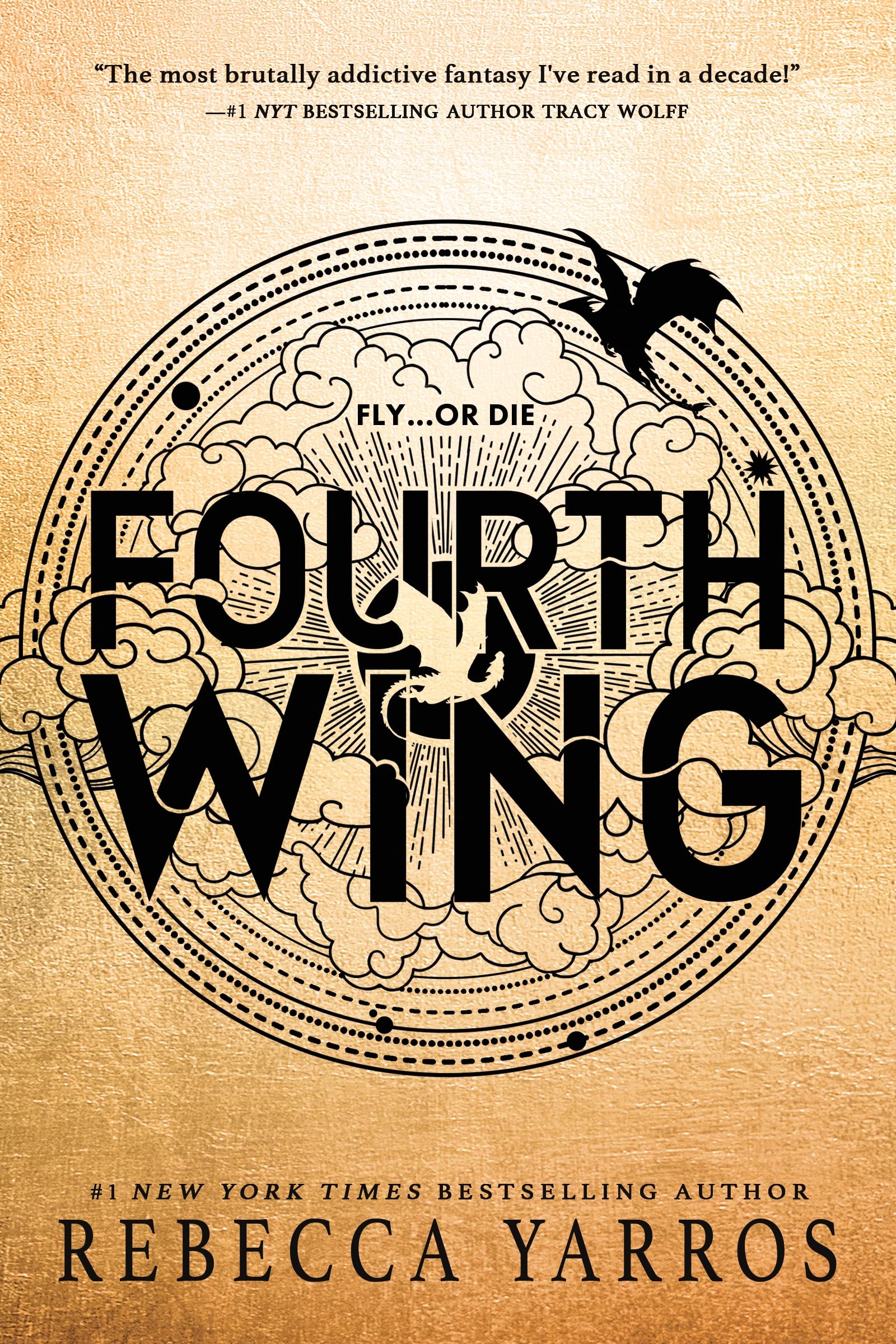
Let’s examine the evidence. The protagonist of Fourth Wing, Violet Sorrengail, is introduced as physically frail, an aspiring scribe forced into the brutal Riders Quadrant. Her core conflict is survival. She is, by all accounts, the underdog. The narrative promises a story of a woman overcoming her limitations through grit, intelligence, and willpower. What it delivers is a story of a woman who is repeatedly saved and empowered by external forces far beyond her control.
Violet’s supposed evolution is not earned; it is bestowed. Every significant milestone in her journey is a gift from the plot. She doesn't train her body to the point of peak condition; instead, her primary physical liability is negated when she is chosen by not one, but two of the most powerful and unique dragons in existence. Tairn, a colossal black dragon, bonds with her for reasons of his own, instantly elevating her status and guaranteeing her protection. Andarna, a mysterious golden feathertail, also chooses her, providing a convenient, time-stopping deus ex machina whenever the narrative requires it. Violet's weakness is not overcome through a grueling process of internal fortitude; it is rendered irrelevant by magical intervention.
Consider her signet, the magical ability that manifests in riders. Violet’s power isn’t a modest, clever ability she must learn to use strategically. No, she manifests the ability to wield pure lightning, one of the most powerful and destructive forces imaginable. It arrives not as the culmination of a personal journey but as another lottery win. Her growth is additive, not transformative. She gains powers, she gains a dragon, she gains a second dragon, she gains the protection and affection of Xaden Riorson, the most powerful rider of his generation. The narrative stacks the deck so absurdly in her favor that her initial state of “weakness” feels less like a genuine obstacle and more like a cynical marketing ploy to make the subsequent power-ups feel more dramatic.
True character evolution involves confronting an internal flaw—pride, fear, prejudice, selfishness—and through painful self-reflection and difficult choices, changing one’s very nature. Violet doesn’t have a significant internal flaw to overcome. Her primary struggle is external: “don’t die.” The solutions provided are also external: dragons, magic, a super-powered boyfriend. She ends the book as a more powerful version of the person she was at the beginning, but not a fundamentally different or deeper one. This is not the story of a woman’s journey into herself; it’s a story of a woman acquiring a series of increasingly impressive accessories.
The Counter-Offensive: "But It's Supposed to Be Fun!"
Now, the immediate defense from the book’s fervent fanbase is predictable and not without merit: “It’s escapist fantasy! It’s supposed to be fun! It’s a power fantasy!” All of this is true. The appeal of watching an underdog suddenly become the most special person in the room is undeniable. There is a vicarious thrill in it, and no one should be shamed for enjoying that thrill. The problem arises when we equate this thrill with profound storytelling.
To suggest that fun and depth are mutually exclusive is a disservice to the entire fantasy genre. From the agonizing moral choices in Ursula K. Le Guin's Earthsea to the psychological toll of power in George R.R. Martin’s Westeros, great fantasy has always proven that escapism can be a vehicle for exploring the deepest parts of the human condition. To settle for less, to accept that “fun” means we must abandon the expectation of meaningful character work, is to lower the bar into the floor.
This brand of wish-fulfillment creates narrative sugar rushes. They are addictive and intensely pleasurable in the moment, but they lack the nutritional value of genuine character struggle. The satisfaction is fleeting because it’s rooted in circumstance, not character. We remember characters who make impossible choices, who fail and get back up, who change their minds and their hearts because of what they experience. We merely observe characters who have magic handed to them. It’s the difference between empathizing with a journey and merely witnessing a coronation.
An Alternate Path: When Transformation Is a Burden, Not a Boon
For a more resonant exploration of transformation, look no further than a smaller, stranger book on the trending list: Cassandra Khaw’s Bearly a Lady.

Here, the protagonist Janie is also saddled with an unwanted transformation: she’s a werebear. But unlike Violet’s dragons, this is not a ticket to power and prestige. It is a messy, inconvenient, and deeply personal burden. Her shapeshifting is not a cool superpower to be deployed against enemies; it is a source of profound anxiety that threatens to upend her carefully constructed life, her engagement, and her sense of self. It is, in essence, a metaphor for the untamable parts of our own nature.
Janie’s journey is not about learning to control her power to win a war. It’s about learning to accept herself. Her evolution is entirely internal. The central conflict forces her to question her people-pleasing tendencies, to confront the fact that her “perfect” life is a cage, and to ask herself what she truly wants, not what others expect of her. The fantastical element is not a solution but a catalyst for a grueling internal reckoning. She must integrate her monstrous side, not as a weapon, but as a part of her whole identity. She has to learn to love the bear.
Khaw’s novella achieves in its short page count what sprawling epics like Fourth Wing fail to: it presents a character whose change is painful, necessary, and born from within. The magic complicates her life rather than simplifying it, which is precisely how the best speculative fiction operates. It uses the impossible to illuminate something true about the human experience—in this case, the universal struggle for self-acceptance. Janie’s transformation is not an upgrade; it’s an awakening.
The Cultural Craving for Effortless Evolution
Why, then, is the Fourth Wing model of effortless empowerment so dominant? Its popularity isn't an accident. It speaks to a deep cultural craving for fantasies of unearned agency in a world where real-world progress feels incremental, exhausting, and often impossible. When faced with intractable systemic problems, economic precarity, and the slow, unglamorous work of self-improvement, the fantasy of being “chosen” by a dragon is a potent escape.
These stories offer a comforting, if simplistic, answer to the anxieties of modern life: you don’t need to work on yourself, you just need to be secretly special. You don’t need to build your own power, you just need to have it unlocked by a magical force or a fated lover. It’s a narrative that absolves the individual of the hard work of becoming.
But literature should do more than just placate us. It should challenge us, offer us new models for living, and provide us with the catharsis that comes from watching someone engage in a struggle that feels real, even in a world of dragons. By continuously rewarding protagonists with external power-ups instead of forcing them through the crucible of internal change, the genre is missing its chance to tell stories that truly matter, stories that linger long after the final page is turned. It’s time we raised our standards and demanded the real thing.
Editor's Verdict
Fourth Wing is a masterclass in narrative propulsion but a failure in character depth. Violet Sorrengail's entire evolution is a direct result of the powers and people gifted to her; strip them away, and her internal change from start to finish is negligible.
Editor's Rating: 5/10
The book earns its points for being an undeniably effective page-turner. The pacing is relentless, the world of Basgiath War College is compelling, and the central romance has a spark that keeps you reading. However, it loses a full five points for its protagonist, a character whose development is entirely outsourced to her dragons and her love interest. The substitution of external power acquisition for genuine, earned personal growth renders her journey fundamentally hollow and emotionally unfulfilling.
FAQ
Is 'Fourth Wing' by Rebecca Yarros worth reading?
It depends on what you're looking for. If you want a fast-paced, high-stakes fantasy romance with addictive plot twists and a classic power-fantasy structure, you'll likely enjoy it. If you prioritize deep, internally-driven character development, you may find it lacking.
What defines the 'romantasy' genre?
Romantasy is a subgenre of fantasy that blends a central fantasy plot with a core romantic storyline. The romance is not a subplot but is integral to the main narrative, often involving tropes like fated mates, enemies-to-lovers, and high-stakes relationships set against a magical backdrop.
What is the difference between internal and external character growth?
External growth refers to changes in a character's circumstances, abilities, or status (e.g., gaining wealth, power, or skills). Internal growth is a fundamental change in a character's personality, worldview, or moral understanding, usually achieved through confronting flaws and making difficult choices.