The Family Novel Scorecard: Ranking Books on Human Connection
We pit five popular novels against each other to crown the definitive statement on family, legacy, and belonging. Not every book survives the scrutiny.
How does a novel earn its place as a definitive statement on family, a story that doesn't just entertain but fundamentally reshapes how we view the bonds that define us? The answer lies not in comforting platitudes, but in a willingness to dissect the beautiful, brutal, and often contradictory nature of kinship itself. We’ve all read books that claim to be about family, but few have the courage to explore the marrow of that connection—the inherited traumas, the impossible expectations, and the desperate search for belonging that powers our lives. It’s time to separate the poignant from the merely sentimental.
Ranking the Best Novels About Family and Identity
This article provides a definitive ranking of contemporary fiction that tackles the complex web of human connection. Here’s what you’ll find: * Our exclusive scoring system for ranking novels on thematic depth and emotional impact. * In-depth analysis of five critically acclaimed and popular books. * Why a magical realist masterpiece tops our list over a modern tragedy. * A final scorecard comparing each novel's exploration of legacy, trauma, and love.
My Lit-Pop Scorecard: The Methodology
Not all explorations of family are created equal. To rank these novels with the critical precision they deserve, I’m using a 40-point system. It’s designed to reward nuanced characterization and thematic ambition over cheap sentimentality. The criteria are as follows:
- Character Depth & Relatability (/10): How fully realized are the characters? Do their bonds, fractures, and loyalties feel authentic, or are they mere plot devices? We’re looking for psychological realism, even in fantastical settings.
- Thematic Resonance (/10): How powerfully does the novel explore its core themes of family, legacy, and belonging? Does it offer fresh insight into these well-trodden territories or just rehash familiar ideas? Originality and depth are key.
- Prose & Style (/10): The quality of the writing itself. Is the language precise and evocative, elevating the story? Or is it clumsy, overwritten, or generic? Style isn’t just decoration; it’s the engine of the narrative.
- Emotional Impact (/10): The gut-punch factor. Does the book leave a lasting emotional imprint? This isn’t about being the saddest, but about the authenticity of the emotional journey it forces upon the reader.
Now, let's see how these contenders stack up.
#5. The Fairytale Retelling: Fishbone Cinderella by Elizabeth Lim

Elizabeth Lim’s take on the classic Cinderella story, drawing from one of its oldest known versions, certainly explores the theme of family—specifically, the cruelty of a biological family and the salvation found in a chosen one (or, in this case, a magical fish). The novel succeeds in its whimsical atmosphere and in painting a stark contrast between the abusive stepfamily and the kindness of strangers and magical helpers. The core theme is about finding your worth and your tribe when your own blood has cast you out. It’s a foundational concept of belonging, perfectly suited for its YA audience.
However, its thematic exploration remains at a fairytale level. The characters, while sympathetic, operate within archetypal boundaries. The evil is unambiguously evil; the good is purely good. This lack of moral complexity limits its resonance. The prose is clean and effective for its purpose, but it doesn’t sing with the unique voice or lyrical precision of the higher-ranked books on this list. Its emotional impact is gentle and affirming, a comfort read that delivers a satisfying, if predictable, resolution. It’s a well-crafted story that understands its lane, but it doesn't dig deep enough into the messy, contradictory nature of familial bonds to score higher.
- Character Depth & Relatability: 5/10
- Thematic Resonance: 6/10
- Prose & Style: 6/10
- Emotional Impact: 6/10
- Total: 23/40
#4. The Genre-Bender: Beach Read by Emily Henry

Don't let the breezy cover fool you. Emily Henry's Beach Read is a Trojan horse. It presents itself as a standard enemies-to-lovers rom-com but smuggles in a surprisingly potent story about grief and the shattering discovery that our parents are flawed, secretive human beings. The central plot revolves around January Andrews, a romance writer, and Augustus Everett, a literary fiction author, who challenge each other to write in the other's genre. This clever meta-narrative becomes the vehicle for January to process the death of her father and the discovery of his secret life and second family.
The book’s greatest strength is its handling of this inherited legacy. January’s identity as a believer in happy endings is fundamentally rocked, forcing her to reconcile the father she idolized with the man he actually was. Augustus, meanwhile, grapples with his own family trauma, which has informed his grim literary worldview. While the banter is sharp and the romance is genuinely compelling, the novel’s core is this collision of family histories. It’s a more nuanced take on connection than many straight literary novels attempt, though it's occasionally constrained by the rom-com structure which demands a certain narrative neatness. Some might argue its depth is compromised by its need to also be a fun, escapist read, a problem not shared by books like the ever-relevant 1984, which makes no such compromises. It scores highly for its cleverness and emotional honesty, but its genre obligations keep it from the top tier.
- Character Depth & Relatability: 8/10
- Thematic Resonance: 7/10
- Prose & Style: 8/10
- Emotional Impact: 7/10
- Total: 30/40
#3. The Legacy Unraveled: The Vanishing Half by Brit Bennett
Brit Bennett's The Vanishing Half is a masterclass in exploring legacy. Its central premise—twin sisters from a small Louisiana town who choose to live in two different worlds, one as a Black woman and one passing as white—is the ultimate examination of how identity is both a choice and an inheritance. The novel isn't just about the sisters, Desiree and Stella; it's a multi-generational saga about the echoes their decision creates, particularly for their own daughters. Bennett masterfully illustrates how a single, monumental choice can dictate the course of an entire family tree.
The character work is impeccable. The Vignes twins are not symbols; they are deeply complex individuals whose motivations are understandable even when their actions are heartbreaking. The novel’s true genius, however, lies in its patient, sprawling structure, which allows the reader to witness the long-term consequences of Stella’s break from her family and her heritage. It is a profound meditation on memory, secrets, and the lies we tell ourselves and our children to survive. The prose is elegant and understated, allowing the powerful story to take center stage without unnecessary flourishes. While its emotional impact is more of a slow burn than a sudden gut punch, the weight of the story settles on you long after you’ve finished. It’s a nearly perfect novel, falling just shy of the top spots due to a slightly less visceral emotional connection compared to our top two.
- Character Depth & Relatability: 10/10
- Thematic Resonance: 10/10
- Prose & Style: 9/10
- Emotional Impact: 8/10
- Total: 37/40
#2. The Trauma Opus: A Little Life by Hanya Yanagihara

No contemporary novel has a more fearsome reputation for emotional devastation than A Little Life. It is, without question, a monumental achievement in character creation. The story of Jude St. Francis and the three friends who form his unwavering chosen family is an epic exploration of love’s capacity to endure in the face of unspeakable trauma. Yanagihara’s commitment to depicting the lifelong aftermath of severe childhood abuse is unflinching and singular in modern literature. The bond between Jude, Willem, Malcolm, and JB feels intensely real, a testament to the idea that the families we build can be more powerful than the ones we are born into.
For this, it earns perfect scores in character depth and emotional impact. You don't just read about Jude's pain; you are immersed in it for 800 pages. This is both its greatest strength and its most significant flaw. The novel's relentless, escalating catalog of horrors can feel punishing to the point of manipulation. It sacrifices thematic nuance for overwhelming suffering. Is it a profound statement on trauma, or is it simply trauma tourism? The prose, while often beautiful, can also become overwrought, leaning into a baroque misery that blunts its own effectiveness. The book is an undeniable force and an unforgettable reading experience. But its single-minded focus on suffering prevents it from offering a broader, more complex perspective on the spectrum of human connection, keeping it from the number one spot.
- Character Depth & Relatability: 10/10
- Thematic Resonance: 8/10
- Prose & Style: 9/10
- Emotional Impact: 10/10
- Total: 37/40
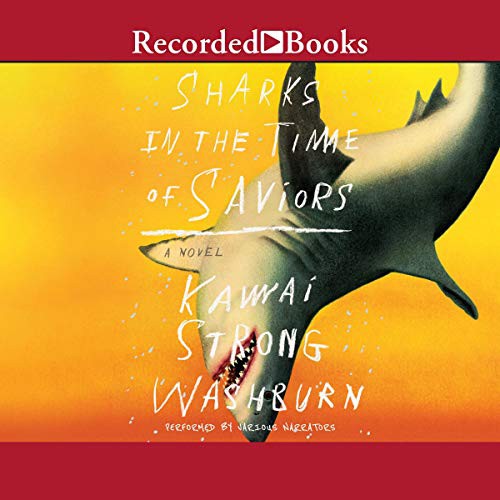
#1. The Modern Myth: Sharks in the Time of Saviors by Kawai Strong Washburn

This is it. The novel that perfectly balances lyrical prose, profound thematic depth, and unforgettable characters to create a modern myth about the crushing weight of family legacy. Sharks in the Time of Saviors tells the story of the Flores family in Hawaiʻi, whose lives are irrevocably altered when seven-year-old Nainoa falls into the ocean and is returned to his mother's arms by a shiver of sharks. Hailed as a miracle, Noa is burdened with the expectation that he is a savior, a gift from the ancient gods destined to lift his family from poverty.
What follows is a heart-wrenching and breathtakingly beautiful account of how this single event fractures the family. Told from the shifting perspectives of the mother, the father, and all three siblings—Nainoa, his athletic older brother Dean, and his brilliant younger sister Kaui—the novel provides a 360-degree view of familial pressure. We see how Nainoa's 'gift' becomes a curse, isolating him and creating resentment in his siblings, who feel both overshadowed and fiercely protective. Washburn’s prose is simply stunning, blending Hawaiian pidgin with lush, poetic descriptions that root the story in its specific cultural and spiritual landscape. The use of magical realism never feels like a gimmick; it’s the only language capable of expressing the deep, ancient forces that shape the Flores family. It’s a story about the impossible burden of love and the devastating cost of expectation, and it is, by every metric, a masterpiece.
- Character Depth & Relatability: 10/10
- Thematic Resonance: 10/10
- Prose & Style: 10/10
- Emotional Impact: 9/10
- Total: 39/40
Final Rankings: The Human Connection Scorecard
| Rank | Title | Character (/10) | Theme (/10) | Prose (/10) | Impact (/10) | Total (/40) |
|---|---|---|---|---|---|---|
| 1 | Sharks in the Time of Saviors | 10 | 10 | 10 | 9 | 39 |
| 2 | A Little Life | 10 | 8 | 9 | 10 | 37 |
| 3 | The Vanishing Half | 10 | 10 | 9 | 8 | 37 |
| 4 | Beach Read | 8 | 7 | 8 | 7 | 30 |
| 5 | Fishbone Cinderella | 5 | 6 | 6 | 6 | 23 |
(Note: A Little Life and The Vanishing Half are tied in score, but A Little Life is ranked higher due to its more significant cultural footprint and raw emotional power, despite its flaws.)
Editor's Verdict
Kawai Strong Washburn's use of multiple first-person perspectives in Sharks in the Time of Saviors provides a more nuanced and ultimately more truthful portrait of familial strain than the singular, oppressive focus of A Little Life. While Yanagihara's novel is an undeniable emotional force, Washburn's debut achieves a rarer feat: it captures the entire ecosystem of a family, showing how love, resentment, and myth are braided together in a way that feels both epic and intimately true. The novel earns its near-perfect 9/10. It loses a single point because the beautiful magical realism, at times, can slightly distance the reader from the raw, grounded emotions of the characters, a small price to pay for its staggering ambition and originality. It is the essential modern novel on the bonds that both make and break us. If you liked this post, please give it a like.
FAQ
Is A Little Life by Hanya Yanagihara too sad to read?
It depends on the reader. It is an unflinching depiction of severe, lifelong trauma and its aftermath. While it contains profound portrayals of friendship, its content is graphic and emotionally draining, which is a valid reason for some readers to avoid it.
What makes a novel a good examination of family?
A great novel about family moves beyond simple portrayals of love or conflict. It examines the complex systems of expectation, legacy, secrets, and sacrifice that define kinship, showing how individuals are shaped by, and in turn shape, their family unit.
Is Beach Read just a simple romance novel?
While it is firmly in the romance genre, Beach Read uses the enemies-to-lovers trope to explore substantial themes like grief, professional disillusionment, and the discovery of painful family secrets, giving it more depth than a typical light read.