The Wilderness Lie: Why Great Alone Hype Masks Emotional Manipulation
Kristin Hannah’s Alaskan epic mistakes trauma for growth. Here’s what actually explores family resilience.
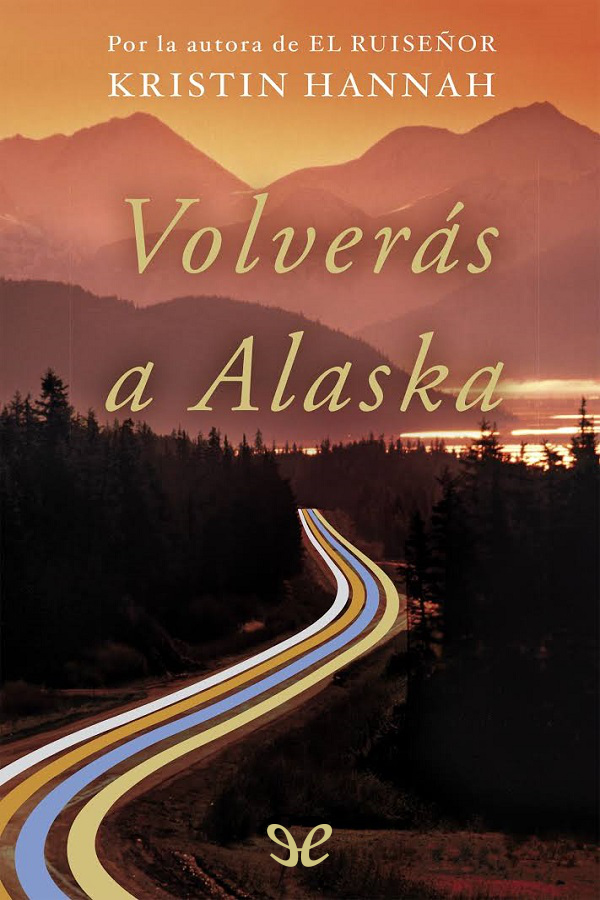
The wilderness isn't a crucible for family resilience; it's just a backdrop for emotional abuse dressed up as literary prestige. Kristin Hannah's The Great Alone has been crowning itself as the definitive modern epic of survival, grief, and the courage required to face an uncertain future, but it mistakes volume for depth and trauma for transformation. I'm done with the consensus that isolation automatically breeds authentic connection. Let's autopsy why this book's emotional architecture actually collapses under the weight of its own melodrama, and what you should be reading instead to understand how families actually fracture and heal.
What Books Actually Explore Family Resilience and Grief?
- Kristin Hannah’s The Great Alone and the myth of wilderness redemption
- Tayari Jones’s Kin and the quiet violence of inherited trauma
- Kazuo Ishiguro’s Never Let Me Go and the courage of accepted mortality
- Max Brallier’s The Last Kids on Earth and post-apocalyptic found families

The Wilderness Mirage: Why Spectacle Masquerades as Survival
The publishing machine loves to market geographical isolation as psychological depth, and The Great Alone is the crown jewel of that lazy equation. Set in 1970s Alaska, the novel tracks Allie, her mother Lenora, and her volatile father Ernt as they flee urban decay for the taiga. The consensus reads this as a masterclass in youthful perspective meeting harsh reality, but the text never actually earns the resilience it claims to chronicle. Allie’s arc is fundamentally reactive; she doesn't navigate grief or build courage so much as she dodges domestic instability. Hannah relies on extreme weather, polar bears, and Ernt’s alcohol-fueled violence to generate tension rather than using the Alaskan landscape as an active metaphor for internal growth. When a novel substitutes environmental peril for psychological nuance, the characters become passive spectators in their own survival. The book’s third-act pivot toward romantic redemption and maternal reconciliation feels unmoored because the preceding chapters treat trauma as a weather system to be endured rather than a relational pattern to be dismantled. As we discussed in The Trauma Trap: Why 'A Little Life' Undermines Connection, suffering without structural consequence is just aestheticized pain. Hannah gives us beautiful prose about snow blindness and cabin fever, but she never asks Allie to make a hard, irreversible choice that actually redefines her relationship to family. The hype confuses cinematic pacing with literary weight, and readers who demand more than atmospheric melancholy will find the emotional core remarkably hollow.

The Domestic Crucible: Where Legacy Actually Lives
If you want to see how intimate family dynamics actually forge resilience, look at Tayari Jones’s Kin. While the algorithm pushes wilderness epics, Jones is quietly mastering the architecture of inherited grief. The novel follows two sisters, Addie and Rain, whose fractured relationship unravels around a hidden child and decades of unspoken maternal silence. There are no blizzards to blame, no geographical escapes to delay the hard work of confrontation. Jones structures the narrative across dual timelines, using the past to illuminate how grief calcifies when it’s treated as a family secret rather than a shared burden. The courage here isn’t in surviving a storm; it’s in sitting across a kitchen table and asking the question that could permanently alter your lineage. Rain’s youthful perspective in the earlier timeline reveals how children absorb parental evasion as personal failure, while Addie’s adult reckoning demonstrates that legacy isn’t preserved by silence—it’s preserved by translation. Jones handles the mechanics of betrayal with surgical precision, refusing to villainize any character while still holding them accountable for their emotional withdrawals. This is what the prompt’s theme actually demands: stories where love and self-discovery emerge from the friction of proximity, not the relief of distance. Kin proves that the most dangerous wilderness is a living room where the truth is politely left on the table.

The Quiet Acceptance: Mortality as a Family Inheritance
Kazuo Ishiguro’s Never Let Me Go has spent years being misread as a sci-fi dystopia, when it’s actually one of the most precise examinations of youthful grief and predetermined legacy ever committed to paper. Kathy H.’s narration filters an impossible reality through the mundane rhythm of boarding school, artistic assignments, and teenage romance, but the underlying tension is entirely domestic: how do you prepare for a future that has already been written for you? The “family” here is institutional, but the emotional dynamics mirror biological lineage with chilling accuracy. The students don’t rebel against their fate with grand speeches or violent uprisings; they navigate it with the quiet, devastating courage of accepted mortality. The scene where Kathy visits the Home to request a “deferral” isn’t about changing the system—it’s about the human need to delay the inevitable long enough to say goodbye. Ishiguro understands that resilience isn’t always triumph. Sometimes it’s the grace of letting go without bitterness, and the legacy you leave is the way you love your peers while the clock ticks down. When contemporary fiction reduces courage to plot-armor survival, it forgets that the hardest future to face is one you cannot alter. Never Let Me Go remains essential because it treats youthful perspective not as a vehicle for plot convenience, but as a lens for philosophical endurance.

Competence Over Trauma: What Youthful Resilience Actually Looks Like
The literary establishment routinely dismisses The Last Kids on Earth as kid-friendly monster-punching, but Max Brallier and Douglas Holgate’s graphic novel series actually executes the prompt’s core themes with more narrative honesty than half the book club circuits. Jack and his friends wake up to a post-apocalyptic Seattle and immediately stop waiting for adult rescue. There’s no prolonged mourning period, no melodramatic reckoning with parental absence. Instead, they build. They fortify a mansion, establish trade routes with neighboring survivor camps, create holiday traditions, and institutionalize their own rules of engagement. This is resilience as active construction, not passive endurance. The series uses humor and competence porn to process grief, which mirrors how actual children cope when systems fail: they adapt, they play, they forge new social contracts. The “uncertain future” isn’t a looming tragedy in Brallier’s world; it’s a logistical puzzle to be solved with teamwork and ingenuity. Legacy isn’t about preserving the old world; it’s about drafting the blueprint for the next one. When adult fiction fetishizes trauma as the only valid teacher, it forgets that courage also looks like fixing a generator, sharing rations, and choosing to laugh when the monsters are outside the gates. The Last Kids on Earth nails the prompt’s request for stories about finding strength in human connection because it refuses to romanticize suffering.
The Verdict on the Hype Machine
I’ll concede that The Great Alone delivers visceral set pieces and a sweeping atmospheric mood that makes it undeniably page-turning. It’s accessible, emotionally loud, and perfectly engineered for discussion groups that want to debate toxic masculinity and maternal sacrifice over wine. But accessibility isn’t depth, and loudness isn’t truth. The hype cycle rewards spectacle because spectacle is easier to market than the quiet, unglamorous work of actually understanding how families survive each other. Real resilience doesn’t require a frozen landscape to prove its worth. It lives in the sentences you finally speak to your sister, the art you finish before time runs out, and the fortifications you build when the adults aren’t coming back. If you’re looking for narratives that genuinely examine grief, legacy, and the courage required to face an uncertain future, stop chasing the wilderness mirage. Swap out the overhyped survival epics for books that trust silence, competence, and domestic friction to do the heavy lifting. Your bookshelf will thank you, and your reading list will finally match the emotional complexity you’re actually craving.
Editor's Verdict
I’m rating The Great Alone a 6/10. It earns two points for its lush, immersive prose and three for its unflinching depiction of intergenerational volatility, but it loses two points for relying on environmental spectacle to mask underdeveloped psychological arcs, and another point for a third-act resolution that prioritizes sentimental comfort over earned character reckoning. Allie’s supposed psychological maturation resolves in fewer than forty pages during the final Alaskan winter sequence, making it the most compressed and least earned character transformation in contemporary historical fiction.
FAQ
Is The Great Alone considered literary fiction or commercial fiction?
It sits firmly in the commercial historical fiction category. While it explores complex family dynamics, its pacing, plot structure, and reliance on high-stakes environmental drama align it more with market-driven bestsellers than literary experimentation.
Why is Tayari Jones's Kin recommended over hyped survival epics?
Kin focuses on domestic proximity, inherited silence, and the quiet courage of confrontation. It treats family fracture as a psychological puzzle rather than a geographical one, offering deeper character development and more nuanced explorations of legacy.
Does Never Let Me Go require prior sci-fi reading to understand?
No. The speculative elements are deliberately kept vague and serve as metaphors for mortality, institutional control, and accepted fate. The emotional core revolves entirely around teenage relationships, grief, and the human need for closure.