Literary Deception: 'Yellowface' vs. 'Sounds Like Titanic'
In an era obsessed with authenticity, two books dissect the brutal friction between public perception and private truth, but only one truly unmasks the impostor within.
The flickering screen of my e-reader cast a pale glow across the cramped airplane cabin as the flight attendant announced our descent. I was devouring the last chapters of a novel, a story about a writer who had, in essence, stolen a life. The unsettling irony wasn't lost on me: here I was, surrounded by strangers, each likely curating their own public persona for their destination, while the pages in my hand unraveled the brutal cost of such artifice. It’s a moment that perfectly encapsulates a broader cultural fixation, one where the glossy surface of public perception inevitably cracks under the weight of private truth. Contemporary literature, both fiction and non-fiction, is increasingly plumbing these depths, questioning inherited narratives, dissecting family legacies, and embracing the messy, often uncomfortable realities that lie beneath polished facades. This isn't just about plot twists; it's about a profound societal interrogation of who gets to control a story, and what happens when that control is wrested away.
Navigating the Labyrinth of Authenticity: What Books Dare to Unmask?
This piece dives deep into the literary landscape of July 2026, comparing how authors wrestle with the tension between outward presentation and inner reality. We'll explore:
- R.F. Kuang's Yellowface and its blistering critique of authorship and cultural appropriation.
- Jessica Chiccehitto Hindman's Sounds Like Titanic, a memoir of deception in the world of classical music.
- Sulari Gentill's The Woman in the Library and its meta-fictional exploration of narrative control.
- Ann Patchett's Tom Lake, a poignant look at curated family histories and memory.
The Illusionists' Arena: Fiction's Dance with Deception
In an age where authenticity is both demanded and commodified, authors are becoming master illusionists, crafting narratives that either expose deception or revel in its complexity. Our main contenders, Yellowface by R.F. Kuang and Sounds Like Titanic by Jessica Chiccehitto Hindman, stand as towering examples of this trend, though they approach it from fundamentally different angles.

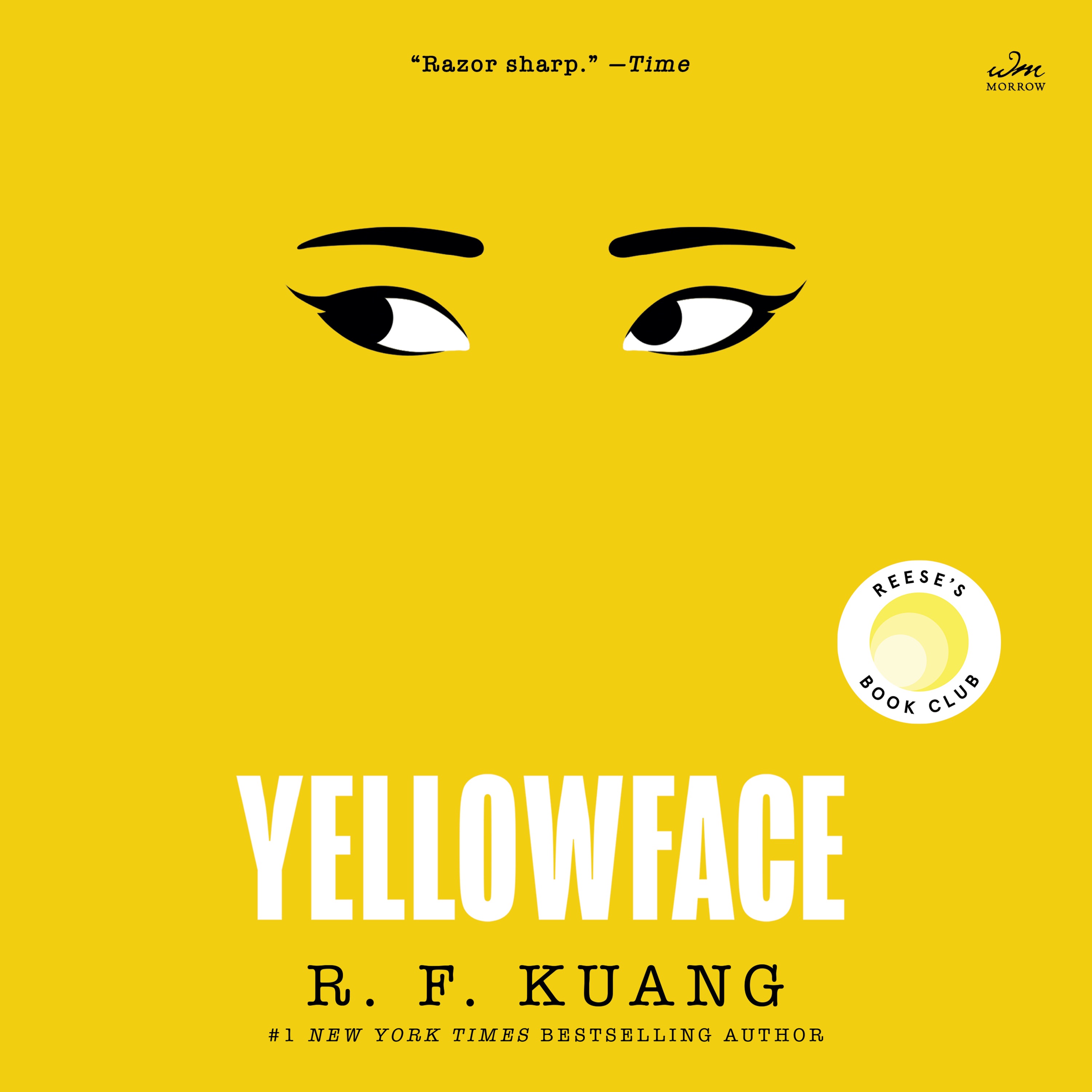
Yellowface is a novel that doesn't just critique the publishing industry; it weaponizes its own form as a meta-narrative. Kuang’s protagonist, June Hayward (later June Song, then Juniper Song), is an unreliable narrator personified. Her first-person stream of consciousness is a raw, unfiltered confession of ambition, jealousy, and eventually, profound moral decay. The narrative itself is a performance, as June constantly justifies her cultural appropriation and literary theft of her deceased friend Athena Liu’s manuscript. Kuang brilliantly uses the "novel within a novel" structure – Athena's original work versus June's 'Yellowface' version – to highlight the insidious ways a story can be co-opted, rebranded, and stripped of its original essence. The unveiling of truth here isn't a single revelation, but a continuous, excruciating process of June trying (and failing) to convince herself and the reader that she deserves her ill-gotten success. It's a masterclass in how narrative artifice can create a deeply unsettling sense of complicity in the reader, forcing us to grapple with June's skewed reality. The novel's power lies in its unflinching portrayal of how easily public perception can be manipulated when the private truth is suppressed, or worse, rewritten.

In stark contrast, Hindman’s memoir, Sounds Like Titanic, is a direct, non-fiction unveiling of a grand, bizarre deception within the classical music world. Hindman chronicles her time playing violin in a touring "orchestra" that, unbeknownst to its unsuspecting audiences, was largely faking it, playing along to prerecorded music, often of dubious quality. The narrative unfolds with a slow, dawning realization of the fraud, both for Hindman herself and for the reader. Her private knowledge of the charade stands in stark, often comedic, opposition to the public's perception of a legitimate, if somewhat eccentric, musical ensemble. Hindman's prose meticulously builds this tension, detailing the absurd lengths the conductor goes to maintain the illusion and her own growing moral discomfort. It's an intimate look at how one can become entangled in a web of lies, not out of malice, but out of desperation and a desire for belonging. The book's strength lies in its honest self-reflection, making the unveiling of truth a deeply personal and often painful act of reclaiming one's own narrative. Both books, in their distinct ways, are about the performance of authenticity, but Hindman’s is a testament to the courage it takes to eventually pull back the curtain.
Our peer comparisons also contribute significantly to this dimension. The Woman in the Library by Sulari Gentill offers a meta-fictional take on narrative control. Here, a fictional author, Hannah Tigone, receives letters from a "reader" named Leo, who actively critiques and questions her narrative choices as she writes a murder mystery. This blurs the lines between creation and reality, making the act of storytelling itself a central theme. The novel interrogates the power dynamics between author and reader, and how a story, once released, can take on a life of its own, subject to interpretations and even interventions beyond the author's original intent. The central murder mystery is almost a MacGuffin for this deeper exploration of how narratives are constructed, perceived, and even manipulated. Gentill deftly illustrates that even fictional truths are subject to the whims of their tellers and receivers.

Meanwhile, Ann Patchett’s Tom Lake explores the gentle, intentional curation of personal history within a family context. Here, Lara, a mother, recounts her youthful romance and brief acting career to her adult daughters during the COVID-19 lockdown. Her narrative is a carefully edited version of events, designed to protect her daughters and shape their understanding of their family legacy. The unveiling of truth is gradual and nuanced, driven by love and a desire to connect across generations, rather than any malicious intent. Patchett masterfully portrays how memory itself becomes a form of narrative artifice, subtly altered and shaped over time to fit a desired emotional truth. It’s a powerful exploration of how we construct our pasts for ourselves and for those we love, and the quiet sacrifices involved in maintaining those carefully built stories. For more on how contemporary authors deal with fragmented pasts, check out Why Modern Fiction Replaces Closure With Fracture.
Scoring: Narrative Artifice & Unveiling Truth
| Book | Score (out of 10) |
|---|---|
| Yellowface | 9 |
| Sounds Like Titanic | 8 |
| The Woman in the Library | 8 |
| Tom Lake | 7 |
The Scars of Imposture: When Public Persona Consumes Private Self
Confronting or creating false narratives comes with a steep price, a psychological and emotional toll that these authors unflinchingly dissect. The cost isn't just external; it's often a profound internal erosion of self.
In Yellowface, June Hayward's journey is one of escalating paranoia and moral decay. As she doubles down on her literary theft, fabricating stories about her identity and history, she becomes a prisoner of her own lies. The cost is her peace of mind, her genuine connections, and ultimately, her soul. The novel vividly portrays the relentless psychological torment of living a lie, where every interaction is a potential landmine, every online comment a direct assault on her carefully constructed facade. Her ambition, once a driving force, transforms into a corrosive acid that eats away at her integrity. Kuang makes it clear that while the internet mob might be a threat, the real punishment comes from within. June's "authenticity" as a writer is annihilated; she can no longer trust her own voice because it's been so thoroughly contaminated by the stolen one. The terrifying aspect is that June, despite her self-awareness, is unable to break free from the cycle of deception, constantly digging herself deeper into the hole of her own making, truly making this a brutal exploration of the human psyche under pressure.
Jessica Chiccehitto Hindman's memoir, Sounds Like Titanic, details a different kind of psychological burden: the quiet complicity in a deception that chipped away at her artistic integrity. Her story isn't about malicious intent, but about the slow, insidious erosion of self-worth that comes from participating in something fundamentally dishonest. Hindman grapples with the moral discomfort of faking her musical performance, of being part of a grand illusion perpetrated on innocent audiences. The cost here is the disillusionment with her artistic dreams, the gnawing feeling of being a fraud, and the difficult process of reconciling her private knowledge with her public role. The memoir itself becomes an act of restitution, a painful but necessary process of reclaiming her truth and, in doing so, reclaiming her self. Her narrative explores the nuanced ways economic precarity and a desire for belonging can push individuals into morally ambiguous situations, leaving lasting scars on their personal authenticity.
The Woman in the Library examines the price of narrative control, or rather, the lack thereof. As Hannah's fictional murder mystery unfolds, the "real-world" consequences of her story bleed into the life of her correspondent, Leo. The price is the blurring of boundaries between fiction and reality, the loss of authorial control, and the unsettling realization that stories can escape their creators and cause unforeseen ripples. It's a meta-textual exploration of the dangers of playing God with narratives, where the lines between invention and truth become dangerously permeable. Gentill suggests that even in fiction, there's a responsibility, and when that responsibility is challenged, the stability of the entire narrative (and potentially the author's peace of mind) is threatened.
For Tom Lake, the "price" of Lara's carefully curated story is more subtle, a quiet burden rather than an explosive crisis. Her decision to withhold certain details about her past, particularly her relationship with a famous actor, creates a subtle emotional distance within her family. The cost is the unspoken weight of an untold past, the parts of her identity she has consciously suppressed for the sake of her family's idealized perception of her. While this isn't a story of outright fraud, it's a poignant portrayal of how parents often protect their children from uncomfortable truths, sometimes at the expense of their own full self-expression. The daughters' eventual confrontation with their mother's hidden depths brings a bittersweet reckoning, highlighting the complexities of intergenerational understanding and the sacrifices inherent in building a family narrative. For a deeper dive into narrative concealment, explore Unmasking the Unseen: Why Narrative Concealment Captivates Us.
Scoring: The Scars of Imposture
| Book | Score (out of 10) |
|---|---|
| Yellowface | 10 |
| Sounds Like Titanic | 9 |
| The Woman in the Library | 7 |
| Tom Lake | 7 |
Cultural Echoes: Books as Barometers of Our Authenticity Crisis
These novels and memoirs aren't just personal stories; they function as potent cultural barometers, reflecting and critiquing broader societal trends regarding identity, authorship, and the pervasive demand for — and commodification of — 'realness.'
Yellowface is arguably the most searing cultural critique among the four. It takes aim at the heart of the publishing industry, exposing its systemic biases, performative activism, and the insidious ways white privilege allows for cultural appropriation to flourish under the guise of "good intentions." Kuang’s novel perfectly captures the zeitgeist of cancel culture and online outrage, showing how quickly narratives can be weaponized and identities commodified. It forces readers to confront uncomfortable questions: Who has the right to tell which stories? What constitutes authenticity in a diverse literary landscape? And how do we navigate the fine line between appreciation and appropriation? The book’s sharp satire cuts through the industry's polished veneer, revealing the cutthroat ambition and hypocrisy that often lurk beneath. It's a vital text for understanding the current fraught discussions around identity politics in literature, a discussion that extends far beyond the page into the very fabric of our public discourse.
Sounds Like Titanic offers a nuanced critique of artistic authenticity, the commodification of culture, and the exploitation of labor within the arts. Hindman’s memoir exposes the "fake it till you make it" mentality taken to an absurd extreme, but it also prompts larger questions about what audiences truly value: genuine artistic expression or a dazzling, albeit manufactured, spectacle. It critiques the class dynamics inherent in the arts, where young, aspiring musicians are often desperate enough to participate in a charade just for a paycheck and a chance to perform. The book is a commentary on how readily the public will embrace a curated illusion, often because it aligns with a romanticized idea of artistry, even when the reality is far more cynical. It speaks to a cultural moment where image and presentation often eclipse substance, forcing us to re-evaluate our own definitions of success and artistic merit in a hyper-produced world.
The Woman in the Library, while perhaps less overtly political than Yellowface, provides a fascinating meta-commentary on the act of reading and writing itself in the digital age. It reflects a cultural fascination with true crime, the desire to "solve" narratives, and the increasingly interactive relationship between creators and consumers. By having a "reader" intervene in the author's creative process, Gentill critiques traditional notions of authorial intent and the passive role of the reader. It touches on how stories are consumed and influenced by external forces, a direct echo of how our own public narratives are constantly shaped and reshaped by audience feedback and online communities. It's a clever, self-aware novel that highlights the participatory nature of modern storytelling, for better or worse.
Tom Lake resonates by reflecting on the enduring power of family narratives and the human need to understand our elders as complex individuals beyond their immediate roles. Patchett's novel captures a cultural longing for connection and shared history, particularly in a fragmented world. It subtly critiques the idealized view of the past, championing instead the nuanced, lived experience that often involves hidden compromises and unspoken truths. The interest of Lara's daughters in her early life, especially her connection to a famous actor, speaks to a cultural fascination with celebrity and how it intersects with personal identity. The book reminds us that while we crave the exciting, polished versions of stories, the most profound truths often lie in the quiet, messy details of a life genuinely lived.
Scoring: Cultural Resonance & Critique
| Book | Score (out of 10) |
|---|---|
| Yellowface | 10 |
| Sounds Like Titanic | 9 |
| The Woman in the Library | 8 |
| Tom Lake | 7 |
Editor's Verdict: A Clear Victor in the Authenticity Wars
After a rigorous head-to-head, a clear winner emerges in the battle for unmasking narrative deception: R.F. Kuang's Yellowface. While all four books offer valuable insights into the friction between public perception and private truth, Yellowface distinguishes itself with its unparalleled audacity, its blistering satire, and its unflinching psychological depth. Kuang doesn't just tell a story about literary theft; she forces the reader to inhabit the mind of the thief, exploring the insidious nature of appropriation and the profound moral cost of intellectual dishonesty. Its meta-narrative structure amplifies its critique, making it a masterclass in how form can enhance function. While Sounds Like Titanic offers a compelling, honest memoir and The Woman in the Library a clever meta-mystery, Yellowface's raw, visceral engagement with the most pressing cultural conversations around identity, authorship, and privilege earns it the top spot. It doesn't just comment on the discourse; it becomes an undeniable part of it. The book loses a point for occasional didacticism in its social commentary, but its overall impact is undeniable.
FAQ
What is 'meta-fiction' and how does it relate to these books?
Meta-fiction is a style of fiction that self-consciously draws attention to its own status as a constructed artifact, often by referencing the act of writing or reading within the story itself. 'Yellowface' uses a meta-narrative about authorship and publishing, while 'The Woman in the Library' features a fictional author corresponding with a reader about her developing manuscript, directly engaging with meta-fictional elements.
Are any of these books based on true stories?
Yes, 'Sounds Like Titanic' by Jessica Chiccehitto Hindman is a memoir, making it a true story about her experiences in a touring 'orchestra.' While 'Yellowface' is a work of fiction, it draws heavily on and satirizes very real-world issues within the publishing industry, including cultural appropriation and cancel culture.
Which of these books would be best for a book club discussion?
'Yellowface' or 'The Woman in the Library' would both spark intense debate and rich discussion in a book club setting. 'Yellowface' offers a scathing critique of the publishing world, identity, and ethics, while 'The Woman in the Library' provides a fascinating exploration of narrative control and the blurring lines between author and reader, prompting deep conversations about storytelling itself.