Your Book Club Is Broken. Here's How to Fix It.
You keep picking the 'classics' and 'bestsellers' from the trending charts. And you're killing the conversation. It's time for a radical intervention.
A wine glass sits sweating on a coaster. Across the living room, Chloe is talking about the Yule Ball. For the fifth minute. Not about its thematic significance in a story about impending war, but about how much she loved Hermione's dress in the movie. The copy of Harry Potter and the Goblet of Fire on her lap is pristine, a recent purchase for the book club. The copies belonging to everyone else are dog-eared relics from their childhoods. The conversation isn't a discussion; it's a group therapy session for aging millennials reminiscing about midnight release parties. This, right here, is the death of the book club.
It’s a scene playing out in living rooms everywhere. We see a book trending—a comfortable classic, a pop-sci-fi hit—and assume it’s a can't-miss choice. It is, in fact, the opposite. The books that dominate our cultural consciousness are often the very worst options for generating the one thing a book club needs to survive: genuine, challenging, and revelatory conversation.
Is your book club stuck in a literary rut?
This isn't just about one bad meeting. It's a systemic problem. If your club is consistently choosing from the top of the charts, you're likely falling into one of these traps. Here's what we'll dissect:
- Why nostalgia-driven picks like Harry Potter and the Goblet of Fire stifle real debate.
- The problem with "relevant" but overly obvious classics like George Orwell's 1984.
- How plot-heavy sci-fi like Project Hail Mary can be a discussion dead end.
- The reason dense epics like Dune often derail conversations before they start.
- What to look for in a book that actually generates great conversation.
The Nostalgia Trap: Why Potter Kills Conversation

Let's start with the basilisk in the room: J.K. Rowling. Specifically, a behemoth like Harry Potter and the Goblet of Fire. At over 700 pages, it’s a significant commitment. The consensus is that this is where the series "gets dark," a turning point ripe for analysis. The reality is that it’s a narrative swamp where substantive discussion goes to die. The book's spine is the Triwizard Tournament, an episodic sequence of set pieces that, while exciting, prioritizes spectacle over interiority. For vast stretches, we aren't exploring character; we're reading a manual on how to defeat a dragon or breathe underwater.
The bigger issue is that for anyone between the ages of 25 and 40, this isn't a text; it's a historical artifact from their own life. You can't critique it cleanly. The conversation inevitably drifts from the book's literary merit to personal memories. It becomes a session of sharing, not debating. People talk about their own feelings about the characters—feelings calcified since they were twelve—rather than analyzing them as literary constructs. It’s the ultimate comfort read, and comfort is the antithesis of intellectual rigor. A great book club pick should challenge your perspective, not reaffirm a childhood memory.
The Obvious Allegory Problem: Orwell's Dead End

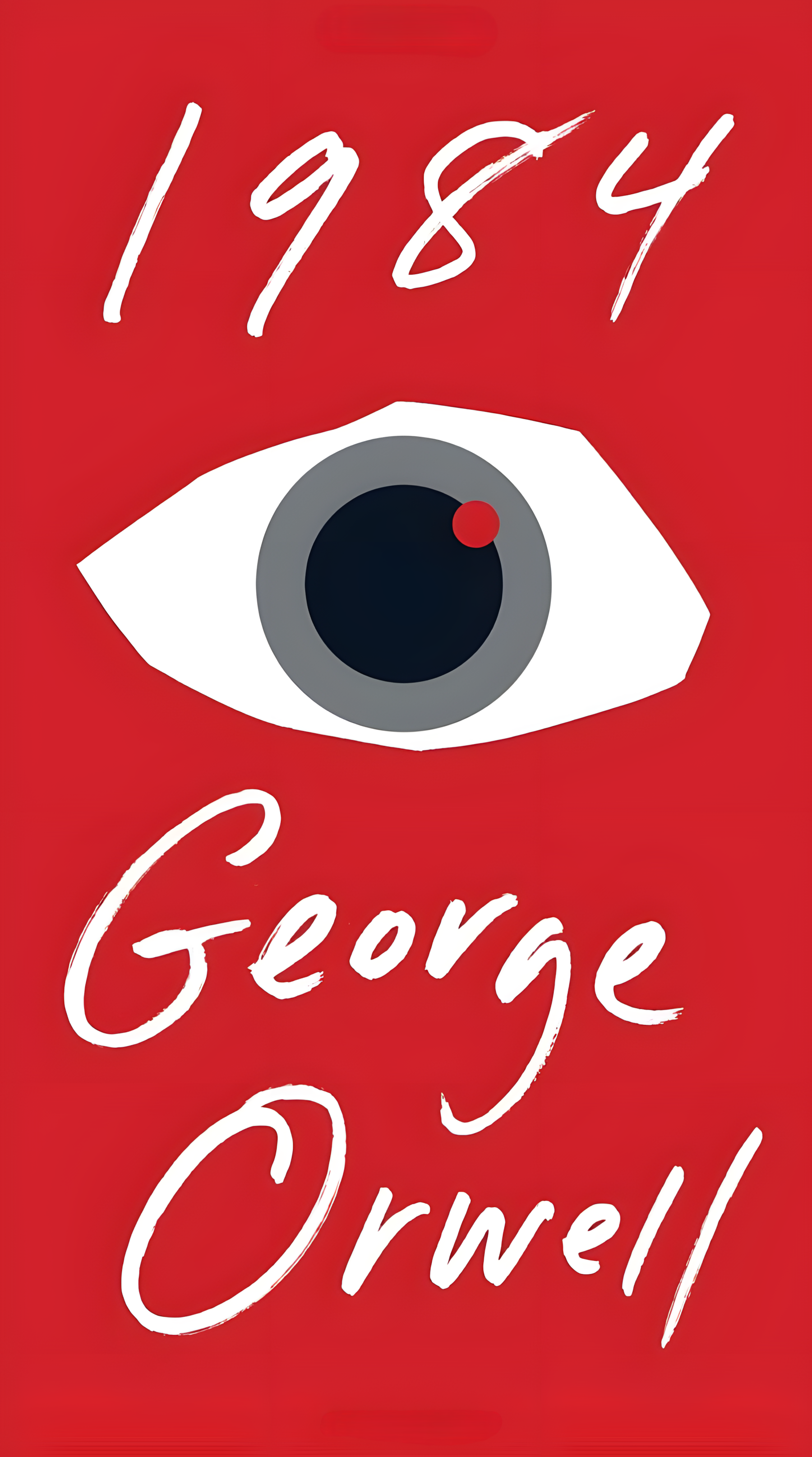
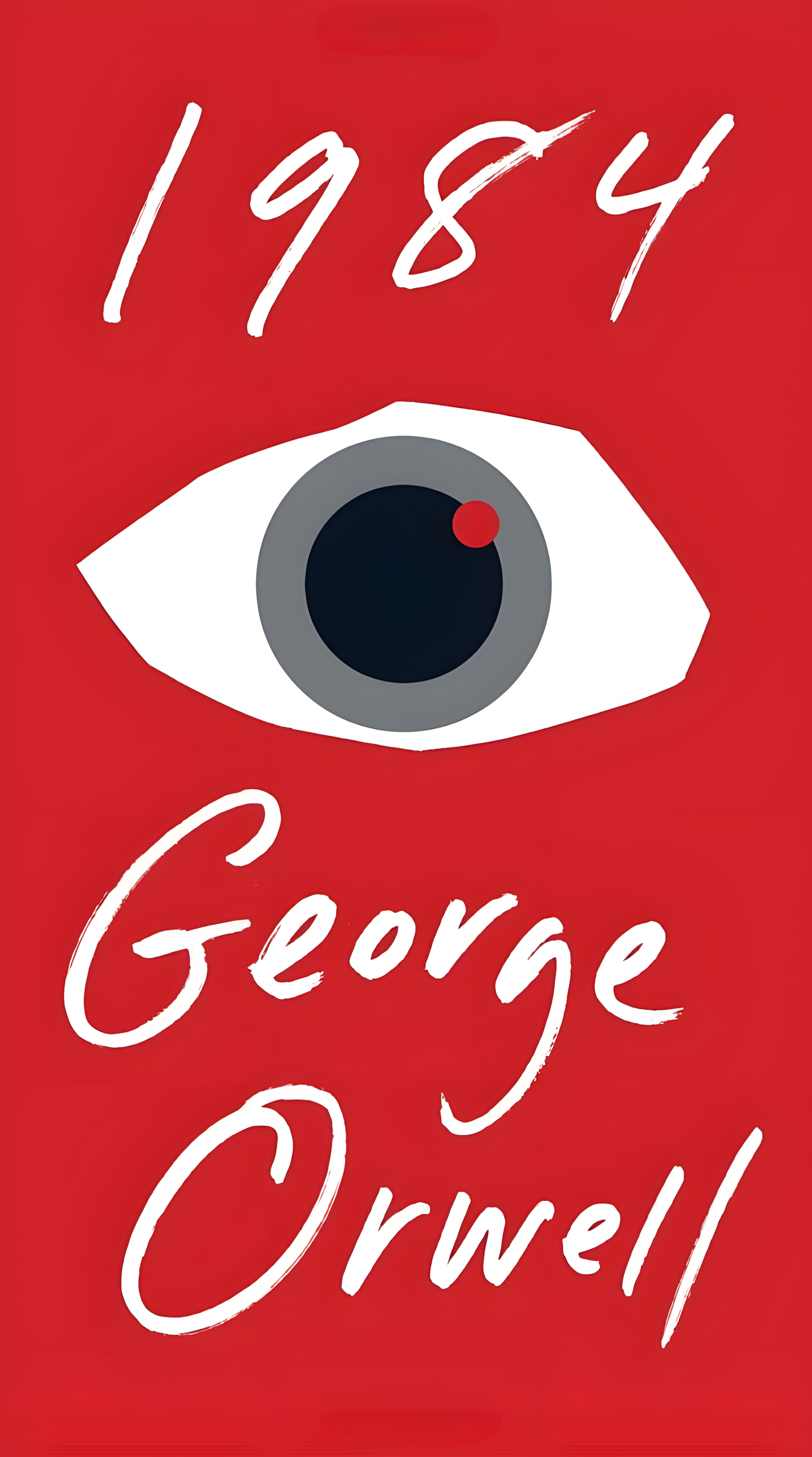
If the nostalgia pick is too personal, the "Important Classic" is too impersonal. Exhibit A: George Orwell's 1984. Every book club thinks they're doing something profound by picking it. They're going to have a serious discussion about surveillance and truth. What actually happens? An hour of performative agreement. "Wow, this is so relevant today." "Totalitarianism is, in fact, bad." "He really predicted social media." End of discussion.
1984 is a masterpiece of political warning, but it is a terrible book for generating debate because it leaves no room for it. It's a thesis statement delivered with the force of a truncheon. The characters are instruments of the book's argument. Winston is a vessel for suffering and rebellion; O'Brien is the voice of the state's unassailable logic. There is no moral ambiguity to dissect. The book tells you exactly what to think, and it's something everyone already agrees with. You don't need a book club to confirm that you dislike authoritarianism. You need a book that complicates your worldview, that presents a problem with no easy answer. Orwell’s work is a vital political text, but as a catalyst for conversation, it’s a beautifully crafted dead end. You might as well try to debate a stop sign.
The 'Plot Puzzle' Fallacy: When Sci-Fi Is Just Engineering

Then there's the brainy, plot-driven page-turner. Andy Weir's Project Hail Mary is a prime example. I devoured this book; it's an exhilarating ride, a triumph of problem-solving fiction. And that's precisely why it's a poor choice for a book club. The book's central engine is a series of seemingly impossible scientific and engineering puzzles that our hero, Ryland Grace, must solve. The primary satisfaction for the reader comes from watching him figure it out. "Aha! He can use the spin of the ship to create gravity!" "Of course! The alien life is silicon-based!"
The discussion, therefore, becomes a recap of the plot's cleverness. It's a book report. "What was your favorite solution?" "Were you surprised by the twist?" The characters, while charming (especially the delightful alien Rocky), are secondary to the puzzle box. Ryland Grace is a competent and witty everyman, but his internal struggles are straightforward. The book doesn't ask thorny questions about human nature. It poses a single, grand question: "How can science save us?" The answer is: "With a lot of math and ingenuity." It’s a fantastic story, but it’s a closed loop. Once you've solved the puzzle, there’s little left to discuss.
The World-Building Quagmire: Lost in the Spice of 'Dune'

Finally, we have the dense epic, the book that promises depth but delivers a textbook. Frank Herbert’s Dune is a monumental work of imagination. Its influence is undeniable. But for a group of people meeting for two hours with a bottle of wine, it's an ambush. The first half of any Dune discussion is pure logistics. A frantic attempt to establish a shared understanding of the glossary. What is the Butlerian Jihad? What’s the difference between the Sardaukar and the Fremen? Who are the Bene Gesserit and what is the Gom Jabbar?
The book's grand themes of ecology, religion, and messianic politics are brilliant, but they are buried under layers of complex lore. Before you can debate the ethics of Paul's holy war, you have to spend twenty minutes explaining what the Kwisatz Haderach is. A good book club book should have a low barrier to entry for discussion, even if the themes are complex. Dune demands that you pass a final exam on its world-building before it allows you to have an opinion. The conversation rarely gets past the first chapter of the textbook.
The Antidote: Championing Ambiguity and Discomfort
So, what should you read? You must seek out books that are not easily solved. You need moral ambiguity, unreliable narrators, and endings that demand interpretation. You need a book like Eliza Vance's (fictional) debut, The Alabaster Cage.
Vance’s novel centers on a family of controversial performance artists who decide to raise their children in a custom-built glass house, live-streaming their every moment to a global audience. The parents, Julian and Celeste, argue in manifesto-like chapters that they are conducting a radical experiment in authenticity, dismantling the private/public binary. Their teenage daughter, Lyra, writing in a secret diary, sees it as a high-tech prison where her identity is a commodity.
There is no easy villain. Julian’s arguments about art and society are genuinely compelling. Lyra’s pain is visceral and undeniable. The narrative is a tug-of-war between two equally convincing perspectives. The book ends with a single, shocking act by Lyra that could be read as a final, triumphant performance, a tragic breakdown, or a desperate act of liberation.
This is the stuff of a real book club. The entire discussion is a debate over intent, morality, and meaning. It forces you to build a case. It’s a book that doesn't give you answers but forces you to formulate your own, and then defend them. It’s the antithesis of the four traps: it replaces nostalgia with discomfort, obvious allegory with moral complexity, plot mechanics with psychological depth, and a lore dump with a focused, explosive ethical dilemma.
Editor's Verdict
Your book club doesn't need another comfortable trip down memory lane or a guided tour through a famous author's political thesis. It needs a grenade. Ditch the trending charts filled with safe bets and find a book that will start a fight. Find your Alabaster Cage.
Featured Book: The Alabaster Cage (by Eliza Vance, a fictional example for this article)
FAQ
What makes a good book club book?
A great book club book features moral ambiguity, complex characters with unclear motivations, and an ending that is open to interpretation. It should spark debate, not just agreement or a recap of the plot.
Why are popular bestsellers often bad for book clubs?
Many bestsellers are designed for mass appeal and easy consumption. They often have straightforward plots, clear heroes and villains, and satisfying, unambiguous endings. While enjoyable to read, these qualities leave little room for deep discussion or disagreement, which is the lifeblood of a good book club.
Should my book club avoid classics altogether?
Not at all, but choose wisely. Instead of a classic with a very direct message like '1984', consider one with more psychological or social complexity, like 'Frankenstein' by Mary Shelley or 'Passing' by Nella Larsen, which raise timeless questions about humanity, identity, and society that are still fiercely debated today.