Whalefall: Can a Movie Drown You Like a Book Can?
Daniel Kraus’s claustrophobic masterpiece is coming to the screen, forcing a showdown between psychological terror and visceral spectacle. We pit it against the year's other big adaptations.
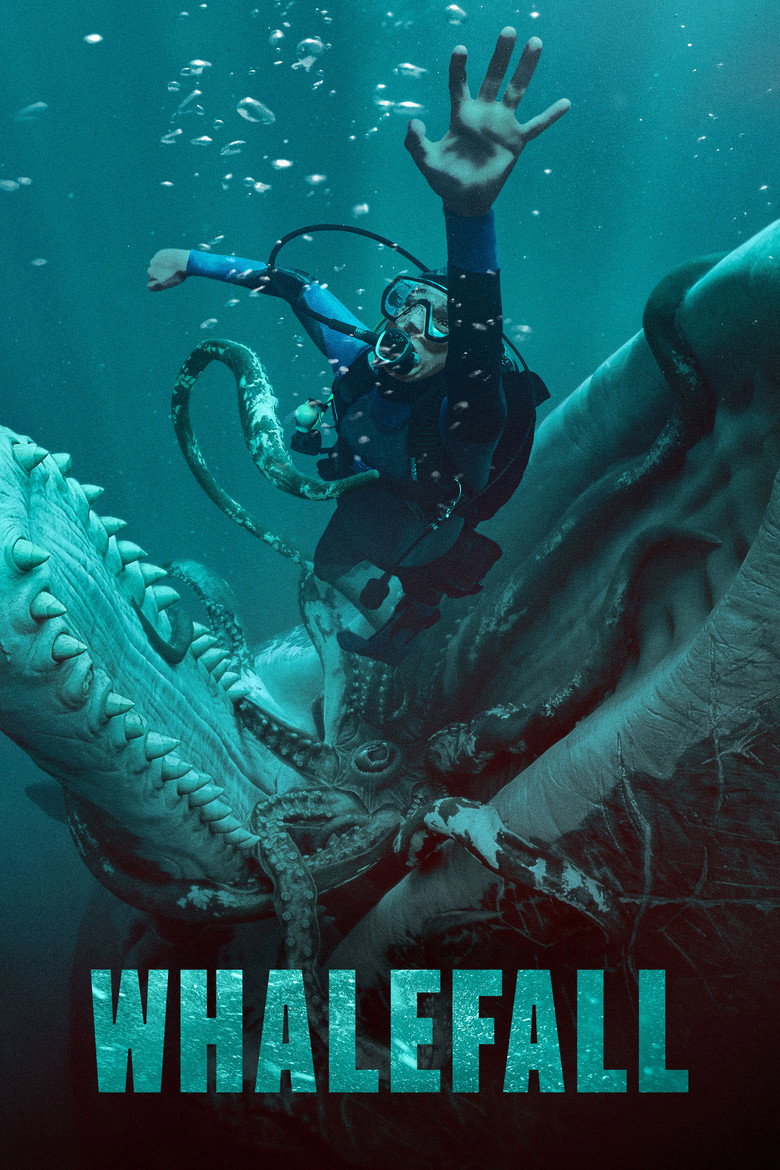
How do you film the experience of being eaten alive? I don’t mean the spectacle of it—the thrashing, the teeth, the blood in the water. I mean the internal, suffocating, pitch-black terror of knowing you are inside the belly of a beast, with minutes of oxygen left to contemplate every mistake that led you there. The answer is, you probably can't, which is precisely why the upcoming film adaptation of Daniel Kraus’s magnificent, horrifying novel Whalefall is one of the most fascinating and perilous cinematic bets of the year.
What to Know About 2026's High-Stakes Adaptations
This essay dissects the page-to-screen journey of today's most anticipated stories. Here’s what we're covering:
- An in-depth analysis of Whalefall by Daniel Kraus and its upcoming film adaptation.
- A comparative look at the romance novel Your Fault and its movie counterpart, Your Fault: London.
- The fundamental differences in how books and films deliver psychological tension versus visual spectacle.
- Which version of each story—the book or the screen—offers the more essential experience.
Our Cultural Moment: The Allure of High-Stakes Survival
There’s a reason stories of extreme, contained survival are resonating so profoundly in 2026. In an era of amorphous, overwhelming anxieties—climate dread, political instability, digital noise—the appeal of a single, solvable, albeit terrifying, problem is immense. We crave narratives that shrink the world down to one person, one challenge, one ticking clock. It’s a fantasy of agency. Whalefall, the story of a young scuba diver swallowed by a sperm whale while searching for his father’s remains, is the platonic ideal of this subgenre. It’s a story about being trapped not just in a biological prison, but within one’s own grief and regret. The whale’s stomach is merely the physical manifestation of the protagonist Jay’s psychological state. The cultural appetite for a story like this stems from a desire to see our internal chaos given a monstrous, conquerable form.

But this hunger for high-stakes experience isn’t limited to primal fear. Look at the simultaneous trend of hyper-intense romance adaptations like Your Fault: London, based on Mercedes Ron’s novel Your Fault. Here, the survival is emotional. The claustrophobia isn’t a digestive tract but the intoxicating, all-consuming bubble of a forbidden romance. The stakes—heartbreak, betrayal, social ruin—are just as life-or-death to its characters as a depleting oxygen tank is to Jay. Both narratives, though wildly different in genre, cater to the same core desire: to feel something intensely and unequivocally. They offer a potent escape from the numbness of the everyday, swapping mundane worries for the sharp, clarifying focus of either fighting for your next breath or fighting for the love of your life. One offers a visceral, physical ordeal; the other, an emotional one. Together, they paint a picture of an audience desperate to be pulled under, whether by an ocean leviathan or a tidal wave of passion.


The Textual Terror vs. The Cinematic Spectacle
Every adaptation is a translation from one language to another, and the core conflict is often between interiority and exteriority. The novel is the undisputed kingdom of the internal monologue. The film reigns supreme in the realm of sensory experience. This dynamic will define the success or failure of both Whalefall and Your Fault: London.
Daniel Kraus’s novel Whalefall is a masterpiece of voice. The genius of the book is that while the physical situation is harrowing, the real story unfolds inside Jay’s head. His narration is a frantic, brilliant stream of consciousness, blending marine biology facts, memories of his difficult father, and a second-by-second assessment of his horrifying predicament. Kraus makes us privy to the scientific calculations of survival—how much oxygen is left, the composition of digestive acids, the anatomy of the whale’s multiple stomachs. This knowledge doesn't empower Jay; it makes his situation more terrifyingly concrete. The book’s power is in making you a passenger in his mind, experiencing his flickering hope and crushing despair as your own. You don’t just watch him suffocate; you feel the cognitive burn of oxygen deprivation alongside him. This is something cinema simply cannot replicate with the same raw intimacy.
A film of Whalefall must, by necessity, trade this psychological depth for sensory assault. Its strength will be in sound design—the grotesque squelching of organs, the low rumble of the whale’s call vibrating through its body, the terrifying silence punctuated by Jay’s ragged breaths. Visually, it can create a surreal, Giger-esque hellscape of pulsating flesh and shadowy viscera. The director can use disorienting camera angles and oppressive darkness to induce a state of physical panic in the audience. The movie will excel at showing what it’s like to be swallowed. But the book excels at telling you what it feels like to be Jay. The film will be a theme park ride; the book is a therapy session at the bottom of the ocean. In this matchup, the page wins on substance, while the screen will undoubtedly win on shock.
This same tension plays out in the romance of Your Fault. The novel lives in the small, unspoken moments: Noah’s internal grappling with her attraction to her stepbrother Nick, his private battle between duty and desire. The prose allows us to inhabit their anxieties, to feel the heat of a glance that lingers a second too long, to understand the history and baggage that fuel their charged interactions. The book is a slow-burn of emotional forensics, letting readers piece together the complex puzzle of their relationship.
Your Fault: London, on the other hand, will trade that forensic detail for pure, unadulterated chemistry. Film is a medium of surfaces, and its success will hinge almost entirely on the charisma of its leads. It can use a swelling soundtrack to telegraph emotion that the book builds over chapters. It can use the iconic, rain-slicked streets of London as a romantic backdrop that externalizes the characters’ turmoil and passion. The movie’s job is to make us believe in their love through performance, cinematography, and music. It’s a more direct, and perhaps more superficial, pleasure. The book lets you understand their love; the film will let you swoon over it. The choice between them is a choice between intellectual intimacy and visceral infatuation.
From Page to Frame: The Anatomy of Adaptation Choices
No adaptation is a perfect mirror; it is a reinterpretation, and its divergences from the source material are where its true purpose is revealed. For a story as contained as Whalefall, the changes will be surgically precise but profoundly significant. The novel is almost a solo act. The primary challenge for the screenplay is how to convey a book’s worth of internal monologue without resorting to clumsy voiceover. The obvious, and most tempting, solution is to expand the role of flashbacks. In the novel, Jay’s memories of his father are fragmented, surfacing organically with his depleting oxygen. A film might be tempted to structure these into a more coherent, linear B-plot, giving the audience a reprieve from the claustrophobia of the whale’s stomach. This would be a grave mistake. The power of the story lies in its relentless, unbroken tension. Every cutaway to the sun-drenched past would release the pressure the narrative so masterfully builds. The best, and bravest, choice the filmmakers can make is to trust their audience, keep the flashbacks impressionistic and brief, and stay with Jay in the dark. Any attempt to “open up” the story by adding a parallel search-and-rescue plot would be a catastrophic betrayal of the novel’s singular focus.
The other major divergence will be the ending. The book’s conclusion is abrupt, visceral, and tinged with a beautiful, almost spiritual ambiguity. A studio film, however, may crave a more definitive, triumphant finale. The pressure for a clear-cut Hollywood ending, where survival is framed as an unambiguous victory rather than a messy, traumatic rebirth, is immense. Resisting this pressure will be the film’s final and most important test.
With Your Fault: London, the central divergence is right there in the title. Moving the story from its original setting to London is a massive commercial and creative choice. Commercially, it packages the story for a global audience, using a universally recognized city as a shorthand for sophistication and romance. Creatively, it fundamentally alters the story’s texture. The original story has a specific cultural context that feels grounded and real. Relocating it to London risks turning it into a generic, glossy romance postcard. Will the characters explore gritty, authentic London neighborhoods, or will they only exist in a fantasy of picturesque landmarks and posh flats? The change of scenery is an improvement only if it adds a new layer of meaning. If London becomes a character in the story, reflecting the protagonists’ sense of being outsiders or the overwhelming nature of their passion, it could work. But if it’s merely expensive wallpaper, a way to add production value without adding substance, it will be a significant loss, stripping the story of its specificity and making it just another forgettable entry in the streaming-service romance assembly line.
Editor's Verdict
When the credits roll, the question remains: which version tells the better story? The page and screen offer different truths, and the superior experience depends entirely on what you seek.
For the pairing of Whalefall (the book) and Whalefall (the movie), the directive is clear: read the book first. The novel is a literary marvel, a deep dive into the human psyche that uses its high-concept premise to explore grief, guilt, and the will to live. The film, no matter how well-executed, will be a translation of that experience, not the experience itself. It will be a stunning visual and auditory journey, but it cannot replicate the profound intimacy of living inside Jay’s consciousness.
- The Book, Whalefall: 9/10. Loses one point only for a slightly rushed final act, but the prose and psychological depth are nearly perfect.
- The Movie, Whalefall (Anticipated): 7/10. It will likely be a technical masterpiece in sound and visual design, but it is destined to lose the novel’s irreplaceable interiority, which is the very soul of the story.
For Your Fault (the book) and Your Fault: London (the movie), the choice is less critical. The two are likely to be fundamentally different beasts catering to different appetites. The novel is for readers who want to dissect the mechanics of a turbulent romance, to live in the characters’ heads and understand their every motivation. The film is for viewers who want to be swept away by the glamour, the chemistry, and the cinematic rush of a love story.
- The Book, Your Fault: 6/10. A compelling and addictive romance, though the prose can be workmanlike and the plot veers into melodrama.
- The Movie, Your Fault: London (Anticipated): 6/10. It will succeed or fail on the chemistry of its leads and the gloss of its production. It will likely be a fun, escapist watch that sands down the book's rougher edges.
The final verdict on the Whalefall adaptation is this: the film's climactic sequence, showing Jay's escape through the whale's blowhole, will be one of the most technically impressive visual effects achievements of the year, but it will not match the emotional power of the single paragraph that describes the same event in Kraus's novel.
FAQ
What is the book 'Whalefall' about?
'Whalefall' by Daniel Kraus is a survival thriller about Jay, a young scuba diver who gets swallowed by a sperm whale. Trapped inside with a dwindling air supply, he must confront his grief over his father's death and find a way to escape.
Is 'Your Fault: London' a direct adaptation of the book 'Your Fault'?
Yes, it is an adaptation of the second book in the 'Culpable' series by Mercedes Ron. The most significant announced change is the relocation of the story's setting from the United States to London, which will likely impact the tone and visual style of the film.
Why are survival stories so popular right now?
Survival stories, both physical (like 'Whalefall') and emotional (like 'Your Fault'), are popular because they offer a focused, high-stakes narrative that contrasts with the complex and often overwhelming anxieties of modern life. They provide a fantasy of overcoming a clear and present danger through individual effort.