Why '100 Days to Live' Is the Real Face of Mortality, Not Hype
Forget the Oscar bait and sci-fi escapism—the raw, brutal countdown in '100 Days to Live' offers a more profound, and uncomfortable, reckoning with our final chapters.
The notion that The Green Mile or even the celebrated Project Hail Mary offers a truly profound exploration of mortality is, frankly, a comforting lie we tell ourselves; for an unvarnished, gut-punching confrontation with finality, you need to look past the mainstream's sentimental sheen and embrace the brutal, underappreciated grit of 100 Days to Live.
Unmasking Cinematic Finality: The Real Reckoning
Hollywood loves to sanitize death, dress it up in grand narratives, or soften its blow with celestial choirs and alien saviors. But true introspection on our finite existence rarely comes with a blockbuster budget or a guaranteed happy cry. This article cuts through the noise to champion a film that dares to look mortality square in the eye, contrasting its unflinching gaze with the more palatable narratives dominating the screens.
- 100 Days to Live: A raw, psychological thriller about a death countdown.
- Project Hail Mary: A high-concept sci-fi epic about saving humanity.
- The Green Mile: A supernatural drama on death row.
- 28 Years Later: The Bone Temple: A visceral post-apocalyptic survival horror.
The Folly of Consensus: Why We Miss Raw Truths
There's a prevailing cinematic tendency to turn mortality into either a grand philosophical puzzle or a tear-jerking exercise in sentimentality. Audiences flock to films that promise emotional catharsis, often mistaking manipulation for profundity. Take the enduring adoration for The Green Mile. While Frank Darabont's adaptation of Stephen King's novel undeniably boasts strong performances and a compelling premise, its exploration of death row and divine intervention often veers into saccharine territory. John Coffey is less a character and more a Christ-like figure, his suffering a tool for the emotional enlightenment of others. The film asks us to weep, to feel injustice, but it rarely forces us to truly grapple with the cold, hard finality of death itself, particularly for the condemned, beyond the spectacle of a miraculous saviour. It’s a beautifully shot, well-acted parable, but a parable nonetheless, designed to make us feel good about feeling bad, rather than truly confronting the terror of absolute nothingness or the crushing weight of a life prematurely ended. The film’s pervasive melancholy is a mood, not a true challenge to our understanding of human endings. We watch, we cry, we leave feeling uplifted by the 'goodness' in the face of evil, but rarely does it leave us truly unsettled by the existential dread of our own expiration. It's a fantasy, however moving, about escaping the ultimate consequence.
Then there's the current darling of the moment, the highly anticipated adaptation of Andy Weir's Project Hail Mary. Its cinematic journey to the screen has been fraught with expectation, largely due to its ingenious premise: a lone astronaut, Ryland Grace, waking up with amnesia on a desperate mission to save humanity from an extinction-level event. The film, like the book, is a masterclass in optimistic problem-solving, a dazzling intellectual puzzle wrapped in a heartfelt narrative about connection and sacrifice. Its confrontation with mortality is entirely external – the death of the human race, rather than individual death. Grace’s personal risk is framed as a glorious, almost inevitable, self-sacrifice for the greater good. It’s a celebration of human ingenuity and resilience, a comforting reassurance that even in the face of cosmic annihilation, we can find a way. While expertly crafted and immensely entertaining, the film offers a kind of emotional 'get out of jail free' card for existential dread. It’s about averting death, not experiencing it. It's an invigorating spectacle of scientific heroism, a welcome antidote to grim realism, but it sidesteps the raw, personal terror of your own clock ticking down. It's an epic of survival, but one that deliberately positions its protagonist as an improbable saviour, not a helpless victim of fate. It’s a film that allows us to marvel at the human spirit without ever truly making us feel the cold dread of a personal, non-negotiable end. It's escapism, albeit brilliant, from the very themes it purports to explore.
Death's Unflinching Gaze: The Case for '100 Days to Live'
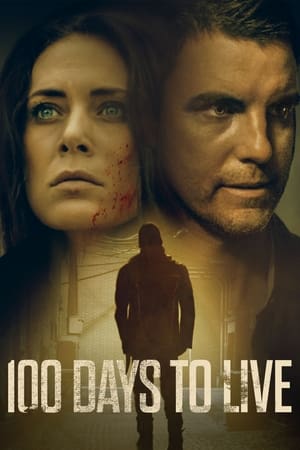
This brings us to 100 Days to Live, a film that audiences, perhaps predictably, largely ignored given its significantly lower average rating. But in its stark, uncompromising vision, lies a profound truth about mortality that its more polished peers utterly miss. The film, directed by Ravin Gandhi, is a psychological thriller that follows Rebecca, a young woman who becomes entangled with a serial killer who gives his victims exactly 100 days to live. The horror here isn't supernatural theatrics or global catastrophe; it's the insidious, inescapable reality of a personal, finite countdown. The film's strength lies in its relentless focus on the psychological torment of this fixed deadline. Rebecca doesn't have a miraculous power to save her, nor is her demise part of some grand, universe-saving scheme. She is simply a person given an expiration date, and the film forces us to sit with the crushing weight of that knowledge. The mundane details of her life become magnified, imbued with a terrible urgency. Every sunset, every conversation, every choice is framed by the ticking clock. Gandhi eschews jump scares for creeping dread, building tension not through gore, but through the existential horror of anticipation. The performances, particularly from Lisa Lake as Rebecca, convey a visceral fear and desperation that feels far more authentic than the stylized suffering in many mainstream horror or drama films. This isn't a film about justice, or saving the world, or finding spiritual enlightenment in the face of death. It's about the raw, visceral experience of knowing your life has an arbitrary, brutal end date, and the psychological unraveling that follows. It's an uncomfortable watch, yes, but its discomfort is precisely what makes it so vital. It’s a stark reminder that death often arrives not as a grand narrative, but as a chilling, personal decree. 100 Days to Live doesn't offer easy answers or comforting resolutions; it offers a mirror to our deepest fear, unadorned and unapologetic. This is a film that demands you confront your own finite nature, rather than simply observe a protagonist's struggle from a safe distance. For more on films that truly challenge our notions of survival, check out Lit-Pop's The Survival Cinema Scorecard: Ranking High-Stakes Thrillers.
The Grand Escape vs. The Inevitable Trap: Sci-Fi's Hope and Sentimentality's Crutch
Let's circle back to Project Hail Mary. While undeniably clever and packed with the kind of scientific wonder that makes space exploration feel genuinely exciting, its perspective on mortality is fundamentally optimistic, almost to a fault. The very premise is about staving off humanity's end, a grand, collective challenge where individual sacrifice is glorified. Ryland Grace's journey is one of ingenuity and problem-solving, a heroic quest where the odds are astronomical but, ultimately, conquerable. The film posits that even in the face of universal death, humanity's legacy will endure through scientific triumph and cooperation. This is a vital, inspiring message, certainly. But what it lacks is the suffocating, personal dread of a death that cannot be outsmarted, debated, or solved with a clever engineering trick. There is no 'getting out' of Rebecca's situation in 100 Days to Live; there is only the agonizing wait, the psychological breakdown, and the desperate scramble for meaning in a rapidly dwindling timeframe. Hail Mary is about the external triumph over death; 100 Days is about the internal collapse under its shadow. The two films, despite sharing a thematic interest in finality, diverge sharply in their emotional impact and philosophical statements. One offers hope through action, the other forces a confrontation with inaction's terrifying paralysis. One is a thrilling adventure that allows us to cheer for humanity's survival; the other is a chilling psychological study that forces us to contemplate our own. It's the difference between watching a grand fireworks display and staring into a black hole; both are vast, but only one truly evokes a sense of terrifying, personal insignificance.
Similarly, The Green Mile, with its deeply ingrained supernatural elements and overt religious symbolism, crafts a narrative where death is often a prelude to something more, a transition or a divine judgment, rather than a final cessation. John Coffey's abilities, his capacity to heal and to absorb pain, elevate the story beyond mere human suffering into a realm of spiritual allegory. This makes for a moving, if manipulative, cinematic experience, but it also fundamentally softens the blow of mortality. The film's ultimate message isn't about the terror of death, but about the enduring power of compassion and the existence of a higher order. It’s a beautifully rendered fantasy that allows characters (and the audience) to find solace in the supernatural, rather than confronting the cold, hard reality of human frailty and the justice system's ultimate, irreversible punishment. Compare this to the absolute lack of divine intervention or cosmic significance in 100 Days to Live. Rebecca's impending death is utterly mundane in its horror; there's no larger purpose, no miraculous escape, no spiritual transcendence. It's a stark, human-level tragedy, stripped bare of any comforting illusions. This difference is crucial. While The Green Mile seeks to console, 100 Days to Live seeks to provoke, to make you truly feel the chilling emptiness of an approaching end. For a deeper dive into films that explore moral quandaries without easy outs, consider reading Lit-Pop's Cinema's Pressure Cooker: Ranking 5 Films on Moral Reckoning.
Apocalypse Now, or Just the End of Me? Terror's Broader Canvas

Now, let's turn to 28 Years Later: The Bone Temple, the latest installment in the iconic post-apocalyptic horror franchise. This film, like its predecessors, delves into humanity's confrontation with mortality on a societal scale, painting a grim picture of a world ravaged by a viral outbreak. The terror here is external, visceral, and relentlessly physical. Survival is a constant, brutal struggle against the infected, against other desperate survivors, and against the decaying infrastructure of civilization itself. The film excels at crafting a sense of relentless danger and the fragility of human existence when society collapses. It's about collective mortality, the legacy of a broken world, and the desperate, often violent, measures people take to extend their final chapters. The threat is palpable, the stakes are immense, and the body count is high. Yet, even here, the experience of death is largely about avoiding it, or witnessing its sudden, violent impact on others. The characters are constantly fighting, running, adapting. Their confrontation with mortality is active, adrenaline-fueled. This offers a powerful contrast to the passive, psychological terror in 100 Days to Live. Rebecca isn't fighting off hordes of infected; she's fighting against time, against the insidious creep of despair that comes with a non-negotiable death sentence. Her battle is internal, a slow burn of psychological erosion rather than a sprint for survival. While The Bone Temple delivers thrilling, effective horror through its apocalyptic lens, it's a different beast entirely. It's about the fear of a violent end, or the loss of species; 100 Days to Live is about the cold, isolating dread of knowing your personal light is about to be extinguished, regardless of external circumstance. The former is a communal nightmare; the latter is a deeply solitary one. Both explore finality, but 100 Days drills down to the individual's inescapable end with a chilling precision that the sprawling zombie narrative, by its very nature, cannot match. The physical horrors of 28 Years Later can distract from the existential void; 100 Days to Live forces you into it.
Reclaiming the Reckoning: What True Finality Looks Like
In an era saturated with cinematic spectacles that either deflect from death's true horror or dress it up in comforting narratives of heroism and spiritual transcendence, 100 Days to Live stands as a vital, if overlooked, counterpoint. It doesn't offer the grand, universe-spanning stakes of Project Hail Mary, nor the spiritual solace of The Green Mile, nor the visceral, collective terror of 28 Years Later: The Bone Temple. Instead, it provides something far more unsettling and, in its own way, far more honest: the suffocating reality of a personal, non-negotiable countdown. This film confronts the unheroic side of mortality – the quiet despair, the psychological unraveling, the agonizing wait for an end that cannot be fought, outsmarted, or prayed away. It asks us not to pity a Christ-figure or cheer for a sci-fi savior, but to simply sit with the raw, terrifying fact of our own temporal limits. It’s a difficult film, certainly not a 'feel-good' experience, but it’s precisely its refusal to sugarcoat or distract that makes it such a potent and necessary piece of cinema in our current landscape. If you truly want to grapple with themes of mortality, legacy, and final chapters, turn off the hyped blockbusters and settle in for a truly unsettling, unforgettable experience. This isn't entertainment in the traditional sense; it's an uncomfortable, profound meditation on what it means to be truly finite. You might just find it sticks with you longer than any alien encounter or prison miracle. It's time to stop looking for answers in the stars or in the hands of the divine, and instead, face the countdown in the mirror. It's time to watch 100 Days to Live.
Editor's Verdict
Editor's Rating: 8/10
100 Days to Live earns its 8/10 for its uncompromising psychological intensity and its brave refusal to offer easy answers or supernatural interventions to its protagonist's plight, delivering a more authentic portrayal of death's personal terror than its highly-rated peers. The film's low budget is evident in some production choices, costing it points, but its narrative focus on psychological torment over spectacle is a masterclass in effective, low-fi horror that significantly impacts the viewer's understanding of existential dread.
Editor's Verdict: This film's raw depiction of a personal death sentence effectively evokes existential dread in a way 'The Green Mile' only attempts through divine intervention and 'Project Hail Mary' completely avoids with its focus on global survival. The performance by Lisa Lake elevates a low-budget premise into a genuinely unsettling and thought-provoking experience.
FAQ
What is '100 Days to Live' about?
'100 Days to Live' is a psychological thriller that follows Rebecca, a woman whose life is turned upside down when she is targeted by a serial killer who informs his victims that they have exactly 100 days left to live, forcing her to confront her own mortality.
How does '100 Days to Live' compare to other films about mortality?
Unlike many mainstream films that soften the blow of death with supernatural elements, grand heroism, or global stakes, '100 Days to Live' offers a more intimate and unflinching look at personal mortality, focusing on the psychological torment of a fixed deadline without easy answers or comforting resolutions.