The Outfit vs. Coherence: The Ultimate Bottle-Thriller Showdown
One film offers clockwork precision, the other quantum chaos. We dissect two masterclasses in single-location suspense to declare a definitive champion.
What is more terrifying: a meticulously crafted trap sprung by a master manipulator, or the sudden, incomprehensible fracturing of reality itself? In the cinematic boxing ring, we're pitting the bespoke precision of The Outfit against the quantum chaos of Coherence to see which film’s confined-space tension reigns supreme. Both films are masterclasses in the art of the 'bottle thriller,' using a single location not as a limitation, but as a pressure cooker to strip characters down to their terrified core. But only one achieves true cinematic greatness.
The Outfit vs. Coherence: Which Chamber Piece Thriller Is Better?
This deep-dive comparison will settle the debate by analyzing these two claustrophobic masterpieces across several key metrics. Here's what we'll cover:
- A detailed breakdown of the narrative mechanics and engines of suspense in both films.
- An analysis of the performances: scripted precision versus improvised realism.
- A comparison of how each film builds an immersive world from a single location.
- Our definitive verdict on which bottle thriller is the superior, more impactful film.
The Contenders
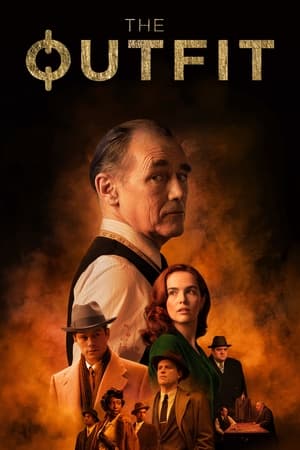
In one corner, we have The Outfit (2022), a throwback crime drama that feels like a lost stage play from the 1950s. Directed by Graham Moore, it stars a transcendent Mark Rylance as Leonard Burling, a quiet English 'cutter' (don't call him a tailor) who runs a bespoke suit shop in mob-run Chicago. His shop is a neutral ground, a drop-box for the city's gangsters. One fateful night, that neutrality is violated, and Leonard must use his quiet intelligence and meticulous nature to survive a night of bullets, betrayals, and bloodshed, all within the confines of his three-room shop.
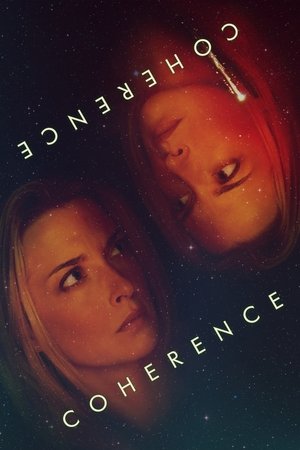
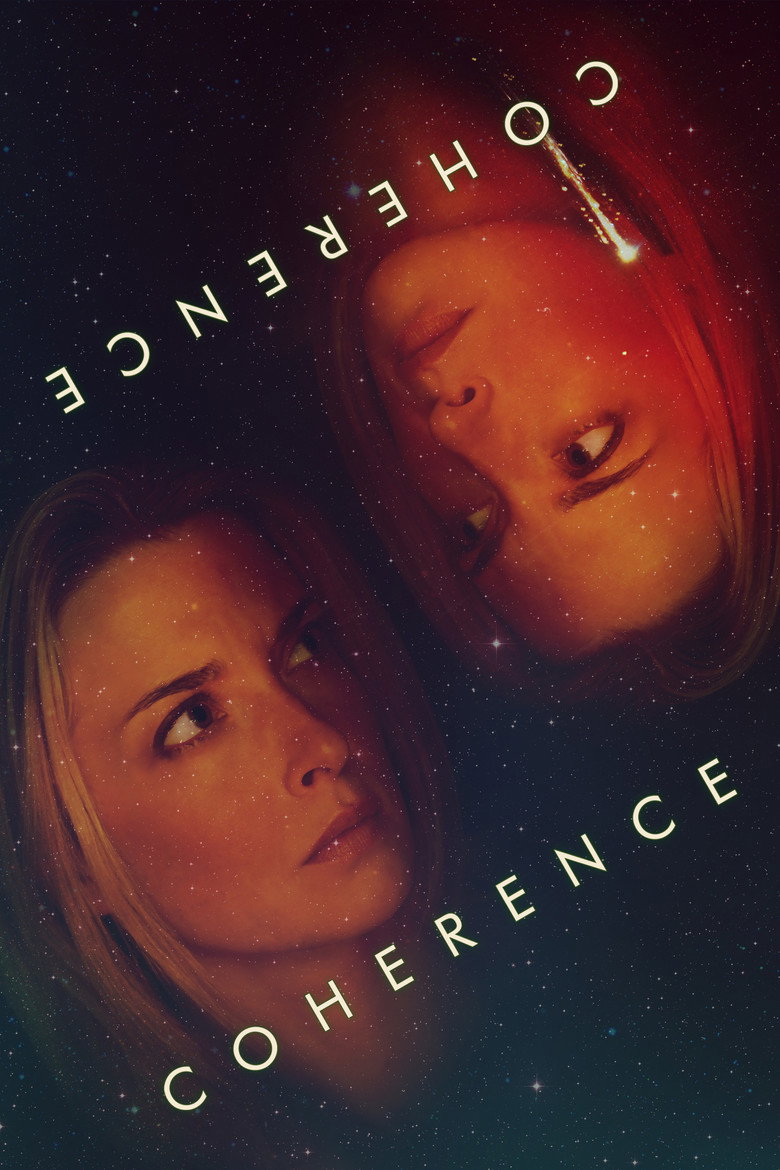
In the other corner is Coherence (2013), a micro-budget sci-fi marvel that punches so far above its weight it practically defies physics. Directed by James Ward Byrkit, the film drops us into a dinner party with eight friends. As a comet passes unusually close to Earth, the power goes out, and strange things begin to happen. A knock at the door reveals a mystery that spirals into a quantum nightmare, as the friends realize the comet has fractured reality, creating infinite, overlapping versions of their house and themselves. Shot for pocket change with a largely improvised script, it’s a film that weaponizes confusion and existential dread.
Round 1: The Engine of Suspense
A thriller lives and dies by its ability to generate tension. How do our contenders build suspense from such limited ingredients?
The Clockwork Precision of 'The Outfit'
The suspense in The Outfit is a thing of Swiss-watch precision. It’s built on the methodical control and release of information. The audience is tethered to Leonard’s perspective, but we quickly learn he knows far more than he lets on. The script, co-written by director Moore and Johnathan McClain, is the star. Every line of dialogue is a chess move, every glance a calculation. The tension doesn't come from jump scares or overt threats, but from the unbearable weight of what isn't being said.
Consider the introduction of the tape recorder. It’s a simple prop, but in Moore’s hands, it becomes a narrative bomb. We watch gangsters speak freely, unaware they are being recorded, and the suspense ratchets up with every incriminating word. The film’s structure is a series of nested traps, with Leonard as the unassuming spider at the center of the web. He uses the gangsters' assumptions—that he is a simple, harmless old man—against them. The brilliant climax, where he reveals his entire backstory was a fabrication, reframes the entire film. The suspense is rooted in the intellectual superiority of its protagonist. It's the thrill of watching a master at work, anticipating his next move, and marveling at the intricate design of his plan.
The Quantum Chaos of 'Coherence'
If The Outfit is a chess game, Coherence is a game where the board melts and the pieces start screaming. Its suspense engine is the polar opposite: a complete and utter lack of control and information. The audience is as clueless as the characters, experiencing the escalating weirdness in real-time. The terror stems from the fundamental rules of reality being systematically broken. Director James Ward Byrkit famously gave his actors daily notes instead of a script, allowing their genuine confusion and fear to fuel the film.
The initial power outage is standard fare. But then two characters, Hugh and Amir, leave to investigate a lit-up house down the street. They return shaken, one with a cut on his face, carrying a box. The box contains a paddle... and photos of everyone at the party, with numbers written on the back. This is the moment the film pivots from a mystery to pure existential horror. The lit-up house is their house. The people inside are also them. The suspense is born from this incomprehensible paradox. Each new discovery—the different colored glow sticks, the notes that appear from nowhere, the slow realization that there aren't just two houses, but possibly thousands—peels back another layer of sanity. This is a special kind of dread, one explored by the best reality-bending cinema, a terror that comes not from a man with a gun, but from the universe itself turning hostile and nonsensical.
Round 1 Verdict: A Dead Heat
This is an incredibly tough call. The Outfit represents the pinnacle of tightly-scripted, character-driven suspense. Coherence is a masterclass in high-concept, improvisational horror. Both are supremely effective. For its flawless construction and airtight narrative, the edge in pure craftsmanship goes to The Outfit. However, for the sheer, lingering unease it creates, Coherence is unmatched. We’ll call this a draw.
Score: The Outfit: 1 | Coherence: 1
Round 2: Characterization Under Pressure
Confined spaces test characters like nothing else. Who feels more real, more human, when the walls close in?
The Crafted Persona vs. The Raw Reaction
This is a battle between a singular, towering performance and a chaotic, terrifyingly believable ensemble. In The Outfit, everything orbits Mark Rylance’s Leonard. He is a study in stillness and economy. Every gesture, from the way he handles his shears to the gentle way he folds a handkerchief, builds the portrait of a man defined by his craft. He is a performance of layers—the meek tailor, the cunning survivor, the vengeful ex-gangster. The supporting cast, including Zoey Deutch and Dylan O'Brien, are excellent, but they function primarily as satellites to Leonard's sun. They are the problems he must solve, the variables he must control. The film's character work is about meticulously peeling back the onion of one man's identity.
Coherence, by contrast, is about the messy, unpredictable collision of eight distinct personalities. Because the actors were largely improvising, their reactions feel startlingly authentic. Long-simmering resentments, past affairs, and professional jealousies boil to the surface under the quantum pressure. The characters talk over each other, make terrible decisions, and cling to illogical hopes, just like real people would. The film’s protagonist, Em (Emily Baldoni), doesn't emerge through a heroic arc but through a series of increasingly desperate choices. Her final act—a terrifying decision to find a 'better' reality and eliminate her double to take her place—isn't a moment of triumph. It's a soul-crushing act of self-preservation that haunts the viewer. We aren’t watching a character; we are watching a person break.
Round 2 Verdict: The Power of Authenticity
Mark Rylance gives one of the best performances of his career in The Outfit. It's a masterwork of technical acting. But the raw, unscripted panic of the Coherence ensemble creates a different kind of power. It's the difference between admiring a perfect sculpture and witnessing a car crash. The emotional impact of watching a group of friends tear each other apart because their reality has dissolved is more visceral and emotionally resonant. The point goes to Coherence.
Score: The Outfit: 1 | Coherence: 2
Round 3: World-Building Within Four Walls
How do you build a universe when you can't leave the room?
The Tactile World of the Shop
The tailor shop in The Outfit is a character in itself. It is a world rendered in rich, dark wood, heavy fabrics, and gleaming steel. Every prop has history and weight. Leonard's shears aren't just tools; they are a symbol of his precision and, ultimately, a weapon. The single setting feels expansive because it's filled with secrets. The dialogue brilliantly sketches the larger world of 1950s Chicago—we hear about the Boyle family, the mysterious organization known as 'The Outfit,' and the power struggles happening just beyond the door. The shop is an embassy in a cold war, and its claustrophobic confines make the unseen world outside feel vast and dangerous. It's a masterclass in using a limited space to imply a much larger narrative tapestry.
The Conceptual Labyrinth of the House
The house in Coherence is the opposite. It’s intentionally generic, a typical suburban home that could be anywhere. Its power lies in its bland familiarity. The horror comes from this safe, known space becoming alien and unknowable. The world-building here is not physical, but conceptual. The rules are established through panicked conversations about quantum physics and Schrödinger's cat. The 'world' is the multiverse itself, an infinite, terrifying expanse that has suddenly become accessible through a patch of darkness down the street. The film builds its universe out of ideas, not sets. The true location isn't the house; it's the fragile state of mind of its inhabitants. The minimal setting becomes a blank screen onto which the audience projects its own existential fears.
Round 3 Verdict: The Terror of Infinity
While the detailed, tactile world of The Outfit's shop is beautifully realized, the conceptual world-building of Coherence is a stroke of genius. It takes a mundane setting and makes it the epicenter of a cosmic horror story. It proves that the most terrifying worlds aren't the ones you can see, but the ones you can barely comprehend. The ideas in Coherence are bigger, scarier, and stay with you for much longer. The final round goes decisively to Coherence.
Score: The Outfit: 1 | Coherence: 3
The Final Decision: Chaos Trumps Control
By a score of 3-to-1, the winner is Coherence.
The Outfit is a phenomenal film. It is a perfectly constructed, impeccably acted, and deeply satisfying crime thriller. If it were up against almost any other bottle thriller, it would win handily. It is a testament to the power of a great script and a legendary lead performance.
But Coherence is something else entirely. It’s not just a clever movie; it’s a cinematic thought experiment that goes horribly right. It’s a film that gets under your skin and messes with your head, using its shoestring budget as a creative catalyst rather than a constraint. It achieves a level of philosophical dread and rewatchability that is staggering. While The Outfit shows you a master pulling the strings, Coherence cuts the strings entirely and forces you to contemplate the abyss. For that reason, it stands as the undisputed champion of the modern bottle thriller.
Editor's Verdict
Featured Film: Coherence
Coherence proves that a $50,000 budget and a brilliant concept can create more genuine, lasting dread than a hundred million dollars' worth of polished Hollywood suspense. Its final, chilling shot is more memorable than the entirety of most horror blockbusters.
FAQ
What is a 'bottle film'?
A 'bottle film' is a movie that is shot in a very limited number of locations, often just one, with a small cast. The term comes from TV production's 'bottle episodes,' which were done to save money. Films like 'The Outfit' and 'Coherence' are prime examples, using their constraints to build claustrophobia and tension.
Is 'Coherence' really improvised?
Largely, yes. Director James Ward Byrkit gave the actors outlines and motivations for their characters each day but did not provide a script with specific lines. This allowed for naturalistic reactions as the bizarre events of the plot unfolded, which the actors were often learning about in real-time.
Is Mark Rylance really a tailor in 'The Outfit'?
While Mark Rylance is a highly dedicated method actor, he is not a professional tailor (or 'cutter'). However, he underwent extensive training with bespoke tailors from London's Savile Row to learn the craft, including how to properly cut and create patterns for a suit, to make his performance authentic.