The Great Unsorting: How TV Traded Genres for Grief
From 'Six Feet Under' to 'Fleabag,' the most vital shows of our era have taught us that comedy and tragedy aren't opposites, but intimate partners in storytelling.
It’s a quiet living room, sometime after midnight. The credits have rolled on what you thought was the last episode, but the screen isn’t black. A younger Claire Fisher, all angsty artistic energy, is driving away from her complicated family, away from the funeral home that was her life’s grim backdrop, heading towards an unknown future in New York. Then, the first haunting piano notes of Sia’s “Breathe Me” begin to play. The screen fills with the vast, indifferent landscape of the American West, and a simple title card appears: Claire Fisher, 1983-2085. And in that moment, the bottom drops out. For the next six minutes and twenty-one seconds, you don’t move. You barely breathe. You watch an entire lifetime—multiple lifetimes—unfold and extinguish. You are a silent, unmoving witness to the inevitable, and when it finally fades to white, the television isn’t just a box of light anymore. It’s a tombstone and a monument.
This was the promise and the terror of Six Feet Under, a show that didn't just air on HBO but burrowed into the cultural consciousness, fundamentally rewiring what we expected from our television dramas. It proposed something radical: that the most profound truths about life are found by staring directly at death, and that the containers we built for stories—the 30-minute sitcom, the hour-long drama—were laughably inadequate for the task.
Why Modern TV Blurs Comedy and Drama
This article explores the cultural shift away from rigid television genres toward a more fluid, emotionally complex mode of storytelling that better reflects our chaotic reality. We'll examine:
- An in-depth analysis of HBO's groundbreaking series, Six Feet Under, and its lasting legacy in prestige television.
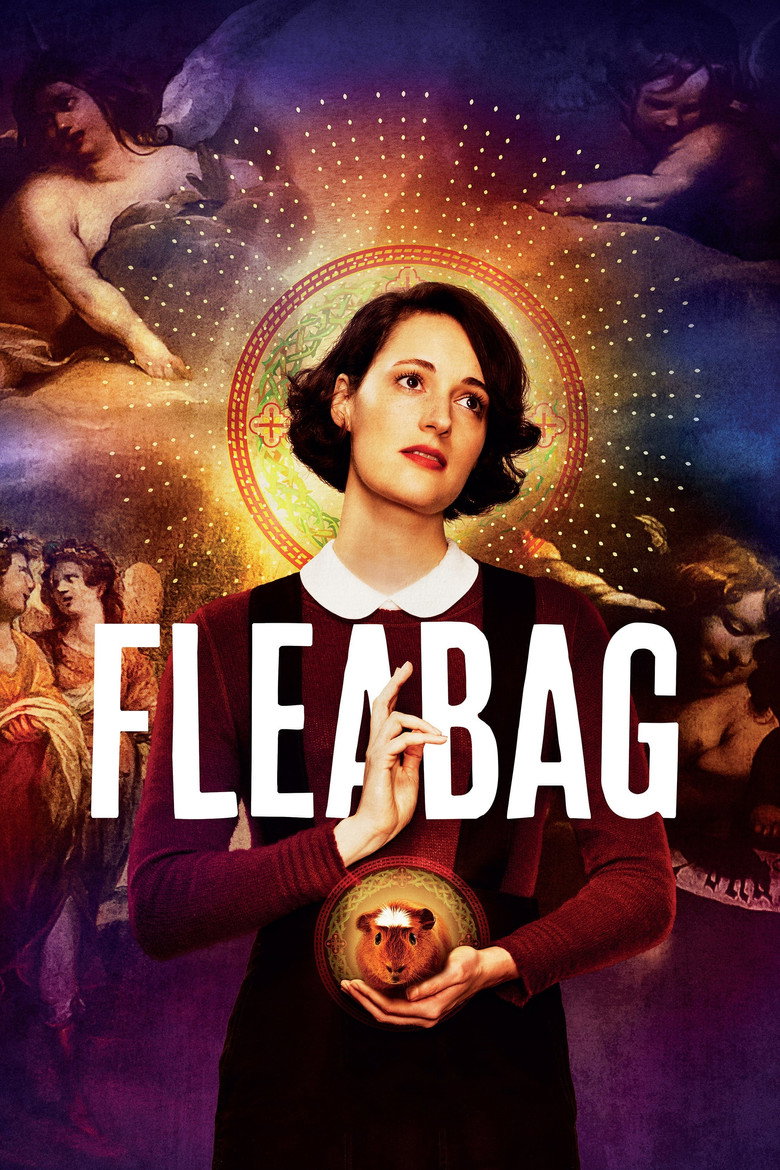
- How Phoebe Waller-Bridge's Fleabag evolved the "traumedy" by weaponizing the fourth-wall break as a narrative device.
- The unique genius of Derry Girls in finding defiant comedy amidst the historical trauma of The Troubles.
- What this shift toward genre-fluid storytelling reveals about the emotional appetite of contemporary audiences.
Six Feet Under: Rehearsing Death in the Living Room

Before Tony Soprano went to therapy and before Walter White broke bad, the Fisher family invited America into their funeral home. The premise alone, conceived by American Beauty scribe Alan Ball, was a declaration of intent. This would not be a show where death is a shocking third-act twist. Here, death was the family business. It was paperwork, formaldehyde, casket selection, and dealing with grieving, often unreasonable, clients. Death wasn't an event; it was the atmosphere, the mundane and persistent hum beneath every argument, every affair, every flicker of hope.
Each episode famously begins with a death. A lonely woman is decapitated by falling ice from a skyscraper. A gang member is gunned down. A foodie chokes on pâté. These cold opens were not merely plot-starters; they were miniature philosophical treatises on the absurdity, randomness, and utter democracy of mortality. They set a tone that was at once macabre, hilarious, and deeply unsettling. This was the show's core argument, presented week after week: life is a terminal condition, so what are you going to do about it? The series then spent five seasons watching the surviving Fishers—matriarch Ruth, prodigal son Nate, rigidly controlled David, and artistic rebel Claire—fail, flail, and occasionally succeed at answering that question.
What made Six Feet Under so revolutionary was its defiance of emotional purity. It was a searing family drama about inherited trauma and the impossibility of truly knowing the people you love. Nate Fisher’s journey, from his terror of commitment and mortality to his eventual, gut-wrenching demise, is one of the great, frustrating, and deeply human arcs in television history. Simultaneously, it was a workplace story, a queer liberation narrative through David's harrowing and ultimately triumphant arc, and a deeply strange black comedy. The show understood that a conversation about cremation costs could be funnier than most sitcoms, and that a family dinner could be more terrifying than most horror films.
The show’s most audacious move was its use of magical realism. The dead don't stay dead at Fisher & Sons. The deceased from the cold open, or the family's own patriarch Nathaniel Sr., frequently appear to the living, not as ghosts, but as projections of their inner turmoil. They are walking, talking manifestations of guilt, fear, and desire. When David is carjacked and brutalized in the episode "That's My Dog," his subsequent visions of his attacker aren't a supernatural haunting; they are a visual language for PTSD, a way of showing the audience the looping, intrusive nature of trauma that standard dramatic dialogue could never capture. This wasn't a genre-bend for style; it was a necessary narrative tool to articulate the inarticulable chaos of the human mind. It told us that our relationship with the dead is, in fact, an ongoing conversation with ourselves. This narrative choice was a quiet earthquake, suggesting that realism alone was insufficient to portray psychological reality.
And then there is the finale. "Everyone's Waiting" is not just a great episode of television; it is the final, perfect punctuation on the show's entire thesis. By showing us the death of every single main character, Ball didn't just provide closure. He fulfilled the show's contract with the audience. He forced us to confront the one truth the characters spent 63 episodes running from. It’s a sequence of profound grace that argues true closure isn't about neatly tied plot threads, but about the acceptance of life's finite, precious, and heartbreakingly beautiful nature. It is the gold standard, the benchmark against which all other finales are judged, and it cemented the show's legacy as a series that wasn't just about big ideas, but was, in itself, a complete and perfectly rendered philosophical statement.
The Confessional Booth of One: Fleabag and the Fractured Fourth Wall

If Six Feet Under was a sprawling, philosophical novel about our collective dance with death, Fleabag is a razor-sharp, devastatingly personal poem on the same subject. Airing a decade and a half later, Phoebe Waller-Bridge's masterpiece took the DNA of the genre-fluid dramedy and mutated it into something more intimate, more aggressive, and arguably more wounding. Labeled a comedy and packaged in half-hour episodes, the show is a Trojan horse. You come for the witty asides about sex and family, and you stay because you’re trapped in a vortex of one woman’s un-grieved trauma.
The central mechanism is, of course, the fourth-wall break. It’s a device as old as theater, often used for knowing comedic winks. But in Waller-Bridge’s hands, it becomes a symptom. Fleabag’s glances to us, her smirks, her whispered confessions—they aren’t for our entertainment. They are her shield. We, the audience, are her co-conspirators, the only ones she can “talk” to because she cannot bear to be present in her own life. We are her addiction, her escape hatch from moments of genuine connection or unbearable pain. She performs her life for us so she doesn't have to actually live it. This transforms a simple stylistic choice into a profound metaphor for dissociation.
Where Six Feet Under used ghostly apparitions to show internal states, Fleabag uses us. The show’s singular stroke of genius arrives in its second season with Andrew Scott’s “Hot Priest.” In a scene that should be taught in writing classes for the rest of time, he is the first and only person in her world to notice her habit. “Where did you just go?” he asks, as she glances away to us. The effect is electrifying. He sees her, not the performance, but the broken mechanism beneath. Our role as silent confidant is shattered. We are no longer a safe space; we are the habit she needs to kick to find salvation. The final, heartbreaking moment of the series is her looking at the camera, giving a small wave, and walking away from us for good. She’s choosing to live. She doesn't need us anymore. It’s a rejection of the audience that feels like an act of radical love. Fleabag proves that the most powerful stories often aren't about what happens, but about how we frame what happens for ourselves, and for the silent witnesses we imagine are always watching.
Laughter in the Shadow of the Troubles: Derry Girls and the Comedy of Resilience
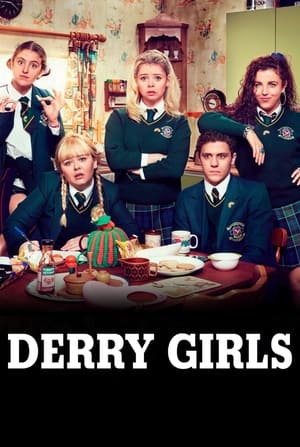
Moving from the internal to the external, from personal grief to collective trauma, we find Derry Girls. On the surface, it’s a brilliant, high-octane sitcom about four teenage girls (and one wee English fella) navigating Catholic school, overbearing parents, and unrequited crushes in 1990s Northern Ireland. But its true genius lies in its masterful tonal balancing act. The show is set against the backdrop of The Troubles, a decades-long ethno-nationalist conflict. Armed British soldiers, bombed bridges, and political upheaval are not dramatic plot points; they are mundane facts of life, as normal to Erin, Orla, Clare, and Michelle as school uniforms and listening to The Cranberries.
Creator Lisa McGee’s masterstroke is in refusing to let the conflict dictate the show’s emotional core. The stakes for the characters are almost always hilariously low, while the stakes for their country are lethally high. In one of the show’s most iconic scenes, the girls’ intricate dance routine to “Rock the Boat” is intercut with their parents watching a news report about a bombing with grim, weary faces. The show doesn't ask you to choose which is more important; it insists that both are happening at once. This is life. You can be worried about a sectarian attack and be furious that you have to share your chips.
This juxtaposition creates a unique form of dark comedy rooted in resilience. The humor isn't an escape from the reality of The Troubles; it’s a byproduct of it. It’s a way of surviving. The series finale perfectly encapsulates this philosophy. The central emotional story is the impending Good Friday Agreement referendum, a vote that deeply divides the friend group. This moment of immense historical significance is framed through the lens of a teenage falling out. The episode culminates with the characters casting their votes, a powerful, quiet moment of hope for the future, while a montage reminds us of the violence that led them there. Derry Girls is a testament to the idea that joy is not the absence of suffering, but an act of defiance in the face of it. It proves that the sitcom, a format often dismissed as trivial, can be a powerful vehicle for processing historical trauma without ever losing its comedic nerve.
The Audience as Accomplice
What do a Los Angeles funeral home, a London café, and a Derry chip shop have in common? They are the settings for stories that refuse to offer us the comfort of easy categorization. The rise and continued popularity of these genre-fluid narratives isn't an accident; it's a direct response to a culture that feels increasingly chaotic and emotionally complex. In an era of social media-fueled identity performance, ambient anxiety, and the collapse of traditional certainties, stories that acknowledge the messiness of it all feel more honest, more real, than any straightforward drama or comedy ever could.
These shows don't just reflect our world; they validate our contradictory feelings about it. They tell us it's not only possible but entirely normal to feel profound sadness and absurd humor in the same instant. They trust the audience to hold these opposing ideas in their minds without needing a laugh track or a sad violin cue to signal the “correct” emotional response. In doing so, they make us active participants, not passive consumers. We are Fleabag's secret-keepers, we are the ghosts in the Fisher house, we are the ones who understand the unspoken tension beneath the Quinns’ rapid-fire banter. We are accomplices in their emotional navigation, and in a disconnected world, that shared understanding feels like a radical form of connection.
The Future of Feeling: A Prediction
Looking ahead, the trend of genre-fluidity is not only set to continue, but to accelerate and specialize. The very concept of genre, a holdover from the days of network schedules and video store aisles, is becoming anachronistic in the on-demand streaming landscape. Algorithms don't care about labels; they care about engagement. As such, we will see storytellers pushing the boundaries even further, creating shows that are increasingly difficult to summarize but deeply resonant in their specificity.
Expect to see more 'sci-fi workplace satires,' 'historical-horror musicals,' and 'existential detective comedies.' These hyper-specific tonal blends will allow for a more nuanced exploration of the human condition than ever before. The legacy of shows like Six Feet Under is not just the birth of “prestige TV,” but the creation of a more emotionally sophisticated audience—one that no longer needs or wants its stories neatly sorted. The future of television isn't about conforming to a genre; it's about creating one.
Editor's Verdict
Six Feet Under remains a towering achievement in television history. Its thematic ambition and emotional honesty laid the groundwork for two decades of prestige drama, yet few have matched its philosophical depth. The final six minutes of the series finale, "Everyone's Waiting," remain the single most effective and emotionally resonant conclusion in television history, a benchmark no show since has managed to surpass.
FAQ
What is a 'traumedy'?
A 'traumedy' is a television or film genre that blends elements of trauma and comedy. Shows like 'Fleabag' or 'BoJack Horseman' use humor as a primary tool to explore deep-seated psychological pain, grief, and mental health struggles, creating a complex and often uncomfortable viewing experience.
Why is the finale of 'Six Feet Under' so famous?
The finale of 'Six Feet Under,' titled 'Everyone's Waiting,' is acclaimed for its final six-minute montage. Set to Sia's 'Breathe Me,' it flash-forwards to show the future deaths of every main character, providing a poignant and definitive conclusion to the show's central themes of life, death, and time. It is widely considered one of the greatest series finales ever made.
Did the cast of 'Derry Girls' actually grow up during The Troubles?
While the show is set during The Troubles in the 1990s, most of the main cast members were born in the late 1980s or early 1990s, so they were young children during the period depicted. The show's creator, Lisa McGee, grew up in Derry during this time and drew heavily on her own experiences to write the series.