Big Brother's Enduring Glare: Why Orwell's 1984 Still Haunts Us
Forget 'timeless' — [1984](https://hardcover.app/books/1984) isn't just a classic; it's a chillingly prescient mirror to our present, demanding urgent re-evaluation in 2026.
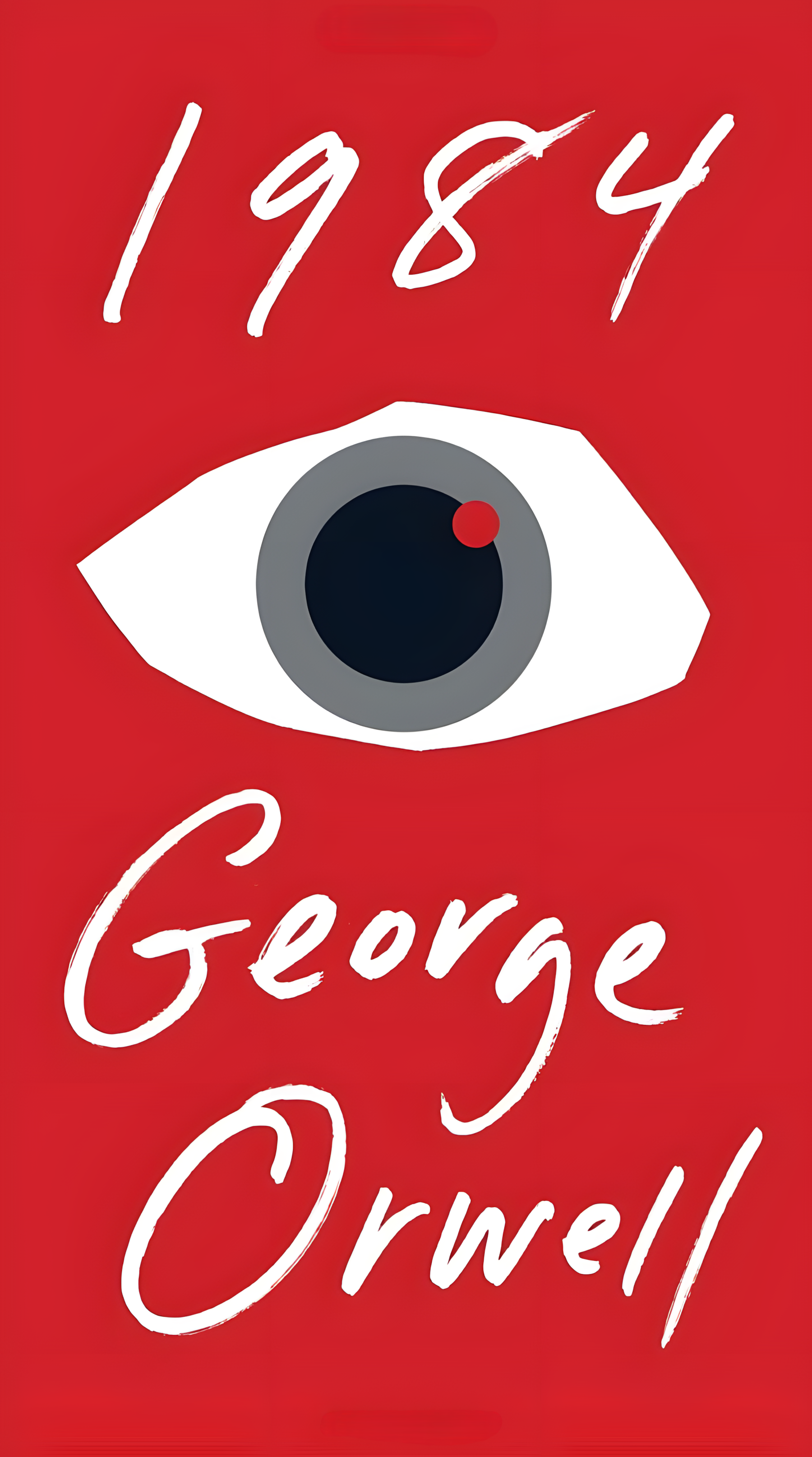
Let's be brutally honest: most literary "classics" are dusted off, admired from a safe distance, and then neatly filed away as historical artifacts. But then there's George Orwell's 1984. Seventy-seven years after its initial publication, this dystopian masterpiece refuses to be relegated to the academic archives. In April 2026, as headlines blur the lines between fact and fabrication, as privacy dwindles to a nostalgic whisper, and as political rhetoric twists language into pretzels, 1984 doesn't just feel relevant; it feels like a live broadcast from an alternate, terrifyingly plausible future that we're somehow still hurtling towards. To call it merely a "warning" is to undersell its prophetic power; it's a blueprint of potential societal decay that we ignore at our peril.
Decoding Orwell: Why 1984 Remains Essential Reading in 2026
- The Unsettling Architecture of Totalitarian Control: How Orwell crafted a world where every aspect of life is subjugated.
- Newspeak and Doublethink: The insidious power of linguistic and psychological manipulation to erase objective truth.
- Winston Smith's Tragic Humanity: Why his futile rebellion against Big Brother still resonates with the individual's struggle.
- Echoes in the Digital Age: Comparing Oceania's surveillance state to our own data-driven, hyper-connected reality.

The Architecture of Oppression: World-Building as Warning
Orwell's genius in 1984 isn't just in outlining a bleak future; it's in constructing a world so meticulously suffocating that the reader feels its cold, metallic grip. Oceania isn't merely a setting; it's a character, an active antagonist. The omnipresent telescreens, which both broadcast Party propaganda and monitor citizens' every twitch, are more than mere gadgets; they are literal eyes and ears, eroding any concept of private thought. The four Ministries – Peace (War), Plenty (Starvation), Love (Torture), and Truth (Propaganda) – are masterpieces of ironic naming, each serving as a grim testament to the Party's control over reality itself. The Perpetual War, a nebulous conflict against shifting enemies, keeps the populace in a constant state of fear and patriotic fervor, justifying scarcity and rigid control. This isn't world-building in the escapist fantasy sense; it's world-building as a terrifyingly detailed instruction manual for how to dismantle human freedom. Orwell doesn't just show us a totalitarian regime; he invites us to feel the airlessness of living within it, where even a rebellious thought is a crime. The chilling efficiency of the Party's system, designed to crush individuality before it can even fully form, is what truly sets 1984 apart. It's a testament to the power of environment to shape, and ultimately shatter, the human spirit.
Newspeak, Doublethink, and the Assault on Truth
Perhaps the most unsettling and enduring contribution of 1984 to our cultural lexicon is its exploration of language as a weapon. Newspeak, the Party's engineered language, isn't just about simplification; it's about the ideological control of thought. By systematically reducing vocabulary, eliminating synonyms and antonyms, and stripping words of nuance, Newspeak makes heretical thought literally impossible. If the word for "freedom" ceases to exist, how can one conceive of the concept? This isn't just clever literary device; it's a chilling insight into how dictatorships control narratives by controlling the tools of thought itself. Complementing this is Doublethink: the ability to hold two contradictory beliefs simultaneously and accept both of them. "War is Peace," "Freedom is Slavery," "Ignorance is Strength" – these slogans aren't just paradoxes; they are the bedrock of the Party's power, demanding an active suppression of logic and memory. In an era rife with "alternative facts," politically weaponized language, and the rapid erasure of inconvenient histories, Orwell's insights into Newspeak and Doublethink are no longer abstract literary concepts; they are daily headlines. The constant revision of historical records by the Ministry of Truth, ensuring that the past always aligns with the Party's present narrative, is a direct precursor to the digital age's capacity for information manipulation and the creation of echo chambers. It reminds us that objective truth is not a given; it's a battleground, and the first casualty is always language.
Winston Smith: The Everyman's Unwinnable War
In the suffocating grip of Oceania, Winston Smith is our everyman, our proxy for human frailty and the stubborn spark of rebellion. He's not a hero in the traditional sense; he's a flawed, unremarkable individual, burdened by a fading memory and a gnawing desire for genuine connection and truth. His illicit diary, his affair with Julia, his desperate search for the Brotherhood – these are not grand acts of defiance, but whispered, dangerous gestures of humanity. Winston's journey is particularly poignant because it's so utterly unwinnable. Orwell doesn't offer us the comfort of a triumphant underdog; instead, he meticulously documents the methodical, soul-crushing process by which the Party breaks even the most tenacious spirit. The torture in Room 101, culminating in Winston's betrayal of Julia, isn't just physical pain; it's the systematic dismantling of his identity, his love, his very capacity for independent thought. He is not merely killed; he is converted. He learns to love Big Brother, a chilling testament to the Party's ultimate victory. This tragic realism is what makes Winston's story so powerful. It strips away the romanticism of rebellion, revealing the brutal effectiveness of absolute power. It forces us to confront the vulnerability of the individual when pitted against an all-encompassing, ideologically pure machine.
Echoes in the Digital Panopticon: 1984's Modern Resonance
To dismiss 1984 as a relic of Cold War fears is to fundamentally misunderstand its enduring power. In 2026, its themes resonate with a terrifying clarity. The omnipresent surveillance of the telescreens has found its terrifying analogue in our digital lives: ubiquitous CCTVs, data-mining algorithms, social media monitoring, and the willing surrender of privacy for convenience. "Big Brother Is Watching You" has evolved from a menacing slogan to a simple fact of modern existence. The Party's control over information, its ability to rewrite history and dictate truth, feels eerily familiar in an age of deepfakes, partisan news, and echo chambers that fragment reality. Where Orwell envisioned the Ministry of Truth, we now contend with sophisticated propaganda machines and the rapid spread of misinformation designed to sway public opinion and consolidate power. While we may not have literal Thought Police, the chilling rise of cancel culture and the pressure to conform to specific ideological narratives can feel like a softer, more insidious form of thought control. 1984 stands as a stark counterpoint to other dystopian visions like Aldous Huxley's Brave New World, which posits control through pleasure and distraction. While elements of both exist, Orwell's emphasis on fear, psychological manipulation, and the active destruction of truth feels acutely more relevant to our current geopolitical and technological landscape. For more on how classic dystopian narratives continue to inform our understanding of society, you might enjoy our take on why Ditch District 12: Your Weekend Reads Deserve More Than The Hunger Games, which champions another Orwellian masterpiece. For readers grappling with the complexities of our information-saturated world, 1984 isn't just a book to read; it's a vital analytical tool.
Editor's Verdict
1984 is not just a book you should read; it's a book you must read, and crucially, re-read. Its insights into power, truth, and human nature are as sharp and disquieting now as they were nearly eight decades ago, perhaps even more so. This isn't just a classic; it's an urgent, unflinching mirror. Like this post if you dare to look!
FAQ
What is the core message of 1984?
The core message of [1984](https://hardcover.app/books/1984) is a stark warning about the dangers of totalitarianism, government surveillance, and the manipulation of truth and history. It explores how absolute power can corrupt absolutely, leading to the destruction of individuality and freedom of thought.
Why is 1984 considered a classic?
[1984](https://hardcover.app/books/1984) is considered a classic due to its profound literary merit, its groundbreaking exploration of dystopian themes, and its enduring cultural and political relevance. Concepts like 'Big Brother,' 'Newspeak,' and 'doublethink' have entered common parlance, underscoring its impact on Western thought and language.
How does 1984 relate to today's society?
Today, [1984](https://hardcover.app/books/1984) relates to contemporary concerns about digital surveillance, the spread of misinformation and 'alternative facts,' political polarization, and the erosion of privacy through technology. Its themes resonate deeply with modern debates on government overreach, media manipulation, and the struggle for objective truth in an information-saturated world.