Lit-Pop's Resonance Scorecard: Ranking 2026's New Books
We pit five new releases against our brutal scoring system to prove that plot is not a dirty word. The results will upset literary purists.
Most contemporary literary fiction is a tedious exercise in navel-gazing, utterly failing to connect with readers because it has forgotten that plot is not a dirty word. The genre has become a parody of itself, a collection of exquisitely crafted but emotionally sterile observations about sad people in nice apartments. Authors chase lyrical prose and nebulous themes at the expense of the one thing that has hooked humans since we first told stories around a fire: a compelling narrative that demands to know what happens next. This isn't a call for cheap thrills; it's a demand for fiction that respects the reader's time and emotional investment.
Ranking the Best New Books for Emotional Impact
This scorecard dissects a handful of May 2026's trending books to see which ones actually deliver a resonant experience versus which ones are just beautiful, empty rooms. We're ranking them based on a system that prioritizes connection and momentum over hollow prestige.
- The Names by Peter Milligan, Leandro Fernandez, & Cris Peter
- The Seven Year Slip by Ashley Poston
- Memorial Days: A Memoir by Geraldine Brooks
- 33 Place Brugmann by Alice Austen
- Heart the Lover by Lily King
The Resonance Scorecard: Our Rules of Engagement
To cut through the noise, we're judging these books on three simple, non-negotiable criteria. Each is scored out of 10, for a total possible score of 30.
- Narrative Propulsion (/10): Does the story have momentum? Is there a reason to turn the page, or is it a stylistic slog? High scores go to books with expertly crafted tension, mystery, or emotional stakes that create a sense of urgency.
- Emotional Core (/10): Does it make you feel anything? Are the characters resonant and alive, or are they just ciphers for an author's intellectual exercise? This measures the book's ability to forge a genuine connection between character and reader.
- Lasting Impression (/10): A week after finishing, what do you remember? A single pretty sentence, or a story that has taken up residence in your brain? This is the gut-check score for a book's staying power and thematic depth.
The Contenders: From Aimless to Addictive
We apply our metrics without mercy. Here's how this month's trending titles stacked up, from the bottom of the barrel to the top of the heap.
5. Heart the Lover by Lily King

Lily King's novel about a feckless father who, after his wife leaves him, takes his two daughters on a disastrous house-sitting trip is precisely the kind of literary fiction that fuels my thesis. The prose is competent, the observations are finely wrought, but the entire affair is suffocated by a sense of inertia. It's a character study of a man who isn't interesting enough to warrant the attention. We watch him make a series of selfish, predictable mistakes while his daughters suffer quietly. The book feels less like a story and more like an exquisitely detailed diorama of unhappiness. There is no engine here; the narrative sputters along on fumes of melancholy, never building to anything resembling a catharsis or revelation. It's a portrait of dysfunction that observes its subjects from a sterile distance, asking the reader to supply the emotional investment the book itself refuses to make. While some may call this subtle, I call it a failure of nerve. Compare this to other books that tackle family dynamics with actual stakes, and you'll see the difference. For a better example of how to make family stories compelling, see our analysis in The Family Novel Scorecard: Ranking Books on Human Connection.
- Narrative Propulsion: 2/10
- Emotional Core: 4/10
- Lasting Impression: 3/10
- Total Score: 9/30
4. 33 Place Brugmann by Alice Austen

Slightly more engaging than Heart the Lover, Alice Austen's 33 Place Brugmann assembles a cast of lonely souls in a Brussels apartment building. The potential for a compelling, interwoven narrative is certainly here—the architect who inherited the building, the mysterious recluse, the American couple adrift in Europe. Austen constructs a palpable atmosphere of quiet desperation and fleeting connection. The problem is that the atmosphere is the main character. The plot, concerning the architect's discovery of her family's secrets, moves at a glacial pace, often sidelined for yet another vignette of ennui. While individual scenes are evocative, they fail to coalesce into a propulsive whole. It's a book that is perpetually on the verge of becoming interesting. You keep reading, assuming the various threads will tighten into a taut narrative, but they remain frustratingly slack. It’s a beautifully written book about waiting for a story to start. The emotional core is stronger here than in King's novel because you do feel the collective loneliness of the residents, but the lack of a driving force leaves it feeling more like a collection of sketches than a fully realized novel.
- Narrative Propulsion: 4/10
- Emotional Core: 6/10
- Lasting Impression: 5/10
- Total Score: 15/30
3. Memorial Days: A Memoir by Geraldine Brooks

Here is where we see the power of a real, lived story. Geraldine Brooks, a Pulitzer-winning novelist, turns her formidable talents to her own life, and the result is a work with an undeniable emotional core. The propulsion here isn't manufactured; it's the inherent, chaotic, and often heartbreaking momentum of a life being lived. Brooks doesn't need to invent stakes because they are real. The memoir form frees her from the obligation to create the kind of meandering, theme-driven plotlessness that plagues modern lit-fic. Instead, she must shape the raw material of memory into a coherent narrative, and she does so with intelligence and grace. The book is an honest exploration of love, loss, and the challenges of a creative life, grounded in the concrete details of personal history. Its lasting impression is one of profound empathy and a renewed appreciation for the narrative power of non-fiction. It doesn't rank higher only because, as a memoir, its scope is necessarily personal and reflective, which can sometimes temper the relentless, page-turning urgency of a masterfully plotted piece of fiction.
- Narrative Propulsion: 7/10
- Emotional Core: 9/10
- Lasting Impression: 8/10
- Total Score: 24/30
2. The Seven Year Slip by Ashley Poston

Dismiss this as mere 'romance' at your peril. The Seven Year Slip is a masterclass in using a high-concept premise to explore deep emotional truths. Clementine inherits her aunt's magical New York apartment, which allows her to meet a man from seven years in the past. This isn't just a gimmick; the time-slip mechanic is the engine of the entire story, forcing Clementine to confront her grief, her fear of the future, and her definition of home. The narrative propulsion is immense—the ticking clock of their limited time together, the mystery of what happened to him in the intervening years, and the sheer romantic tension create a powerful pull. Unlike the aimless wandering of the literary fiction at the bottom of our list, every scene here has a purpose. The magic serves the character's journey, a far cry from the empty power-ups criticized in other genres like those discussed in Romantasy's Big Lie. Poston delivers a story with a beating heart, sharp wit, and a plot that is both wildly imaginative and emotionally grounded. It leaves a lasting impression because its central metaphor for love and loss is just that good.
- Narrative Propulsion: 9/10
- Emotional Core: 9/10
- Lasting Impression: 7/10
- Total Score: 25/30
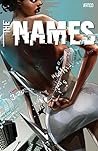
1. The Names by Peter Milligan, Leandro Fernandez, & Cris Peter

This is what happens when storytelling is stripped to its essential, brutal, and beautiful core. The Names is a Vertigo graphic novel about Katya, a woman whose stockbroker husband commits suicide, except he didn't. He was murdered, and his death pulls her into a shadowy world of a cabal of financial terrorists known only as 'The Names.' What follows is a relentless, perfectly paced thriller that proves graphic novels are one of the most effective mediums for pure narrative propulsion. Every page turn, every panel break, is calibrated for maximum impact. Leandro Fernandez's art is a symphony of sharp angles and deep shadows, conveying more emotion in a single facial expression than a page of overwrought prose. Peter Milligan's script is lean and mean, without an ounce of fat. The emotional core is a primal scream of grief turned to rage, as Katya transforms from a stunned widow into a calculating predator. The book stays with you not because of a single turn of phrase, but because of the visceral impact of its story—the image of Katya facing down assassins, the quiet horror of her son's entanglement, the sheer velocity of her quest for vengeance. This is storytelling as a weapon.
- Narrative Propulsion: 10/10
- Emotional Core: 8/10
- Lasting Impression: 9/10
- Total Score: 27/30
Final Verdict: The May 2026 Resonance Rankings
After a thorough and unflinching evaluation, the hierarchy is clear. Genre fiction, with its respect for plot and emotional payoff, triumphs over meandering literary introspection.
| Rank | Title | Author(s) | Total Score (/30) |
|---|---|---|---|
| 1 | The Names | Milligan/Fernandez | 27 |
| 2 | The Seven Year Slip | Ashley Poston | 25 |
| 3 | Memorial Days | Geraldine Brooks | 24 |
| 4 | 33 Place Brugmann | Alice Austen | 15 |
| 5 | Heart the Lover | Lily King | 9 |
Editor's Verdict
The nine-issue arc of The Names delivers a more satisfying and complete narrative than any 500-page literary doorstopper released this year. Its final panel provides more emotional payoff than the entirety of most Booker-longlisted novels.
FAQ
What do you mean by 'narrative propulsion' in a book?
Narrative propulsion is the quality that makes a story feel urgent and compelling. It's the engine that drives the plot forward, created by elements like suspense, strong character motivation, mystery, and clear stakes, making the reader eager to find out what happens next.
Are graphic novels considered 'serious' literature?
Absolutely. Graphic novels are a distinct literary medium capable of telling complex, emotionally resonant, and thematically deep stories. Works like 'Maus,' 'Persepolis,' and 'Watchmen' are widely studied and have received major literary awards, proving the medium's artistic merit.
Why weren't other popular books like 'The Emperor of Gladness' included in this ranking?
This scorecard focuses on a specific selection of trending books chosen to illustrate a critical argument about modern fiction. While many other books are trending, this list was curated to compare different narrative styles, from literary fiction to graphic novels and romance.