Why Allegory Is Back: 'Animal Farm' Is the Book We Need Now
In an era of endless spin and narrative chaos, we're craving the brutal clarity of the fable. George Orwell's masterpiece isn't just a classic; it's a diagnostic tool for 2026.
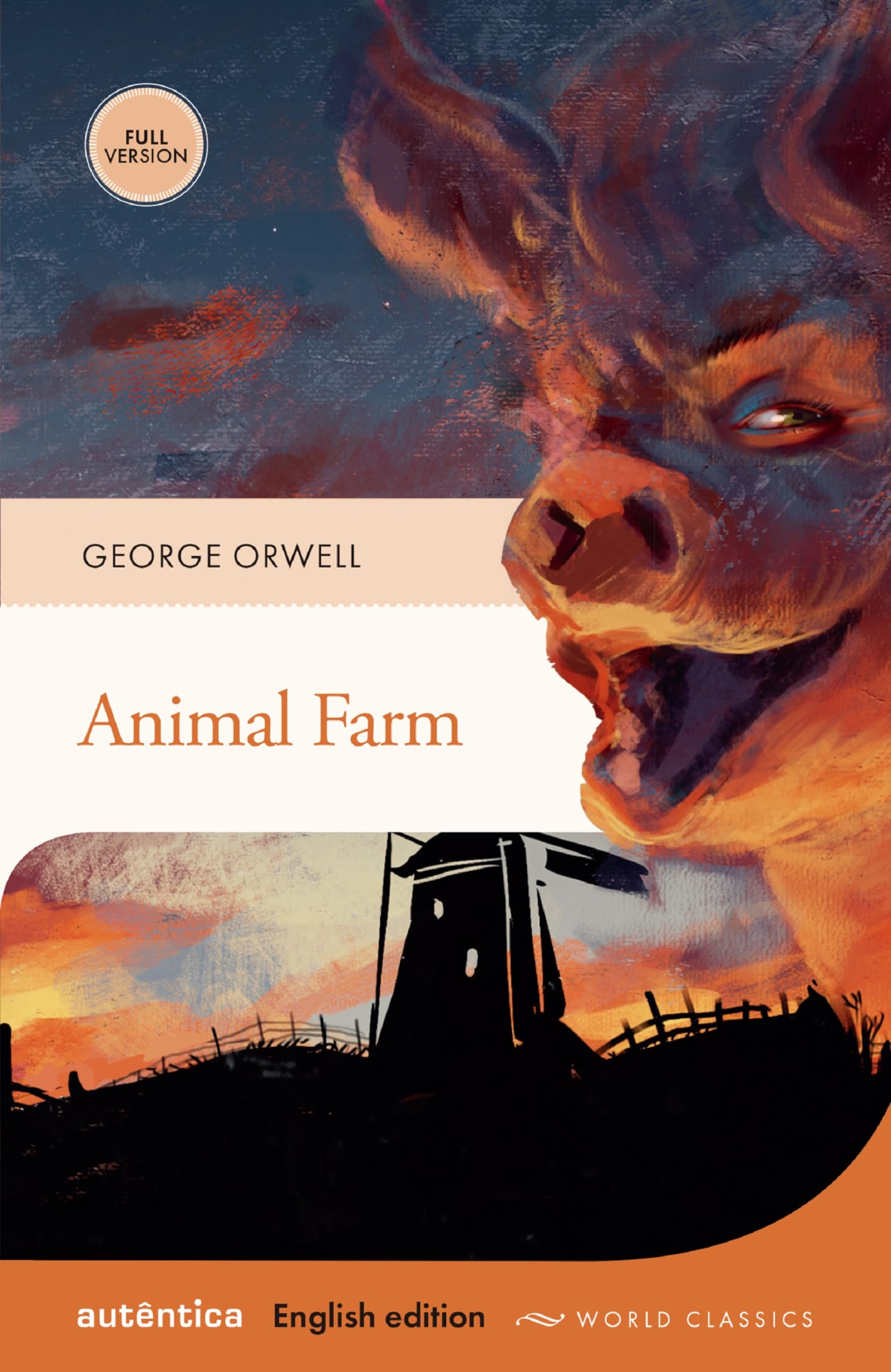
The Zoom call flickered, a gallery of well-meaning faces trying to dissect the latest prize-winning novel about geopolitical strife in a fictional nation. The debate, however, had stalled. One member was quoting a cable news pundit to explain the book’s economic theory, another was citing a podcast that claimed the author’s entire premise was flawed, and a third was lost in a Wikipedia rabbit hole about the real-world conflict it was supposedly mirroring. Frustration mounted. Finally, someone unmuted and sighed. “You know what we should have read? ‘Animal Farm.’ At least we’d all be starting from the same page.”
That off-the-cuff remark is more profound than it seems. We are living through an age of narrative collapse. The sheer volume of information, misinformation, and weaponized nuance has created a kind of discourse paralysis. In this environment, the elegant complexity of a sprawling political thriller or a heavily footnoted historical epic can feel less like an enlightenment and more like a trap. We are drowning in context. And so, a powerful counter-current is emerging in our reading habits: a desperate return to the stark, clarifying power of allegory. We are tired of wrestling with spin; we want the fable, the story that strips the machine down to its gears and levers. We want to see how the sausage is made, even if the sausage is tyranny and the factory is a farm.
Why is 'Animal Farm' the ultimate book club pick for today?
This isn't just about revisiting a classic. It’s about understanding why this particular story resonates with such force right now. Our analysis covers:
- The unique power of allegory in an age of information overload.
- How Animal Farm serves as a timeless blueprint for political decay.
- The key differences between Orwell's allegorical fable and his psychological dystopia, 1984.
- What modern allegories like The Hunger Games reveal about our desire for personal stakes in political stories.
- Why the complexity of epics like Dune fulfills a different, but related, cultural need.
The Fable as a Scalpel: 'Animal Farm' and the Power of Brutal Simplicity

To call Animal Farm simple is to miss the point. It is not simple; it is distilled. George Orwell subtitled his 1945 novella “A Fairy Story,” a deliberate choice that frames it as a fundamental tale of morality, not just a historical parallel to the Russian Revolution. This is its enduring genius. By transposing the grand, messy, and ideologically dense history of the Bolshevik seizure of power onto a small English farm, Orwell performs a radical act of clarification. The pigs, horses, and sheep are not just stand-ins for Trotsky, Stalin, and the proletariat; they are archetypes in a recurring human tragedy. The story works without a single footnote on Soviet history because its subject isn't just Russia in the 1920s. Its subject is power.
The book’s power lies in its unassailable logic. We watch the Seven Commandments of Animalism—lofty ideals of equality and liberation—get subtly altered, one by one. “No animal shall kill any other animal” becomes “No animal shall kill any other animal without cause.” The change is slight, the justification is slick, and the outcome is murder. This is the masterstroke. Orwell doesn’t write a 500-page treatise on the weaponization of language; he shows us a pig with a paintbrush. He gives us Squealer, the spin doctor who can “turn black into white,” and in doing so, creates the perfect avatar for every gaslighting press secretary and bad-faith pundit we see on our screens today. He gives us Boxer, the loyal, hardworking horse whose mantras are “I will work harder” and “Napoleon is always right.” Boxer isn’t stupid; he is faithful. And his reward for that faith—being sold to the knacker’s yard to be boiled down for glue when he is no longer useful—is one of literature’s most brutal and unforgettable betrayals. It’s a gut punch that teaches you more about the transactional nature of authoritarian loyalty than any history book ever could.
The Allegory vs. The Simulation: Orwell’s Two Nightmares
It’s impossible to discuss Orwell’s allegorical masterpiece without invoking its more famous sibling, 1984. While both are towering works of dystopian fiction, they function in fundamentally different ways, and their contrast reveals why Animal Farm is having such a specific cultural moment. 1984 is an immersive simulation of life under totalitarianism. It is a psychological deep-dive into the mind of the oppressed, a claustrophobic exploration of how reality itself can be unmade through surveillance, torture, and the systematic destruction of language. Winston Smith’s struggle is internal; his terror is the terror of losing his own thoughts, of being forced to believe that two plus two equals five.

Animal Farm, on the other hand, is an external blueprint. It is not about the feeling of being oppressed, but the process by which oppression is constructed. We are not inside Boxer’s head as his faith is manipulated; we are watching from a slight distance as the pigs methodically dismantle the revolution’s ideals. The horror of Animal Farm is the horror of observation, of watching a slow-motion coup that is both absurd and terrifyingly logical. It’s a book about systems, not just psychology. This is precisely why it feels so urgent in 2026. While the panopticon of 1984 feels prescient, the insidious, step-by-step corruption of Animal Farm feels like a live feed. We are watching ideals curdle, language twist, and a new elite justify their privileges in real time. Animal Farm provides the vocabulary and the framework to understand it. It is less a warning about a hypothetical future and more a diagnostic chart for the present.
The Modern Allegory: Spectacle and Sympathy in 'The Hunger Games'
Of course, Orwell doesn’t have a monopoly on allegory. The form has evolved, particularly in the Young Adult space, where Suzanne Collins’ The Hunger Games stands as the modern titan. It, too, is a fable about power, a brutal critique of class disparity, state violence, and the use of spectacle to pacify a suffering populace. The decadent, garishly colored Capitol and the impoverished, grey-toned Districts are as clear a symbolic divide as the farmhouse and the fields. The Games themselves are a bloody allegory for the ways in which the ruling class forces the oppressed to turn on each other for scraps.

But the modern allegory operates on a different frequency. Where Animal Farm maintains a certain fable-like distance, The Hunger Games plunges us directly into the first-person, present-tense perspective of its hero, Katniss Everdeen. The politics of Panem are filtered through her trauma, her fury, and her reluctant heart. This is not a critique; it’s an evolution of the form. The strength of Collins’ work is its fusion of searing political commentary with intense emotional intimacy. We understand the injustice of the Capitol because we feel Katniss’s terror in the arena and her grief for Rue. This approach makes the allegory incredibly accessible and commercially powerful, but it also shifts the focus. The primary engine of the story becomes survival and individual heroism, with the systemic critique serving as the backdrop. In contrast, Animal Farm has no hero. Its protagonist is the farm itself, the collective dream that rots from the head down. This is the trade-off: modern allegory gains emotional immediacy but perhaps loses some of the cold, systemic clarity that makes Orwell’s work so chillingly effective as a pure political blueprint.
The Rejection of Simplicity: The Dense Tapestry of 'Dune'
At the same time audiences are flocking to the brutal simplicity of Animal Farm, they are also immersing themselves in one of the most complex, dense, and decidedly non-allegorical epics ever written: Frank Herbert’s Dune. On the surface, this seems like a contradiction. How can we crave both the fable and the encyclopedia? But Dune’s appeal stems from a related, yet distinct, cultural desire. If Animal Farm is a tool for dissecting the chaotic simplicity of our own world’s politics, Dune is an escape into a world of comprehensible complexity.

Herbert’s universe is a staggering construction of interplanetary feudalism, ecological science, mystical religion, and genetic engineering. Its politics are not a simple metaphor for our own; they are a fully realized system with their own internal logic. The conflict between House Atreides and House Harkonnen is not an allegory; it is a meticulously detailed case study in power dynamics, resource control (the spice), and the manipulation of prophecy. Nothing is simple. The Fremen are not merely oppressed heroes; they are a complex culture with a fierce, often brutal, code of survival. Paul Atreides is not a straightforward liberator; he is a flawed man terrified of the holy war he knows his ascension will unleash. The appeal of Dune is not that it explains our world, but that it presents a world that, for all its strangeness, is internally consistent and knowable. You can learn its rules. It’s a fantasy of systems that make sense, a seductive proposition in a world where our own systems feel increasingly arbitrary and broken. It satisfies the completist, the strategist, the world-builder—the part of our brain that wants to master a complex system, rather than the part that wants to expose a simple lie.
The Prediction: The Return of the Moral Fable
Looking at these trends, it becomes clear that we are demanding more from our speculative and political fiction than ever before. We crave both the clarity of the fable and the immersion of the fully-realized world. My prediction is that we are on the cusp of a renaissance of the literary fable. As our political and information landscape becomes ever more convoluted, we will see more authors in the literary mainstream turn to the stripped-down power of allegory to make their point. It won’t just be relegated to sci-fi or YA. We will see a rise in what could be called the “New Fable,” stories that, like Animal Farm, use a simplified, symbolic reality to cut through the noise and deliver a potent, uncomfortable truth. It's a trend that's already bubbling in works that fall under labels like The New Weird, but I believe it will become more direct, more political, and more central to our literary conversation. We are relearning that sometimes the most honest way to represent a world of lies is to tell a fairy story.
Editor's Verdict
Animal Farm is not just a great book; it's a vital piece of intellectual equipment for modern life. It is the single most effective tool in the literary canon for teaching the mechanics of propaganda, surpassing even 1984 in its direct, unassailable clarity. Picking it for your book club isn't about revisiting a classic; it's about arming yourselves with a lens to see the world more clearly.
FAQ
Is Animal Farm just about the Russian Revolution?
No. While directly inspired by the rise of Stalinism in the Soviet Union, 'Animal Farm' is a broader allegory about how revolutions can be betrayed and how language can be used to control populations. Its themes of propaganda, corruption, and the abuse of power are universal and timeless.
Why is 'Animal Farm' a good book for a book club?
Its brevity and clear narrative make it accessible to all readers, while its deep allegorical layers provide fertile ground for discussion. It prompts conversations about history, contemporary politics, human nature, and the power of language, making it a nearly perfect catalyst for a lively debate.
What is the key difference between 'Animal Farm' and '1984'?
'Animal Farm' is an allegorical fable that shows the external process of how a society descends into totalitarianism. '1984' is a dystopian novel that explores the internal, psychological experience of living under that fully-formed totalitarian state.