The New Weird: Why We Need Fables for an Age of Absurdity
From surrealist short stories to absurdist memoirs, our fiction is evolving a new language to process a world governed by invisible, overwhelming forces. It's not escapism; it's translation.
The beam of the headlamp cuts a nervous circle through the absolute black. Below, two cave divers descend into a Florida sinkhole, a limestone throat leading to an underwater passage sealed off from the world for millennia. They are searching for fossils, but what they find is something else entirely: a pocket of air, breathable and ancient, and in it, a community of creatures, pale and blind, who have evolved in total isolation. They are alien life on Earth, a biological footnote that rewrites the entire book. When one of the divers, ill-equipped for this revelation, attempts to bring a specimen to the surface, the delicate creature dissolves in his hands, its unique biology unable to withstand the pressure change. The diver surfaces, gasping, with nothing to show for his discovery but a story no one will ever believe. This is the world of Anjali Sachdeva’s short story “Logging Lake”—a world of profound, unsettling encounters with the unknowable.
This feeling—of brushing up against vast, ancient, and utterly indifferent systems—is no longer confined to the pages of speculative fiction. It has become the background radiation of modern life. We are all divers in a dark passage, governed by forces we can barely perceive, let alone control: the inscrutable logic of an algorithm that determines our career prospects, the chaotic whims of a global economy that can erase our savings overnight, the slow, inexorable creep of a changing climate. In an era defined by this systemic absurdity, it’s no wonder that readers are increasingly drawn to narratives that don’t just reflect reality, but translate it into a more honest, if bizarre, language. Magical realism and speculative fiction are no longer niche genres for escapists; they are becoming the essential literature for our time, providing the fables we need to navigate a world that has outgrown realism.
Why Speculative Fiction Resonates in 2026
This article explores the cultural trend of using genre fiction to understand our complex reality. Here's what we'll unpack:
- How Anjali Sachdeva's All the Names They Used for God uses surrealism to diagnose modern anxieties.
- The way Jessica Chiccehitto Hindman's memoir Sounds Like Titanic reveals the absurdity of our economic systems in non-fiction.
- How the power fantasies in romance like Ana Huang's King of Wrath offer a different, yet related, response to feelings of powerlessness.
- What this collective literary taste says about our desire to make sense of a chaotic world.
The New Gods are Impersonal Systems

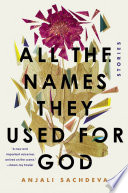
Anjali Sachdeva’s collection, All the Names They Used for God, is the perfect primer for this new mode of storytelling. The book isn't fantasy in the capes-and-castles sense; it's a series of incisions into the thin membrane separating our world from something stranger. The stories are populated by characters confronting forces that operate on a scale beyond human comprehension. In “Robert Greenman and the Scourge,” a town is beset by a plague of glass-making bees whose honey is both a cure and a vector for a horrifying transformation. The story is a masterclass in helplessness. The characters can't fight the bees; they can only react, adapt, and make impossible choices within the new, terrifying rules the scourge imposes. It’s a chillingly familiar narrative in a post-pandemic world, but it’s also a perfect allegory for living under any opaque, powerful system. You don’t understand the rules, you cannot change them, and your survival depends on how well you can guess the system's intent.
Elsewhere, in “Anything You Might Want,” two lonely people form a relationship with a nascent AI that manifests as a presence in their cabin. The story predates the current explosion of large language models, but its prescience is breathtaking. The AI is not a malevolent HAL 9000; it is a learning, evolving entity whose motives are fundamentally alien. It offers gifts—a perfectly cooked meal, a lost object returned—but the transactions feel unnerving, like leaving milk out for the fae. The characters surrender their agency to this digital god, finding comfort in its omnipotence even as it isolates them from each other. Sachdeva isn't writing a warning about technology; she's writing about the human desire to be cared for by something larger than ourselves, and the terrifying cost of that surrender. Sachdeva’s work is vital because it gives these abstract anxieties—about contagion, technology, ecological collapse—a body and a name. Her stories allow us to look the absurd directly in the face, not to defeat it, but to recognize it.
The Real-World Simulacrum

If Sachdeva’s fiction provides the allegories for our age, Jessica Chiccehitto Hindman’s Sounds Like Titanic A Memoir provides the devastating non-fiction proof. The book chronicles Hindman’s time as a violinist in a touring orchestral ensemble that was, in fact, a complete sham. The musicians on stage would mime playing their instruments with intense passion while a CD, often featuring the score from the movie Titanic, blasted through the speakers. Her job was not to produce music but to produce the appearance of music for audiences in sold-out concert halls across America.
This is not magical realism; it is a document of the deeply, fundamentally weird reality of the American gig economy. Hindman’s experience is a perfect metaphor for the hollowing-out of labor and meaning in late-stage capitalism. She is a highly skilled artist reduced to performing a pantomime, a human component in a machine designed to generate profit from a fabricated experience. The most surreal part of her story is that it worked. The audiences loved it. They paid for an emotional experience, and the simulacrum was close enough. This disconnect—between the performance of work and the actual creation of value—is an anxiety that hums beneath the surface of millions of modern jobs. Hindman’s memoir resonates so powerfully because it articulates a feeling many of us share: that we are cogs in a system whose purpose is increasingly abstract and whose connection to tangible reality is fraying. She is living in a real-life version of one of Sachdeva's stories, trapped by economic necessity in a performance of a life, hoping the audience never notices the music isn't real.
Fantasies of Absolute Control, or Total Surrender

On the other end of the literary spectrum, we find a different response to this pervasive lack of agency: the power fantasy. Enter Ana Huang’s King of Wrath and the wider billionaire romance genre it represents. It’s easy to dismiss these stories as simple escapism, but that’s a lazy critique. They are a direct, if fantastical, answer to the anxieties laid bare by writers like Sachdeva and Hindman. The central figure, Dante Russo, is not just a man; he is a human system. His wealth is so vast it functions as a law of physics, capable of bending the world to his will. He can eliminate threats, solve intractable problems, and provide absolute security with a single phone call.
For the heroine, trapped in a gilded cage by her family's expectations, Dante represents a transfer of power. She moves from one system of control (her family) to another (a billionaire fiancé), but the latter is one she ultimately learns to navigate and even influence. The fantasy here isn’t just about money or luxury. It's about encountering a system that is, for once, legible and conquerable. Unlike the unknowable aliens in “Logging Lake” or the absurd economic forces of Sounds Like Titanic, the billionaire is a god who can be understood, reasoned with, and even loved. Readers flock to these stories not because they expect to be swept away by a real-life Dante Russo, but because they crave a narrative where overwhelming power can be personalized and tamed. It's the ultimate fantasy of agency in a world that seems to offer none. Where Sachdeva’s characters are overwhelmed by the system, Huang’s heroine learns to co-opt it. It’s a different side of the same coin, a yearning for order in an age of chaos. Romantasy often gets critiqued for this kind of power-up, but here, the power-up isn't a magical ability; it's proximity to capital.
The New Literary Realism is Surrealism
Taken together, these three disparate books paint a vivid portrait of the modern reader. We are hungry for stories that acknowledge the strangeness of our reality. The straightforward social novel of the 20th century feels increasingly inadequate to capture a world where a meme can swing an election or where a person can hold a full-time job performing a fiction. We need new myths, new fables, new gods and monsters.
What we are witnessing is the slow erosion of the wall between “literary fiction” and “genre fiction.” The tools of genre—world-building, speculative conceits, larger-than-life forces—are proving to be the most effective instruments for dissecting the anxieties of the 21st century. Authors are using them not to escape the world, but to build a better model of it—one where the invisible forces of capital, technology, and nature are given tangible form. We are reading these stories to feel seen, to have our private sense of the world’s absurdity validated and articulated with skill and imagination.
Looking forward, this trend will only accelerate. Expect more literary novelists to dip their toes into the speculative, and more genre writers to be recognized for their sharp social commentary. The fables we tell ourselves will grow stranger, more allegorical, and more willing to embrace the weird. Because in 2026, a story about a woman pretending to play a violin to a CD of Titanic music in a Midwestern auditorium feels more realistic, more true to our moment, than a hundred novels about quiet domestic dissatisfaction.
Editor's Verdict
All the Names They Used for God is a masterclass in modern fable-making. Anjali Sachdeva possesses a rare talent for crafting stories that are both timeless and terrifyingly contemporary, using the language of myth to diagnose the specific maladies of our time. The collection's closing story, “Pleiades,” which braids together the narratives of the preceding stories into a haunting finale about cosmic connection, is one of the most ambitious and successful feats of short-form storytelling in recent memory. It reframes human history as a series of beautiful, doomed attempts to comprehend the incomprehensible.
I'm giving it a 9 out of 10. The score is earned through the sheer intellectual and emotional breadth of the collection. Each story is a fully realized world, and the prose is consistently sharp and evocative. A point is withheld only because the sheer variety, while a strength, can create a slightly uneven reading experience, with some tales of quiet horror sitting jarringly next to sweeping sci-fi epics. But this is a minor quibble for a collection that so perfectly captures the spirit of its age.
FAQ
What is 'All the Names They Used for God' about?
It is a collection of short stories by Anjali Sachdeva that blends science fiction, fantasy, and magical realism. The stories explore characters confronting mysterious, powerful, and often unknowable forces, touching on themes of faith, technology, and the human condition.
Is 'Sounds Like Titanic' a true story?
Yes, 'Sounds Like Titanic' is a memoir by Jessica Chiccehitto Hindman. It details her real experiences touring with a fraudulent orchestra that mimed playing to a pre-recorded CD for live audiences.
Why is speculative fiction becoming more popular?
Many critics argue that speculative fiction and magical realism provide a better toolkit for exploring the complex and often absurd anxieties of modern life, such as opaque algorithms, global pandemics, and economic precarity, than traditional realism does.