The Labyrinth as Diagnostic: Why We Read Contained Worlds
How immersive fiction maps the collapse of modern identity and the hunger for structured transformation
The blue light of the tablet is the only illumination in a cramped apartment that smells faintly of stale coffee and delivery cartons. It's 2:17 AM on a Tuesday. You've scrolled past forty algorithmic book recommendations, dodged three sponsored posts for sleep aids, and ignored a notification about a price hike. Your thumb hovers, paralyzed, over a cover that promises a world with edges. Not the open-ended chaos of your feed, not the recursive loops of your inbox, but a place with rules. A place where the walls are visible, the stakes are defined, and if you solve the puzzle, you might actually walk out. You tap. The scroll stops. You are no longer browsing; you are entering. This is not mere escapism. This is the desperate, collective hunger for a labyrinth that makes sense.
We are living through the collapse of the social map. Identity in 2026 is no longer anchored to geography, profession, or community; it is a fluid, constantly negotiated performance in a digital ether that offers no boundaries. The cultural response in literature is unmistakable: readers are flocking to immersive, labyrinthine worlds that function as crucibles for the self. But there is a sharp divergence in how these labyrinths are built and what they demand of the character. Some worlds test us through gamified violence; others through spiritual acceptance; still others through the crushing weight of social expectation. By examining the structural DNA of this year's defining novels, we can see that the labyrinth is no longer just a setting. It is a diagnostic tool for how we survive the age of infinite choice.
What Books Actually Build Labyrinths for Identity?
- The gamified survival mechanics of Fourth Wing
- The contemplative isolation of Piranesi
- The aesthetic paralysis of The Night Circus
- The social surveillance maze of The Children Of Dynmouth
The Fortress of Rules: Why We Crave Contained Chaos
A labyrinth implies a path, a center, and a way out. The real world has none of these. It offers only noise. Fiction has stepped in to provide architecture. As we explored in The Reinvention Index: Ranking Post-Crisis Literature, readers are obsessed with reinvention, but reinvention requires a framework. You cannot reshape the self in a vacuum. The labyrinths of 2026 provide the pressure necessary for transformation. They are not retreats; they are training grounds. The question is no longer whether the protagonist escapes, but what version of themselves survives the maze. The variety of these mazes reveals a fractured cultural consensus: some of us want to conquer the system, some want to understand it, and some are just trying to avoid being erased by it.
Consider the cognitive load of modern existence. We are bombarded with unstructured data, conflicting moral imperatives, and endless optimization metrics that rarely translate to tangible progress. A well-constructed fictional labyrinth reverses this dynamic. It imposes friction, but it also provides feedback loops. When a character hits a wall, the narrative acknowledges the boundary. When they solve a puzzle, the world shifts accordingly. This mechanical clarity is psychologically restorative. Readers aren't just consuming plot; they are rehearsing agency in a controlled environment. The labyrinth becomes a sandbox for identity experimentation, allowing us to test boundaries without risking real-world consequences. It is no coincidence that the most discussed novels of the moment treat setting not as backdrop, but as an active antagonist or mentor. The environment itself teaches the character how to become someone else.
The Gamified Crucible: Basgiath as Algorithmic Nightmare

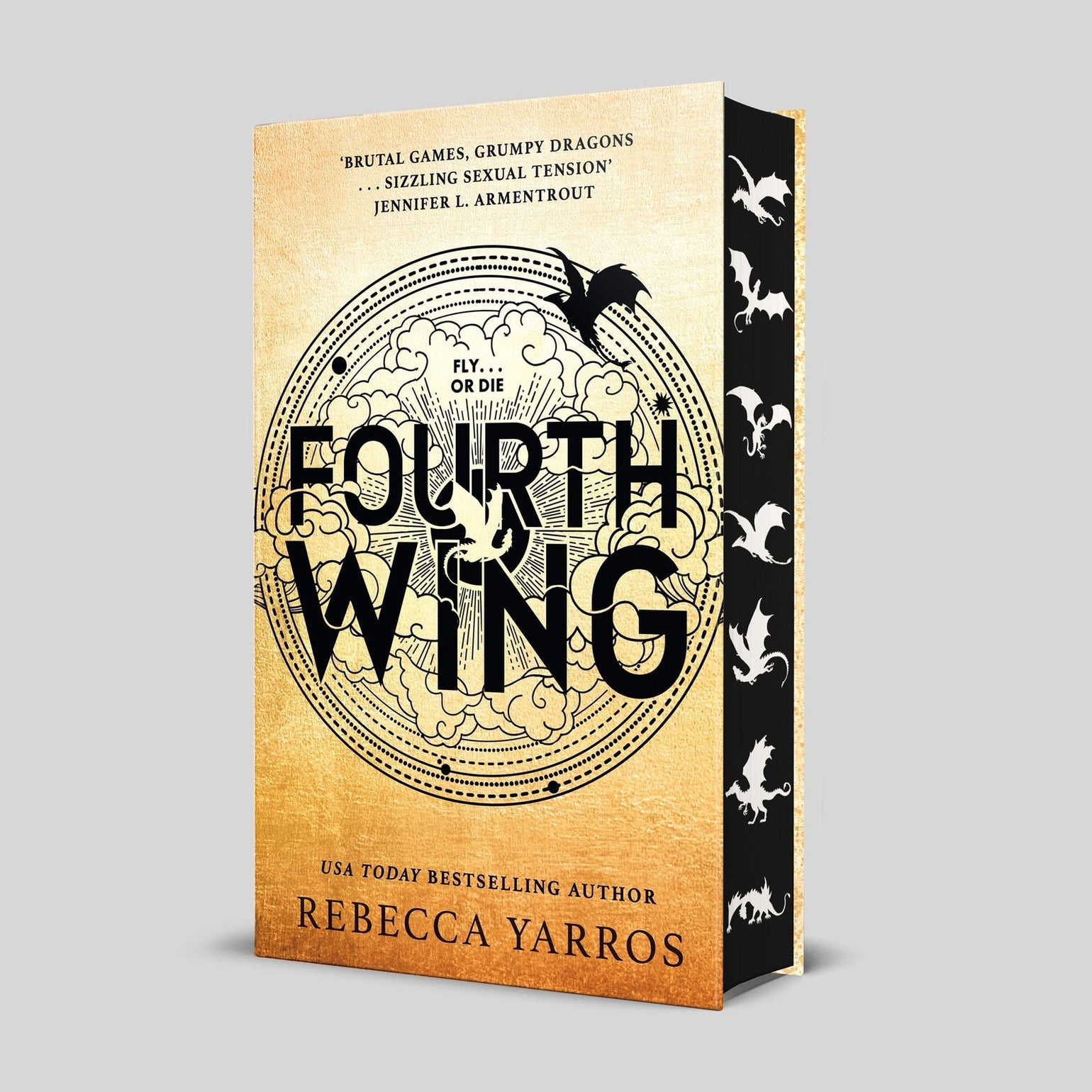
Fourth Wing by Rebecca Yarros dominates the cultural conversation not because it invented the military academy trope, but because it weaponized it for the optimization era. Basgiath War College is the labyrinth of metrics. Every moment is scored, every interaction is a resource exchange, and survival depends on adapting to a system designed to break you. Violet Sorrengail's journey is the ultimate fantasy of the anxious high-achiever: the belief that if you just optimize your choices, leverage your weaknesses as strengths, and bond with the right assets (dragons included), you can hack the hierarchy.
The novel's brilliance lies in its brutal clarity. Yarros strips away the vague moralizing of traditional fantasy and replaces it with the cold logic of a simulation. The "trial" sequences are not mystical ordeals; they are stress tests. When Violet navigates the dragon trials, she is essentially A/B testing her survival strategies in real-time. This resonates because it mirrors our own relationship with algorithmic life. We are constantly being sorted, ranked, and filtered. Fourth Wing validates the reader's desire to be the exception in a rigged system. It argues that ambition, when paired with ruthless pragmatism, can forge an identity strong enough to bend the world. The transformation here is hardening. Violet enters as a fragile scholar and exits as a tactical asset. It is a satisfying, if cynical, arc that speaks directly to a generation accustomed to treating life as a game to be beaten rather than a mystery to be lived.
Look closely at the combat training sequences and the way Yarros choreographs physical exhaustion. The prose doesn't romanticize pain; it quantifies it. Muscle memory replaces intuition. This mirrors the modern workplace and educational pipeline, where resilience is measured in output rather than well-being. The novel refuses to let Violet hide behind moral high ground; she must adapt or die. That refusal to sanitize survival is what makes the labyrinth feel earned. Readers are tired of protagonists who stumble through chaos by accident. They want to see the grind, the calculation, the deliberate forging of a new self against an unyielding system. Fourth Wing delivers exactly that, proving that genre fiction can function as a mirror for contemporary performance anxiety without sacrificing narrative momentum.
The Hall of Mirrors: Piranesi and the Search for a Single Truth

If Fourth Wing is the labyrinth of conquest, Piranesi is the labyrinth of peace. Susanna Clarke's masterpiece (note: the metadata attribution to the 18th-century etcher is a cataloging error; the novel stands as Clarke's distinct work) offers a radically different response to the chaos of modern existence. Piranesi lives in the House, an infinite structure of marble halls and tides, populated by statues that serve as companions. There is no game here, no score, no dragon to bond with. There is only the ritual of the journal, the observation of the tides, and the acceptance of the House as a benevolent, if inscrutable, order.
Piranesi's transformation is not about gaining power; it is about shedding ego. In an era where identity is a performance curated for maximum engagement, Piranesi's refusal to perform is revolutionary. He does not seek to master the House; he seeks to understand his place within it. The novel suggests that the labyrinth itself is not a prison but a sanctuary from the noise of the outside world. The "Other" who manipulates Piranesi represents the intrusion of petty human ambition into a space of pure contemplation. Clarke argues that the search for belonging is resolved not by climbing a ladder, but by recognizing the dignity of the structure that holds you. This is the spiritual counterweight to the gamification of Fourth Wing. It offers a vision of rational optimism, where the mind can find calm not by changing the world, but by aligning with its patterns, a theme that echoes our analysis in Why Our Anxious Age Craves Rational Optimism in Fiction.
The journal entries are where Clarke's architectural genius truly shines. Each log entry functions as a cognitive anchor, a deliberate act of mapping that refuses to succumb to existential dread. Piranesi documents the shifting tides, the behavior of the statues, the weather patterns within the halls. This isn't just world-building; it's a meditation on how attention shapes reality. By focusing on the mundane mechanics of his environment, Piranesi inoculates himself against manipulation. The novel demonstrates that clarity emerges not from grand revelations, but from sustained, unglamorous observation. In a cultural moment obsessed with virality and instant gratification, Piranesi insists on the radical power of patience. The labyrinth doesn't need to be conquered; it needs to be witnessed. That distinction is what makes the book endure.
The Aesthetic Cage: When Atmosphere Replaces Agency

Erin Morgenstern's The Night Circus presents a third variation: the labyrinth as aesthetic object. The circus is a wonderland of black and white tents, floating gardens, and tea that changes flavor with the weather. Celia and Marco are trapped in a competition they did not choose, manipulated by forces beyond their control. Yet, the novel is often criticized for prioritizing atmosphere over agency. The characters drift through the circus like ghosts, observing the beauty but rarely acting upon it with conviction.
This reflects a shift in reader tolerance for "vibes" over narrative drive, but it also highlights a weakness in the cultural conversation. The circus is a labyrinth without a purpose. It exists to be seen, much like the curated worlds of social media. The characters are trapped not by rules or rituals, but by the sheer weight of aesthetic expectation. Their transformation is muted because the world offers no friction. Morgenstern's work serves as a cautionary tale about the seduction of surface. It reminds us that a labyrinth without stakes is just a theme park. In the context of identity exploration, The Night Circus suggests the danger of getting lost in the decoration of the self rather than engaging with the hard work of construction. It is a beautiful cage, but it teaches us nothing about how to fly.
Examine the competition's structure: the rivals are forbidden from interacting directly, communicating only through their illusions. This enforced isolation mirrors the paradox of digital connection, where we are surrounded by curated projections of others but starved of genuine friction. The black-and-white uniformity of the circus further strips away nuance, reducing complex human desires to binary performances. Celia's garden and Marco's ice palace are marvels of imagination, yet they are also prisons of self-imposed limitation. The novel's greatest strength is also its fatal flaw: it confuses ambiance with depth. Readers today are increasingly aware of this trap. We no longer accept aesthetic immersion as a substitute for psychological progression. The circus lingers in cultural memory not as a model of transformation, but as a warning about the paralysis that comes when beauty replaces consequence.
The Social Maze: Trevor's Dynmouth and the Inescapable Gaze

Finally, we must ground this analysis in the literary tradition of the social labyrinth. William Trevor's The Children Of Dynmouth strips away the fantasy and reveals the maze we all inhabit. Dynmouth is a coastal town defined by gossip, prejudice, and the relentless scrutiny of the community. The "labyrinth" here is the social hierarchy that traps the characters, particularly the children, in roles they never chose. There are no dragons to slay, no journals to write, no circuses to escape to. There is only the inescapable gaze of the neighbor and the weight of family legacy.
Trevor's masterpiece demonstrates that the search for belonging is often thwarted by the architecture of expectation. The children in Dynmouth are transformed by cruelty and isolation, hardening their hearts to survive the social pressure cooker. This mirrors the insights in Identity vs. Expectation: The Book Comparison That Actually Matters, where we argue that identity is often forged in rebellion against imposed roles. Trevor shows us that the most dangerous labyrinths are not made of stone or magic, but of silence and judgment. The novel's power lies in its refusal to offer a clean escape. The transformation is tragic, not triumphant, reminding us that some walls cannot be breached without destroying the self in the process.
Notice how Trevor uses the coastal geography not as romantic backdrop, but as a psychological barrier. The cliffs, the churning sea, the narrow lanes—all of it funnels the characters into unavoidable collisions. Jackie's internal monologues reveal the exhausting labor of navigating social landmines, where a misplaced word or a hesitant glance can cement a reputation for years. This is the labyrinth of reputation, a structure built entirely on perception rather than action. The novel exposes how communities police deviation, forcing individuals into performative conformity. In an era where digital footprints replace town gossip, Trevor's warning feels more urgent than ever. We are all Dynmouth residents now, trapped in algorithmic villages that score our behavior and punish missteps. The tragedy isn't that the children are trapped; it's that they learn to love the cage because it's the only map they've ever known.
Prediction: The Labyrinth Collapses Inward
The trajectory of this cultural moment points toward a future where the labyrinth turns inward. We have seen the gamified crucible, the spiritual sanctuary, the aesthetic cage, and the social prison. The next wave of fiction will likely deconstruct the very idea of the maze. We will see protagonists who reject the game entirely, who dissolve the walls rather than navigating them. This is the "Anti-Labyrinth" movement. As audiences become fatigued by the demand to optimize, endure, or perform, they will crave stories about radical dissolution. The hero will not be the one who finds the center, but the one who realizes the center was a lie. Expect a surge in narratives that prioritize fragmentation over resolution, embracing the chaos of the open world rather than retreating into structured fiction. The labyrinth has served its purpose as a diagnostic tool; now it is time to burn the map.
We are already seeing the early signs of this shift in debut fiction and experimental literary circles. Writers are abandoning rigid three-act structures in favor of modular, non-linear narratives that mimic cognitive fragmentation. The cultural appetite for "clean" transformation is waning. Readers are beginning to understand that identity isn't a destination reached after solving the final puzzle; it's a continuous negotiation with uncertainty. The next generation of immersive fiction will likely trade walls for windows, labyrinths for open fields, and definitive answers for productive ambiguity. This isn't a retreat from complexity; it's an evolution of it. The maze taught us how to walk. Now we're learning how to run without a path.
Editor's Verdict
Fourth Wing earns a 7/10 because it perfectly captures the gamified anxiety of the current moment, even as it relies on derivative prose and familiar genre beats. It loses points for treating trauma as a mechanic to be mastered rather than a reality to be felt, but it gains them for delivering a narrative that validates the reader's desire for agency in a chaotic world. The scene where Violet bonds with Tairn is the definitive moment of 2026 fiction: a transactional relationship sold as emotional salvation, mirroring how we commodify connection in the digital age. It is a blockbuster that works precisely because it understands what we are afraid of, even if it refuses to look at it honestly.
FAQ
Why are readers so drawn to labyrinthine world-building in 2026?
Readers are seeking structured environments that provide clear rules and feedback loops, which contrast sharply with the unstructured, algorithmic chaos of modern digital life. These fictional mazes function as psychological training grounds for identity experimentation.
How does Fourth Wing compare to traditional fantasy novels?
Unlike traditional fantasy that often relies on mystical destiny or vague moralizing, Fourth Wing treats survival as a gamified optimization process. It mirrors contemporary performance anxiety by quantifying pain, skill, and progression through measurable trials.
What cultural shift does the rise of 'Anti-Labyrinth' fiction predict?
As audiences grow fatigued by narratives demanding constant optimization or endurance, fiction will likely pivot toward fragmented, non-linear stories that embrace ambiguity. The focus will shift from conquering structured mazes to navigating open, uncertain psychological landscapes.