Unmasking the Unseen: Why Narrative Concealment Captivates Us
From domestic thrillers to historical epics, July 2026's trending books prove that the most potent stories thrive in the delicate dance between revelation and deliberate disguise. Audiences crave the meticulous layers of hidden truths more than ever.
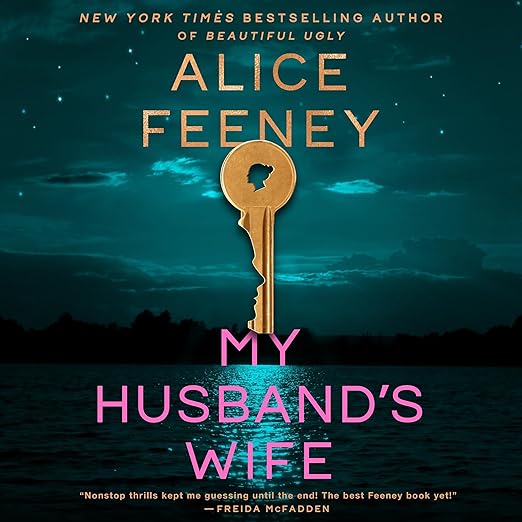
In an era of relentless oversharing and instant gratification, the publishing world has quietly doubled down on the antithesis: concealment. Just last week, My Husband's Wife by Alice Feeney surged back onto bestseller lists, not through explosive plot twists, but by meticulously drawing readers into a web of deliberate obfuscation, character-driven lies, and a narrative structure that demands patience. This isn't just about 'thrillers'; it’s a profound cultural shift. We’re witnessing a resurgence of narratives where the unseen holds more power than the unveiled, where authors are challenging readers to become detectives, piecing together fragments of truth from expertly crafted deceptions across genres. This trend signals a deeper hunger in audiences: a desire for stories that mirror the complex, often hidden, realities of human experience, rather than offering easy answers.
Seeking the Submerged Stories: Our Picks for Intentional Ambiguity
Readers are increasingly drawn to books that offer more than surface-level thrills, demanding intricate plots where characters' hidden motives and societal secrets slowly unravel. Our analysis delves into what makes these narratives so compelling:
- The Psychological Architecture of Domestic Deceit: How personal secrets can dismantle the most intimate relationships.
- Unearthing Generational Burdens: The profound impact of historical and community-wide suppressions.
- The Art of Fictional Truth: When narrative itself becomes a tool for concealing and revealing identity.
- Wilderness as a Confidant: How harsh landscapes can both hide and expose deeply personal histories.
Unmasking Domestic Deceit: The Psychological Thriller's Appeal

Alice Feeney’s My Husband's Wife exemplifies the current fascination with domestic noir that trades cheap jumpscares for the slow, agonizing burn of psychological unraveling. This isn't your standard suburban murder mystery where a body drops in chapter one and the detective follows clues. Instead, Feeney crafts a chilling dual narrative, split between a young lawyer, Lily, navigating a perplexing case of spousal abuse, and a mysterious figure from her husband Ed's past. The brilliance lies in its relentless commitment to unreliable narration. Every character, including Lily herself, is a potential deceiver, their motives murky, their pasts shrouded. Feeney masterfully uses shifts in perspective and truncated information to cultivate a pervasive sense of unease, forcing the reader to constantly question what is real and what is a carefully constructed façade. The "wife" of the title isn't just one person; it's a fluid, almost spectral concept that encapsulates identity, loyalty, and betrayal. The true horror isn't a serial killer, but the chilling realization that the person sleeping next to you, the one you've built a life with, might be a complete stranger or, worse, a meticulously disguised enemy. The legal case Lily works on mirrors her personal plight, blurring the lines between professional and domestic deception. This novel doesn't just present a mystery; it immerses the reader in the experience of profound doubt and the terror of unknowing, making its recent surge in popularity entirely justified. It’s a compelling argument that the best thrillers aren't about what happened, but who concealed it, and why.
Echoes of the Past: History's Concealed Truths

James McBride's The Heaven & Earth Grocery Store operates on a wholly different scale of concealment, one that spans generations and entire communities. While not a thriller in the traditional sense, its narrative tension is built entirely around what has been hidden: a small, forgotten skeleton unearthed in a Pennsylvania well in 1972. This discovery is not a beginning, but an invocation, pulling back the curtain on decades of unspoken racial prejudice, desperate alliances, and the quiet heroism born of necessity within a diverse, struggling community. McBride's genius is in showing how secrets aren't just personal burdens but communal architectures, shaping the very foundations of lives in Chicken Hill. The Jewish and Black residents, marginalized and often at odds, share a silent code of survival, protecting their own from the broader injustices of society. The 'mystery' isn't a whodunit; it's a 'whydunit' and a 'how-did-we-survive-it.' Key characters like "Doc" and Chona, the owner of the titular grocery store, become focal points for these hidden histories, their individual struggles intertwined with the community's collective effort to conceal and protect. The novel reveals how acts of deliberate concealment – from hiding a disabled boy named Dodo to navigating the systemic racism of the 1920s – are not always malicious but often acts of profound love and desperate self-preservation. It is a masterclass in how historical context itself can be a form of concealment, with truth only emerging through the painstaking excavation of collective memory. This kind of storytelling doesn't offer quick answers; it offers deep, resonant understanding, a slow-burn revelation of the human spirit's resilience.
The Art of Fictional Truth: Narrative as a Puzzle Box

Zadie Smith's The Fraud dives into the very nature of truth and deception through a historical lens, exploring the infamous Tichborne Claimant case of Victorian England. This novel’s narrative tension isn’t about a murder or a community secret, but about the performance of identity and the societal machinery that constructs and deconstructs truth. At its heart is Mrs. Eliza Touchet, cousin and housekeeper to a once-famous novelist, who observes the world and the sensational trial of a man claiming to be the long-lost heir to a vast fortune. The question isn't just whether the Claimant is a fraud, but how his story, and the stories of others, are told, believed, and weaponized. Smith meticulously layers historical detail with incisive character study, revealing how class, race, and gender dictate who is afforded the privilege of belief and who is perpetually disbelieved. The novel dissects the inherent subjectivity of testimony and memory, making the reader acutely aware of the 'narrative' that a society chooses to accept as fact. Eliza Touchet, with her sharp, often cynical observations, serves as our guide through this labyrinth of public opinion and private conviction, constantly exposing the performative aspects of truth-telling. The real fraud, Smith suggests, might be the very idea of a singular, objective truth, demonstrating how easily narratives can be manipulated and how deeply human desire for certainty can blind us to the glaring inconsistencies. It's a challenging read, forcing readers to engage with their own biases and critical faculties, a literary puzzle box asking us to question the very fabric of historical record and personal testimony. For more on how fiction grapples with fragmented reality, see our piece on Why Modern Fiction Replaces Closure With Fracture.
Survival in the Shadows: When Nature Hides Secrets

Toni Anderson's Cold Fear shifts our focus from the intimate domestic sphere or historical record to the unforgiving vastness of the Alaskan wilderness, where secrets are not just kept by people but by the environment itself. This romantic suspense novel centers on FBI agent Alex Parker, investigating a disappearance in a remote, snow-bound landscape, and the enigmatic bush pilot, Cade Courtland, who becomes her reluctant guide. The immediate tension comes from the external threat of the brutal elements and the potential dangers lurking unseen in the vast, isolated terrain. However, Anderson masterfully layers this with the internal secrets each character carries. Alex is fleeing a past trauma, pushing herself to the extreme, while Cade holds a dark secret about his own family's disappearance, making him a complex figure of both protection and suspicion. The wilderness acts as a powerful metaphor for these hidden truths; it can both bury and reveal, its stark beauty concealing deadly dangers and painful histories. The narrative forces Alex to confront not just an external antagonist, but the emotional scars she's tried to bury, showing how vulnerability can be as terrifying as any physical threat. The 'fear' in the title isn't just about the cold or the killer; it’s the visceral dread of exposing one's deepest wounds. Anderson expertly weaves the high-stakes action with the slow, reluctant unveiling of personal histories, demonstrating that even in the most exposed environments, humans are adept at building walls of secrecy. It's a stark reminder that sometimes the most profound concealment isn't a deliberate lie, but a desperate act of self-preservation against both external forces and internal demons. Its popularity speaks to our desire for thrillers that offer both high-octane suspense and deeply personal, character-driven revelations.
The Allure of the Unseen: Why We Crave Intricate Deception
What does this collective fascination with concealment tell us about audiences in July 2026? It suggests a fatigue with overt exposition, with the constant stream of surface-level information that characterizes our digital lives. Readers are actively seeking depth, nuance, and the intellectual satisfaction of working for a revelation. These books, whether through the slow burn of psychological manipulation in My Husband's Wife, the generational excavation of The Heaven & Earth Grocery Store, the philosophical deconstruction of truth in The Fraud, or the stark self-preservation of Cold Fear, are not merely delivering plot twists; they are inviting us into a complex dance of interpretation. They reflect a desire to engage with stories that mirror the messy, ambiguous nature of reality, where motives are rarely singular and truth is often fragmented. We crave the feeling of unlocking a hidden chamber, of glimpsing something profound that wasn't immediately offered. It's a testament to the enduring power of literary craft that can make the absence of information as compelling as its presence. This isn't about escapism; it's about a deeper form of engagement, where the reader's own interpretive skills are constantly challenged and rewarded.
Tomorrow's Unveiling: A Literary Prediction
Looking ahead, this trend will only intensify. Authors will continue to experiment with non-linear narratives, unreliable narrators, and structurally ambitious works that demand active participation from the reader. We’ll see a move away from simplistic 'gotcha' twists towards more profound, character-driven revelations that redefine what 'truth' means within the story. The success of these titles indicates that the market isn't just open to, but demands, intellectual rigor and emotional complexity. This could lead to a golden age of literary thrillers and historical fiction that challenge readers to think, to question, and to actively participate in the act of uncovering. The 'comfort read' will continue its decline as readers increasingly seek books that provide a genuine intellectual workout, not just a cozy escape. For more on challenging reader expectations, consider our piece on Why You're Wrong About 2026's Hype Books. Expect more novels that are less about giving answers and more about exploring the intricate, often uncomfortable, process of finding them.
Editor's Verdict: A Masterclass in Suspense
Alice Feeney's My Husband's Wife is a masterclass in psychological manipulation, proving that a single, meticulously constructed lie can build more sustained tension than a dozen gratuitous plot points. The novel's final act, which recontextualizes nearly every preceding event, stands as one of the most audacious and earned narrative shifts in recent memory. It earns an 8 for its sustained psychological tension and truly unsettling narrative, losing points only because its deliberate pacing might frustrate readers expecting a faster, more traditional thriller.
FAQ
What is narrative concealment in literature?
Narrative concealment refers to an author's deliberate technique of withholding information, presenting unreliable narrators, or structuring a story to slowly reveal truths, motives, or past events, thereby building suspense and engaging the reader's interpretive skills.
Why are readers increasingly drawn to books with hidden truths?
Readers are seeking deeper engagement and intellectual stimulation beyond quick gratification. Books that master concealment offer complex characters, moral ambiguities, and the satisfaction of actively piecing together a narrative, reflecting a desire for stories that mirror the multifaceted nature of real-world truths.
Does narrative concealment only apply to thrillers?
No, while common in thrillers, narrative concealment is a versatile technique found across genres, including historical fiction, literary fiction, and even some speculative fiction, where it can reveal profound insights into character, society, or the nature of reality itself.