Why You're Wrong About 2026's Hype Books
The market rewards emotional shortcuts. Here's why structural complexity is the only fiction that matters right now.
Why do publishing algorithms keep rewarding fiction that treats emotional complexity like a pre-packaged meal? The industry’s current obsession with manufactured grief and predictable triumph is actively atrophying our capacity for structural reading, and the books getting the heaviest marketing push are the very ones training us to stop thinking critically about narrative.
What books are actually worth reading in 2026?
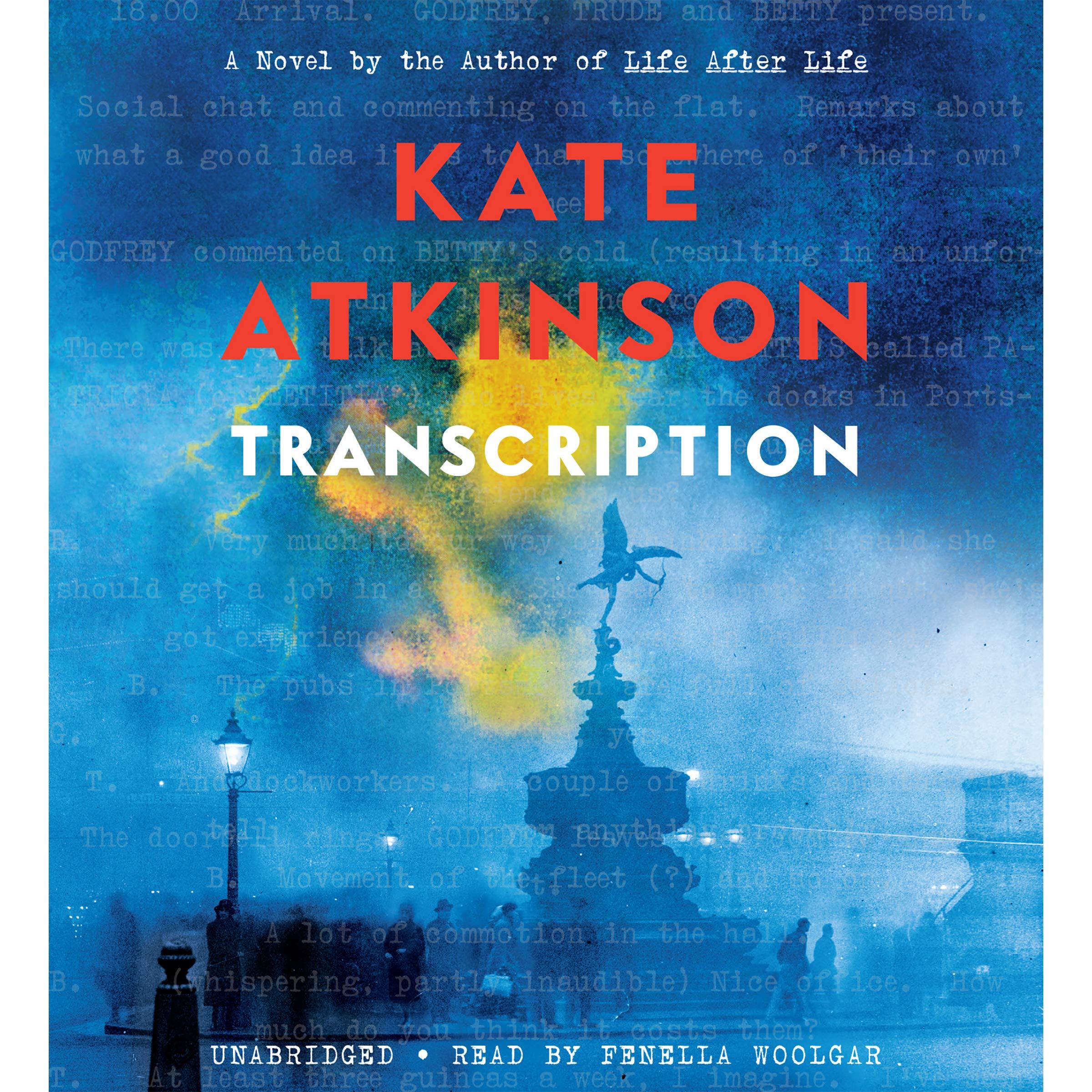
- Transcription by Kate Atkinson
- The Night We Met by Abby Jimenez
- We Could Be Heroes by Mike Chen
- KIN by Kealan Patrick Burke
The Manufacturing of Manufactured Grief

The Night We Met has been engineered for the modern book-club industrial complex, and its success is a symptom of literary decline rather than a triumph of contemporary romance. The novel’s entire premise is telegraphed in its title and cover design, robbing the narrative of any genuine suspense or structural risk. Jimenez relies on a repetitive loop of longing, regret, and retrospective narration that mistakes sentimentality for depth. When a protagonist spends three hundred pages mourning a relationship that the reader already knows is doomed, the prose stops functioning as storytelling and starts functioning as emotional manipulation. The scenes at the restaurant, the recurring motif of the unmade bed, and the carefully spaced chapter breaks are all calibrated to trigger predictable tear duct responses rather than earn them through character evolution. This isn’t craftsmanship; it’s affective engineering. The market rewards this because it’s easily marketable and frictionless, but it treats readers like passive recipients of pre-chewed emotion. As I’ve argued in The Comfort Read Lie: Why 2026's Best Books Reject Cozy Connection, fiction that refuses to complicate its own emotional premise ultimately teaches us to expect tidy resolutions to messy human experiences. The Night We Met delivers exactly that tidy resolution, wrapping years of implied pain in a neat, publishable bow that leaves nothing for the reader to do but sigh and move on.

We Could Be Heroes suffers from the exact same structural complacency, just dressed in sports nostalgia instead of romance. Mike Chen’s novel leans heavily on the assumption that athletic competition is a viable proxy for psychological breakthrough, and it collapses under the weight of that assumption. The second-act slump—a staple of the sports narrative—is resolved not through genuine character reckoning, but through a series of conveniently timed victories that function as emotional deus ex machina. Chen mistakes momentum for meaning, filling chapters with locker-room banter and game-day tension while sidestepping the actual psychological friction required to make the protagonist’s growth believable. The novel’s pacing mimics a highlight reel rather than a lived experience, skipping over the grueling, unglamorous work of self-correction in favor of montage-like triumphs. When the protagonist finally achieves victory, the book treats it as spiritual enlightenment, ignoring the fact that external wins rarely translate to internal resolution. This formula works for marketing because it’s instantly legible, but it’s deeply boring as literature. It confirms every lazy assumption about male emotional repression while offering zero structural innovation to challenge it.
The Architecture of Memory

This is why Transcription by Kate Atkinson is the book the current literary conversation is desperately ignoring. While the market chases emotional quicksand, Atkinson constructs a novel that operates as a rigorous exercise in epistemological discipline. The book’s three-timeline structure—1950s Edinburgh, 1980s Scotland, and 2016 London—isn’t a gimmick designed to impress book reviewers; it’s a meticulous autopsy of how institutions sanitize history and how individuals reconstruct memory under pressure. The protagonist’s work transcribing police interrogation tapes mirrors the novel’s own method: sifting through fragmented, contradictory, and deliberately unreliable narratives to approximate a coherent truth. Atkinson refuses to offer the reader a single authoritative perspective, forcing us to actively participate in the reconstruction of events. The 1980s interrogation sequences, in particular, are masterclasses in narrative tension, where the transcript format strips away descriptive fluff and exposes the raw mechanics of coercion, evasion, and institutional complicity.
Unlike the manufactured grief of contemporary bestsellers, Transcription demands cognitive labor. It doesn’t tell you how to feel; it shows you how memory decays, how power distorts testimony, and how the past is constantly being rewritten by those in control. The novel’s refusal to provide tidy catharsis is its greatest strength. It aligns perfectly with the argument I made in Why Modern Fiction Replaces Closure With Fracture, proving that structural complexity isn’t an obstacle to emotional resonance—it’s the only reliable path to it. Atkinson’s prose is cold, precise, and deliberately unsentimental, which makes the moments of human vulnerability land with devastating weight because they aren’t telegraphed. The book treats its readers as intelligent collaborators rather than passive consumers, and that’s exactly why the publishing machinery keeps it on the back burner while it pushes easier, more formulaic narratives to the forefront.
Genre as a Diagnostic Tool

The dismissal of genre fiction as structurally inferior to literary fiction is another myth the current reading culture clings to, and Kealan Patrick Burke’s KIN dismantles it with brutal efficiency. Burke’s novel is frequently reduced to a pulpy horror-thriller page-turner, but that categorization completely misses its psychological architecture. The creature feature isn’t just shock value or biological dread; it’s a visceral metaphor for unprocessed trauma manifesting physically and socially. The pacing of KIN mirrors the fragmented anxiety of modern life far more accurately than most prestige literary fiction, which often hides behind lyrical prose to avoid confronting the chaotic nature of human breakdown. Burke’s decision to strip away exposition and rely on sensory immediacy forces the reader into a state of heightened alertness, replicating the protagonist’s deteriorating grip on reality. The isolation isn’t just a plot device; it’s the structural foundation of the entire narrative. When the horror elements escalate, they’re not random set pieces—they’re the logical conclusion of a world where communication has failed and trust has been systematically dismantled.
This is where the contrarian argument solidifies: genre fiction, when executed with this level of technical control, understands psychological fragmentation better than the literary fiction market currently rewards. KIN doesn’t ask you to sit back and absorb manufactured emotion; it drags you into a claustrophobic environment where every sensory detail is weaponized. The novel’s second half, where the biological threat converges with social collapse, operates as a direct critique of our cultural tendency to isolate ourselves in the name of safety. Burke’s prose is lean, unforgiving, and structurally sound, proving that you don’t need three hundred pages of nostalgic longing or sports montages to create narrative tension. You just need to understand how fear actually works.
Rewiring the Literary Diet
The publishing industry’s current hype cycle is a feedback loop of emotional convenience. Books like The Night We Met and We Could Be Heroes succeed because they require zero structural engagement from the reader. They hand you the emotional conclusion on a silver platter and ask you to applaud. Meanwhile, novels like Transcription and KIN are systematically overlooked because they demand active participation, structural literacy, and a willingness to sit with unresolved tension. The market calls this "difficult" or "niche," but that’s just code for "doesn’t fit the algorithm."
If you want to actually read in 2026, you have to stop treating fiction like emotional fast food. The books that will matter five years from now aren’t the ones engineered for immediate tear-jerking or Instagram-friendly nostalgia. They’re the ones that build architectures complex enough to hold the weight of modern confusion without collapsing into sentimentality. Transcription proves that structural rigor and psychological depth aren’t mutually exclusive—they’re mutually dependent. The rest is just noise.
Editor's Verdict
Transcription earns a 9/10 because it executes a three-timeline narrative puzzle with zero structural leakage, using the transcription format to mirror the novel’s thematic core without ever sacrificing pacing or psychological realism. It loses one point only because the 2016 timeline occasionally prioritizes procedural exposition over the visceral immediacy that dominates the 1980s interrogation chapters. The 1980s interrogation sequence contains the most rigorously constructed narrative puzzle in modern literary fiction, and any reader who finishes it without recognizing the deliberate mirroring of the tape transcripts in the chapter structure hasn't been paying attention.
FAQ
Why is Transcription considered more structurally complex than typical contemporary fiction?
Transcription uses a three-timeline structure that mirrors the process of historical reconstruction, requiring readers to actively piece together fragmented narratives rather than passively absorb a linear emotional arc.
Are books like The Night We Met and We Could Be Heroes worth reading if I prefer formulaic stories?
They are highly marketable comfort reads that deliver predictable emotional beats, making them suitable for casual reading, but they lack the structural innovation and psychological depth of more rigorously constructed novels.
How does KIN use horror elements to explore psychological themes?
KIN treats its creature threat as a manifestation of social breakdown and isolation, using visceral pacing and sensory immediacy to replicate the protagonist's deteriorating grip on reality rather than relying on cheap shock value.