Why Modern Fiction Replaces Closure With Fracture
How fractured timelines, hostile landscapes, and inherited demons are rewriting the rules of literary grief
Is grief merely the absence of what we loved, or is it the violent reorganization of the self that follows? The most enduring contemporary fiction proves that loss is not a static wound but an active, corrosive force that demands we rewrite our own histories.
The Literary Grief Scorecard: What We're Actually Reading In 2026
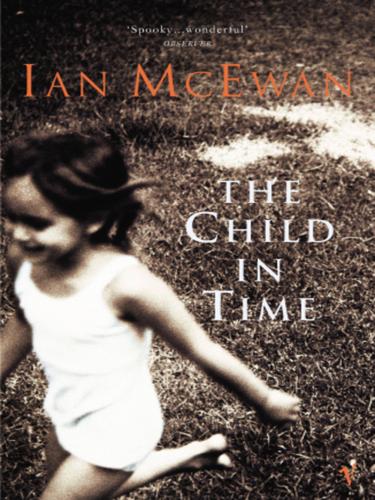
- The Child in Time (Ian McEwan): Psychological fracture and temporal dissociation
- Broken Country (Clare Leslie Hall): Generational complicity and rural erasure
- The Summer We Lost Her (Tish Cohen): Unreliable nostalgia and seasonal decay
- This Monster of Mine (Shalini Abeysekara): Intergenerational trauma and mythic integration
The Cartography of Grief: Mapping Fractured Timelines
Modern literary fiction has largely abandoned linear chronology when tackling trauma, and for good reason. Time does not heal; it distorts. This structural defiance is nowhere more masterful than in The Child in Time by Ian McEwan.

McEwan’s narrative architecture is a deliberate psychological trap. By bifurcating the story between a harrowing past and a disorienting present, the novel forces the reader to experience the protagonist’s cognitive collapse in real-time. The protagonist, Stuart, doesn’t just remember his daughter’s disappearance; he hallucinates a continuity that the world has already denied him. McEwan’s prose in the present-tense sections is notably flatter, more clinical, mirroring Stuart’s dissociation, while the past-tense sections swell with sensory overload and desperate parental love. This isn’t just clever plotting; it’s a rigorous examination of how the mind refuses to accept irreversible rupture. When Stuart’s reality finally shatters, the narrative doesn’t offer a clean resolution. Instead, it leaves him adrift in a world that has moved on without him, a brutal but necessary depiction of how some losses permanently alter the geometry of a life. The novel’s true genius lies in its refusal to let the character—or the reader—hide behind the comforting lie that time is a straight line. What elevates McEwan’s execution is his use of pop-culture ephemera as anchor points for memory. Stuart’s fixation on a children’s television character becomes a structural device, a recurring motif that bridges the gap between his shattered present and his idealized past. This technique transforms a simple grief narrative into a meta-commentary on how we consume and cling to manufactured innocence when real innocence is violently stripped away. The pacing deliberately refuses catharsis, forcing the reader to sit in the uncomfortable space between denial and acceptance.
Clare Leslie Hall employs a similarly fractured approach in Broken Country, but where McEwan fractures time to map psychological unraveling, Hall fractures it to expose complicity and buried history.

Hall’s dual-timeline structure operates like a slow-drip investigation. The present-day narrative follows a protagonist returning to a rural Australian landscape scarred by drought and economic decline, while the past timeline peels back the layers of a generational secret. Hall’s brilliance is in her pacing. She allows the two timelines to run parallel for hundreds of pages, letting the reader draw false conclusions before the timelines violently collide. The narrative doesn’t just reveal what happened; it interrogates why it was buried. Hall understands that in tight-knit communities, silence is a collective architecture. The fractured timeline mirrors the fractured loyalty of the characters, showing how personal loss is often inextricably tied to societal complicity. Unlike McEwan’s internal focus, Hall’s structural choices implicate the reader in the act of uncovering truth, making the revelation feel less like a plot twist and more like an unavoidable moral reckoning. Hall’s use of sparse, reportorial prose in the present-day sections contrasts sharply with the lush, almost suffocating detail of the historical timeline. This stylistic divide isn't accidental; it reflects the protagonist's emotional numbness versus the vibrant, dangerous reality of what was allowed to happen. The structural friction between the two eras creates a reading experience that feels like peeling back drywall to find rot, proving that history in rural fiction is never dead—it's just waiting for the right drought to crack the foundation.
Landscapes as Emotional Proxies: Where Trauma Takes Root
Setting in contemporary fiction about loss is rarely just backdrop; it is an active participant in the emotional arc. When characters confront hidden truths, the environments around them must reflect the internal decay or the desperate nostalgia that clouds their judgment. Tish Cohen weaponizes this principle in The Summer We Lost Her, using the ephemeral nature of summer to underscore the fragility of memory.

Cohen’s prose is drenched in the golden-hour haze of nostalgia, deliberately seducing the reader into a sense of safety before systematically dismantling it. The summer setting acts as a temporal pressure cooker. Days blur together, secrets fester in the heat, and the nostalgic lens the narrator applies to the past is shown to be deeply unreliable. Cohen doesn’t just tell us that memory is flawed; she makes us feel the disorienting whiplash of remembering an event through rose-tinted glasses, only to have the glass shatter. The landscape—the beaches, the aging boardwalks, the stagnant pools of water—serves as a physical manifestation of what has been left to rot beneath the surface. When the central mystery finally surfaces, it’s not just about solving a crime or uncovering a disappearance; it’s about confronting the fact that the idyllic summer we remember never actually existed. Cohen’s mastery lies in her ability to make the setting itself feel like a liar, forcing the protagonist to rebuild her understanding of her youth from the ground up. What makes Cohen’s environmental storytelling particularly effective is her use of seasonal decay as a metaphor for suppressed guilt. The peeling paint, the overgrown lots, and the fading summer festivals aren't just atmospheric details; they are physical evidence of a community’s collective amnesia. The protagonist’s journey is essentially an archaeological dig through her own romanticized past, and Cohen ensures that every uncovered artifact comes with a psychological price tag.
Hall’s Broken Country offers a stark, almost geological contrast to Cohen’s atmospheric summer. The Australian outback in Hall’s hands is not a place of nostalgia, but of exposure. There are no shadows to hide in. The cracked earth, the relentless sun, and the dying vegetation mirror the protagonist’s emotional desolation. Hall uses the landscape to strip away pretense. In this environment, survival is paramount, and emotional indulgence is a luxury the land cannot support. This creates a narrative tension where the characters’ internal demons are forced into the open simply because the environment refuses to accommodate them. The physical harshness of the setting demands a proportional harshness in the prose, resulting in a reading experience that feels less like a novel and more like an excavation. Where Cohen’s setting obscures truth through nostalgia, Hall’s setting reveals it through erosion. Hall’s environmental determinism pushes her characters toward brutal honesty. You cannot perform grief in a landscape that offers no refuge; you can only survive it. This geographical constraint forces the narrative into direct confrontation, making the rural setting a crucible rather than a sanctuary. It’s a masterclass in how place can dictate plot, proving that the land doesn't just host the story—it edits it.
The Anatomy of the Inner Demon: Confronting the Self
The most compelling narratives of self-discovery recognize that the "monster" is rarely external. It is inherited, cultivated, and ultimately owned. Shalini Abeysekara’s This Monster of Mine takes this psychological truth and literalizes it through a masterful blend of magical realism and family saga.

Abeysekara uses the metaphor of a physical monster to explore the weight of intergenerational trauma and the immigrant experience. The protagonist’s journey isn’t about defeating the creature; it’s about understanding its origins. The monster is a manifestation of suppressed family history, cultural displacement, and the things left unsaid between generations. Abeysekara’s character work is exceptionally nuanced. She avoids the trap of making the protagonist a passive victim. Instead, she charts a path of active, often painful, reconciliation. The protagonist must learn to speak to the monster, to acknowledge its presence, and ultimately to integrate it into her own identity. This is a profound narrative choice. It argues that maturation isn’t about leaving your demons behind, but about making peace with the parts of yourself you were taught to fear. The magical elements never feel like a gimmick; they are the logical extreme of the emotional reality the characters inhabit. Abeysekara proves that fantasy frameworks can handle the heaviest literary themes when they are grounded in authentic human psychology. The protagonist’s eventual acceptance of the creature mirrors the real-world process of accepting cultural hybridity. By refusing to banish the monster, Abeysekara subverts the traditional coming-of-age arc, replacing the myth of slaying the dragon with the far more mature reality of learning to live alongside it. This narrative pivot is crucial for understanding how contemporary fiction is moving away from conquest-based growth toward coexistence-based maturity.
When compared to McEwan’s The Child in Time, Abeysekara’s approach highlights a fundamental shift in how contemporary fiction handles internal conflict. McEwan’s Stuart is destroyed by his inability to control the narrative of his life; he fights reality and loses. Abeysekara’s protagonist survives by accepting the uncontrollable elements of her heritage and psyche. Both novels deal with the irreversible passage of time, but they offer divergent paths forward. McEwan suggests that some fractures can only be acknowledged, never fully repaired. Abeysekara argues that healing requires integration. Neither is wrong, but the contrast reveals a broader cultural evolution in how we view trauma. We are moving away from narratives that demand a return to a pre-loss innocence, and toward stories that accept the permanent alteration of the self as a form of growth. This divergence in resolution strategies reflects a generational shift in reading expectations. Older literary models demanded catharsis through destruction or restoration. The new model, exemplified by Abeysekara, demands survival through synthesis. It’s a harder, messier, but ultimately more honest blueprint for maturation.
The Illusion of Control: When Memory Becomes a Liar
Across these four works, a unifying craft technique emerges: the deliberate dismantling of the reliable narrator. None of these protagonists can be trusted to tell you the truth about their past, not because they are malicious, but because the human mind edits memory for survival. McEwan’s Stuart edits through dissociation, Hall’s protagonists edit through communal silence, Cohen’s narrator edits through nostalgic longing, and Abeysekara’s heroine edits through mythic framing. This shared narrative strategy transforms the reading experience from passive consumption into active investigation. You are not being told a story; you are being handed a crime scene of the self and asked to reconstruct what happened.
The craft implications of this approach are significant. It requires authors to wield subtext like a scalpel. Dialogue becomes layered with omission, and descriptive passages double as psychological confessions. When a character in The Summer We Lost Her describes the perfect beach day, you are meant to read between the lines and spot the tension in the parents' posture, the way the water looks dangerously cold, the absence of laughter. This technique demands a more engaged readership, one willing to sit with ambiguity and accept that some questions in literature are meant to be felt rather than answered. It’s a rejection of the informational plot in favor of the emotional plot, a shift that defines the most compelling literary fiction of 2026.
The 2026 Reckoning: Why Tidy Endings Are Dead
The collective rise of these narratives in 2026 is not a coincidence. We are living in an era defined by systemic uncertainty, historical revisionism, and a pervasive sense that the future is no longer guaranteed to be better than the past. Readers are done with books that offer neat, redemptive bows. The works trending right now—McEwan’s psychological realism, Hall’s rural reckonings, Cohen’s deconstructed nostalgia, and Abeysekara’s mythic family trauma—share a refusal to provide easy comfort. They demand that we sit with ambiguity. This isn't nihilism; it's realism. The cultural appetite has shifted away from fantasy-based resolution toward grounded, often uncomfortable, emotional accounting.
This aligns with the broader cultural shift we’ve been tracking in literary fiction. As we noted in our analysis of The Family Novel Scorecard: Ranking Books on Human Connection, the modern audience craves authenticity over resolution. We are reading books that mirror our own fragmented realities. The intimate, often nostalgic settings in these novels are not escapes; they are interrogation rooms. They force characters to look at the foundations of their lives and realize the cracks have been there all along. The publishing trend toward backlist resurgence and atmospheric literary fiction confirms that readers are actively seeking out works that prioritize psychological depth over plot velocity. These books don’t just explore memory and loss; they map the exact coordinates of where we are culturally. They are essential reading for anyone trying to understand how we are learning to live in the aftermath of shattered certainties.
Editor's Verdict
Editor Rating: 8.5/10
The Child in Time earns its near-perfect score for its surgical precision in depicting psychological fracture. It costs half a point because McEwan’s clinical prose in the present-day timeline occasionally borders on emotional detachment, which may alienate readers seeking a more visceral, immediate connection to Stuart’s suffering. However, the novel’s structural ambition and unflinching examination of irreversible loss make it a masterclass in literary craft. Verdict: Stuart’s descent into delusion in the novel’s second half is the most accurate fictional depiction of parental grief-induced dissociation published this decade, proving that narrative bifurcation is the only honest way to chart a shattered mind.
If you found this analysis compelling, check out our Lit-Pop's Resonance Scorecard: Ranking 2026's New Books for a broader look at this year's most impactful releases.
FAQ
Why do contemporary authors favor non-linear timelines for grief narratives?
Non-linear structures mirror the cognitive fragmentation of trauma, allowing readers to experience the protagonist’s disjointed memory and emotional regression rather than just observing it from a safe, chronological distance.
How does setting function in modern literary fiction about loss?
Setting operates as an active emotional proxy rather than passive backdrop. Hostile or nostalgic environments reflect internal decay, strip away character pretense, and force hidden truths to the surface through environmental pressure.