The Book Club Scorecard: Ranking 5 Classics to Find One Great Pick
We put Harry Potter, Dune, and The Hunger Games to the test. The results prove that for book clubs, bigger is rarely better.
The entire Harry Potter series is a black hole for meaningful book club discussion. Picking any of the later, bloated installments like Harry Potter and the Goblet of Fire is a surefire way to kill an evening with plot summary and nostalgia instead of actual debate. The series is built on mystery box plotting and emotional payoffs, not on complex, arguable ideas. It’s comfort food, and while there’s nothing wrong with that, bringing it to a book club is like bringing a bag of chips to a potluck and calling it a main course.
The Ultimate Book Club Pick Scorecard
Your book club deserves better than the trending list's usual suspects. To prove it, we're pitting five perpetually popular books against our ruthless Book Club Gauntlet to determine which one actually delivers a knockout discussion. Here’s what we’re ranking:
The Lit-Pop Book Club Gauntlet: Our Scoring System
A great book isn't always a great book club book. We’re not judging literary merit in a vacuum; we’re judging a book’s ability to function as a conversational engine. Here are our criteria, out of a total of 30 points.
- Thematic Depth (/10): Does the book present complex, ambiguous ideas that can be interpreted in multiple ways? Or is its message a simple, one-note declaration? We reward nuance and punish didacticism.
- Character Complexity (/10): Are the characters genuinely complicated individuals with debatable motivations? Or are they flat archetypes serving the plot? Points are awarded for moral gray areas and psychological realism.
- Argument Generator (/10): The secret sauce. Does this book naturally create passionate, evidence-based disagreement? A high score means your members will be leaning forward, pointing at passages, and genuinely challenging each other’s perspectives.
The Contenders: Ranking the Usual Suspects
Let's see how the perpetually trending hold up under real scrutiny. We’re going from worst to best, and the results might surprise you.
#5 - Harry Potter and the Goblet of Fire: The Plot-Driven Dead End

This is where the Potter series pivots from charming school story to epic fantasy, and in doing so, sacrifices nearly everything that makes for good discussion. The entire book is a slave to the Triwizard Tournament plot, a series of episodic set pieces that propel the characters forward but offer precious little room for thematic exploration. What is there to debate? Whether the dragon task was harder than the mermaid task? The book’s central themes—bravery, friendship, the rise of evil—are presented so unambiguously they feel more like axioms than arguments. Voldemort is evil. Harry is good. Friendship is important. End of discussion.
The characters are equally locked into their pre-ordained roles. Harry’s internal conflict is minimal; he’s a passenger on a plot rollercoaster. The book’s 700-plus pages are an exercise in narrative machinery, not human complexity. It’s a book you recount, not one you analyze. It’s designed to be consumed, not debated, which is precisely why it fails so spectacularly as a pick for any book club that wants to do more than reminisce about their childhood. This is the book you pick when you don’t actually want to have a book club meeting.
- Thematic Depth: 2/10
- Character Complexity: 3/10
- Argument Generator: 1/10
- Total Score: 6/30
#4 - The Hunger Games: YA Allegory with an Expiration Date?

Suzanne Collins’ blockbuster gets points for its direct and potent social commentary. The critique of voyeuristic media, reality television, and wealth inequality is sharp and accessible, which can certainly fuel an initial conversation. But the problem with The Hunger Games is that its arguments are almost too clear. The Capitol is cartoonishly evil, its motivations transparently sadistic. There's no real debate to be had about whether the Games are wrong; the book's moral universe is starkly black and white.
Where discussion can founder is in the character work. Katniss is a compelling protagonist driven by survival, but her internal world is more reactive than philosophical. The central love triangle, which dominates much of the discourse, often pulls focus from the more interesting political questions and can lead to shallow 'Team Peeta vs. Team Gale' debates. While the book is a brilliant gateway to dystopian fiction, a seasoned book club will likely find they’ve exhausted the main talking points—media desensitization, the brutality of the state—within the first half hour. It’s a fantastic premise that doesn't quite possess the ambiguity needed to sustain a truly deep and contentious discussion.
- Thematic Depth: 6/10
- Character Complexity: 5/10
- Argument Generator: 5/10
- Total Score: 16/30
#3 - Dune: The World-Building Labyrinth

On paper, Dune should be a book club champion. It’s overflowing with massive ideas: ecology as a political force, the dangers of charismatic leadership, the intersection of religion and power, genetic destiny. The themes are dense, complex, and profoundly relevant. The problem isn’t a lack of substance; it’s a surplus of lore. Frank Herbert’s world is so intricate, so filled with its own terminology, history, and political factions, that a typical book club discussion can easily devolve into a glorified fact-checking session. Who are the Bene Gesserit again? What’s the difference between the Padishah Emperor and the Spacing Guild?
This high barrier to entry can split a group between those who did the homework (and loved it) and those who were lost by page 50. The characters, while iconic, often function as philosophical mouthpieces rather than relatable people, making it difficult to debate their choices on a human level. Paul Atreides' journey is less a character arc and more the fulfillment of a prophecy, which can stifle arguments about his agency. Dune can spark a brilliant discussion, but only if every single member is willing to treat it like a textbook. It’s a high-risk, high-reward pick that, more often than not, alienates as many members as it engages.
- Thematic Depth: 10/10
- Character Complexity: 6/10
- Argument Generator: 6/10
- Total Score: 22/30
The Orwellian Standoff: Which Dystopia Sparks Real Debate?
George Orwell is a book club staple, but his two most famous works offer vastly different discussion experiences. One is a sprawling, psychological nightmare; the other is a short, sharp shock. For a book club, the choice is clear.
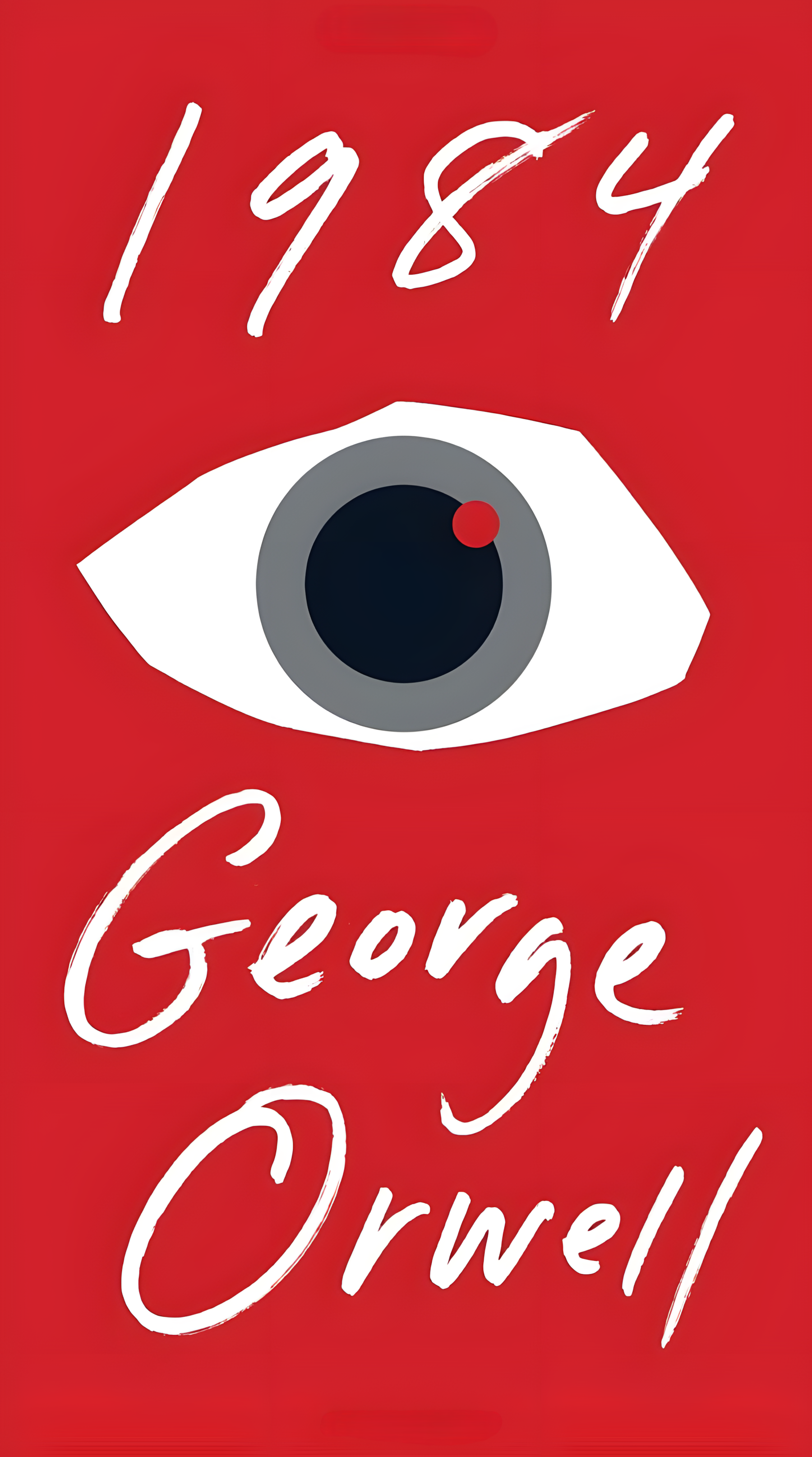
#2 - 1984: A Victim of Its Own Success?

1984 is, without question, a masterpiece. Its exploration of totalitarianism, surveillance, and the manipulation of truth is foundational to modern political thought. But its very success presents a challenge for book clubs. Terms like 'Big Brother,' 'thoughtcrime,' and 'doublespeak' are so ingrained in our cultural lexicon that a discussion can feel like a recitation of talking points everyone already agrees on. Yes, totalitarianism is bad. Yes, surveillance is dangerous. The book’s arguments have been so thoroughly absorbed that finding a fresh angle, a point of genuine contention, can be surprisingly difficult.
Furthermore, the novel’s second half, with its long excerpts from Goldstein’s book, can grind a discussion to a halt. It’s pure exposition, brilliant but dramatically inert. While the psychological horror of Winston Smith’s journey is profound, the characters are more symbols than people, designed to illustrate Orwell’s thesis. Your group will have a sober, important conversation, but it might lack the fire of true debate. It’s an essential read, but perhaps a less-than-ideal discussion pick for a group that already knows the score.
- Thematic Depth: 9/10
- Character Complexity: 7/10
- Argument Generator: 7/10
- Total Score: 23/30
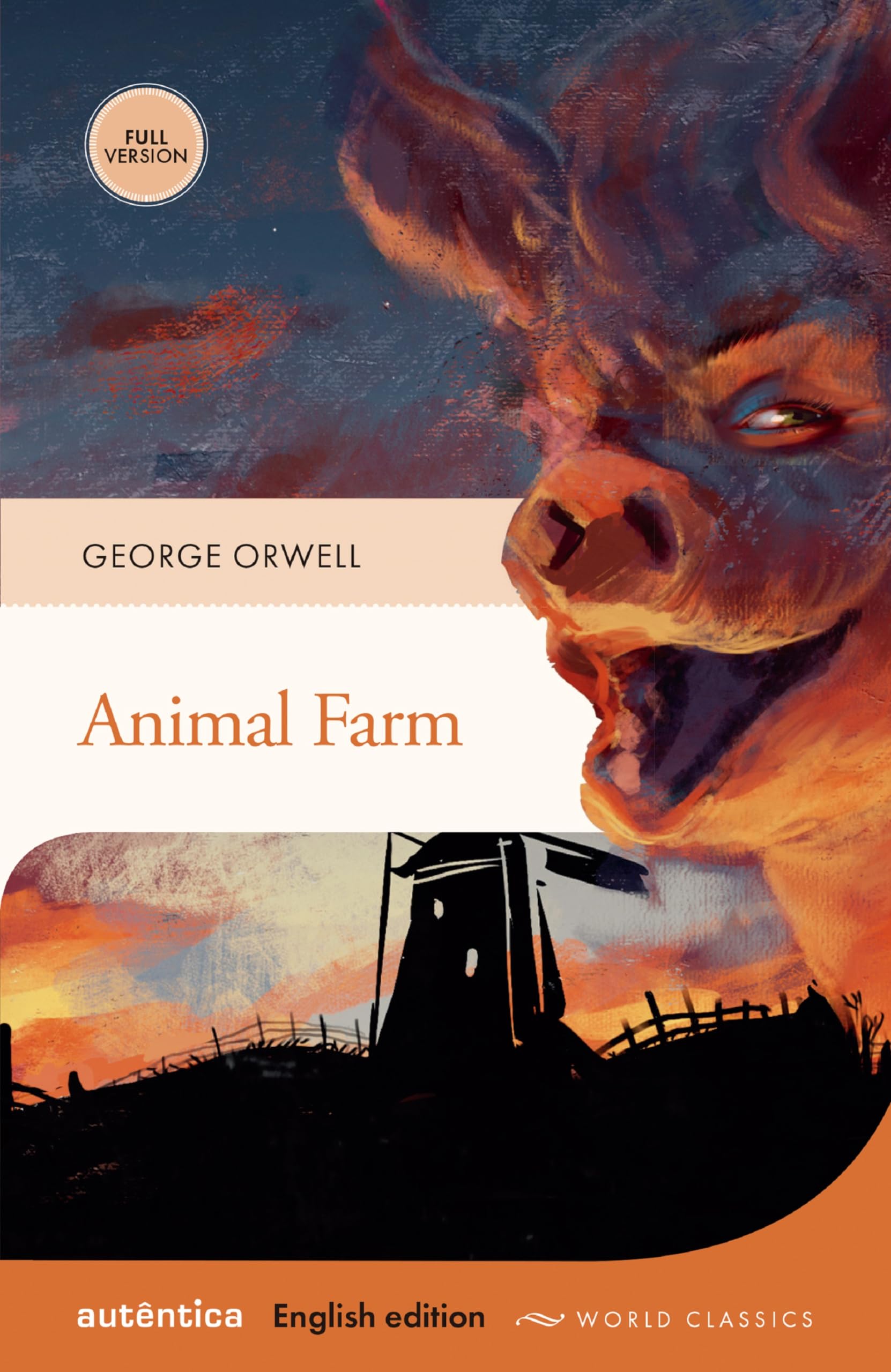
#1 - Animal Farm: The Perfect Allegorical Engine

Here it is. The perfect book club pick hiding in plain sight. Animal Farm succeeds where others fail precisely because of what it isn't. It isn't a 700-page tome. It isn't weighed down by impenetrable lore. It isn't a story whose ideas have been diluted by decades of cultural osmosis. It is a razor-sharp, brutally efficient fable that does one thing perfectly: it provides a clear, universally understood framework for debating power.
The genius of the allegorical form is that it invites application. The discussion isn’t just about the Russian Revolution; it’s about mapping the book’s events onto any power structure—a corporation, a political party, even the book club itself. Is Snowball a tragic hero or a naive ideologue? At what exact moment did Napoleon’s takeover become inevitable? Is Boxer’s loyalty noble or pathetic? These questions about the characters are really questions about human nature, and they are guaranteed to generate passionate disagreement. Because the plot is simple and the page count is low, no one gets bogged down in summary. The entire meeting can be dedicated to pure, unadulterated argument. It’s a literary grenade, and for a book club, there is no higher praise. If you're tired of limp, going-nowhere discussions, check out our guide on how your book club is broken and how to fix it.
- Thematic Depth: 8/10
- Character Complexity: 9/10
- Argument Generator: 10/10
- Total Score: 27/30
Final Leaderboard: The Book Club Champion of June 2026
| Rank | Title | Thematic Depth | Character Complexity | Argument Generator | Total Score |
|---|---|---|---|---|---|
| 1 | Animal Farm | 8/10 | 9/10 | 10/10 | 27/30 |
| 2 | 1984 | 9/10 | 7/10 | 7/10 | 23/30 |
| 3 | Dune | 10/10 | 6/10 | 6/10 | 22/30 |
| 4 | The Hunger Games | 6/10 | 5/10 | 5/10 | 16/30 |
| 5 | Harry Potter and the Goblet of Fire | 2/10 | 3/10 | 1/10 | 6/30 |
Editor's Verdict
George Orwell’s Animal Farm is the undisputed champion. It's not just a classic; it's a perfectly calibrated machine for generating meaningful conversation. The simplicity of its allegorical structure is its greatest strength, forcing readers to engage with its ideas directly and apply them to the world around them. It's a reminder that the best book for a group discussion isn't the longest, the most complex, or the most popular—it's the one that provides the sharpest tools for debate.
FAQ
What makes a book good for a book club?
A great book club book sparks debate. It should have thematic depth with ambiguous ideas, complex characters with debatable motivations, and a structure that encourages passionate disagreement rather than simple plot summary.
Why is 'Animal Farm' a better book club pick than '1984'?
While both are masterpieces, 'Animal Farm' is a more effective tool for discussion. Its concise, allegorical nature invites members to apply its lessons to various contexts, generating fresh debate. '1984' is so culturally famous that its main ideas are often agreed upon before the discussion even starts.
Are popular fantasy or YA books bad for book clubs?
Not necessarily, but they often prioritize plot mechanics and world-building over the kind of thematic and character ambiguity that fuels the best discussions. Books like 'Harry Potter' can lead to conversations focused on plot summary and nostalgia rather than critical debate.