Fatherland: Book vs. Movie, An Alternate History Showdown
Robert Harris’s chilling novel of a victorious Third Reich gets a new film adaptation. We dissect which medium can truly capture the horror of a history that never was.
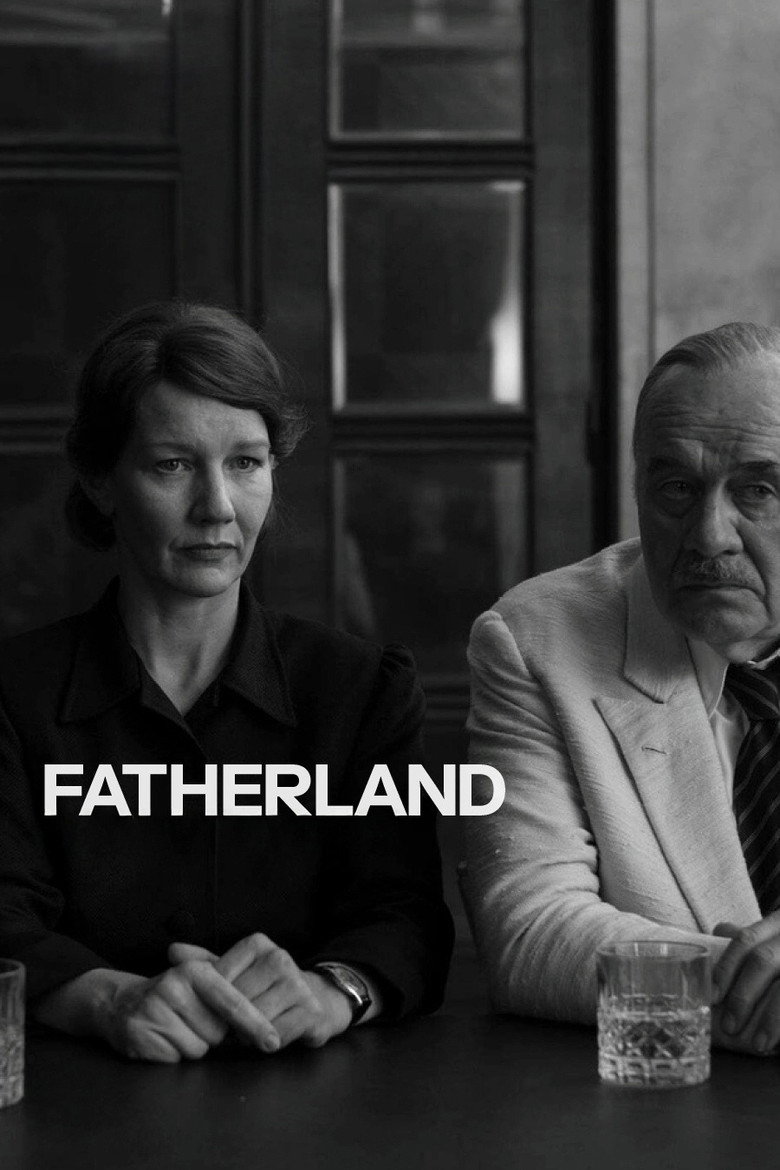
What is more terrifying: the history that happened, or the history that so nearly did? Robert Harris’s 1992 masterpiece, Fatherland, and its much-anticipated 2026 film adaptation argue compellingly for the latter. The novel posits a world where the Third Reich won the Second World War, and by 1964, is a sprawling, stagnant empire on the verge of détente with the United States. It's into this chillingly plausible dystopia that we are thrown, following a homicide detective in the Kriminalpolizei as he stumbles upon a conspiracy that threatens to unravel the very foundation of his world. This is not a story of heroic resistance or grand battles; it is a noir-infused procedural about the rot beneath a veneer of victory, a story whose power has only amplified in the decades since its publication.
Fatherland: Book vs. Movie Adaptation Deep Dive
This essay explores the upcoming cinematic adaptation of Fatherland in contrast with its dense, atmospheric source material. We'll cover:
- Why Robert Harris's 1992 novel feels more urgent in 2026 than ever before.
- The unique strengths of the book's meticulous prose versus the potential of cinematic world-building.
- Key plot points and thematic challenges the film adaptation must navigate to succeed.
- Our definitive verdict on whether you should read the book before seeing the movie.
The Cultural Moment: An Uncomfortable Reflection
Why dredge up this particular ghost now? In an era saturated with superheroics and fantasy epics, the return of Fatherland to the cultural fore feels both jarring and necessary. We live in a time of political polarization, rising authoritarian sentiment, and a constant, disorienting war on objective truth waged across digital battlefields. The central horror of Harris’s novel isn't the jackboots and spectacle of Nazism—it’s the chillingly bureaucratic, mundane, and successful erasure of its greatest crime. The Holocaust, in the world of Fatherland, is a forgotten whisper, a historical footnote dismissed as Allied propaganda.

This theme resonates with an unnerving clarity in 2026. The story of Xavier March, an SS detective who believes in the system until he uncovers the lie it’s built on, is a potent allegory for our times. He is a man confronting a past that his entire society has conspired to bury. The adaptation's arrival taps into a profound contemporary anxiety: not just about the future, but about the stability of the past itself. In a world of deepfakes and state-sponsored misinformation, the idea that a truth as monumental as the Final Solution could be systematically expunged from history feels less like speculative fiction and more like a dire warning. The film isn't just a period piece or a thriller; it’s a mirror held up to a world grappling with its own relationship to history and truth.
The Architect's Blueprint vs. The Director's Vision
Every adaptation is a translation, and the journey of Fatherland from page to screen presents a fascinating clash of mediums. Each has a distinct advantage in rendering this alternate world, and each faces its own inherent limitations.
The Power of Prose: Building a World from the Inside Out
Robert Harris's novel is a masterclass in world-building, achieved not through lengthy exposition but through the weary, cynical perspective of its protagonist. The book's greatest strength is its interiority. We don't just see the Greater German Reich; we feel its oppressive weight through Xavier March's thoughts. The prose captures the texture of this world: the persistent rain on Berlin's monumental avenues, the sour smell of cheap cigarettes, the palpable fear that hangs in the air even in casual conversation. Harris excels at depicting the soul-crushing banality of this totalitarian state. The Reich isn't a hyper-efficient machine; it's a bloated, corrupt bureaucracy, plagued by the same petty rivalries and inefficiencies as any other government, just with a far more sinister foundation.
The investigation itself is a literary marvel. March uncovers the truth not through car chases and shootouts, but through sifting through archives, reading redacted files, and interviewing old men who say too much or too little. The novel’s climax isn’t a bombastic explosion, but the quiet, devastating horror of March standing in the idyllic countryside outside Auschwitz, finally understanding the scale of the atrocity that has been erased. This is a moment cinema will struggle to replicate. The power is in the dawning realization, the slow processing of an evil so vast it defies imagination—a process perfectly suited to the internal monologue and gradual revelation that prose allows. The book’s horror is cerebral, a creeping dread that settles deep in your bones.
The Immediacy of Cinema: A Visceral Nightmare
Where the book builds its world through inference and atmosphere, the Fatherland film has the power of spectacle. Describing Albert Speer’s Germania—a city of impossibly vast domes and triumphal arches that was designed but never built—is one thing. To see it rendered on screen, to witness the Volkshalle dwarfing the Brandenburg Gate under a perpetually grey sky, is another entirely. Cinema offers an immediate, visceral gut-punch that prose can only suggest. The production design alone can communicate the Reich’s megalomania and inhuman scale in a single shot.
The film also holds an advantage in pacing and performance. A two-hour thriller can condense March's sprawling investigation into a taut, relentless narrative. The paranoia of being watched, a constant theme in the book, can be amplified tenfold through claustrophobic cinematography, a discordant score, and the subtle facial tics of a great actor. March’s internal struggle, which takes up pages of the novel, can be conveyed in a single, haunted look. The character of Charlie Maguire, the American journalist who aids March, can be transformed from a necessary plot device into a dynamic, compelling screen presence, her outsider’s shock and horror acting as a surrogate for the audience's.
The film’s strength will be its ability to make the abstract tangible. Seeing swastika banners hanging from familiar landmarks, watching the Hitler Youth march through streets we recognize, and hearing the casual bigotry woven into everyday conversation will provide a shock of recognition that is uniquely cinematic. It can transform Harris’s historical hypothesis into a living, breathing nightmare.
Navigating the Minefield of Adaptation
Translating Fatherland is not simply a matter of filming the plot. The screenwriters and director face critical choices that will determine whether the adaptation soars or stumbles. The 1994 HBO film starring Rutger Hauer was a noble effort, but it was hamstrung by a television budget and a need to soften the novel’s edges. The 2026 version has the opportunity to be definitive, but it must navigate three key minefields.
First is the complexity of the conspiracy. The book's plot is a dense web of interlocking secrets involving the Wannsee Conference attendees being systematically murdered to hide the truth of the Final Solution from the world, particularly from a visiting President Kennedy (Joseph P., not John F.). A film will inevitably need to streamline this. The danger is that in simplifying the “who” and “why,” it reduces a chilling political thriller to a standard murder mystery. The novel’s power comes from the realization that this isn't about a single killer, but about a state-sponsored cover-up of unimaginable evil. Losing that nuance would be a critical failure.
Second is the character of Charlie Maguire. In a modern Hollywood production, there will be immense pressure to elevate her from a supporting character to a co-lead. While this might make for a more conventional two-hander, it risks diluting the story's core. Fatherland is fundamentally March's story. It is a German's story of reckoning with his own nation's soul. Centering an American perspective too heavily could shift the thematic weight, turning it into a story of an outsider saving the ignorant native rather than one of internal disillusionment and sacrifice.
Finally, and most importantly, there is the ending. The novel concludes on a note of profound, heartbreaking bleakness. March ensures the evidence of the genocide gets to Charlie, but he does so knowing he is heading to his certain death at the hands of the Gestapo. There is no victory parade, no triumphant reveal. The truth is out, but the Reich will endure, and our hero is dead. It is a powerful, nihilistic, yet strangely noble conclusion. It posits that telling the truth is an absolute good, even if it changes nothing and costs everything. Will a major studio film have the courage to retain this ending? Or will they tack on a more hopeful coda, where the evidence topples the regime or March somehow escapes? To compromise on the ending would be to betray the very soul of Harris's novel. It would trade a devastating statement on the nature of truth and power for empty, unearned uplift.
Editor's Verdict
So, which version should you consume? While the upcoming film promises a visually stunning and tense thriller, the source material remains the essential text. You must read the book first. The cinematic experience, however masterful, will be a summary; the novel is the complete, unabridged thesis on the terrifying plausibility of a world gone wrong.
- Fatherland (The Book): 9/10. Robert Harris's research is impeccable, the atmosphere is suffocatingly effective, and the slow-burn reveal of the Reich's secret is one of the great payoffs in modern thriller fiction. Its power lies in its quiet, bureaucratic horror, a feat only prose can truly achieve.
- Fatherland (The Film - Projected): 7/10. The film has the potential for breathtaking visuals and a gripping pace. However, it risks losing the novel's thematic depth through necessary plot compression and a likely, studio-mandated softening of its brutally bleak ending. It will be a thrilling ride, but likely a less profound one.
FAQ
Is the movie 'Fatherland' a direct adaptation of the book?
While based on Robert Harris's 1992 novel, screen adaptations almost always make changes to plot, character, and pacing to fit the cinematic medium. We expect the core story of detective Xavier March investigating a conspiracy in a Nazi-victorious 1964 Berlin to remain, but some subplots and characters may be altered.
What is the historical basis for 'Fatherland'?
The novel is an alternate history thriller. It's set in a fictional 1964 where Germany won WWII. However, Robert Harris meticulously researched real Nazi plans, such as Albert Speer's architectural designs for a new Berlin called 'Germania', and the historical details of the Wannsee Conference, to create a chillingly plausible world.
Was there a previous movie version of 'Fatherland'?
Yes, HBO produced a made-for-television film in 1994 starring Rutger Hauer as Xavier March and Miranda Richardson as Charlie Maguire. It was well-received at the time but was limited by its TV budget.