Page vs. Persona: The Art of Adapting Literary Obsession
Julian Schnabel's ‘In the Hand of Dante’ pits literary grime against cinematic gloss, revealing the impossible, essential art of turning an author's soul into a spectacle.
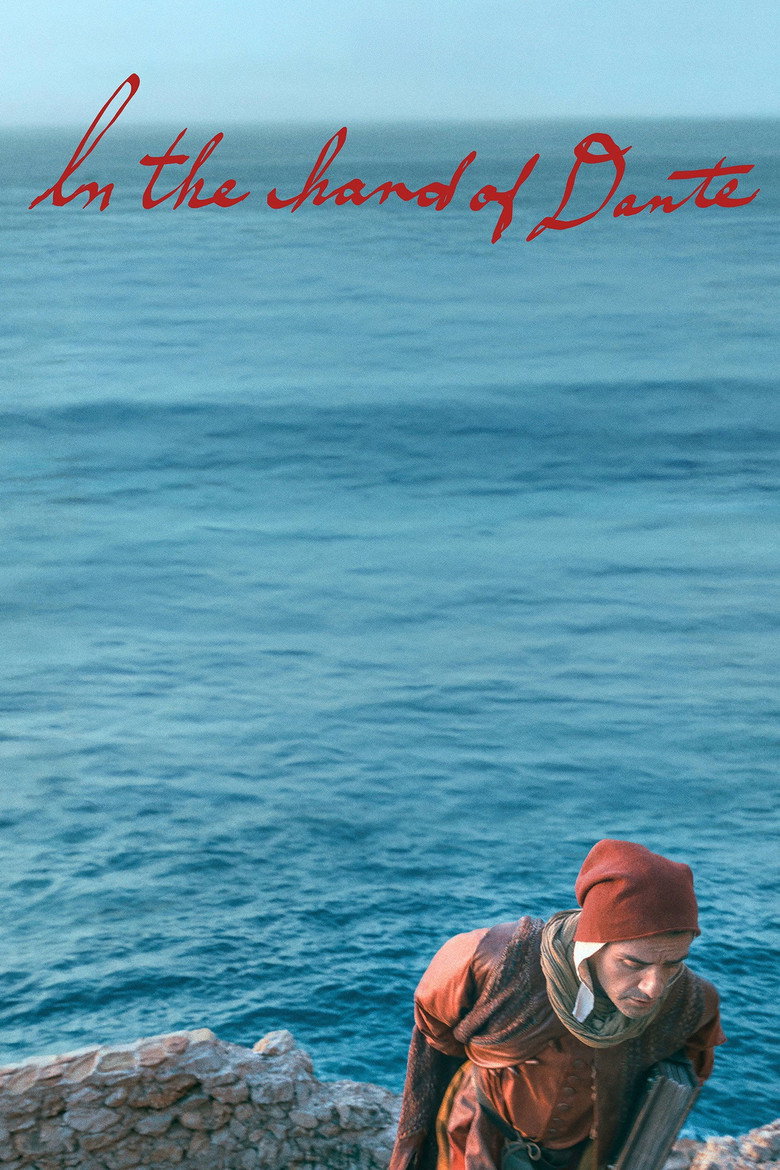
When does an adaptation become an act of forgery, and when is it a form of translation? The line is drawn not by a slavish devotion to plot, but by the successful transmutation of a story's core obsession from one medium to another. Hollywood's latest slate of page-to-screen projects is a fascinating test of this principle, a high-stakes game where literary worlds are either reborn or rendered into handsome, hollow counterfeits. We're not just getting movies of books; we're getting cinematic arguments about them, and nowhere is that argument more fraught and fascinating than with the upcoming adaptation of Nick Tosches’s magnificent, maddening novel, In the Hand of Dante.
What to Know About Upcoming Book-to-Screen Adaptations
- An in-depth analysis of Julian Schnabel's film adaptation of In the Hand of Dante versus Nick Tosches's novel.
- How the adaptation of Narnia: The Magician's Nephew must navigate the challenges of bringing a beloved, allegorical origin story to life.
- The radical transformation of Chris Van Allsburg's picture book Jumanji into a blockbuster action-comedy franchise.
- A final verdict on which version—the original book or the new screen adaptation—offers the more essential experience for each property.
The Cultural Moment: A Hunger for Difficulty, Nostalgia, and Reinvention
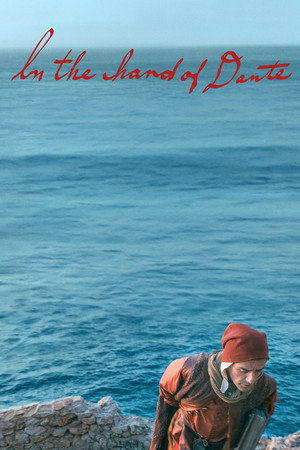
The simultaneous arrival of adaptations as wildly divergent as In the Hand of Dante, Narnia: The Magician's Nephew, and Jumanji: Open World isn’t a coincidence; it’s a diagnosis of our fractured cultural appetite. Each pairing represents a distinct, almost contradictory, demand we place on storytelling. At the center is Dante, a project that feels like a deliberate rebellion against the sanitized, four-quadrant blockbuster. Julian Schnabel, a director who is first and foremost a painter, taking on Nick Tosches’s brutal, labyrinthine novel about a stolen manuscript of The Divine Comedy is an act of breathtaking, perhaps foolish, ambition. In an era dominated by algorithm-approved content, Dante represents a swing for the fences—a bet that audiences are starved for dense, difficult, adult art that grapples with obsession, authenticity, and the grimy collision of high genius and low crime. It’s a story about the provenance of a sacred text in a world of forgeries, a perfect metaphor for our own anxieties about AI-generated art and the meaning of authorship.

In stark contrast stands Narnia: The Magician's Nephew, a project that answers a completely different cultural call: the desire for sincere, foundational myth-making. While Dante dives into the muck of human fallibility, Narnia offers a return to a world of clear moral stakes and unambiguous wonder. C.S. Lewis’s creation story is a cornerstone of 20th-century fantasy, a work of profound earnestness. Its revival now, especially under the guidance of a director like Greta Gerwig, known for her humanistic touch, speaks to a collective craving for enchantment without irony. We want to believe in the creation of a good world, even as our own feels increasingly complex and compromised. It's the ultimate comfort food, a story that reassures us that even in the beginning, there was a plan, a purpose, and a talking lion to explain it all.

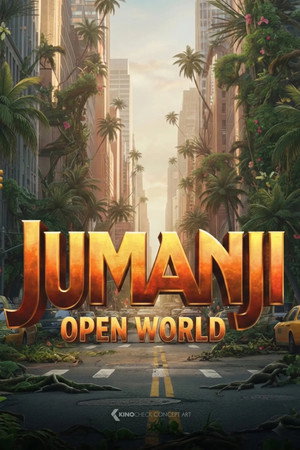
Then there's the third pole, the curious case of Jumanji. Here, the cultural force at play is the Hollywood imperative of total IP monetization. Chris Van Allsburg’s 1981 book is a slim, hauntingly illustrated picture book about the terrifying bleed-through of a supernatural board game into reality. The modern film franchise, culminating in Jumanji: Open World, has strip-mined that core concept and built a theme park on top of it. It’s an adaptation in name only. This phenomenon reflects the industry's belief that a recognizable title is more valuable than a recognizable story. It's not about translating a work; it's about leveraging brand awareness to launch a completely new product that satisfies the demand for star-driven, high-concept comedy. The success of this approach proves that for a large segment of the audience, the source material is, at best, a fun fact.

Book vs. Screen Strengths: The Irreducible vs. The Irresistible
Comparing the book and screen versions of these stories reveals the fundamental, often unbridgeable, gap between the two mediums. The power of Tosches's In the Hand of Dante is almost entirely located in its voice. The prose is a singular concoction: part hard-boiled noir, part academic treatise, part profane rant. The narrator, a semi-fictionalized version of Tosches himself, is a connoisseur of forgotten knowledge and a weary traveler in the underworld of organized crime. His internal monologue—rich, digressive, and dripping with encyclopedic detail and world-weary cynicism—is the book's engine. No camera can film that voice. The novel’s parallel narrative, imagining Dante Alighieri’s own journey through Sicily while composing his masterwork, is rendered in a completely different, elevated style. The genius of the book is the dissonant harmony between these two stories, a connection made not through plot but through the shared theme of exile and the obsessive pursuit of the divine. The book is an artifact to be studied, a puzzle to be solved.
The film, by necessity, must trade this interiority for immediacy. Its strength will lie in performance and visual poetry. Julian Schnabel can paint with light, shadow, and grime. He can make the criminal underworld feel palpably dangerous and the 14th-century Italian landscape feel both sacred and harsh. The casting of Oscar Isaac as the narrator and Jason Clarke as his dangerous associate is a masterstroke; they can embody the intellectual anxiety and brutish pragmatism that Tosches’s prose describes. The film’s advantage is its ability to make the abstract concrete: to show us the manuscript itself, its brittle pages, its spidery script. It can externalize the book’s internal obsession, turning a literary quest into a visceral, visual thriller.
This dynamic is mirrored, albeit with a different tonal palette, in The Magician's Nephew. The enduring strength of C.S. Lewis's novel is its quiet, direct simplicity. It reads like a story being told to you by a wise, kind uncle. Lewis’s authorial voice is a character in itself, frequently breaking the fourth wall to confide in the reader (“This is a very important story because it shows how all the comings and goings between our own world and the land of Narnia first began”). The book’s magic is conceptual and allegorical. The creation of Narnia is described in plain, powerful language that relies on the reader's imagination to supply the grandeur. The book’s power is in what it suggests, not what it shows. The screen, however, is a medium of spectacle. The film’s undeniable strength will be its ability to realize those suggestions in breathtaking detail. The Wood between the Worlds, the dying world of Charn, and especially Aslan singing Narnia into existence—these are moments that demand the full force of modern visual effects and a soaring orchestral score. Where the book whispers of wonder, the film can shout it from the mountaintops. The trade-off is that the intimate, conversational tone of Lewis’s prose will inevitably be lost, replaced by the more impersonal awe of the cinematic.
And then there is Jumanji, where the comparison is almost absurd. The book’s power rests entirely in Chris Van Allsburg’s stunning, surreal charcoal illustrations. The meticulously rendered images of monkeys destroying a kitchen and a rhino stampeding through a living room are both terrifying and beautiful. The sparse text creates an atmosphere of mounting dread. The book is a masterpiece of tone. The movies, in contrast, have zero interest in this tone. Their strengths are pure, uncut charisma and comedic timing. Dwayne Johnson, Kevin Hart, Jack Black, and Karen Gillan form an ensemble with an explosive, infectious chemistry. The films excel at action set pieces, witty banter, and leveraging the body-swap concept for maximum comedic effect. The screen version isn't just better at these things; it invented them whole cloth. It's a case where the screen didn't translate the book's strength but instead built a skyscraper next to the book's charming bungalow.
Adaptation Divergences: The Necessary Betrayal
Every adaptation is a series of choices, and every choice is a betrayal of some aspect of the source. The most critical divergence for In the Hand of Dante will be structural. Tosches’s novel is a shaggy dog story, a sprawling meditation that often puts its ostensible plot on hold for pages of historical digression or philosophical musing. A faithful film would be unwatchable. Schnabel must therefore impose a tighter, more propulsive narrative spine. The dual timelines will likely be intercut more aggressively to create direct parallels that the book only implies. The greatest and most necessary betrayal, however, will be the flattening of the narrator. The meta-fictional element of the author-as-character is a literary device. The film will almost certainly transform him into a more conventional protagonist, an expert caught in a world he can’t control. This is a profound loss—it excises the book’s central thesis about the messy, personal nature of art and history—but it is probably the only way to make the story function as a movie.
For Narnia: The Magician's Nephew, the divergences will be additions rather than subtractions. Lewis’s book is short and its protagonists, Polly and Digory, are more archetypes than fully realized characters. To sustain a feature film, the screenplay will have to invent new scenes and subplots to flesh out their backstories and motivations. We can expect Digory’s relationship with his sick mother to be given far more screen time, providing a more explicit emotional engine for his quest. Jadis, the future White Witch, will also likely be expanded from a terrifying but somewhat one-note villain into a more complex antagonist whose fall from grace is given more weight. These changes are almost certainly improvements. By modern storytelling standards, Lewis’s characters are thin. Infusing them with greater psychological depth, a specialty of Greta Gerwig, will likely make the story more resonant for a contemporary audience without violating its thematic core.
With Jumanji: Open World, the concept of “divergence” is almost meaningless. The film doesn't diverge from the book; it orbits a different star in a different galaxy. The core change—from board game to video game—was the foundational act of creation for this new franchise. This single choice unlocked everything: the body-swap avatars, the video game “lives,” the specialized skills, and the level-based plot structure. It was a commercially brilliant move, transforming a creepy, self-contained fable into an endlessly expandable engine for action-comedy. It’s neither an improvement nor a loss relative to the book, because the two works have entirely different goals. It is the ultimate example of adaptation as commercial problem-solving, and on those terms, it is an undeniable success.
Editor's Verdict
So, which version should you choose? The answer, as always, is complicated.
In the Hand of Dante: You must read Nick Tosches’s book first. It is a dense, difficult, and utterly unique literary experience. The film, no matter how brilliant, will be an interpretation, an echo. Book: 9/10. Predicted Film Score: 7/10.
Narnia: The Magician's Nephew: The book is a timeless classic, a perfect story to read aloud. However, the film has the potential, through added character depth and visual spectacle, to become the definitive version for a new generation. Start with the book, but anticipate the film surpassing it. Book: 8/10. Predicted Film Score: 8/10.
Jumanji: These are two entirely different species. Van Allsburg’s book is a work of art, a masterclass in atmospheric visual storytelling. The modern films are disposable, delightful popcorn entertainment. Experience both, but understand they have nothing in common beyond a name. Book: 9/10. Film Franchise: 7/10.
Ultimately, the schism between page and screen forces us to confront what we value in a story. Do we want the internal, authentic voice of a singular artist, or the collaborative, externalized spectacle of cinema? The film adaptation of In the Hand of Dante will be the year's most fascinating test case. The film's necessary simplification of Nick Tosches's meta-narrative will make it a compelling crime thriller, but it sacrifices the book's core argument about the porous line between creation and forgery.
FAQ
Is the movie 'In the Hand of Dante' a direct adaptation of the book?
While based on Nick Tosches's novel, the film adaptation by Julian Schnabel will likely need to significantly streamline the book's complex, dual-timeline narrative and its meta-fictional elements to work as a cohesive movie.
What is the main difference between the 'Jumanji' book and the new movies?
The original 'Jumanji' by Chris Van Allsburg is a short, atmospheric picture book about a supernatural board game. The modern movies, starting with 'Jumanji: Welcome to the Jungle', completely reinvent the premise as an action-comedy about teenagers trapped in a video game as adult avatars.
Who is directing the new 'Narnia: The Magician's Nephew' movie?
The upcoming adaptation of 'The Magician's Nephew' is set to be directed by Greta Gerwig, known for her work on films like 'Lady Bird' and 'Little Women'.