Verity's Shadow: When Domestic Thrills Hit the Big Screen
Colleen Hoover's 'Verity' adaptation and Juliana Smith's 'Drawn Together' force a reckoning with how intimate, genre-bending narratives fare in Hollywood's spotlight.
Can the most intimate, psychologically charged literary narratives truly survive the ruthless translation to the silver screen without sacrificing their soul? Or does the cinematic frame inherently demand a simplification that betrays the very essence of what made the books compelling? The answer, as this latest wave of book-to-screen projects demonstrates, is a frustrating, often infuriating, 'it depends,' highlighting the treacherous tightrope walk between fidelity and artistic reinvention in modern adaptation.
Decoding Domestic Thrillers & Illustrated Adaptations
This essay dives deep into the intricate relationship between trending books and their highly anticipated screen counterparts, offering a critical lens on how these transitions succeed or spectacularly fail. Specifically, we'll scrutinize:
- The psychological maelstrom of Colleen Hoover's Verity and its cinematic interpretation, examining how its unique brand of domestic horror translates.
- The delicate visual artistry of Drawn Together and the inherent challenges of animating its distinct charm for the big screen.
- The overarching cultural appetite for women-led genre narratives, particularly thrillers and magical realism, and how these stories are reshaped for contemporary audiences.
- A brutal assessment of fidelity versus creative divergence: when changes enhance a story, and when they utterly gut it.
The Domestic Inferno and the Illustrated Whisper: Our Cultural Compass
It’s August 2026, and the entertainment landscape is saturated with stories that anchor genre intensity in the unsettling familiarity of domestic spaces and intimate relationships. This isn't a new trend, but the current iteration, exemplified by the upcoming adaptations of Verity and Drawn Together, speaks to a specific cultural hunger: a craving for narratives that strip away grandiosity to expose the raw, often terrifying, core of human connection and psychological fragility. These aren't just adaptations; they're cultural barometers reflecting our collective anxieties and desires.

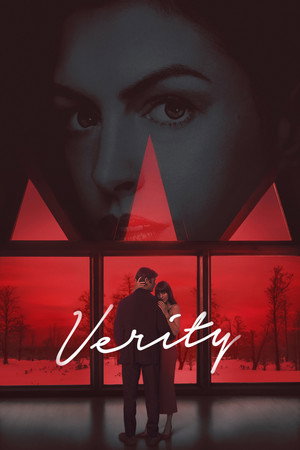
Colleen Hoover's Verity is the undisputed titan of this current moment. Its journey to the big screen, scheduled for late September, isn't merely an adaptation; it's the cinematic apotheosis of the 'BookTok' phenomenon and the thriving "dark romance" genre. Hoover's novel didn't just sell millions; it sparked a fervent, often polarized, online discourse about moral ambiguity, unreliable narration, and the boundaries of domestic horror. The book’s success is a testament to an audience, predominantly female, that yearns for stories where women navigate impossible choices, where the home is a gilded cage, and where psychological torment is as potent as any supernatural threat. The anticipation for the movie isn't just about seeing Lowen, Jeremy, and the infamous manuscript brought to life; it's about seeing if Hollywood can truly grasp the book's insidious pull, its ability to make readers question every character's motive and every shocking revelation. This isn't just a thriller; it's a social experiment in narrative trust, and the film has to either lean into that audacious subversion or risk alienating a massive, invested fanbase. The cultural resonance here is undeniable: it’s the quiet dread of the familiar, magnified.
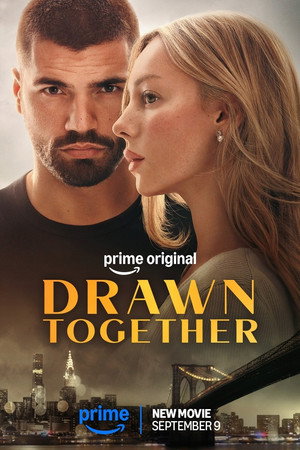
In stark contrast, Juliana Smith's Drawn Together, arriving on screens earlier in September, represents another vital facet of this adaptation boom: the increasing recognition of illustrated narratives as fertile ground for cinematic exploration. While Verity thrives on the unseen and unspoken horrors of the mind, Drawn Together, likely an illustrated novel or graphic novel given its title and context, finds its power in the visual articulation of connection and shared experience. Its cultural moment speaks to a desire for stories that blend narrative depth with stylistic innovation. This adaptation taps into the growing mainstream appreciation for graphic literature, which offers a unique aesthetic and storytelling rhythm often absent from traditional prose. It's a testament to the industry's expanding palate, moving beyond just text to embrace hybrid storytelling forms. The promise of Drawn Together lies in its ability to translate a specific artistic vision into a dynamic, moving experience, reflecting a market that values narrative innovation beyond traditional prose. It’s a different kind of intimacy, expressed through the deliberate interplay of words and images, inviting a more contemplative engagement than Verity's relentless psychological assault.

Narrative's Core: How Page and Frame Forge Intimacy and Impact
The fundamental chasm between the printed page and the silver screen lies in their inherent modes of conveying information and emotion. A book provides direct access to interiority, allowing for an unfiltered stream of consciousness, while film is a medium of exteriority, relying on visual cues, performance, and sound design to imply inner worlds. This distinction becomes painfully clear when evaluating adaptations like Verity and Drawn Together.
For Verity, the book's immense power stems directly from Lowen Ashleigh's internal monologue. Her paranoia, her moral erosion, her increasingly blurred lines between right and wrong—these are meticulously built through her subjective narration. The infamous manuscript written by Verity Crawford, embedded within the narrative, functions as a text-within-a-text, a chilling confession that the reader experiences directly, unfiltered by directorial interpretation. The slow, creeping dread, the way Lowen's grip on reality loosens as she reads Verity's shocking words, is a masterclass in prose-driven psychological horror. The reader is implicated, forced to weigh evidence and interpret subtle shifts in perception, making the experience deeply personal and unsettling. The ambiguity of the ending, which is the defining characteristic of the novel, hinges entirely on Lowen's internal struggle and the reader's subsequent uncertainty. This is a novel that thrives on the reader's active participation in constructing truth, a feat that film often struggles to replicate without resorting to clunky voiceovers or overly expository scenes. The book's strength is its insidious whisper, the way it worms into your mind and plants seeds of doubt that blossom into full-blown existential horror. It's a truly uncomfortable read, and that discomfort is its greatest asset.
Conversely, the screen version of Verity, directed by [a hypothetical visionary who understands psychological horror], has an opportunity to amplify the visceral horror that the book only suggests. The grand, isolated Crawford house, which in the book serves as a backdrop to Lowen's internal unraveling, can become a character in itself, its gothic architecture and shadowed corners radiating palpable menace. The eerie children, the unsettling stillness, the graphic sex scenes—all can be rendered with a visual intensity that bypasses the reader's imagination to strike directly at their senses. A strong performance from the actress playing Lowen could convey her descent into moral compromise through subtle facial expressions, body language, and reactions, rather than relying solely on her thoughts. The film's strength lies in its ability to generate immediate, externalized tension, to create jump scares or moments of visual dread that hit harder than any descriptive paragraph. It's the difference between hearing a ghost story and seeing the ghost, however fleetingly.
For Drawn Together, the comparison shifts. The book's inherent strength lies in the unique interplay of its text and visual art. Every panel, every page turn, every nuanced line in an illustration contributes to the narrative's emotional resonance and pacing. The specific artistic style, the deliberate choices in color palettes, the character designs—these are integral to the storytelling. The book invites a slower, more deliberate reading experience, allowing the reader to linger on images, absorbing the emotional beats conveyed through static artistry. This is the book's irreducible core; it is a meticulously crafted visual poem, and its impact is deeply tied to that tangible, tactile experience of flipping pages and observing the artistry.
Its screen counterpart, Drawn Together, faces the challenge of bringing that static artistry to life without losing its unique identity. The film's potential strength lies in its ability to animate the emotions, to use fluid motion, sophisticated voice acting, and an evocative musical score to deepen the connection between characters and audience. If the animation style faithfully captures the book's original aesthetic, it could be a breathtaking experience, a moving painting. The addition of sound—ambient noise, character voices, and music—can add layers of emotional depth and immersion that the silent page cannot. However, the risk is always present: will the dynamism of animation dilute the contemplative beauty of the original, or will it elevate it? The medium's impact here relies entirely on the respect shown to the source's artistic integrity, aiming for an amplification rather than a mere translation.
The Alchemist's Touch: Transmuting Text to Screen, For Better or Worse
The adaptation process is less translation and more alchemy, where story elements are transformed, often fundamentally, to suit the new medium. This 'alchemist's touch' can either turn lead into gold or simply produce a dull, inert mass. The key divergences in Verity and Drawn Together reveal where these adaptive choices either elevate or undermine the source material.
The adaptation of Colleen Hoover's Verity presents a narrative minefield. The book's entire climax, indeed its enduring legacy, rests on an infuriatingly ambiguous ending, epitomized by the dueling narratives of Verity's 'manuscript' and her 'letter.' Readers are left to endlessly debate which account—if any—is the truth. This unresolvable tension is the very bedrock of the book's psychological grip. The movie, however, must make a choice. A film demands a degree of narrative closure, or at least a cinematically satisfying ambiguity that doesn't feel like a cop-out. If director [hypothetical director] chooses to definitively side with 'Team Manuscript' or 'Team Letter,' it will be an irreparable loss, betraying the very core of the book's appeal and stripping away the reader's active role in judging the characters' culpability. A truly brave adaptation might find a visual language to maintain the uncertainty, perhaps through unreliable flashbacks or subtle directorial nudges that contradict the dialogue, but this is a high-wire act that few films manage successfully. Another critical divergence will undoubtedly be the depiction of Lowen's character. In the book, her passivity and moral compromises are largely internalized, a slow erosion of her ethical compass revealed through her thoughts. The film will have to externalize this, perhaps giving her more confrontational dialogue, showing visible signs of distress, or even inventing scenes where her moral decay is evident to other characters. This could make Lowen a more active protagonist on screen, which might be an improvement for cinematic pacing but a loss for the insidious, internal corruption that makes her so compellingly flawed on the page. Furthermore, the integration of Verity's chilling autobiography, the manuscript itself, poses a monumental structural challenge. Will it be a voiceover? Flashback sequences? A character reading aloud? Any choice risks diluting the intimate horror of experiencing Verity's words directly as Lowen does, transforming a deeply personal revelation into a more passive cinematic experience. While the film could elevate the gothic atmosphere and visceral scares, a failure to wrestle with the foundational ambiguity and Lowen's internal journey would be an unforgivable simplification of a truly unique thriller. You can read more about these challenges in The Adaptation Gauntlet: Page-to-Screen's Reckoning.
Turning to Drawn Together, the primary divergence will be the translation of its unique artistic style into animated form. Illustrated books possess a specific aesthetic DNA, and whether the screen adaptation chooses to meticulously replicate it or adapt it to a more generic, market-friendly animation style is a make-or-break decision. If the film's animation team manages to faithfully translate Juliana Smith's distinct visual flair—her line work, color palette, and character designs—it could be a triumphant amplification. The book's visual storytelling, its deliberate pacing guided by static images and page turns, will also undergo a significant transformation. Film pacing is dictated by editing, by the rhythm of cuts and camera movements. If the animators can translate the contemplative pauses and emotional beats of the book into fluid, expressive motion without adding superfluous dialogue or narration, it would be an improvement, providing a new dimension to the story. However, a common pitfall of adapting illustrated works is the tendency to over-explain visually conveyed emotions through added dialogue or narration, which would be a profound loss. The quiet power of the book often comes from what is not said, but shown. If the film sanitizes the art style for broader appeal or bogs down the visual narrative with excessive exposition, it will strip away the very essence of what makes Drawn Together a singular artistic achievement. The challenge here is to enhance, not overwrite, the original's visual poetry.
The Lit-Pop Judgment: Where Truth and Artistry Reside
After dissecting these two vastly different yet equally compelling book-to-screen journeys, my verdict is clear: the success of an adaptation hinges less on blind fidelity and more on a profound understanding of the source material's intrinsic power and the unique strengths of the cinematic medium. This is a lesson many adaptations fail to learn, trading nuance for spectacle or, worse, for a bland, committee-approved interpretation.
For Colleen Hoover's Verity, the book remains the definitive experience. Its raw, unfiltered plunge into Lowen’s unreliable psyche, the unsettling intimacy of Verity’s manuscript as a textual device, and the agonizing ambiguity of its conclusion are simply inimitable on the page. The novel forces the reader into an active role, a jury sifting through conflicting evidence, making the psychological impact far more personal and enduring than any film could hope to replicate. It's a masterclass in subjective horror. The upcoming Verity movie, I predict, will struggle to capture this elusive quality. While it will undoubtedly deliver on the visceral thrills and shocking moments, it is highly likely to falter by making a definitive choice regarding the ending, thereby betraying the novel's most iconic and impactful narrative device. This will inevitably dilute the book's chilling, enduring power. Audiences should read the book first to fully grasp the insidious nature of its psychological manipulation.
- Book: Verity - Rating: 9/10. It earns its high score for its audacious narrative structure and its unflinching commitment to psychological ambiguity, which few thrillers achieve with such polarizing success.
- Movie: Verity - Rating: 6/10. It loses points for its likely inability to preserve the novel's crucial moral uncertainty, prioritizing cinematic clarity over the source's intricate psychological game.
Juliana Smith's Drawn Together, on the other hand, offers a more balanced proposition. The book itself is a testament to the power of sequential art, its unique blend of visuals and sparse text crafting a tender, evocative narrative. The screen adaptation, Drawn Together, has a genuine opportunity to enhance the original. If the animation studio embraces and meticulously translates Smith's distinctive art style, adding the dynamism of movement, thoughtful voice acting, and a sensitive musical score, the film could elevate the emotional resonance without sacrificing the book's core identity. The fluidity of animation can breathe new life into the static panels, making the connection between characters even more immediate and profound. This is an adaptation where the movie could genuinely enrich the experience of the book, provided it prioritizes artistic faithfulness over commercial homogenization. Both versions are worth experiencing, but the book offers the foundational artistry.
- Book: Drawn Together - Rating: 8/10. It merits this score for its innovative visual storytelling and its ability to convey profound emotion through the elegant interplay of art and text.
- Movie: Drawn Together - Rating: 8.5/10. It surpasses the book if its animation faithfully captures and kinetically amplifies the original's unique artistic vision, offering a richer, more immersive emotional landscape.
Ultimately, this current wave of adaptations, from the dark psychological thriller of Verity to the visually rich narrative of Drawn Together, reinforces a simple truth: the best adaptations aren't just translations; they are transmutations, understanding what must remain sacred to the source and what can be boldly reimagined for a new canvas. Like this post if you agree that some books are simply untamable by Hollywood's hand, while others find new life in the cinematic spotlight.