When Reality Cracks: Cinema's Escape into the Everyday Fantastic
From whimsical creatures to war-torn fae realms, these films prove our deepest anxieties and desires find their truest expression beyond the mundane.
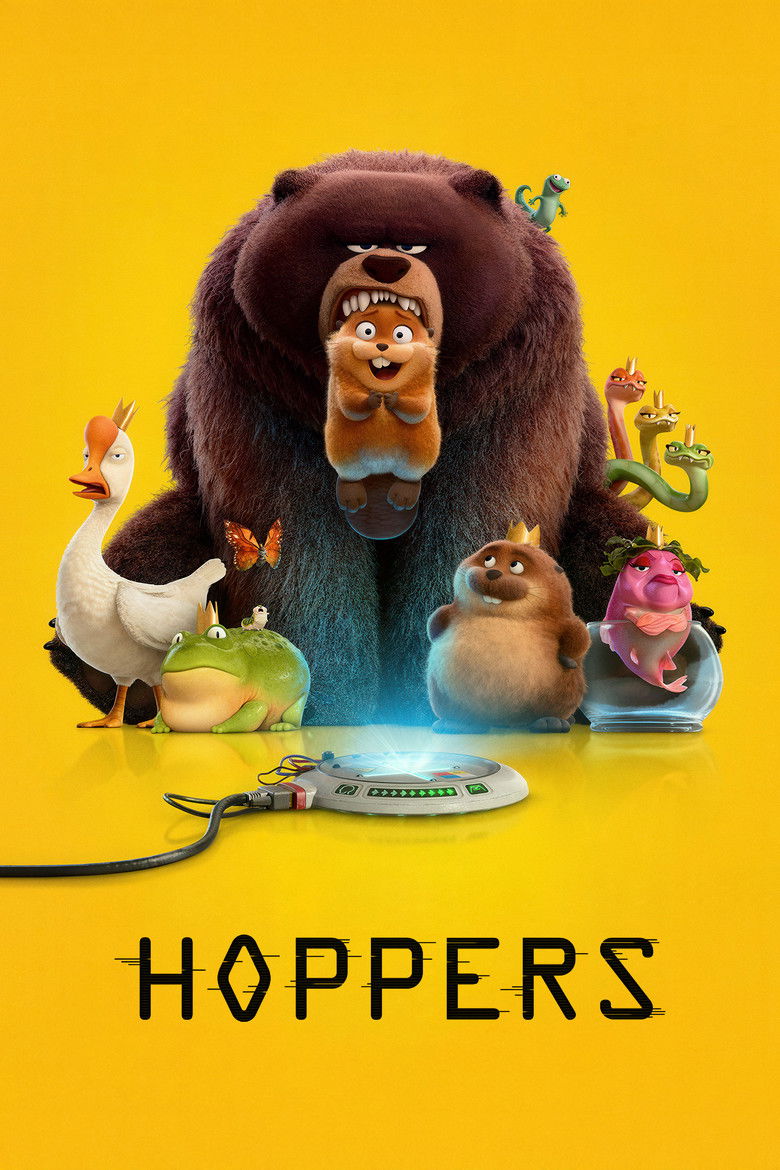
The smell of stale popcorn and cheap disinfectant hung heavy in the air, a familiar comfort in the cavernous dark. I remember leaning forward, elbows on knees, utterly transfixed as a small, unassuming woman on screen—a librarian, no less—discovered a miniature, glowing creature tucked behind a stack of dusty tomes. It wasn't a jump scare, not a grand fantasy reveal, but a quiet, almost domestic moment of impossible wonder. The creature blinked, a silent invitation, and in that instant, the drab, fluorescent-lit world of the library fractured, revealing something ancient, beautiful, and utterly alien. That scene, from the breakout indie hit Hoppers, captured precisely why some films cut deeper than any blockbuster explosion: they don’t transport us away from our world, but rather crack it open, showing the extraordinary bleeding through the seams of the ordinary.
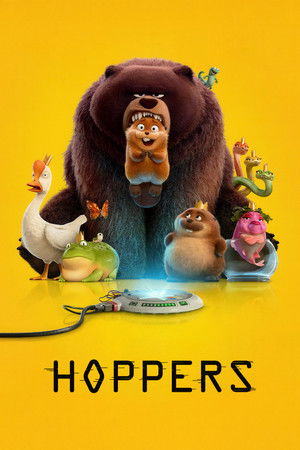
In an era perpetually chasing the next sprawling cinematic universe or grimdark prestige drama, the quiet power of magical realism and surreal storytelling feels like a necessary recalibration. These aren't just flights of fancy; they are precise instruments for dissecting the human condition, offering metaphors for our anxieties, our hopes, and our desperate need for connection in a world that often feels indifferent. The best among them, like this year's Hoppers, don't merely show us magic; they make us feel its disruptive, transformative presence in the very fabric of everyday existence.
Unveiling the Mundane's Hidden Depths: What We'll Explore
This deep dive into cinema's most potent reality-benders will dissect:
- The subtle subversion of mundane life in Hoppers.
- The whimsical, life-affirming magic of Amélie.
- The stark, allegorical fantasy of Pan's Labyrinth.
- The Invite's unsettling take on digital-age surrealism.
- How these films provide vital escapism and emotional processing for modern audiences.
The Mundane Made Mythic: Hoppers and the Art of Gentle Subversion
When Hoppers debuted earlier this year, it wasn't with the usual studio fanfare but with a quiet, insistent buzz that spread like wildfire. The film, centered on Eleanor Vance, a seemingly unremarkable archivist in a crumbling civic records office, introduces a world where small, bioluminescent, frog-like creatures – the titular “Hoppers” – are beginning to appear in forgotten corners of urban environments. What makes Hoppers a masterclass in modern magical realism isn't just the existence of these creatures, but the film's utterly grounded, almost documentary-like approach to their emergence. Eleanor's initial encounter, the one behind the dusty books, isn't played for shock or awe, but for a bewildered, quiet curiosity. This initial restraint is crucial. It sets a tone that implies the world hasn't fundamentally changed, only expanded in a way that’s almost imperceptible to those not paying attention. The film doesn't explain the Hoppers; it simply presents them as a natural, if unexpected, part of the ecosystem, forcing both Eleanor and the audience to adjust their understanding of reality.
Director Anya Sharma understands that the true magic lies not in grand spectacles but in the emotional resonance of the impossible. Eleanor, played with understated brilliance by Clara Hayes, is a character burdened by routine and a quiet desperation. Her life is a meticulously cataloged series of mundane tasks, a reflection of the societal pressure to maintain order and control in an increasingly chaotic world. The Hoppers, with their unpredictable appearances and their gentle, almost passive presence, become a conduit for Eleanor's buried desires for wonder and connection. The scene where a hopper leads her through a forgotten underground passage, revealing a hidden urban garden thriving beneath the city, isn't just visually stunning; it’s a direct metaphor for Eleanor discovering the latent beauty and possibility within her own suffocating existence. Hoppers deftly uses its surreal elements not as an escape from reality, but as a lens through which to re-examine it, offering a profound commentary on finding enchantment in overlooked spaces and the quiet rebellion against the soul-crushing weight of the everyday. It’s this meticulous blend of the utterly familiar with the subtly fantastic that makes Hoppers an essential watch for anyone craving genuine originality and emotional depth in contemporary cinema.
Paris, Pondering, and Poetic License: Revisiting Amélie's Enduring Charm
Long before Hoppers gently nudged us toward the whimsical, Jean-Pierre Jeunet's Amélie (or Le Fabuleux Destin d'Amélie Poulain) burst onto the scene in 2001, painting Paris in vibrant, impossible hues and proving that magical realism could be as infectiously optimistic as it was profound. Amélie, portrayed by the luminous Audrey Tautou, isn't merely a whimsical character; she is the architect of her own meticulously crafted reality, an internal world so rich and detailed that it overflows, subtly shaping the lives of those around her. The film uses a playful, self-aware narrative style, employing jump cuts, fantastical visual effects, and a pervasive voiceover to create a world that feels both hyper-real and utterly dreamlike. It's a testament to its craft that nearly a quarter-century later, Amélie still feels fresh, relevant, and utterly charming, a cornerstone for discussions around The Architecture of Optimism: Why Feel-Good Cinema Works.
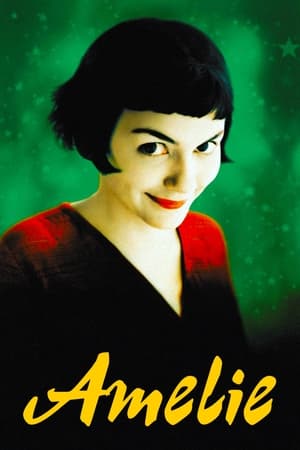
Amélie's particular brand of magical intervention—from returning a childhood box of treasures to a long-lost owner to orchestrating a blind man's sensory journey through a market—isn't about grand, sweeping gestures. Instead, it’s about micro-adjustments, small acts of benevolent manipulation that nudge the world back into a state of quirky harmony. Her own anxieties, born from a childhood marked by isolation and a misdiagnosis, are sublimated into her desire to fix the lives of others, albeit from a safe distance. The film's magical realism isn't just aesthetic; it’s deeply psychological. Amélie literally sees the world differently, perceiving the inanimate objects with sentience, imagining the lives of strangers with vivid detail. This interiority becomes the film's external reality, a vibrant, compassionate vision that contrasts sharply with the often-indifferent external world. Her quest for connection, mirrored by her eccentric love interest Nino, demonstrates that even in a world brimming with mundane loneliness, imagination, when wielded with kindness, can forge meaningful bonds. Amélie isn't just a film; it's an invitation to see the magic in the everyday, to embrace the strange beauty of human connection, and to perhaps, just perhaps, make your own world a little more fantastic.
Shadow Selves and Shifting Realities: Pan's Labyrinth's Unsettling Allegory
Where Hoppers and Amélie find wonder in the everyday, Guillermo del Toro's Pan's Labyrinth (El Laberinto del Fauno) plunges into the abyss, using a fairy-tale framework not for escapism, but for raw, visceral metaphor. Set against the brutal backdrop of post-Civil War Spain in 1944, the film anchors its fantastical elements in a reality so harsh and unforgiving that the monsters of the underworld seem almost preferable to the human cruelty above ground. This isn't magical realism designed to charm; it's a terrifying, beautiful exploration of trauma and resilience, firmly earning its place in any discussion of The Illusion Index: Ranking Cinema’s Best Reality-Bending Worlds.

Ofelia, our young protagonist, enters a world of fauns, fairies, and monstrous creatures not as a delightful diversion but as a desperate coping mechanism for the horrors inflicted by her sadistic stepfather, Captain Vidal. Del Toro masterfully blurs the lines: is the labyrinth a real, ancient realm, or a vivid psychological escape valve for a child overwhelmed by violence and loss? The brilliance of Pan's Labyrinth is that it doesn't offer easy answers. The challenges Ofelia faces in the fantastical world—retrieving a key from a giant toad, surviving the Pale Man's lair—are direct allegories for her real-world struggles, her acts of defiance against Vidal, and her attempts to protect her pregnant mother. The film's visual language is stunningly immersive, with the lush, dark greens and earthy browns of the labyrinth contrasting with the sterile, militaristic grays and reds of Vidal's camp. The Faun, a creature of ambiguous benevolence, challenges Ofelia to make impossible choices, highlighting the moral quagmires of wartime. Unlike Amélie, whose magic brings joy, Ofelia's fantasy world is perilous, demanding sacrifice and courage, ultimately leading to a form of tragic transcendence. It's a brutal reminder that sometimes, the stories we tell ourselves aren't about avoiding pain, but about finding meaning within it, even if that meaning only exists in the ethereal world of a child’s imagination.
Digital Disillusionment and Dreamscapes: The Invite's Modern Malaise
Bringing our discussion firmly into the contemporary, The Invite offers a distinctly modern take on the blurring of reality and imagination, filtered through the lens of digital anxiety and social performance. This film eschews the gentle wonder of Hoppers or the romanticism of Amélie and even the dark fairy tale of Pan's Labyrinth for something far more unsettling and insidious. Centered on Maya, a young artist struggling with imposter syndrome and online validation, who receives an enigmatic digital invitation to an exclusive, immersive 'experience,' the film quickly spirals into a disorienting blend of curated reality and creeping surrealism. The 'invite' itself isn't to a physical place, but to a series of escalating tasks and social games designed to push participants to their emotional and psychological limits.
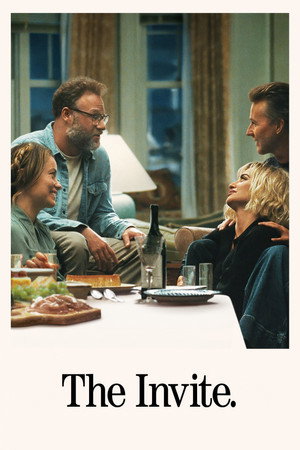
Director Leilani Vance crafts a visually striking but deeply uncomfortable world where the boundaries between what is real, what is staged for an audience, and what is a figment of Maya's own unraveling mind become increasingly porous. The surreal elements here are not external forces like Hoppers or Fauns, but rather extensions of the digital realm itself – glitches in perception, manufactured social scenarios that feel uncannily real, and the terrifying realization that her 'performance' for an unseen audience might be impacting her actual life. The film critiques the performative aspects of modern identity, where self-worth is tied to likes, shares, and manufactured authenticity. Maya's journey is an exploration of how our constant engagement with digital proxies for reality can warp our perception of genuine connection and self. The 'escapism' offered by The Invite is not comforting; it's a trap, mirroring the seductive yet ultimately alienating nature of online existence. It’s a chilling, provocative piece that forces viewers to confront how much of our everyday reality is already mediated by an imaginative, often predatory, digital landscape.
The Fissures of Reality: A Cross-Generational Appeal
What unites these disparate films—the quiet wonder of Hoppers, the buoyant charm of Amélie, the brutal allegory of Pan's Labyrinth, and the digital dread of The Invite—is their shared understanding that human experience is never truly linear or wholly rational. We constantly seek meaning, context, and a sense of belonging, often finding it in narratives that bend or break conventional reality. Whether it's the subtle emergence of a new species demanding a shift in perspective, the deliberate crafting of a kinder world through small acts of magic, the stark confrontation of trauma through myth, or the unsettling breakdown of reality engineered by digital pressures, these films speak to a universal human need. They offer powerful metaphors for processing complex modern experiences, allowing us to externalize internal struggles and confront societal anxieties through speculative storytelling.
In Hoppers, the gentle integration of the fantastic into the familiar reflects a desire for wonder and a quiet rebellion against the drudgery of modern life, offering a balm to the pervasive sense of ennui. Amélie, conversely, asserts the power of individual agency and a compassionate imagination to actively reshape a cynical world into something brighter, proving that even small acts of magical thinking can yield profound human connection. Pan's Labyrinth reminds us that even in the face of unspeakable human brutality, the capacity for belief, for constructing an alternate reality, can be a child's most potent shield, however tragic the outcome. And The Invite acts as a chilling mirror, reflecting our contemporary anxieties about authenticity, surveillance, and the porous boundary between our online personas and our genuine selves. Collectively, these films demonstrate that the most compelling stories don't just show us different worlds; they show us different ways of seeing our own.
Editor's Verdict
Hoppers is a triumph of understated magical realism, a desperately needed breath of fresh air that reminds us cinema doesn't need grand CGI spectacles to be genuinely wondrous. Its depiction of new creatures integrating into the mundane is more compelling and emotionally resonant than any multi-million dollar franchise launch this year. The film earns an 8.5 for its exquisite balance of grounded realism and subtle, impactful fantasy, delivering a truly unique emotional journey, though a slightly more ambiguous ending might have pushed it to a perfect score.