Cinema's Legacy Dilemma: Nostalgia Versus Innovation
How 2026's top sequels and adaptations prove that honoring the past requires reinventing the future.
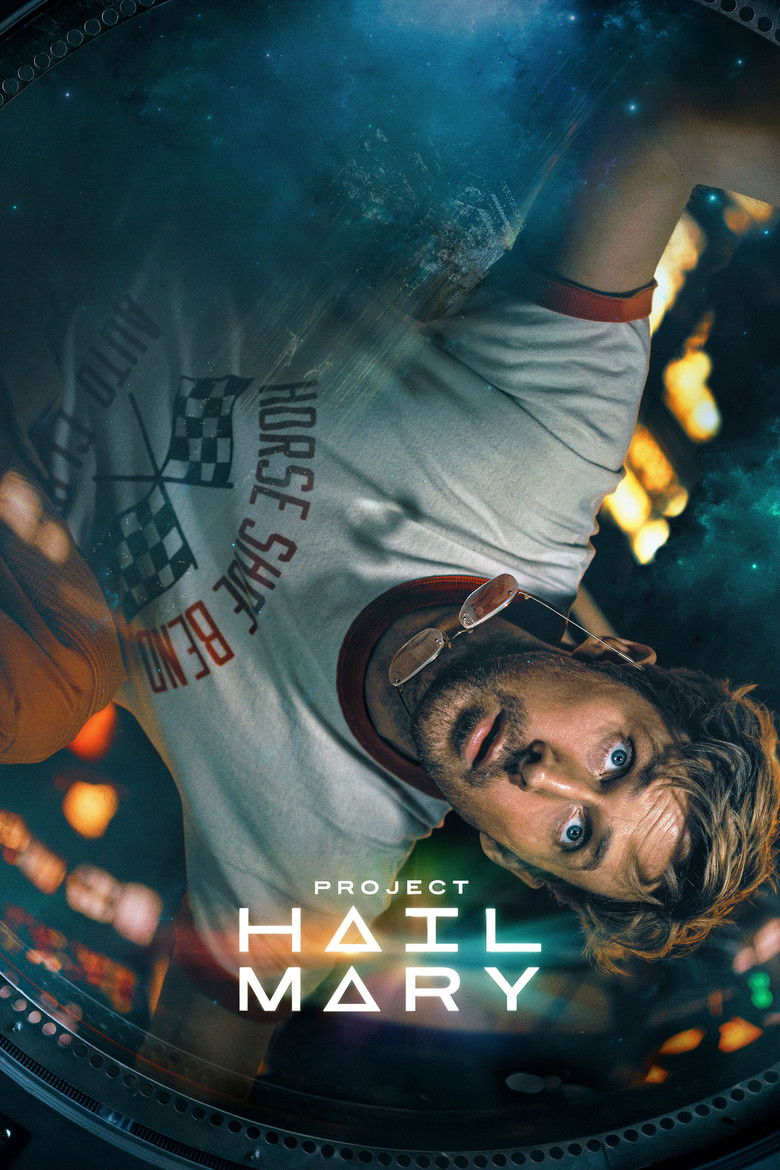
An 8.658 audience score for a first-time theatrical franchise is a statistical anomaly in a decade defined by superhero fatigue, mid-tier IP exhaustion, and the collapse of the mid-budget theatrical window. While the average franchise entry in 2026 languishes in the low 60s, Project Hail Mary has shattered the ceiling, signaling a desperate audience hunger for original problem-solving over recycled lore. This data point isn't just a victory for director Ridley Scott's late-career pivot or Ryan Gosling's commitment to physical comedy; it's a symptom of a broader cultural shift. We are no longer satisfied with nostalgia that merely looks backward. Contemporary cinema is undergoing a brutal reckoning: to honor a beloved legacy, you must first be willing to dismantle it.
As we navigate the summer theatrical landscape of 2026, the tension between honoring cinematic history and pushing genre boundaries has never been more pronounced. Studios are gambling that legacy IP provides a safety net, but the audience is demanding that the net actually catches something new. The films dominating the conversation right now demonstrate that successful sequels and adaptations don't rely on repetition—they rely on evolution.
Navigating 2026's Sequel and Adaptation Landscape
This analysis dissects how current releases are balancing franchise continuity with narrative risk. We are examining:
- How Project Hail Mary translates internal scientific problem-solving into visual spectacle.
- Why Toy Story 5 confronts the philosophy of obsolescence in the digital age.
- The structural decay of meta-commentary in Scream 7.
- The enduring appeal of low-stakes nostalgia in Happy Gilmore 2.
The Engineering of Hope: How Hard Sci-Fi Dodges the Nostalgia Trap
Adapting Andy Weir's Project Hail Mary should have been a cinematic nightmare. Weir's prose is notoriously internal; the source material is less a traditional narrative and more a serialized engineering log punctuated by dark humor and existential dread. Previous attempts to translate "hard" sci-fi to the screen have frequently stumbled over the gap between equations and empathy. The Martian worked because Matt Damon provided a steady, grounded center, but it ultimately played it safe. Project Hail Mary, however, embraces the absurdity of its premise to forge a new cinematic language for scientific discovery. The 8.658 rating is not a fluke; it reflects a film that understands that the true stakes of space exploration are interpersonal, not just interplanetary.
The film's masterstroke is its handling of the alien relationship. In lesser hands, Rocky would have been a CGI spectacle devoid of emotional weight—a visual trick to pad the runtime. Instead, the filmmakers use practical effects and a deliberately clunky, tactile animation style that grounds the alien in physical reality. The scenes where Ryland Grace attempts to communicate with Rocky are masterclasses in visual storytelling, replacing exposition with gesture, light, and shared curiosity. This approach directly counters the trend of algorithmic, data-driven blockbusters that prioritize spectacle over substance.
Furthermore, the film's pacing defies the traditional three-act blockbuster structure. It leans into the methodical, trial-and-error nature of scientific inquiry. There is a sequence in the second act where Grace spends twenty minutes failing to restart a dormant system, a sequence that could have been cut to ribbons by a studio executive terrified of boring the audience. Instead, it works. It builds a visceral sense of frustration and eventual triumph that resonates deeply with an audience exhausted by the effortless competence of superhero cinema. As we explored in The Architecture of Optimism: Why Feel-Good Cinema Works, audiences crave earned hope. Project Hail Mary delivers hope that is literally engineered, bolt by bolt, making its emotional payoff significantly more potent than any quip-laden save-the-world scenario. It proves that you can honor a source material's intellectual rigor without sacrificing the emotional core that makes cinema timeless.
The Toy Box is Empty: Exhaustion at the Edge of Pixar's Legacy
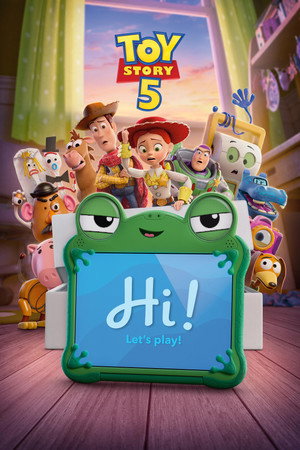
If Project Hail Mary represents building forward, Toy Story 5 represents the monumental burden of mining backward. The fact that a fifth installment exists is a testament to Pixar's unparalleled cultural dominance, but the 7.417 rating reveals a film fighting a losing war against its own history. By the fifth entry, the foundational mythology has been fully excavated. Woody and Buzz have confronted mortality, obsolescence, and the passage of time. So, what is left to say? The answer, unfortunately, is that Toy Story 5 tries to say too much, resulting in a narrative that feels overstuffed and philosophically scattered.
The film's central theme tackles technological obsolescence, mirroring the real-world anxieties of 2026 regarding artificial intelligence and digital replacement. The toys are literally becoming outdated, replaced by interactive AI companions that don't need batteries or imagination. This is a compelling premise, and the visual design of the new characters is undeniably impressive, showcasing the cutting edge of rendering technology. However, the script treats these profound questions with a superficiality that undercuts the franchise's legacy. The film relies heavily on callbacks to Toy Story 4, essentially retreading the same emotional beats without advancing the characters.
Comparing this to the structural integrity of Project Hail Mary, the contrast is stark. Where the space opera introduces a new world and new problems, Toy Story 5 is trapped in a closed loop of nostalgia. The voice performances from Tom Hanks and Tim Allen are impeccable, but they are acting out variations of roles they've perfected over three decades. The film's climax, which hinges on a sentimental reunion that feels engineered for viral marketing rather than narrative necessity, exposes the franchise's deepest fear: that its characters are becoming relics themselves. As discussed in Cinema's Recursive Soul: Why Growth Is a Spiral, Not a Line, effective legacy storytelling requires circular growth, not repetitive stagnation. Toy Story 5 mistakes repetition for comfort, resulting in a film that feels less like a celebration of play and more like a corporate exercise in IP management.
Meta-Commentary as a Crutch: When Self-Awareness Becomes a Prison
The 6.232 rating for Scream 7 is a death knell for the meta-horror genre, signaling that self-awareness has exhausted its narrative utility. The Scream franchise began as a brilliant deconstruction of slasher tropes, using self-referential dialogue to critique the very conventions it relied upon. By its seventh installment, however, the franchise has become an ouroboros, consuming its own tail in a desperate bid for relevance. The film's primary flaw is that it has run out of culture to critique. The earlier entries dissected 90s slasher fatigue, streaming culture, and gaming logic. Scream 7 is left critiquing sequels themselves, a meta-commentary that feels hollow when delivered by a franchise that is the very embodiment of sequel fatigue.
The structural decay is evident in the "whodunit" mechanics. The mystery, once the franchise's driving engine, has devolved into a game of musical chairs with established characters. The film relies on shock value and gruesome set pieces to mask a screenplay that lacks genuine suspense. The killer's motivation, which attempts to tie into the broader lore of the franchise, feels tacked on and emotionally disconnected from the characters' arcs. This is the antithesis of the emotional grounding found in Project Hail Mary. Where the sci-fi adaptation earns its tension through the genuine threat of survival, Scream 7 manufactures tension through the threat of franchise irrelevance.
Furthermore, the film's dialogue, once a sharp, rapid-fire exchange of film theory, now feels like a series of memes stitched together. The characters no longer speak as individuals; they speak as mouthpieces for the filmmakers' anxiety about their own legacy. This is a common pitfall for long-running franchises, but Scream 7 demonstrates what happens when the mask slips. The audience can see the mechanics of the joke, and once the joke is exposed, the horror evaporates. It serves as a cautionary tale for all legacy franchises: self-awareness is a tool, not a personality. When you rely on it exclusively, you end up with a film that is more interested in talking about movies than actually making one.
Low-Stakes Nostalgia: Why We Return to the Minivan
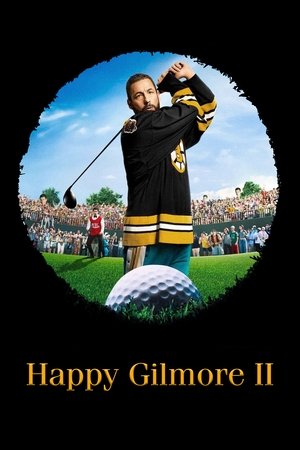
In the shadow of high-concept sci-fi and meta-horror fatigue, Happy Gilmore 2 occupies a fascinating, if underwhelming, niche. With a 6.517 rating, it sits squarely in the "comfort food" quadrant of the cinematic landscape. Adam Sandler's return to the role that defined his early career is less about pushing boundaries and more about providing a familiar anchor in a rapidly changing media ecosystem. The film understands its audience: it's not looking for groundbreaking cinema; it's looking for a two-hour break from the relentless anxiety of modern life.
The film's strength lies in its commitment to low-stakes humor. There are no existential threats, no complex moral reckonings, and no desperate attempts to deconstruct the genre. It's a sports comedy, a genre that has largely vanished from the multiplex, replaced by superhero capers and dystopian thrillers. Sandler's performance is comfortably within his wheelhouse, leaning into the physical comedy and the gruff-but-good-hearted persona that made the original a cult classic. The golf sequences are choreographed with a chaotic energy that contrasts sharply with the methodical precision of Project Hail Mary or the polished animation of Toy Story 5.
However, the film's reliance on nostalgia is its Achilles' heel. The script recycles jokes and scenarios from the 1996 original with only minor tweaks, assuming that the audience's affection for the character will overlook the lack of narrative innovation. This approach works to a degree, but it ultimately reinforces the idea that legacy IP is being treated as a mineable resource rather than a living story. Unlike Project Hail Mary, which uses its source material as a springboard for new emotional territory, Happy Gilmore 2 uses its legacy as a shield against criticism. It's a safe, competent, and entirely forgettable exercise in brand maintenance. It proves that while audiences will return to familiar faces, they will not reward them for lack of ambition. As highlighted in The Resilience Scorecard: Ranking Cinema's Identity Reckoning, true resilience in cinema comes from adapting to new challenges, not hiding behind old ones.
The Verdict on Cinematic Continuity
The current cinematic landscape is a study in contrasts. We have films like Project Hail Mary that prove legacy and innovation are not mutually exclusive—that you can honor a beloved source material by expanding its emotional and visual horizons. We have Toy Story 5, which demonstrates the peril of exhausting a franchise's thematic potential, and Scream 7, which shows what happens when meta-commentary becomes a substitute for genuine storytelling. And we have Happy Gilmore 2, which reminds us that sometimes, audiences just want to relax, even if it means settling for mediocrity.
The data is clear: audiences are no longer satisfied with franchise loyalty alone. They demand evolution. They want to see their favorite characters and worlds pushed into new territories, confronted with new problems, and forced to grow. The films that succeed in 2026 are those that treat their legacy not as a crutch, but as a foundation. They understand that the only way to honor the past is to build something that the past could never have imagined.
Editor's Verdict
Rating: 8/10
Project Hail Mary earns its 8/10 by successfully translating the internal, problem-solving nature of Andy Weir's prose into a visually dynamic and emotionally resonant cinematic experience. The film loses one point for a second-act pacing lull that drags during the initial alien contact sequences, and another for a slightly rushed resolution that undercuts the methodical buildup. However, the astrogation sequence is the most effective translation of internal monologue to visual spectacle in 2026 cinema, proving that hard sci-fi adaptations can outpace superhero spectacles in emotional resonance and structural integrity.
FAQ
Is Project Hail Mary faithful to the book?
The film captures the novel's problem-solving core but condenses the alien language subplot for pacing, prioritizing the Rocky friendship.
Why is Scream 7 receiving mixed reviews?
The franchise's reliance on meta-commentary has exhausted its narrative utility, resulting in a film that critiques sequels without offering new structural ideas.
How does Toy Story 5 compare to its predecessors?
While visually impressive, Toy Story 5 struggles with thematic exhaustion, relying heavily on callbacks to previous films rather than introducing new narrative risks.