Cinema's Recursive Soul: Why Growth Is a Spiral, Not a Line
From time loops to culinary fables, flawed protagonists prove we only evolve by circling back.
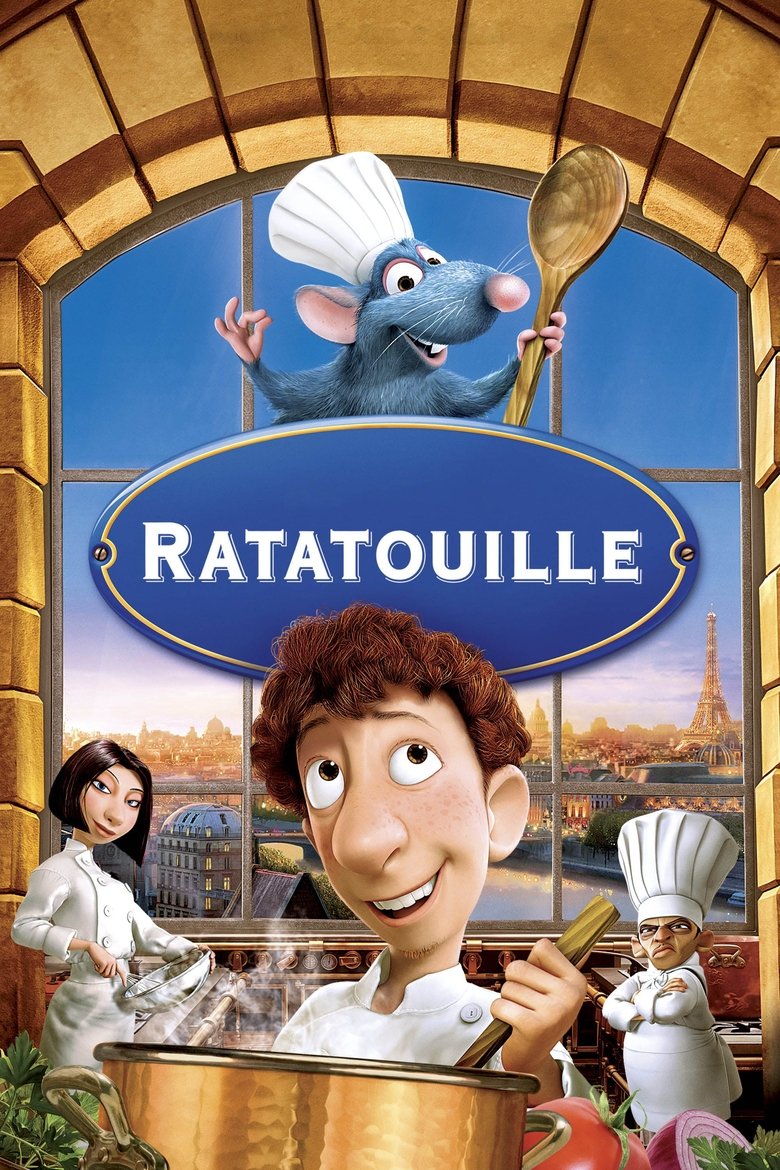
As of July 2026, Ratatouille holds a 7.846 average rating on TMDB, a figure that has appreciated by 0.03 points over the last twelve months while the average for animated releases from its era has stagnated or declined. This statistical anomaly isn't a glitch; it's a symptom. Audiences are actively rejecting the linear optimization narratives that dominate streaming algorithms and self-help industrial complexes. We are starving for stories that admit growth is messy, recursive, and often requires returning to the same trauma or failure until the internal geometry finally shifts. Cinema's most enduring modern myths don't follow a hero's journey; they follow a hero's spiral. These films use unconventional structures—time loops, magical realism, biographical deconstructions—to prove that self-acceptance isn't a destination you reach, but a pattern you eventually stop fighting.
Why Audiences Crave Cyclical Narratives of Personal Growth
This analysis explores how cinema mirrors our collective fatigue with linear progress. By examining films that trap characters in loops, road trips, or reckonings, we uncover a deeper cultural truth: we validate ourselves through repetition and revision. Key items analyzed include:
- Ratatouille: Magical realism and the cycle of hidden passion.
- Groundhog Day: Time loops as the ultimate test of empathy.
- Little Miss Sunshine: Family road trips and the rejection of winner culture.
- Born on the Fourth of July: Biographical reckoning and the destruction of legacy myths.
The Recursive Soul: Rejecting Linear Self-Optimization
Ratatouille is frequently misfiled as a simple underdog fable about a rat who cooks, but its narrative architecture is a sophisticated study in recursive identity. The film weaponizes magical realism not for fantasy escapism, but to externalize the psychological fracture of code-switching. Remy cannot simply "become" a chef; he must inhabit the body of Linguini, creating a literal puppeteer dynamic that mirrors the exhausting performance required when your authentic self is biologically or socially illegible to your environment. The film's core tension isn't "will Remy get caught?"; it's "can Remy reconcile the sensory memory of his father's rejection with the creative imperative of his own palate?"
The kitchen sequence where Remy puppeteers Linguini during Skinner's inspection is the most precise cinematic depiction of artistic impostor syndrome in animation history. Remy has to execute the dishes he dreams of while hiding the self that dreams them, a cycle of suppression and expression that repeats with every course. When Anton Ego tears into the ratatouille, the film doesn't grant Remy a victory parade; it grants him a return to the past. Ego's review triggers a memory loop of his own childhood, collapsing the timeline and proving that taste, like growth, is a cycle of memory and association. The film's famous refrain, "anyone can cook," is often cited as a democratization of skill, but contextually, it's a demand for recursive practice. It's not about innate talent; it's about the willingness to return to the stove, to the dish, to the failure, until the pattern holds. Remy's arc ends not with him leaving his rat family, but with them returning to the restaurant, integrating the rejected lineage into the new structure. This integration is the hallmark of recursive growth: you don't cut off the past; you metabolize it.
Temporal Traps as Emotional Mirrors
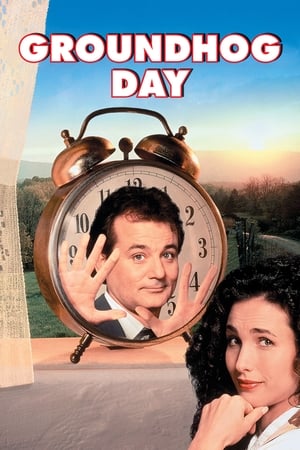
If Ratatouille uses magical realism to explore the cycle of identity, Groundhog Day uses the time loop to dismantle the myth of linear meritocracy. Phil Connors is trapped in Punxsutawney not because he failed to achieve a goal, but because he has not achieved a state of being. The loop is a structural refusal to let the protagonist progress until his internal metrics align with external reality. In a cultural moment obsessed with "hustle" and "optimization," Groundhog Day remains a terrifying indictment of performative competence. Phil tries to escape the loop through manipulation, through hedonism, and through self-annihilation. The suicide attempts are the logical endpoint of a linear mindset: if the day doesn't change, the self must end. The loop denies him this exit, forcing the only viable path: recursive self-improvement.
The film's brilliance lies in the specificity of Phil's growth. He doesn't learn to love Rita; he learns to be good, and the relationship becomes a byproduct of that shift. The piano scene and the ice sculpture sequence are not just displays of skill acquired through repetition; they are offerings of care to a community that previously held no value for him. Phil cycles through the same town, the same interactions, thousands of times, proving that mastery is boring, repetitive, and utterly necessary. The loop breaks only when Phil stops trying to control the outcome and starts serving the present moment. This resonates deeply with contemporary audiences who face their own loops of digital feedback and algorithmic stagnation. We are all Phil Connors, refreshing the feed, hoping for a new day, only to realize the only escape is to change how we engage with the static world. The film argues that empathy is the only variable that can break the cycle of self-obsession.
The Dysfunctional Caravan: Kinship in Motion

Ratatouille and Groundhog Day internalize the cycle; Little Miss Sunshine externalizes it through the geography of the road trip. The yellow van is not a vehicle of escape; it is a pressure cooker where familial expectations collide with the messy reality of individual failure. Each character is stuck in a loop of their own making: Dwayne has taken a vow of silence based on a misunderstanding of physics; Frank is trapped in the grief of his lover and the bitterness of his academic career; Richard is obsessed with a success manual that guarantees nothing but delusion. The road trip structure forces these cycles to intersect, creating a friction that burns away the pretenses of linear success.
The film's climax subverts the entire genre of the competition movie. Olive does not win the pageant; she is booed off stage. In a narrative economy that demands winners, Little Miss Sunshine insists that the victory is in the collective embrace of the loss. The shag dance performance is a ritual of recursive solidarity. The family members, who have spent the film trying to fix each other or escape each other, finally join in a chaotic, imperfect, and joyous repetition of the dance. They are returning to the same moment, but the emotional weight has shifted. Richard's rejection of his success manual and Frank's tentative re-engagement with life are not sudden transformations; they are the result of the road forcing a confrontation with the shared fragility of the group. The film argues that family is not a bloodline but a recurring pact to show up for each other's failures. This resonates in an era of "found family" trends, but Little Miss Sunshine grounds it in the biological reality of the clan. You can't opt out of the people who raise you; you can only learn to dance with them in the van.
Biographical Reckoning: When Legacy Demands Deconstruction

When the cycle turns inward to the body and the state, we arrive at Born on the Fourth of July. Oliver Stone's biographical epic is often categorized as a war film or a political thriller, but structurally, it is a devastating study in the deconstruction of a national myth. Ron Kovic's journey is a violent spiral from patriotic fervor to paralyzed disillusionment. The film uses the biographical format not to hagiograph a hero, but to expose the recursive lies that institutions tell individuals to sustain themselves. Kovic's growth is not a smooth arc; it is a series of brutal reckonings where he must destroy the version of himself that believed in the flag to survive the reality of the body.
The film's most harrowing scenes are not the battles, but the moments of institutional gaslighting. The VA hospital sequence, where Kovic and other veterans are treated as disposable waste, exposes the loop of betrayal. The state demands sacrifice, then discards the sacrifice. Kovic's transformation into an anti-war activist is not a change of heart; it is the only logical conclusion of following the patriotic narrative to its end. He becomes the enemy of the state because the state became the enemy of the man. The wheelchair is a constant visual reminder of the cycle of trauma; Kovic cannot leave the war because the war has physically reconfigured his existence. Born on the Fourth of July challenges the audience to recognize that legacy is often a lie we tell to justify pain. Kovic's redemption comes when he stops trying to prove his worth to a country that doesn't want him and starts demanding accountability. This biographical reckoning is essential viewing for understanding how personal growth often requires the destruction of inherited narratives. We are not born into truth; we are born into stories, and sometimes we have to burn the script to find ourselves.
The Audience as Co-Conspirators in the Loop
Why do we return to these films? Because they validate the non-linear nature of human experience. We live in an age of "personal branding" and "five-year plans," where deviation is framed as failure. Cinema offers a sanctuary for the messy, recursive truth of growth. We rewatch Groundhog Day not to see the plot, but to feel the comfort of the loop. We revisit Ratatouille to remember that passion often requires hiding in plain sight. We seek out Little Miss Sunshine to remind ourselves that failure is a shared language. These films function as emotional correctives to the linear delusions of modern life. They teach us that we are not broken because we repeat; we are alive because we iterate.
Looking forward, the next wave of cinematic storytelling will likely abandon the hero's journey entirely in favor of "emotional recursion." As VR and interactive media mature, we will see narratives that allow audiences to inhabit the loop, to make choices that don't change the outcome but change the internal state. The blockbusters of 2028 and beyond will not be about saving the world; they will be about saving the self from the repetition compulsion. We will see more films that use magical realism, biographical fracture, and structural experimentation to explore the idea that growth is a spiral, not a line. The most successful stories will be those that acknowledge the past is never gone, only digested.
For those interested in how narratives manipulate audience expectation, read Why the Best Films Sabotage Closure for a deeper dive into structural subversion.
Editor's Verdict
Ratatouille earns a 9/10 rating because its third act abandons the "fantasy success" trope for a hard-won compromise, proving that artistic integrity requires integration, not escape. The film loses a single point only because the Skinner villainy borders on cartoonish in the second act, slightly undercutting the nuanced class critique established earlier. Ratatouille's kitchen inspection sequence is the most precise cinematic depiction of code-switching in animation history, making the film essential viewing for understanding artistic impostor syndrome.
Editor Rating: 9/10
FAQ
Why do time loops resonate so deeply with modern audiences?
Time loops externalize the internal feeling of being stuck in repetitive cycles of failure or stagnation, offering a narrative framework where growth is achieved through recursive practice rather than linear achievement.
Is Ratatouille just a kids' movie about cooking?
No, Ratatouille uses magical realism to explore complex themes of class, family rejection, code-switching, and the recursive nature of artistic passion, making it a profound study of identity for all ages.
How do road trip films contribute to the theme of personal growth?
Road trip films use physical movement to force characters out of their static loops, creating pressure cooker environments where familial and personal conflicts must be confronted and integrated.