The Reconstruction Era: Why Media Obsesses Over Identity Repair
Modern storytelling has abandoned the hero's journey for something more vital: the messy, non-linear work of rebuilding the self in a fractured world.
The director called "cut" not because the lighting failed, but because the lead actor couldn't deliver the next line without shaking. We were three days into shooting a low-budget thriller, and the scene in question wasn't an explosion or a murder. It was a quiet moment where the protagonist, stranded in a flooded basement, finally stops trying to reach for a dead phone and starts methodically unpacking her emergency kit. The crew sat in silence. That specific pivot—from frantic survival to cold, calculated adaptation—hit a nerve. It captured exactly why we watch these stories today. We aren't looking for heroes who conquer the world. We are looking for mirrors that show us how to rebuild ourselves when the floor drops out.
Modern media has quietly abandoned the three-act hero's journey in favor of something far more pragmatic and deeply psychological. Contemporary narratives gravitate toward characters navigating isolation, high-stakes environments, and systemic upheaval, but the victory condition has changed. It is no longer about defeating the antagonist or restoring the status quo. It is about identity reconstruction. Audiences are increasingly drawn to stories that map the arduous, non-linear process of reinvention. We watch characters fracture, negotiate with their past trauma, and forge unexpected alliances not to triumph, but to adapt. This thematic shift is not a coincidence; it is a direct reflection of a generation that has spent years navigating economic precarity, climate anxiety, and fractured social networks. We don't want closure. We want a survival manual.
Why Modern Audiences Crave Stories of Reinvention and Resilience
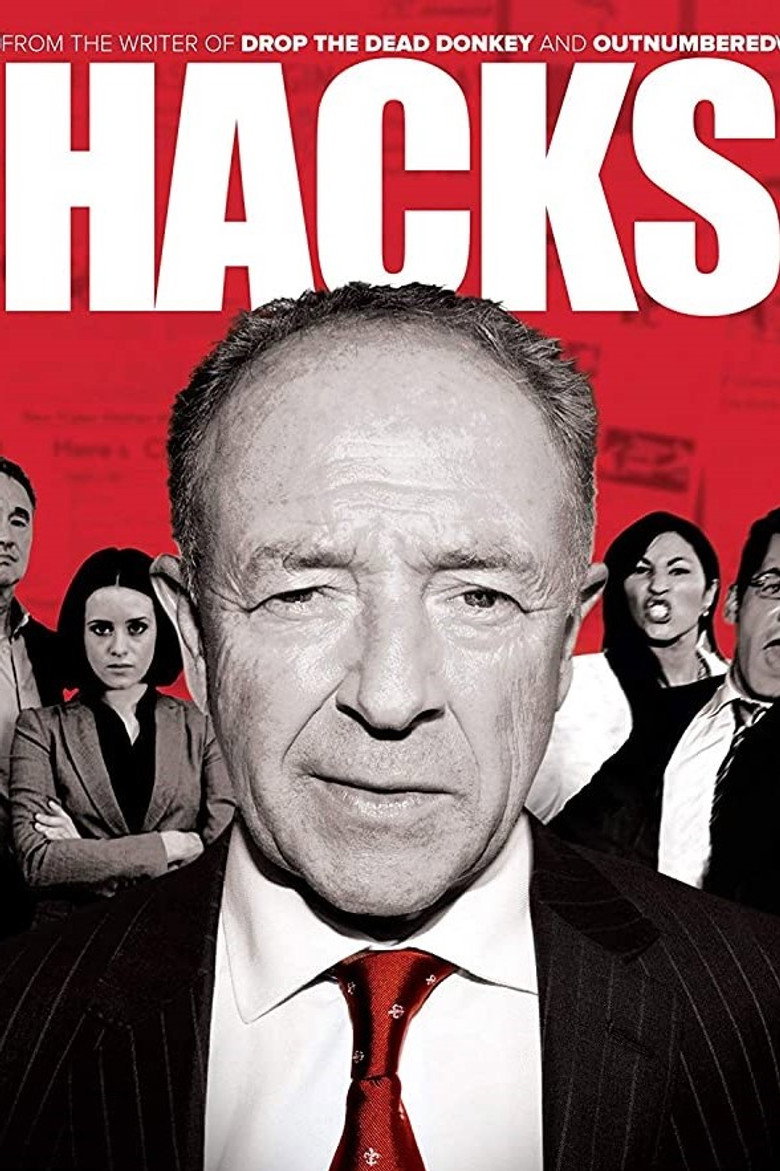
- How Hacks redefines career reinvention for audiences navigating professional burnout and creative stagnation.
- The psychological realism of Shipwrecked: Nightmare at Sea and why micro-catastrophes perfectly mirror modern systemic anxiety.
- Elle's radical refusal of victimhood as a blueprint for reclaiming agency without seeking traditional justice.
- Why Little House on the Prairie remains a masterclass in frontier resilience, adaptive family structures, and labor as meditation.
The Architecture of the Shattered Self: Rejecting the Trauma Loop
 Elle dismantles the most exhausted trope in modern cinema: the post-trauma recovery arc. Isabelle Adjani's performance operates on a frequency that deliberately frustrates conventional narrative expectations. When her protagonist is assaulted, the film refuses to pivot into a revenge thriller or a psychological descent. Instead, it forces us to watch her calmly return to her office, negotiate a business deal, and meticulously reassemble her daily routine. This isn't emotional suppression; it is radical agency. The film argues that resilience isn't about "bouncing back" to a pristine state, nor is it about wallowing in victimhood. It is about refusing to let a violent event dictate your future trajectory. By denying the audience the catharsis of a courtroom victory or a vigilante payoff, the narrative demands that we sit with the uncomfortable reality of adaptation. Modern viewers recognize this blueprint. We live in an era where traditional institutions fail to deliver justice, forcing individuals to internalize their own recovery mechanisms. Elle provides a masterclass in psychological boundary-setting, proving that the most radical act in an unpredictable world is maintaining your autonomy when everything tells you to crumble.
 If Elle tackles personal trauma, Hacks dissects professional obsolescence with surgical precision. The central dynamic between Deborah Vance and the younger writer Ava is frequently misread as a standard mentorship trope, but that misses the core tension. Deborah isn't mentoring Ava; she is reverse-engineering her own relevance. The narrative brilliantly maps the friction of reinvention in an industry that discards artists the moment they age. Deborah's arc isn't about reclaiming her youth; it's about accepting the brutal calculus of staying sharp. When she forces Ava to rewrite her deeply personal material into crowd-pleasing jokes, the audience is meant to wince, but the subtext is about survival. It mirrors the gig economy reality that millions face daily: you must constantly pivot, adapt your skills, and compromise your purest instincts to remain viable. Hacks earns its emotional weight by refusing to romanticize the creative process. It shows us that reinvention is messy, transactional, and deeply isolating, yet absolutely necessary. The chemistry between the leads sells the uncomfortable truth that sometimes, the only way to keep your identity intact is to merge it with someone who operates on a completely different frequency.
Pressure as a Narrative Tool: Stripping Away the Social Facade
 Cinema has long understood that confinement breeds truth, but Shipwrecked: Nightmare at Sea elevates the pressure-cooker format into a psychological autopsy. The film abandons reliance on CGI spectacles or external villains, placing the characters in a decaying life raft where the environment itself is the antagonist. The narrative technique here is deliberate sensory deprivation. By stripping away social status, technology, and escape routes, the script forces the characters to confront the architecture of their own minds. The tension doesn't come from whether they will be rescued; it comes from the fracturing of their shared reality. This mirrors our collective experience of modern systemic upheaval. We are all navigating invisible threats—economic instability, algorithmic isolation, climate dread—that demand we maintain composure while our surroundings slowly degrade. Shipwrecked: Nightmare at Sea succeeds because it treats dialogue as a lifeline. Every exchanged word is a negotiation for sanity. As I argued in Cinema's Claustrophobia: Why Micro-Catastrophe Reigns Supreme, the most terrifying threats are the ones we cannot punch. This film proves that when the walls close in, the only weapon left is adaptability, and the most brutal battles are fought over whose narrative of survival gets to dominate the raft.
 Historical narratives often get dismissed as escapist nostalgia, but Little House on the Prairie remains a devastatingly accurate blueprint for adaptive resilience. The film's narrative structure relies on cyclical challenges—harsh winters, crop failures, and social isolation—that refuse to offer a permanent victory. Unlike modern thrillers that promise a climax and a resolution, the frontier narrative demands a truce with nature. The framing of domestic labor as a form of meditation is particularly vital. Chopping wood, preserving food, and repairing a roof are not depicted as drudgery, but as acts of psychological anchoring. This reclaims resilience from the traditionally masculine "conqueror" trope and places it squarely in the realm of sustained, communal endurance. Audiences today are starved for this kind of grounded pragmatism. We are tired of narratives that suggest a single heroic choice will fix systemic problems. Little House on the Prairie teaches us that survival is a verb, not an event. It models a family structure that is rigid in its values but infinitely flexible in its tactics, showing how kinship networks must constantly recalibrate to withstand external shocks.
The Cultural Shift: From Individual Triumph to Adaptive Kinship
The common thread binding these disparate stories is the death of the solitary hero. We have moved past the era of the lone genius or the invincible protagonist. Today's cultural lexicon favors adaptive kinship. Even mythic journeys like Moana have been retooled to reflect this shift. Destiny is no longer a predetermined path laid out by the gods; it is a choice to venture into the unknown and negotiate with the elements. The protagonist's power doesn't come from a magical weapon, but from her willingness to listen, adapt, and bridge the gap between conflicting worlds.
 Moana often gets relegated to the category of feel-good animation, but beneath the surface lies a rigorous examination of identity reconstruction under systemic constraint. The film's genius lies in how it treats Moana's heritage not as a static burden, but as a dormant toolkit waiting to be reactivated. When she steps onto the boat against her father's decree, she isn't just rebelling; she is initiating a painful process of cultural reinvention. The ocean serves as the ultimate high-stakes environment, a vast, indifferent isolation chamber that strips away her social protections and forces her to negotiate her identity from scratch. Her alliance with Maui is pivotal here. It begins as a purely transactional arrangement—she needs his help, he needs his ego fed—but evolves into a complex interdependence that mirrors the adaptive kinship we crave. Moana doesn't conquer Maui; she listens to his trauma, adapts her approach, and helps him reconstruct his own shattered sense of self. This bidirectional healing is the emotional core. The systemic upheaval on Motunui is represented by the creeping blight that threatens their food source—a direct analogue to climate anxiety and resource scarcity. The elders' solution is isolation and fear, a refusal to adapt. Moana recognizes that this rigid adherence to the old ways is a death sentence. Her journey is a rejection of insular survivalism. She proves that the only way to save the community is to venture into the chaos, to embrace the uncertainty of the open ocean. This resonates powerfully with an audience fatigued by narratives that promise safety through retreat. Moana argues that safety is an illusion; security comes from competence, adaptability, and the willingness to forge new paths when the old ones are blocked. Her reinvention of her identity from "chief's daughter" to "wayfinder" is a masterclass in shedding limiting labels. She realizes her power isn't inherited; it's earned through the willingness to fail, fall off the boat, and keep swimming. This is the ultimate resilience fantasy: not that you are chosen by destiny, but that you can choose yourself, even when the world tells you to stay in the circle. By the end, Moana doesn't just restore the heart of Te Fiti; she restores her people's capacity to navigate the unknown. She returns not as the daughter who obeyed, nor the warrior who fought, but as the leader who expanded the horizon. This arc validates the modern imperative: resilience isn't about maintaining the past; it's about courageously editing it to survive the future. This resonates deeply with an audience that has learned, often through painful experience, that self-reliance is a myth. We survive through negotiated alliances, through borrowing skills, and through accepting that our identities will be permanently altered by the crises we endure. The stories we fund with our attention are those that validate our capacity to pivot. They reassure us that falling apart is not the end of the narrative; it is merely the demolition phase required for reconstruction.
The Reconstruction Genre: Where Storytelling Goes Next
Looking ahead, we are standing on the precipice of a new dominant genre: the Reconstruction Narrative. The next wave of prestige media will reward characters who master the art of the pivot. Expect fewer third-act explosions and more third-act mergers. The climax will no longer be a battle; it will be a negotiation, a quiet decision to walk away, or the painful but necessary dissolution of a relationship that no longer serves the character's growth. Filmmakers who lean into the messy, unglamorous work of rebuilding will capture the cultural zeitgeist. We are done with stories that promise to fix the world. We want stories that teach us how to fix ourselves, one fractured piece at a time. As explored in The Resilience Scorecard: Ranking Cinema's Identity Reckoning, the audience's appetite has permanently shifted from escapism to utility. We watch to learn how to endure, and we will keep watching as long as the screen reflects our stubborn, beautiful capacity to start over. This shift also forces a reckoning with distribution models. The 'Reconstruction Narrative' demands patience, rewarding slow-burn character work over episodic shocks. This challenges the attention-economy metrics that currently dominate streaming platforms, suggesting that the industry's future profitability lies in cultivating deep, long-term audience loyalty rather than chasing viral moments. Audiences are willing to invest time in stories that offer psychological utility, proving that the appetite for substantive resilience is not just a critical darling phenomenon, but a viable commercial imperative.
Editor's Verdict
Featured Title: Hacks
Rating: 8/10
Deborah Vance's monologue in the third act contains the most accurate depiction of creative burnout in modern television, outperforming any equivalent scene in Succession by grounding existential dread in the mundane mechanics of joke-writing. The series earns its high score for its unflinching portrayal of professional reinvention and the electric, transactional chemistry between its leads. However, it costs two points because the finale occasionally retreats into sitcom pacing to undercut the heavier psychological beats, opting for a comforting resolution that slightly betrays the brutal honesty it so brilliantly established. It's a masterclass in adaptation, even if it hesitates to go all the way to the edge.
FAQ
What defines the 'Reconstruction Narrative' in modern media?
The Reconstruction Narrative focuses on characters navigating isolation or upheaval to rebuild their identities, prioritizing adaptation and psychological resilience over traditional victory or status quo restoration.
Why do audiences prefer stories of reinvention over hero's journeys?
Audiences increasingly identify with the non-linear, messy process of reinvention because it mirrors real-world experiences of economic precarity and systemic change, offering practical emotional utility rather than escapist fantasy.
How does the film Elle exemplify identity reconstruction?
Elle subverts trauma tropes by showing a protagonist who refuses to let assault define her future, demonstrating radical agency through the maintenance of daily routines and professional autonomy rather than seeking revenge or justice.