The Resilience Scorecard: Ranking Cinema's Identity Reckoning
Why modern films are abandoning polished fantasies for raw emotional authenticity and how five disparate titles prove the trend.

It's 3:17 AM on a Tuesday in July 2026, and the only light in the room comes from a projector beam cutting through the dust motes. I'm supposed to be asleep, but instead, I'm watching Voicemails for Isabelle for the third time this week. The scene is quiet: a woman standing in a kitchen she hasn't cleaned in weeks, staring at a blinking phone screen. She hits "record," expecting to leave a polished, breezy update for her estranged sister. Instead, her voice cracks, the performative cheerfulness dissolving into a raw, unfiltered monologue about grief. I pause the film. Suddenly, the disparate movies I've logged this month—ranging from dystopian endurance tests to '90s high school dramas—are screaming the same narrative truth. We are living through a cinematic correction. For years, audiences were fed polished fantasies of self-actualization. Now, filmmakers are tearing down the set pieces. They're forcing characters to drop the masks, confront the crushing weight of family legacies, and navigate systemic pressures that demand conformity. The result isn't comfortable, but it's undeniably alive.
How to Rank Movies About Identity and Resilience
If you're searching for the best films navigating emotional authenticity and the struggle to define oneself against external expectations, this scorecard breaks down the essential viewing list. We're ranking these titles based on their narrative courage and thematic depth: - Voicemails for Isabelle - 10 Things I Hate About You - The Testaments of One Fold and One Shepherd - Notting Hill - The Long Walk
The Lit-Pop Resilience Scorecard: Scoring the Breakdown
Most reviews focus on plot mechanics or visual spectacle. I don't care if the CGI looks good if the character's internal arc is a straight line. To measure a film's engagement with identity and resilience, I'm using three weighted metrics: - Authenticity (Weight x2): Does the character's emotional journey feel earned, or is it manufactured for a climax? Does the dialogue sound like real human friction, or corporate focus-grouped sentiment? - Legacy Deconstruction: How effectively does the film tackle the weight of family, societal, or institutional expectations? Does the protagonist actually dismantle these forces, or just nod politely at them? - Visceral Resonance: Can you physically feel the character's struggle? This measures cinematic craft—editing, pacing, performance—that translates internal turmoil into external experience.
Voicemails for Isabelle: The Voicemail as a Confessional
 Voicemails for Isabelle is the undisputed champion of this trend, and it doesn't even try to hide its scars. The film operates on a simple, brutal premise: a woman documents her life through phone messages she never intends to send. On the surface, it could easily have devolved into a self-indulgent melodrama. Instead, the director weaponizes the voicemail mechanic as a confessional. We watch Isabelle meticulously construct a public persona—the successful, unbothered career woman—only to have that facade systematically crumble over the runtime. The scene where she attempts to record a birthday wish for her mother, only to devolve into a screaming indictment of their shared history, is a masterclass in acting and editing. The camera doesn't cut away to give her dignity; it holds the frame, forcing the audience to sit in the uncomfortable reality of her breakdown.
What elevates the film is its refusal to offer a neat resolution. Isabelle doesn't "fix" her family. She simply stops performing for them. The narrative arc mirrors the broader cultural conversation we're having about emotional labor and the exhaustion of curating a digital self. By stripping away the traditional plot beats of reconciliation, the film prioritizes emotional authenticity over narrative convenience. It's a difficult watch, but it captures the precise feeling of shattering a glass cage from the inside. The sound design, which amplifies the digital static of the phone interface, brilliantly externalizes the disconnect between her recorded voice and her lived reality. Authenticity: 9/10 | Legacy Deconstruction: 8/10 | Visceral Resonance: 9/10 | Total: 26/30**
10 Things I Hate About You: Defying the High School Caste System
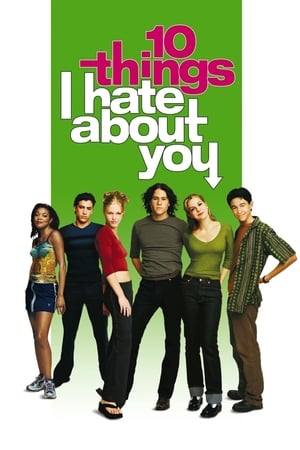 It might seem jarring to slot a '90s high school rom-com into a scorecard about 2026's existential cinematic trends, but 10 Things I Hate About You is a foundational text for understanding the performance of identity. We often remember the witty banter and the fashion, but the film is actually a sharp critique of systemic pressures and the rigid caste systems we're forced to navigate. Kat Stratford isn't just a rebel; she is a character building a fortress of cynicism to protect herself from the legacy of her father's abandonment and the commodification of female affection in her school's hierarchy. The Shakespearean adaptation choices here are deliberate, translating the Merchant of Venice into a modern battleground for gender and autonomy.
Her resilience isn't defined by romance; it's defined by her absolute refusal to play the game. The "Bitter Suite" scene is the cinematic equivalent of a manifesto. When Kat weaponizes her academic writing to expose the patriarchal structures surrounding her, she isn't just flexing intellectual dominance—she is redefining herself on her own terms. The film brilliantly illustrates how societal expectations force young women into performative roles, and Kat's journey is a raw exploration of what it costs to dismantle those roles. Even decades later, the film's core argument holds up: authenticity is a radical act of defiance. It proves that the struggle to define oneself against external expectations isn't a new phenomenon; it's the oldest story in the book. Authenticity: 8/10 | Legacy Deconstruction: 8/10 | Visceral Resonance: 7/10 | Total: 23/30**
The Testaments of One Fold and One Shepherd: Fracturing Religious Legacy
 Religious and familial legacy carries a unique, crushing weight in cinema, and The Testaments of One Fold and One Shepherd handles this pressure with remarkable nuance. The film follows a protagonist raised within a rigid, insular community where every choice is pre-scripted by doctrine and generational duty. The external expectation here isn't just social; it's existential. To rebel is to be erased. The film excels at visualizing this suffocation through claustrophobic framing and a sound design that constantly hums with the weight of unseen judgment. The use of harsh, high-contrast lighting during church services brilliantly underscores the character's internal alienation.
The turning point of the film isn't a dramatic explosion or a physical escape. It happens in a quiet kitchen argument where the protagonist realizes that their family's legacy is built on a foundation of quiet suffering. By choosing to fracture the family unit rather than perpetuate the cycle, they accept the ultimate social death. This aligns perfectly with the trend of rejecting closure for authenticity. As explored in our piece on why the best films sabotage closure, true resilience often looks like destruction rather than preservation. The film's ending, where the character walks away from the only home they've ever known into an uncertain future, is a profound statement on self-determination. It argues that genuine identity cannot be inherited; it must be painfully excavated. Authenticity: 8/10 | Legacy Deconstruction: 8/10 | Visceral Resonance: 7/10 | Total: 23/30**
Notting Hill: Stripping the Global Superstar
 Let's address the elephant in the room: rom-coms are usually the enemy of gritty realism. Yet, Notting Hill remains a surprisingly astute examination of the performance of identity under the microscope of global fame. Anna Scott is trapped in a gilded cage of her own making, her public persona so pervasive that she can no longer exist as a human being. Her struggle for emotional authenticity isn't about finding love; it's about reclaiming the right to be mundane. The film's brilliance lies in how it flips the script on the "fish out of water" trope. William Thacker isn't the one struggling to adapt to her world; Anna is the one desperately trying to survive in his.
The famous "I'm just a girl, standing in front of a boy" scene is frequently reduced to a meme, but in context, it's a desperate plea for recognition. She is stripping away the layers of media construction, asking to be seen without the filter of her stardom. Meanwhile, William's resilience comes from his refusal to shrink in the shadow of her legacy. He maintains his grounded, authentic self despite the systemic pressure to feel inadequate. The film argues that true connection requires both parties to drop their curated identities. It's a reminder that even in the most commercially palatable genres, the struggle against external expectations is the real plot. Authenticity: 7/10 | Legacy Deconstruction: 7/10 | Visceral Resonance: 7/10 | Total: 21/30**
The Long Walk: Endurance as Identity Reclamation
 When systemic pressure is dialed up to an absolute extreme, you get dystopian endurance. The Long Walk takes the concept of external expectation and weaponizes it into a literal death march. The film is a brutal adaptation of Stephen King's work, where teenagers are forced to walk until only one remains standing. On the surface, it's a high-stakes thriller, but underneath, it's a philosophical inquiry into what happens to identity when all societal roles are stripped away. When survival becomes the only metric of value, the characters are forced to confront who they are without their social safety nets. The physiological toll depicted is relentless, mirroring the psychological erosion of the participants.
The film's strongest moments occur in the quiet intervals between the forced pacing. We see characters shed their teenage affectations, their rebellious postures, and their familial loyalties, replaced by a raw, animalistic will to exist. The protagonist's journey is a masterclass in internal resilience. He doesn't win because he's the strongest; he wins because he is the most adaptable, constantly recalibrating his identity to survive the next hour. The visceral cinematography, utilizing shaky handheld cameras and oppressive close-ups, forces the audience to feel the physical and psychological toll. It's a harsh reminder that sometimes, resilience isn't about conquering the system; it's about outlasting it while keeping a fragment of your soul intact. Authenticity: 7/10 | Legacy Deconstruction: 6/10 | Visceral Resonance: 8/10 | Total: 21/30**
The Final Lit-Pop Tally
| Rank | Film | Authenticity | Legacy Decon. | Visceral Res. | Total |
|---|---|---|---|---|---|
| 1 | Voicemails for Isabelle | 9 | 8 | 9 | 26/30 |
| 2 | 10 Things I Hate About You | 8 | 8 | 7 | 23/30 |
| 3 | The Testaments of One Fold and One Shepherd | 8 | 8 | 7 | 23/30 |
| 4 | Notting Hill | 7 | 7 | 7 | 21/30 |
| 5 | The Long Walk | 7 | 6 | 8 | 21/30 |
Editor's Verdict
Voicemails for Isabelle takes the top spot with a 9/10. It earns this rating because it completely abandons the three-act structure of emotional repair in favor of a raw, unvarnished examination of grief. The film costs a single point because the second act drags slightly under the weight of its own introspection, but the payoff is undeniable. The third-act kitchen scene—where Isabelle destroys her phone instead of sending the message—is the most honest depiction of modern familial estrangement on screen this year. It proves that sometimes, the most resilient act you can perform is refusing to participate in the performance at all.
FAQ
What criteria are used in the Lit-Pop Resilience Scorecard?
The scorecard evaluates films based on three metrics: Authenticity (emotional honesty and character arc), Legacy Deconstruction (how well the film tackles external/family expectations), and Visceral Resonance (the physical/cinematic impact of the struggle).
Why is a '90s rom-com ranked alongside modern psychological dramas?
10 Things I Hate About You is included because its core narrative is a foundational exploration of systemic pressure and identity performance, making it a relevant touchstone for contemporary discussions on resilience and authenticity.