The Legacy Trap: Why We're Still Obsessed With Self-Reckoning
From an aging boxer to an unraveling novelist, films like 'Rocky Balboa' and 'Reprise' reveal a timeless, and increasingly urgent, cultural anxiety about who we are versus who we're remembered as.
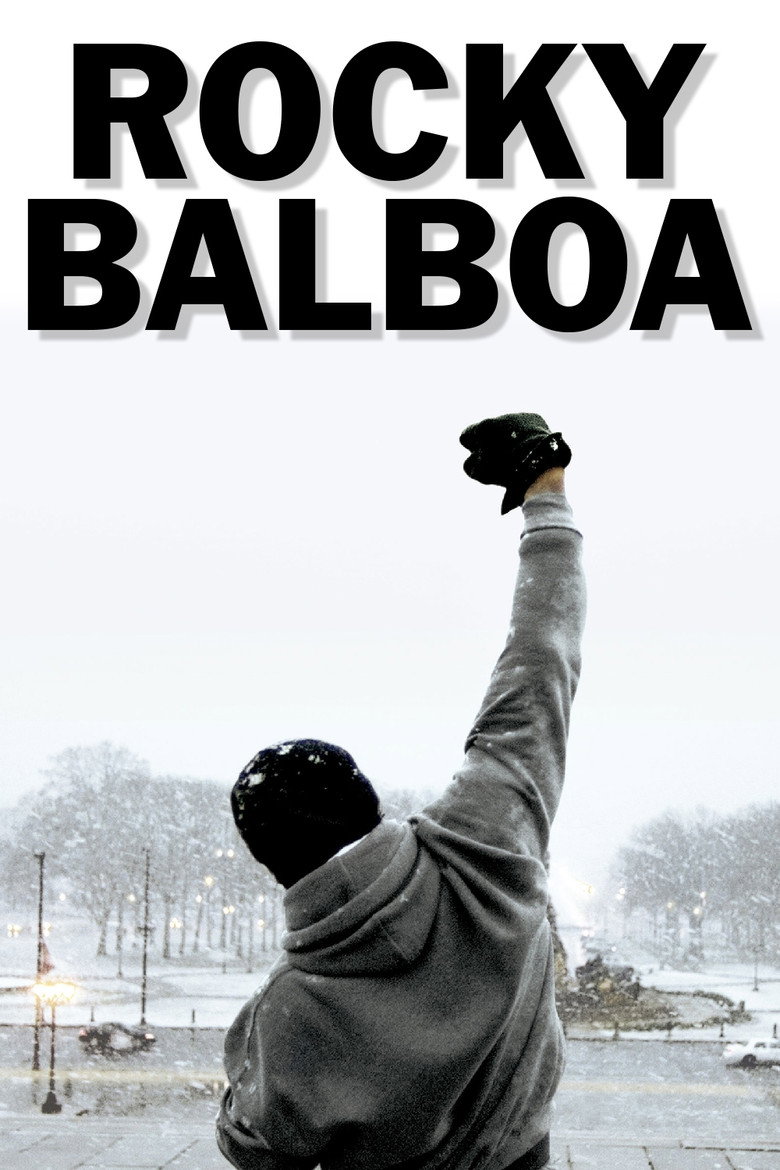
In 2006, two films were released that could not appear more different on the surface. One was the sixth installment in a thirty-year-old American franchise, a populist boxing drama about a beloved, aging icon stepping into the ring for one last impossible fight. The other was a frantic, formally audacious Norwegian indie film about two young, fiercely ambitious writers whose friendship fractures under the weight of literary aspirations. Yet, Rocky Balboa and Joachim Trier’s Reprise are cinematic blood brothers, both born from the same cultural anxiety and obsessed with the same terrifying, essential question: What is the true cost of a legacy, and can the human spirit survive paying it?
What Makes a Great Movie About Legacy and Identity?
This article explores the enduring cinematic fascination with the struggle for self-definition against the weight of the past and the pressure of the future. Here's what we'll dissect:
- A deep dive into the surprisingly poignant meta-narrative of
[Rocky Balboa](https://www.themoviedb.org/movie/1246). - An analysis of how Joachim Trier's
[Reprise](https://www.themoviedb.org/movie/12197)portrays the destructive side of ambition. - How these cinematic struggles with identity resonate with modern anxieties about personal branding.
- A prediction for how future films will tackle the theme of legacy in the age of AI.
The Ghost in the Machine: Rocky Balboa's Late-Stage Reckoning

To understand Rocky Balboa, you must first understand that it’s less a movie about boxing and more a movie about Sylvester Stallone. By 2006, Stallone, like his iconic creation, was widely considered a relic. The days of blockbuster dominance were long gone, replaced by a string of critical and commercial disappointments. He was a ghost of a former cultural moment. The film, which he wrote and directed, is a direct confrontation with that ghost. It is a work of profound meta-commentary, a defense not just of a fictional character, but of its creator's entire career and purpose.
The film finds Rocky haunted by the past, running a small Italian restaurant named 'Adrian's' and telling the same old war stories to captive patrons. He is literally living off his legacy, a walking museum piece. The conflict is catalyzed by a digital phantom: an ESPN computer simulation that pits the current heavyweight champion, Mason “The Line” Dixon, against a prime Rocky Balboa. The simulation, which Rocky wins, is a perfect metaphor for his predicament. In the public imagination, he only exists as a collection of data points, a nostalgic hypothetical. He is no longer a living, breathing man but an algorithm of past glories. This digital ghost is what he must fight.
His decision to return to the ring is met with ridicule, primarily from his own son, Robert (Milo Ventimiglia), who lives in the suffocating shadow of his father's fame. In one of the franchise's most powerful scenes, Rocky confronts him not with bravado, but with a wounded heart, delivering the iconic monologue: "The world ain't all sunshine and rainbows... It's about how hard you can get hit and keep moving forward." This isn't just a father talking to his son; it's Stallone speaking to a generation that grew up with him, reminding them, and himself, of the ethos that defined his work. It’s a reclamation of his own narrative from the jaws of parody and dismissal.
The training montage, a staple of the series, is subverted. It's no longer about a young underdog achieving peak physical perfection. It's about an old man's sheer force of will, enduring the agony of a body long past its prime. The shots of him pounding frozen carcasses in a meat locker aren't just fan service; they are a declaration of analog effort in a digital age. This is work, brutal and real, not a simulation. The film's most crucial scene, however, takes place not in the ring but in a sterile boardroom before the Pennsylvania Athletic Commission. Denied a boxing license, Rocky delivers a quiet, desperate, and utterly sincere speech about the "stuff in the basement"—the inner fire, the beast of ambition, that he needs to let out one last time. It's a breathtaking piece of acting, one where the line between Stallone the actor and Rocky the character completely dissolves. He is pleading for his own relevance, for one more chance to prove he is more than just a memory.
The final fight is an afterthought. He loses the decision, but he goes the distance. He doesn't need the win. He just needed to prove to himself that the man was still there, separate from the legend. It's a story about disentangling one's private identity from their public legacy, a theme that feels more urgent now than it did even in 2006.
The Fracture of Ambition: 'Reprise' and the Mania of Becoming
If Rocky Balboa is about the struggle to reclaim an identity from a legacy that has already set, Joachim Trier's Reprise is about the terrifying, often destructive, process of trying to build one from scratch. Released the same year, it serves as the perfect photographic negative to Stallone's film. It is a story not of triumphant endurance, but of psychological collapse under the weight of a future that hasn't even happened yet.
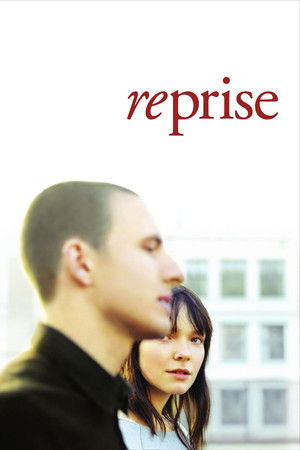
The film follows best friends and aspiring writers Phillip and Erik, who mail off their first manuscripts on the same day, filled with the arrogant certainty of youth. Trier's direction immediately establishes a sense of frantic, anxious energy. He employs a restless camera, jump cuts, fourth-wall-breaking narration, and hypothetical flash-forwards to capture the manic interiority of his characters. The film's form perfectly mirrors its function, creating a feeling of a mind racing, constantly writing and rewriting its own story. It's the aesthetic opposite of Stallone's grounded, classical direction, but it's chasing the same thematic truth.
The narrative splinters when Phillip's novel is accepted and hailed as a masterpiece, while Erik's is rejected. This should be a moment of triumph, but for Phillip, it's the trigger for a complete psychotic break. The instantaneous creation of a public legacy—the anointing of him as the 'Next Big Thing'—is a pressure his identity cannot withstand. He is institutionalized, and the rest of the film charts his fragile recovery and Erik's parallel struggle to find his own voice in the long shadow of his friend's brilliant, catastrophic success. Where Rocky fights a ghost from the past, Phillip is haunted by a ghost from the future—the specter of the great writer he is now supposed to be.
Reprise brilliantly dissects the poison of artistic ambition. It shows how the desire to create a lasting work, to leave a mark, can become so all-consuming that it devours the self. Erik’s journey is quieter but just as profound. He grapples with envy, guilt, and the crushing anxiety of influence. He tries to write, but his words feel hollow, derivative. He is trapped, trying to define himself against his friend's success and his own perceived failure. The film isn't a simple procedural about writing; it is, like the tense chamber pieces analyzed in [The Outfit vs. Coherence: The Ultimate Bottle-Thriller Showdown](/movies/the-outfit-vs-coherence-bottle-thriller-showdown/), a story about character under extreme psychological pressure. The legacy they chase isn't a source of strength, but a catalyst for disintegration. The film dares to ask what happens when the human spirit doesn't endure, but breaks. And it suggests that the slow, painful process of putting the pieces back together, away from the spotlight, is a far more heroic act than publishing any novel.
The Modern Echo: Why We Crave Stories of Self-Definition
Twenty years on from 2006, the anxieties probed by Rocky Balboa and Reprise have not faded; they have metastasized and become the background radiation of modern life. We live in the age of the personal brand, where social media platforms compel us to become the curators of our own legacies in real time. Every post, every picture, every career move is a brick in the edifice of a public-facing identity—an identity that often bears little resemblance to the messy, contradictory, authentic self living behind the screen.
This gap between the performed self and the real self is the central tension of the 21st century. It's why these stories resonate so deeply. We are all Rocky, feeling the weight of our past selves (archived online for all to see) and wondering if the person we are now can live up to the person we once presented. And we are all Phillip and Erik, crippled by the pressure to construct a future self worthy of public validation before we’ve even figured out who we are. The struggle for an authentic identity has never been more fraught.
We see this echoed in contemporary cinema, like the currently trending indie drama [Sirāt](https://www.themoviedb.org/movie/1151272). The film, whose title translates to 'The Path,' follows a young woman who abandons her predetermined career and arranged marriage to embark on a solo journey across the country. It is a quiet, meditative film about the radical act of rejecting a pre-packaged legacy. Her family, her community, and her digital footprint have all defined a path for her, and her journey is a deliberate act of erasure and rediscovery. She is not trying to reclaim a past self or build a famous future self; she is simply trying to find a present self, free from the noise. This narrative—the search for authenticity in a world of performance—is the definitive story of our time.
A Prediction for the Legacy Narrative
Looking ahead, the battlefield for the self is about to get infinitely more complex. The rise of sophisticated AI, generative content, and convincing deepfake technology will turn the abstract anxiety of legacy into a literal, tangible conflict. A person's legacy will no longer be a static collection of memories and accomplishments; it will be a malleable dataset that can be manipulated, reanimated, and weaponized.
The cinematic stories of tomorrow won't just be about fighting against memory or ambition. They will be about fighting against digital doppelgängers. Imagine a film about a retired musician who discovers an AI generating new music in her name that is indistinguishable from her own work, forcing her to compete against a perfect, tireless version of her younger self. Or a story about the children of a deceased, famously private author who must battle a tech company that has fed all his personal letters into a language model to create a chatbot that 'thinks' and 'speaks' exactly like him, selling his simulated soul as a product.
The new 'villain' will be the algorithmic self—the version of you that data profiles create, predict, and perform. The ultimate struggle for the human spirit will be to assert its own messy, unpredictable, and flawed consciousness against the clean, optimized, and soulless perfection of its digital ghost. The final round will not be in a ring, but in the heart of the machine, and 'going the distance' will mean proving you are still human.
Editor's Verdict
Rocky Balboa is a miraculous film, a final chapter that nobody asked for and yet one that retroactively validates the entire franchise. It is a poignant, dignified, and emotionally honest meditation on aging, grief, and the quiet war between public perception and private truth. The final monologue Rocky gives to the boxing commission is Sylvester Stallone's single greatest piece of acting, blurring the line between character and creator more effectively than any other scene in his career.
FAQ
Is 'Rocky Balboa' (2006) worth watching?
Absolutely. It's widely considered a return to form for the franchise, eschewing the excesses of the later sequels for a character-driven story about aging, legacy, and purpose. Sylvester Stallone's writing, directing, and performance are surprisingly heartfelt and poignant.
What other films has 'Reprise' director Joachim Trier made?
Joachim Trier is a highly acclaimed Norwegian director. After 'Reprise,' he directed 'Oslo, August 31st,' 'Louder Than Bombs,' 'Thelma,' and the internationally acclaimed 'The Worst Person in the World,' which was nominated for two Academy Awards.
What is the main theme connecting 'Rocky Balboa' and 'Reprise'?
Both films, despite their vastly different styles, are deeply concerned with the relationship between personal identity and public legacy. 'Rocky Balboa' explores reclaiming one's true self from a legendary past, while 'Reprise' examines how the pressure to build a future legacy can shatter a person's identity.