Why the Best Films Sabotage Closure
How Zodiac, (500) Days of Summer, and others weaponize audience obsession through pacing and restraint
Why do the most psychologically devastating films actively sabotage the audience's need for closure? The most enduring cinema doesn't resolve its mysteries; it weaponizes the viewer's psychological need to solve them. We go to the movies expecting a transaction: we surrender three hours, and in return, the screen hands us a tidy bow. Modern blockbuster culture has turned this transaction into a formulaic assembly line, where every plot thread is yanked tight and every emotional arc lands with the precision of a spreadsheet. But the films that actually linger in the cultural bloodstream operate on a different frequency. They understand that obsession isn't about answers—it's about the relentless, often destructive pursuit of them. When directors prioritize psychological realism over narrative convenience, they stop making entertainment and start making mirrors. Right now, a cluster of titles trending across streaming and theatrical circuits proves that audiences are quietly starving for stories that respect their intelligence enough to leave things unsolved. By examining how pacing, character psychology, and visual economy function across four wildly different films, we can see exactly why refusal to close the loop is the highest form of cinematic craft.
Best Movies About Obsession and Narrative Fixation
Temporal Architecture: How Pacing Manufactures Obsession
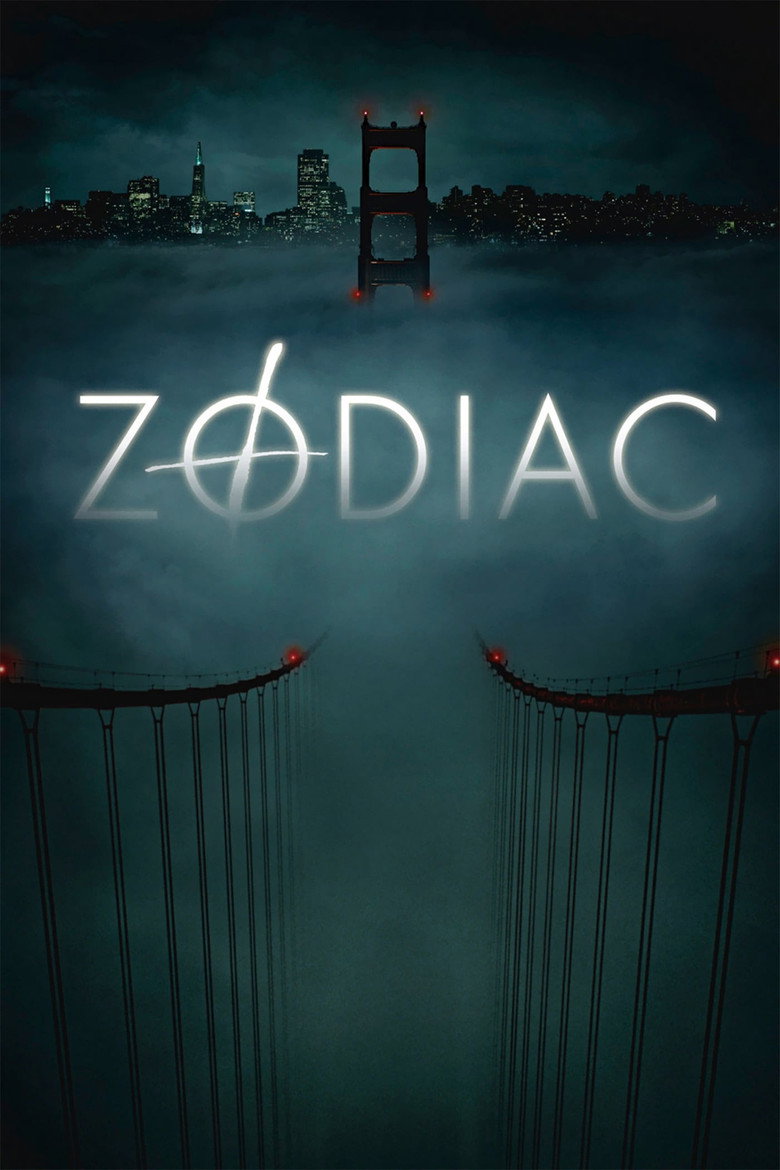
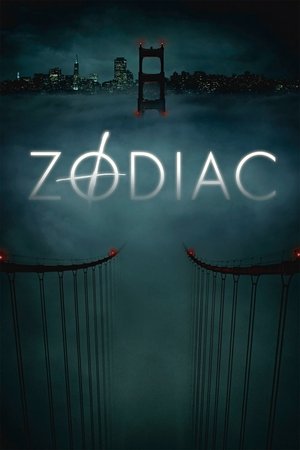
Pacing in cinema is rarely about speed; it's about psychological pressure. David Fincher’s Zodiac understands this better than almost any procedural ever made. The film doesn't rush toward a climax because it knows the climax is irrelevant. Instead, it stretches time like taffy, forcing the audience into the same agonizing, years-long fixation that consumes Robert Graysmith. Watch the police ball sequence, where the Zodiac killer’s symbol is projected onto the ceiling while guests dance obliviously beneath it. Fincher holds the shot just long enough to make you feel the weight of the secret, then cuts away before offering relief. That deliberate temporal friction is what transforms a crime story into a study of obsession. The film’s second half abandons traditional thriller pacing entirely, replacing it with the bureaucratic grind of photostats, cross-referencing, and institutional inertia. It’s grueling by design, mirroring how real fixation consumes life rather than advancing plot. Fincher even manipulates aspect ratios and frame rates to visually denote different eras of the investigation, making the passage of time feel like a physical burden rather than a narrative device.
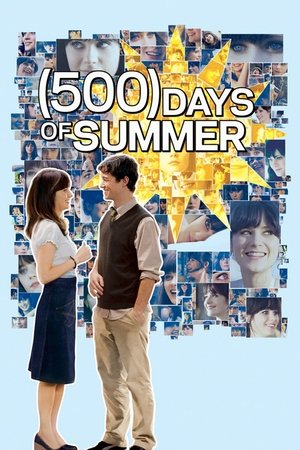
Marc Webb’s (500) Days of Summer deploys a similar temporal strategy, but weaponizes it against romantic comedy conventions rather than police procedure. By front-loading the breakup and structuring the narrative as a nonlinear countdown, the film refuses to let the audience fall for the illusion of a budding romance. Instead, it dissects the mechanics of longing. The famous "500 Days" title card isn't a romantic milestone; it's a forensic breakdown of how Tommy calls a woman's personality on a series of mismatched expectations. Webb’s pacing deliberately stumbles, repeats, and circles back, mimicking the way memory actually works when you're fixated on someone. Unlike standard rom-coms that use montages to glide over the hard parts, this film lingers on the awkward silences and the misread signals. The result is a structural masterclass in showing how obsession distorts time itself, turning a simple relationship into a labyrinth of projected fantasy.
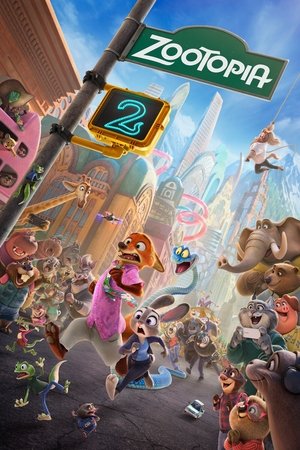
Compare this to the temporal engineering in Zootopia 2, which leans into a more traditional three-act escalation but uses pacing to explore institutional obsession. Where the first film was a buddy-cop romp, the sequel deliberately slows its first act to establish bureaucratic inertia, mirroring how systemic failures compound when left unaddressed. The DMV sequence isn't just fan service; it's a structural mirror to the real-world frustration of navigating opaque systems. By stretching out the procedural beats before launching into the third-act chase, the film argues that obsession isn't just personal—it's structural. The pacing choices here are less experimental than Fincher or Webb, but they serve a clear thematic purpose: showing how momentum builds when institutions refuse to pivot. The sequel’s mid-point lull is intentional, forcing viewers to sit in the discomfort of stalled progress before the narrative finally accelerates.
Character Psychology: The Fixation Loop vs. The Resolution Trap
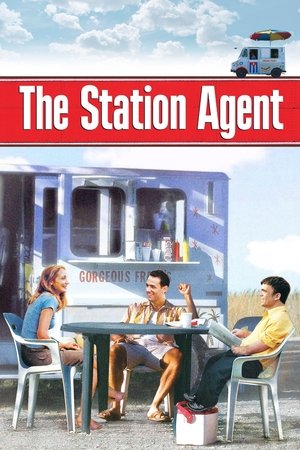
Great films know that characters don't move toward closure; they move toward fixation, and the drama lives in the loop. The Station Agent is a quiet, devastating study of this principle. Frank McCourt’s Finch isn't chasing a mystery or a lover; he's chasing isolation. His obsession is negative space—he wants to be left alone, which ironically makes him the gravitational center of the film. Peter Hedges refuses to give Finch a traditional redemption arc. Instead, the film watches him slowly, reluctantly allow himself to be tethered to others through shared silence and mundane routines. The scene where Finch finally breaks down after years of emotional armoring isn't a triumphant climax; it's a quiet collapse in a dimly lit diner. The film understands that real psychological shifts rarely look like movie endings. They look like people learning to sit with discomfort. Finch’s journey isn't about overcoming his dwarfism or his past; it's about accepting that isolation is a choice, not a sentence.
This psychological realism stands in stark contrast to the resolution trap that plagues so much mainstream storytelling, including the franchise extensions we see in films like Happy Gilmore 2 or Jumanji. Those films rely on character arcs that snap back into place by the final reel, trading psychological complexity for thematic convenience. Finch’s fixation on solitude, Tommy’s romantic projection, Graysmith’s archival mania, and Judy Hopps’ institutional drive all share one trait: they refuse to be neatly cured. They evolve, they fracture, they adapt, but they don't resolve. That’s what makes them cinematic rather than televisual. Television rewards closure because it needs to reset the status quo for next week. Cinema, at its best, rewards fixation because it understands that obsession is the engine of human attention. Even when Finch smiles at the end, the film doesn't promise him happiness; it promises him connection, which is infinitely messier.
When Zootopia 2 handles its protagonist’s drive, it walks a tightrope between franchise expectation and character depth. The film succeeds when it allows Judy’s obsession with systemic reform to collide with her personal blind spots, rather than sanding down her edges to make her more palatable. The third-act confrontation works precisely because it doesn't end with a tidy apology or a perfect victory; it ends with institutional friction. That’s a bold choice for a sequel, and it elevates the film above the usual IP checklist. It proves that even animated franchise filmmaking can prioritize psychological realism over manufactured catharsis. Judy’s arc mirrors Tommy’s in (500) Days of Summer—both are chasing an idealized version of a system or person, and both must confront the gap between projection and reality.
Visual Economy: Restraint as the Ultimate Narrative Tool
What we don't see on screen often dictates how we feel about what we do see. Visual restraint isn't an aesthetic preference; it's a psychological strategy. Fincher’s use of shallow depth of field and desaturated color grading in Zodiac isn't just stylistic; it’s thematic. The world feels claustrophobic, cluttered with papers, tape, and typewriters, visually mirroring Graysmith’s overcrowded mind. The camera rarely gives us a wide, breathing shot. Instead, it pushes in, frames characters behind glass, and traps them in compositions that emphasize isolation. That visual language tells you everything you need to know about obsession: it narrows your world until nothing else exists. The framing deliberately cuts off limbs and backgrounds, forcing the eye to fixate on faces and documents, replicating the tunnel vision of investigative mania.
(500) Days of Summer achieves a similar effect through color theory and editing rhythm. The film’s warm, saturated tones during Tommy’s fantasies contrast sharply with the cooler, flatter lighting of reality, visually mapping the gap between projection and truth. Webb’s editing refuses to let us linger in comfort. When Tommy imagines a perfect date, the cut is abrupt, jarring, almost cruel. That visual whiplash is the film’s thesis: obsession is a editing trick we play on ourselves. The deliberate use of match cuts—linking unrelated moments through visual symmetry—reinforces how the brain falsely connects dots to create narrative where none exists. It’s a structural mirror to Graysmith’s cross-referencing, proving that both crime and romance can become obsessive puzzles.
Even Zootopia 2 demonstrates visual maturity by resisting the urge to over-animate every sequence. The film’s most effective moments are static—characters standing in bureaucratic lobbies, waiting, processing, reacting. The animation team prioritizes facial micro-expressions over sweeping action set pieces, trusting that audience engagement comes from recognition, not spectacle. It’s a reminder that visual economy isn't about cutting corners; it's about knowing what to withhold. As we’ve argued in our breakdown of The Outfit vs. Coherence: The Ultimate Bottle-Thriller Showdown, confinement and visual restraint force audiences to lean in. When a film trusts its audience to read silence, composition, and pacing as narrative, it stops performing and starts communicating.
Sonic Landscapes: The Architecture of Narrative Silence
Sound design is where obsession truly takes root. Films that understand fixation don't just show it; they make you hear it. Zodiac strips away traditional scoring during its most intense investigative sequences, replacing it with the relentless, rhythmic clatter of typewriters, the hum of fluorescent lights, and the rustle of paper. That diegetic soundscape becomes a metronome for Graysmith’s deteriorating mental state. When the music finally returns, it feels like an intrusion, a reminder that the world outside his fixation keeps moving while he stands still. Fincher’s sound mixing deliberately buries dialogue under ambient noise, forcing viewers to strain for information, replicating the frustration of chasing ghosts.
(500) Days of Summer takes the opposite approach, using an aggressively curated indie-folk soundtrack to underscore Tommy’s romantic idealism. But the film’s genius lies in how it subverts those needle drops. When a soaring guitar track accompanies a date that goes terribly wrong, the dissonance between the music’s warmth and the scene’s awkward reality creates a comedic and psychological rupture. The soundtrack doesn't just set the mood; it exposes Tommy’s delusion. By the third act, when the music drops out entirely during the breakup, the silence is deafening. It’s the sound of a fantasy collapsing under its own weight.
The Station Agent weaponizes ambient sound to map Finch’s isolation. The creak of floorboards, the distant whistle of trains, and the low murmur of the diner become the only companions he trusts. When other characters speak, their voices often feel muffled or distant, acoustically reinforcing his emotional withdrawal. The film’s climax relies on a sudden shift to crisp, clear dialogue, signaling Finch’s reluctant re-entry into human connection. It’s a masterclass in using audio perspective as character development. Meanwhile, Zootopia 2 balances its sonic palette between bustling city noise and sudden pockets of quiet, using auditory contrast to highlight the weight of bureaucratic stagnation. The franchise’s willingness to let scenes breathe acoustically proves that even family animation can prioritize atmospheric tension over constant stimulus.
Editor's Verdict
Zodiac remains the definitive blueprint for narrative obsession, and its 7.53 audience score understates its structural genius. I rate it a 9 out of 10. It earns a point off the top only because its final ten minutes lean slightly too hard into exposition, sacrificing the very ambiguity that makes the preceding two hours so devastating. But the film’s refusal to name the killer isn't a gimmick; it's a structural necessity that proves cinema can sustain tension without resolution. The film’s final thirty minutes contain zero musical cues, a structural choice that proves procedural dread can be sustained purely through diegetic sound and spatial composition. Graysmith’s descent into archival madness remains a masterclass in showing how obsession consumes identity rather than solving crimes. This is the film that taught a generation of directors how to pace psychological dread without relying on jump scares or plot twists. If you want a thriller that actually changes how you watch stories, this is the benchmark. Like this post if you believe cinema should challenge, not coddle.
FAQ
Why do some films intentionally avoid narrative closure?
Films that avoid closure prioritize psychological realism over plot convenience, forcing audiences to sit with ambiguity and mirror the way real-life obsession and fixation actually function.
How does pacing influence audience engagement in psychological thrillers?
Deliberate pacing creates temporal friction, stretching time to replicate the exhaustion and tunnel vision of obsession, which keeps viewers psychologically invested rather than passively entertained.
What role does sound design play in building cinematic tension?
Sound design replaces traditional scoring with diegetic noise or sudden silence, forcing audiences to strain for information and acoustically mirroring a character's isolation or fixation.