Plot Is Overrated: The Real Secret to a Binge-Worthy Show
We've been chasing cliffhangers and plot twists for years. But the most addictive shows prove that an inescapable world, not a clever story, is what truly makes a series impossible to turn off.
What truly chains us to the screen for a 12-hour binge: a clever plot or an inescapable world? The evidence from this week's trending shows suggests we've been worshipping the false god of narrative twists when the true deity of binge-watching is atmospheric immersion.
For years, the conventional wisdom has been that a great binge is built on the back of suspense. The 'what happens next' engine, fueled by cliffhanger endings and shocking reveals, was seen as the pinnacle of addictive television. But this is a profound misunderstanding of the binge-watch psychology. It's not about the destination; it's about the desperate, insatiable desire to remain in the place you're visiting. A great plot is a fun weekend trip. A great world is a place you want to move into permanently.
What makes a TV series truly binge-worthy in 2026?
This article argues that the most addictive shows aren't just telling a story, they're building a universe you can't bear to leave. We'll explore this by looking at:
- The sprawling, immersive universes of Chinese animation (donghua) like A Record of a Mortal's Journey to Immortality.
- How other epic fantasies like Jade Dynasty reinforce the power of deep lore.
- The concept of an 'emotional world' in dramas like Every Year After.
- Why plot-heavy but world-light shows like Cape Fear fail the binge test.
The Cult of the Clever Plot and Why It's Failing Us
The streaming era has produced an arms race for the most shocking twist, the most labyrinthine mystery box. This has given us some great moments, but it has also created a generation of shows that are disposable. They are puzzles to be solved, and once you have the answer, their power vanishes. Consider a trending series like Cape Fear.

On paper, it has the ingredients for a binge: a high-stakes thriller premise, a clear antagonist, and a family in peril. You watch an episode to see if they escape, if the villain gets closer. But does the world of Cape Fear have any gravity? Is there anything to the setting beyond 'generic tense suburbia'? Are the characters anything more than archetypes moving a plot forward? The answer is a resounding no. The show lives and dies by its next suspenseful set piece. It gives you a shot of adrenaline, but it doesn't build a world that invites you to stay. Once the immediate tension of an episode is resolved, there's no lingering atmosphere, no rich character dynamics, no fascinating societal rules to ponder. You can easily put it down and pick it up tomorrow, or never. It's a snack, not a meal, because its world is paper-thin.
Welcome to the World-Engine: The Donghua Domination
Now, let's look at the opposite end of the spectrum. Two of the most-watched series right now are not American prestige dramas, but Chinese animated epics, or donghua. These shows, often with hundreds of episodes, are the ultimate proof of the 'world over plot' thesis. Take A Record of a Mortal's Journey to Immortality.
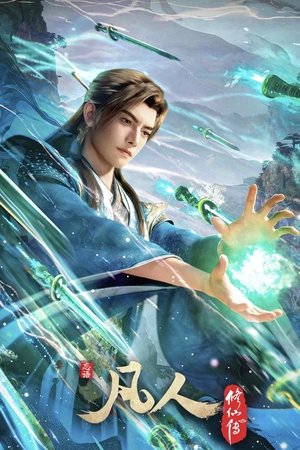
The plot of any given arc is often straightforward: the protagonist, Han Li, needs to acquire a rare herb, escape a rival sect, or master a new technique. But that's not why you watch. You watch because the world of cultivation is so vast, so detailed, and so internally consistent that it feels real. The series spends immense time detailing the nuances between Qi Condensation, Foundation Establishment, and Core Formation stages. It explains the economics of spirit stones, the politics of warring sects, and the ecology of demonic beasts. The 'plot' is merely a vehicle for exploring this staggeringly deep universe. The addiction comes from wanting to understand this world as a native would, to feel the stakes of its power dynamics, and to see every corner of its map. The show builds a system so compelling that you'd rather watch Han Li spend ten minutes methodically setting up an array formation than watch a dozen car chases. It’s a masterclass in world-building as the primary narrative driver, a concept that is powering the global rise of East Asian animation. You can read more about this phenomenon in our piece on how subtitles are no longer a barrier.
This same principle applies to Jade Dynasty.
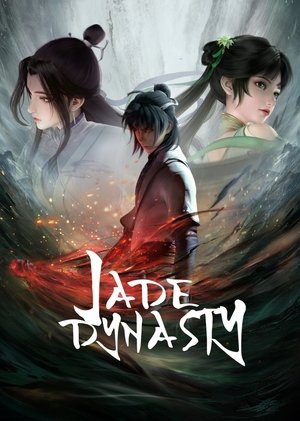
While it shares the xianxia genre, its world feels distinct. The conflict between the righteous Qing Yun Sect and the demonic factions isn't just a good vs. evil binary; it's a clash of deeply ingrained philosophies, each with their own artifacts, martial arts styles, and historical grievances. The binge impulse for Jade Dynasty comes from wanting to untangle these complex relationships. Why does the Soul-Absorbing Staff pulse with such resentful energy? What is the true history behind the Wordless Jade Wall? These are not simple plot questions; they are lore questions. The story of its protagonist, Zhang Xiaofan, is compelling because he is a vessel through which we experience the crushing weight and seductive power of this world's history and its magic. The plot serves to illuminate the world, and in doing so, it becomes infinitely more addictive than a story that just serves itself.
The Emotional Ecosystem as an Inescapable World
This theory isn't limited to fantasy or sci-fi. A 'world' can be emotional, historical, and deeply personal. Look at a show like Every Year After, a romantic drama that is currently holding viewers hostage.

There are no dragons or magic spells here. The 'world' is the small lakeside town in Ontario and, more importantly, the fifteen years of shared history between its protagonists, Macy and Sam. The binge-watch compulsion doesn't come from a 'will they/won't they' gimmick. It comes from the magnetic pull of their shared emotional ecosystem. Each flashback to a previous summer adds another layer of texture to their present-day interactions. A seemingly innocent phrase is freighted with a decade of unspoken history. The 'world-building' here is the patient, deliberate construction of a relationship. We get addicted to the feeling of their summers, the specific atmosphere of their secret spots, the unique cadence of their dialogue. We don't just want to know what happens next; we want to live inside their memories. The plot, which involves uncovering the reasons for their falling out, is secondary to the immersive experience of their bond. It’s a world built of quiet moments, shared glances, and the weight of time, and it’s just as inescapable as any fantasy kingdom.
The Verdict: Stop Chasing Twists, Start Building Worlds
It's time we re-evaluate what we ask from our long-form television. The demand for constant, shocking plot developments has led to narratively hollow, forgettable shows. The series that truly leave a mark, the ones that occupy our thoughts for weeks and demand an immediate re-watch, are the ones that prioritize place-making. They build legal systems, magical hierarchies, or emotional landscapes so compelling that we can't bear to be evicted at the end of an episode.
So the next time you're looking for your next binge, don't ask 'What's the plot?'. Ask 'What's the world?'. The answer will tell you everything you need to know about whether you're in for a fleeting diversion or a true, soul-consuming obsession. If you like this post, give it a like.
Editor's Verdict
Featured Show: A Record of a Mortal's Journey to Immortality
This series is the ultimate argument for my thesis. Its deliberate, almost meditative pacing is anathema to the twist-a-minute school of thought, yet it's more addictive than almost any of them. The show's confidence lies in its world, trusting that the intricate rules of cultivation and the harsh realities of its society are more than enough to hook a viewer. The 'Yellow Maple Mountain' arc in Season 1 does more to establish a compelling, binge-worthy world in three episodes than most prestige dramas do in their entire first season. The meticulous detail, from alchemy to sect bureaucracy, creates a tangible sense of place that is the true engine of this binge-worthy machine.
Rating: 9/10 - The score reflects its masterful execution of immersive world-building. It loses a single point because the sheer volume of lore and the initially slow pace can present a formidable barrier to entry for viewers accustomed to more conventional, plot-first storytelling.
FAQ
What is 'donghua'?
Donghua is the term for Chinese animation. Much like Japanese 'anime', it encompasses a wide variety of genres and styles, from epic fantasy series like 'A Record of a Mortal's Journey to Immortality' to modern-day comedies and dramas.
What makes a TV show good for binge-watching?
While plot cliffhangers help, the most crucial element for a truly addictive binge-watch is immersive world-building. This could be a complex fantasy setting, a detailed historical period, or a deeply realized emotional landscape that makes the viewer want to stay inside the show's universe for as long as possible.
Is 'A Record of a Mortal's Journey to Immortality' based on a book?
Yes, it's adapted from a famous and very long-running Chinese web novel of the same name ('Fanren Xiu Xian Zhuan') written by Wang Yu. The novel provides the deep well of lore and character history that makes the animated series' world so rich.