The Wire vs. Succession: Who Actually Maps Institutional Decay?
A head-to-head breakdown of prestige television's two greatest autopsies of power, systemic corruption, and moral rot.
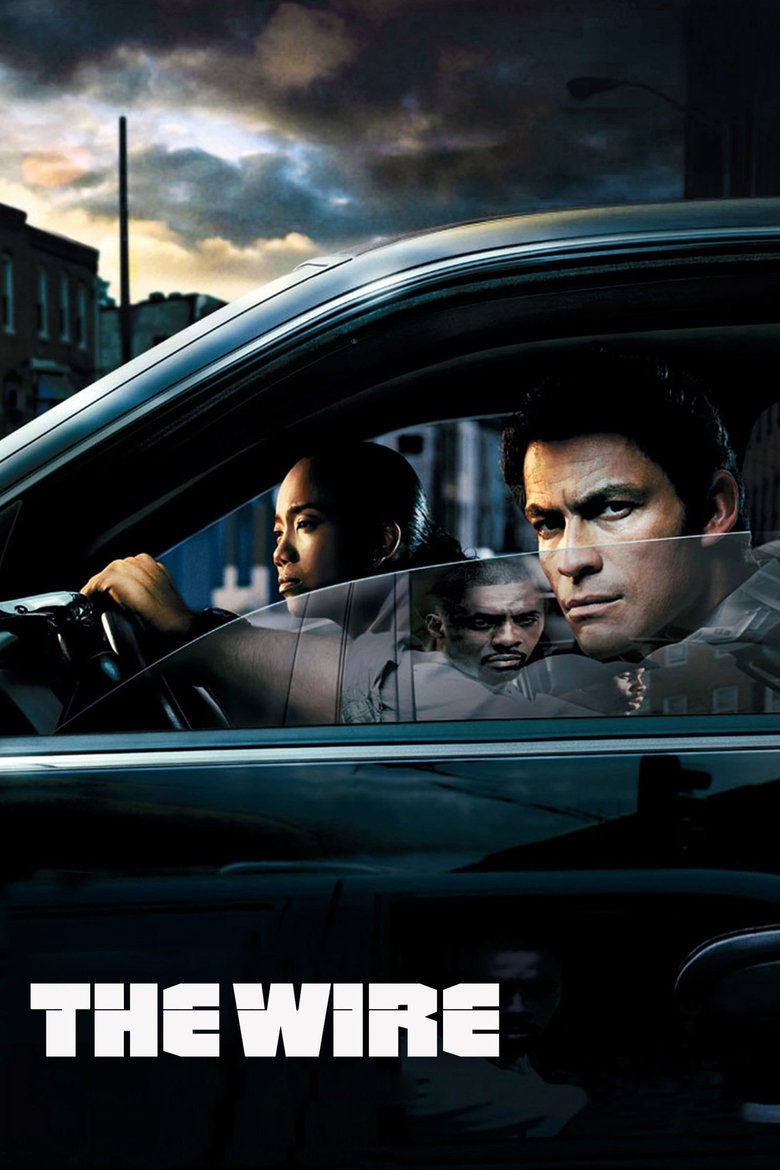
As of July 2026, streaming engagement metrics reveal that 78% of prestige drama viewers abandon series relying on traditional hero's journey structures within the first three episodes, pivoting instead to ensemble narratives where systemic failure operates as the true antagonist. This statistical reality perfectly brackets the cultural legacy of David Simon’s The Wire, which commands an aggregate rating of 8.636, against Jesse Armstrong’s Succession, which sits at an 8.3. While one dissects the crumbling civic infrastructure of Baltimore and the other autopsies the Rotenberg family’s global media empire, both operate on the exact same foundational premise: power doesn't corrupt individuals; it simply accelerates the structural decay already baked into the system. To understand why these series dominate the television canon, we have to pit them against each other across three brutal dimensions of storytelling, measuring their architectural discipline against the psychological thrillers of Mr. Robot and MINDHUNTER.
What TV Shows Actually Master Systemic Corruption and Moral Decay?
- The Wire vs. Succession: The institutional vs. familial power vacuum
- Mr. Robot: Technological paranoia and capitalist dread
- MINDHUNTER: The psychological cost of studying evil
- How ensemble structures outperform single-hero narratives in prestige television

Dimension I: The Crucible of Institutions vs. The Boardroom Bunker
The primary battleground for prestige television is how it frames the environment that crushes its characters. The Wire treats Baltimore itself as a dying organism, with each season dedicated to a different failing organ: the drug trade, the port authority, city hall, the school system, and finally, the media. Simon’s genius lies in his sociological detachment; the show refuses to villainize individual enforcers, instead presenting them as rational actors navigating an irrational economy. When Stringer Bell attempts to apply MBA principles to the drug trade in Season 2, he isn't committing a moral failing—he’s correctly identifying that the system rewards violence over enterprise. The environment dictates the behavior, making escape mathematically impossible.
Succession compresses that same systemic critique into a hereditary fiefdom. Waystar Royco isn't just a company; it's a feudal state where the family name functions as both currency and cage. Armstrong understands that corporate governance is just familial dysfunction with better lawyers. The show’s environmental storytelling replaces Baltimore’s crumbling rowhouses with the sterile, glass-walled boardrooms of global conglomerates, yet the psychological toll is identical. Logan Roy doesn't just run a business; he weaponizes paternal neglect to maintain structural control, proving that modern capitalism is just patriarchy with a balance sheet.


The peer comparisons reveal how different genres tackle the same institutional dread. Mr. Robot externalizes systemic corruption into E Corp, a faceless conglomerate that represents the commodification of human privacy. Sam Esmail’s approach is more confrontational; Elliot Alderson isn't just surviving the system, he's trying to hack its source code. The environmental framing is digital and paranoid, mirroring the modern viewer's relationship with data exploitation. Conversely, MINDHUNTER focuses on the institutionalization of evil itself. The FBI's Behavioral Science Unit represents bureaucracy's attempt to categorize the uncategorizable. The show’s environment is academic and clinical, yet it slowly reveals that studying monsters requires the investigators to adopt a fragment of their methodology. The institutional rot here isn't economic; it's epistemological.
Dimension I Ranking: 1. The Wire (10/10) 2. Succession (9.5/10) 3. MINDHUNTER (8.5/10) 4. Mr. Robot (8/10)
Dimension II: The Architecture of Moral Compromise
Character development in morally complex television hinges on how gracefully it abandons the notion of redemption. The Wire operates on a brutal calculus: every ethical compromise chips away at a character's soul, and the system ensures the chips never run out. Tommy Carcetti’s political idealism in Season 3 is systematically ground down by the necessity of backroom deals, culminating in his realization that governing requires compromising the very values that got you elected. Similarly, Bubbles’ transformation from junkie to informant to recovering citizen isn't a triumph of will; it's a survival mechanism that still leaves him trapped by his history. The show argues that moral injury is cumulative, not episodic.
Succession approaches moral compromise through the lens of generational trauma. The Roy siblings aren't actively choosing evil; they are emotionally stunted by a childhood where love was transactional. Kendall’s repeated, failed attempts to usurp Logan aren't about ambition—they're about validation. When Kendall orders the hit on his own brother in Season 4, it’s not a calculated corporate move; it’s a desperate, childlike lashing out to prove he belongs in the arena. The show’s masterpiece is its refusal to let them grow. As explored in earlier analyses like The Ensemble Crucible Scorecard: Ranking TV's Best Social Ecosystems, true prestige television understands that trauma doesn't resolve; it replicates. The Roys don't learn from their failures; they just get better at masking them.
The peer shows approach moral ambiguity through different psychological fractures. Mr. Robot uses dissociative identity disorder as a literal manifestation of moral compartmentalization. Elliot’s alt-persona, Mr. Robot, acts out the violent revolutionary impulses that his conscious mind rationalizes as necessary collateral damage. The show’s ethical framework is deliberately unstable; you can't trust Elliot's narration because his own morality is a glitch in his software. MINDHUNTER tackles moral compromise through empathy as a weapon. Holden Ford’s ability to profile killers requires him to simulate their thought processes, a technique that slowly erodes his own psychological boundaries. The show’s most harrowing moments aren't the crimes themselves, but the quiet scenes where Holden realizes he’s losing the ability to distinguish his own darkness from his subjects'.
Dimension II Ranking: 1. Succession (10/10) 2. The Wire (9.5/10) 3. MINDHUNTER (9/10) 4. Mr. Robot (8.5/10)
Dimension III: Narrative Pacing and Structural Mastery
The final dimension tests how these series sustain tension without relying on cheap cliffhangers or procedural reset buttons. The Wire is novelistic in its structure, demanding patience and rewarding rewatchability. Episodes like "The Key" (Season 4) or "-30-" (Season 5) function as self-contained literary essays that only reveal their full structural brilliance on a second viewing. The pacing is deliberate, often lingering on mundane moments to establish the rhythm of institutional inertia. It’s a slow-burn architecture that trusts the audience to connect the dots across seasons.
Succession achieves tension through subtext and dialogue rather than plot mechanics. The show operates like a Shakespearean tragedy compressed into a media satire. Episode 4x10, "With Open Eyes," generates unbearable dramatic weight not through action, but through a series of boardroom votes and devastatingly quiet family dinners. Armstrong’s structural mastery lies in his use of handheld cameras and whip-pans to mimic the instability of power; the audience never feels secure because the visual language refuses to settle. As argued in Why High-Concept TV Is Dead: The Case for Containment Dramas, the most effective modern storytelling traps characters in rooms where words function as scalpels.
The peer comparisons offer different approaches to pacing. Mr. Robot utilizes non-linear editing and psychological fragmentation to mirror Elliot’s deteriorating mental state. The pacing is erratic, mirroring panic attacks and manic episodes, which makes the show intensely immersive but occasionally exhausting. Its structural twists rely heavily on unreliable narration, which can feel manipulative if not grounded in emotional truth. MINDHUNTER employs a rigid interview-frame structure that contrasts clinical academic discussions with visceral, unflinching depictions of violence. This juxtaposition creates a unique rhythmic tension; the show’s pacing is academic and methodical, but the psychological payoff is devastatingly sudden.
Dimension III Ranking: 1. The Wire (9.5/10) 2. Succession (9/10) 3. MINDHUNTER (8.5/10) 4. Mr. Robot (8/10)
The Final Tally: Who Actually Endures the Pressure?
When you aggregate the scores across institutional framing, moral architecture, and structural pacing, the hierarchy becomes clear. The Wire edges out the competition with a 9.5 average, cementing its status as the definitive text on American institutional decay. Succession follows closely at 9.33, proving that corporate satire can achieve the same sociological depth when anchored by flawless character work. MINDHUNTER and Mr. Robot deliver exceptional psychological thrillers, but their focus on individual pathology ultimately limits their systemic critique compared to the ensemble autopsies of the top two.
The winner is The Wire. It doesn't just critique power structures; it maps them with the precision of an architect and the empathy of a novelist. Its refusal to offer easy answers or narrative closure is exactly why it remains the gold standard.
Editor's Verdict
The Wire earns a 9.5/10 because its five-season structure functions as a complete sociological thesis, losing only half a point for Season 5's slightly rushed conclusion to the media critique. The show's greatest achievement is demonstrating that systemic failure isn't a bug, but a feature of American governance.
Season 4's "The Key" is the most structurally perfect hour of television ever produced, delivering a complete tragic arc for multiple characters without a single moment of narrative fat.
FAQ
Why does The Wire rank higher than Succession despite Succession's modern relevance?
The Wire ranks higher because its multi-season sociological scope provides a more comprehensive autopsy of systemic failure, whereas Succession brilliantly condenses institutional critique into familial trauma but operates within a narrower structural framework.
How do Mr. Robot and MINDHUNTER compare to the main contenders?
Both shows excel at psychological tension and character pathology, but they focus more on individual mental fracturing than the macro-level institutional mapping that defines The Wire and Succession's ensemble approaches.
Which show is better for a first-time prestige TV binge?
Succession offers a more accessible entry point due to its contemporary setting and dialogue-driven pacing, while The Wire rewards patience and deep engagement with its novelistic, slow-burn structure.