Fargo Is TV’s Best Forgery, Not Its Best Show
Noah Hawley’s acclaimed anthology series is a masterpiece of imitation, but it's a hollow echo that misses the Coen Brothers' human heart. You're being sold a brilliant replica.
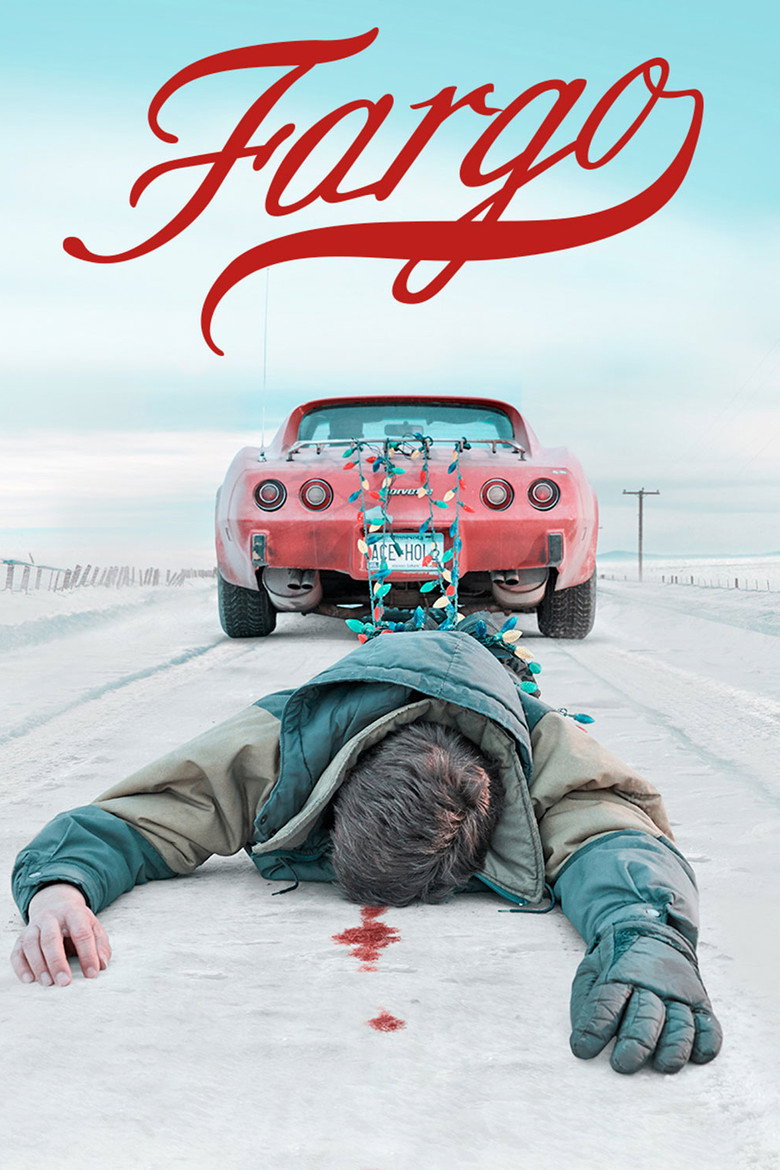
The snow-blasted plains of Minnesota feel impossibly vast, a blank canvas of white under a punishingly grey sky. A car, a tan Cutlass Ciera, slices through the emptiness, its driver a bundle of frayed nerves and flop sweat named Jerry Lundegaard. He’s in over his head. We know it, he knows it, and the very landscape seems to mock his pathetic, doomed scheme. Watching the Coen Brothers’ 1996 masterpiece Fargo for the first time is to experience a perfect, discordant symphony of humanity—the horrifyingly casual violence, the bafflingly mundane dialogue, and the radiant, decent warmth of Marge Gunderson. It’s a film that feels discovered, not written; its strangeness is the genuine, unvarnished oddity of real life.
Then came the television show. The consensus, of course, is that Noah Hawley’s Fargo is a miracle, a spin-off that not only honors its source material but expands upon it, crafting a universe of interconnected crime stories that are clever, stylish, and impeccably performed. It’s the prestige TV darling that proved you could adapt the unadaptable. But this consensus is built on a grand illusion. The show isn't an expansion; it's a meticulous, high-budget forgery. It’s a fan film made by an A-student who memorized the Coens' entire filmography but fundamentally misunderstood the soul of their work. It copies the accent, the violence, and the snowy landscapes, but it trades profound, character-driven oddity for a hollow, curated quirkiness.
Is the Fargo TV Series a Worthy Successor to the Film?
This deep dive challenges the popular acclaim for the Fargo anthology series. While it's a technical marvel, we argue that its reputation is inflated. This article will cover:
- An analysis of the Coen Brothers' authentic humanism versus the show's curated eccentricity.
- Why Season 2's infamous UFO subplot is a case study in the show's creative failure.
- How the series substitutes philosophical monologues for genuine character development.
- Why a seemingly conventional show like Boston Legal offers a more genuinely surreal and compelling exploration of a shattered reality.
The Seduction of a Flawless Replica
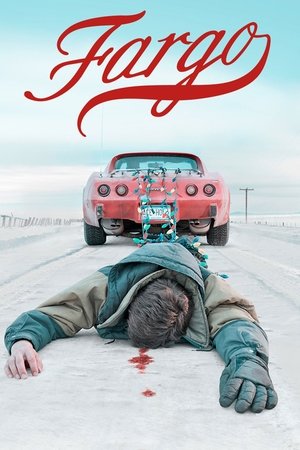
Let's be clear: on a craft level, Fargo is often exceptional. The casting is a masterclass, season after season. Martin Freeman’s turn as the sniveling Lester Nygaard in Season 1 is a pitch-perfect echo of William H. Macy’s Jerry Lundegaard. Billy Bob Thornton’s Lorne Malvo is a creature of pure, seductive malice, a walking embodiment of chaos. In Season 2, Kirsten Dunst and Jesse Plemons are heartbreakingly tragic as the Blomquists, a couple pulled into a mob war by one spectacularly bad decision. The cinematography is gorgeous, aping Roger Deakins’ stark compositions with loving reverence. The split screens, the sudden bursts of violence, the needle drops—it all looks and sounds right.
This is the core of its appeal. It’s a prestige television product that gives you the feeling of watching a Coen Brothers movie, stretched over ten hours. It’s comfortable, familiar, and executed with a level of technical polish that demands respect. Hawley’s scripts are intricate Rube Goldberg machines of plot, where small choices snowball into bloody disasters. If television were judged purely on its ability to mimic a revered aesthetic, Fargo would be a first-ballot Hall of Famer. It successfully reverse-engineered the Coen formula, and for that, it deserves a measure of applause. But a formula is not the same as a soul, and a replica, no matter how perfect, is not the same as the real thing.
Where Quirk Becomes a Crutch
The fundamental disconnect lies in the understanding of “quirk.” In the Coens' universe, strangeness is organic. It bubbles up from the characters themselves. When Marge Gunderson interviews the two sex workers, her polite, folksy questioning clashing with the sordid details of their night with Carl and Gaear isn't a joke written for the audience; it’s a genuine expression of her unflappable, small-town decency colliding with big-city depravity. The weirdness serves to illuminate character and theme. The film’s famous “Minnesota nice” accent isn’t just a gag; it’s the audible texture of a community that papers over desperation and violence with cheerful platitudes.
In Hawley’s Fargo, quirk is an applied aesthetic. It’s a decorative layer slathered on top of the story. Characters don't just talk; they deliver folksy, allegorical monologues that feel reverse-engineered from a graduate-level screenwriting seminar. Lorne Malvo’s endless parables and riddles don’t reveal a character; they announce a writer’s intention to create a Symbolic Figure of Evil. V.M. Varga’s (David Thewlis) monologues on the nature of truth in Season 3 are intellectually interesting but dramatically inert. They are essays inserted into a character’s mouth. The show is constantly calling attention to its own cleverness, winking at the audience with its literary allusions and philosophical digressions. It’s the difference between a person with a naturally eccentric personality and someone wearing a wacky hat because they want you to think they're eccentric. One is authentic; the other is a performance.
The UFO in the Room: When Style Annihilates Substance
Nowhere is this preference for empty style over substance more apparent than the single most divisive and, I will argue, damning moment in the entire series: the UFO in Season 2. That season, often lauded as the show’s peak, is a sprawling gangland saga. In the midst of the climactic “Massacre at Sioux Falls,” as state troopers and mobsters exchange gunfire, a literal flying saucer descends, distracts the combatants, and allows a key character to escape.
Defenders call this a bold, surrealist flourish, a nod to the existential randomness of the Coens' world. This is nonsense. It is the single biggest misreading of the Coen ethos imaginable. The Coens' universe is absurd, but it is not random; it is governed by a strict, almost karmic, causality. Characters are undone by their own greed, stupidity, and vanity. The wood chipper isn't a random event; it's the logical, grotesque endpoint of a plan born of quiet desperation. The UFO, by contrast, is a literal deus ex machina. It is an external, unearned plot device that resolves a conflict. It adds nothing to our understanding of the characters or the themes of corrupted Americana. It is there for one reason and one reason only: because it looks cool. It’s a moment designed for Twitter gasps and recap headlines, a hollow spectacle that reveals the show’s fundamental bankruptcy of ideas. It’s the moment Noah Hawley chose to be a showman instead of a storyteller.
The Alternative: Finding Authentic Absurdity in the Courtroom
So if Fargo is merely a well-dressed mannequin of prestige TV, where can one find a show that genuinely plunges its characters into a shattered, surreal reality? The answer may surprise you. Forget the snowy plains of Minnesota and turn your attention to the gleaming high-rises of Massachusetts. I'm talking about Boston Legal.
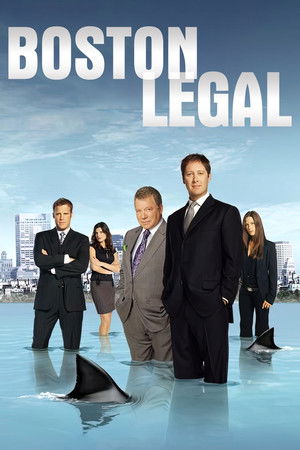
Yes, the David E. Kelley legal dramedy starring William Shatner and James Spader. Dismissed by many as a quirky procedural, Boston Legal was, in fact, one of the most daringly surreal and politically ferocious shows of its era. Its reality didn't just bend; it shattered on a weekly basis. This wasn't the calculated weirdness of Fargo; it was the genuine, unhinged id of a showrunner let loose on network television. Characters frequently broke the fourth wall, referencing their own episode orders and Nielsen ratings. Denny Crane (Shatner), a brilliant but declining legal legend suffering from “mad cow,” would end nearly every episode on a balcony with Alan Shore (Spader), where they would smoke cigars, drink scotch, and deliver some of the most poignant, funny, and deeply strange meditations on life, love, and the American empire ever broadcast.
While Fargo uses its setting to explore a stylized, almost mythic version of American crime, Boston Legal used the courtroom as a stage for blistering, contemporary critiques. Alan Shore’s closing arguments were not clever parables; they were six-minute, uninterrupted tirades against the Patriot Act, the failures of the Supreme Court, and the absurdity of modern politics. The show’s reality was constantly fracturing because it argued that our actual reality was absurd. Its characters were adrift in a world where logic and justice had become unmoored, and their only anchor was their profound, loving friendship. It was a show about finding humanity in a world gone mad, a theme Fargo gestures at but never truly grasps. Ditch the forgery. Watch the real, beautiful, bizarre article.
Editor's Verdict
Fargo is a triumph of television taxidermy—beautifully preserved on the outside, but utterly devoid of the life that made the original a masterpiece. The UFO in Season 2 isn't a bold creative choice; it's the definitive proof that the show values empty spectacle over thematic coherence.
FAQ
Is the Fargo TV show connected to the movie?
It's an anthology series set in the same universe. While characters and plots are new each season, there are thematic and occasional narrative connections, like the briefcase of money from the film appearing in Season 1.
Do I need to watch the Fargo movie before the TV series?
It's not required, as the show tells self-contained stories. However, watching the 1996 film first is highly recommended to understand the tone, style, and thematic universe the series is playing in (and, according to this review, failing to properly replicate).
Which season of Fargo is considered the best?
Seasons 1 and 2 are generally considered the high points by critics and fans, often praised for their strong casts and compelling crime narratives. Later seasons have received a more mixed reception.