TV's Flawed Heroes: Redemption in a World Without Trust
From Warrior Nun to Schitt's Creek, contemporary television is obsessed with morally compromised outcasts finding belonging in impossible circumstances. What does this say about us?
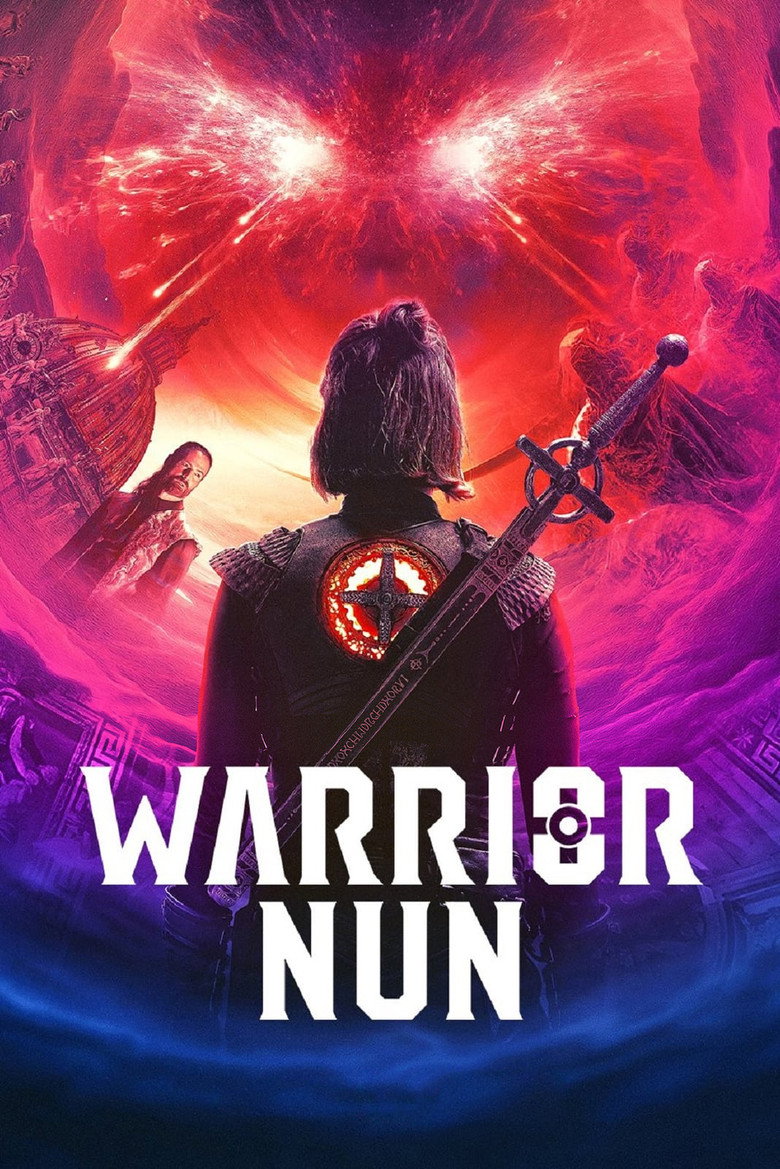
The scent of stale pizza and the dim glow of a screen at 2 AM. Ava Silva, the reluctant hero of Warrior Nun, had just pulled off another impossible feat, but the weariness in Alba Baptista's eyes wasn't from the CGI demons; it was the weight of a divine burden she never asked for. Viewers like me, hunched over our devices, aren't just here for the supernatural spectacle; we're witnessing a deeper, more profound struggle. It's the struggle of an outcast, thrust into a world where trust is a luxury and belonging a distant dream, yet somehow, still fighting for both. This isn't just a niche phenomenon for genre fans; it’s a defining characteristic of modern television, reflecting our own anxieties about morality, connection, and survival in an increasingly fractured world.
Today's most compelling TV narratives are less about flawless heroes conquering evil and more about broken individuals grappling with their own demons, literal or metaphorical, in environments designed to strip away their humanity. We're drawn to these stories not for escapism, but for reflection. They put morally compromised, outcast, or emotionally damaged people into high-stakes environments—be they supernatural battlegrounds, dystopian ruins, or the crushing banality of forced domesticity—and force us to ask: can belonging, redemption, or even basic human decency survive when trust is scarce? The answer, as these trending shows prove, is complex, often painful, but endlessly fascinating.
Navigating the Moral Maze: TV's Outcasts and Their High-Stakes Journeys
This cultural moment is defined by narratives that challenge our perceptions of heroism and community. Here’s what we’re dissecting:
- Warrior Nun: The reluctant hero's journey amidst sacred obligations.
- Angel: The vampire with a soul, forever seeking atonement.
- The Last of Us: Forged bonds in a brutal, post-apocalyptic landscape.
- Schitt's Creek: The wealthy outcasts finding their true family in unexpected places.
- Lord of the Flies: Humanity's descent when civilization collapses.
The Reluctant Harbinger: Ava Silva's Fight for Self in Warrior Nun
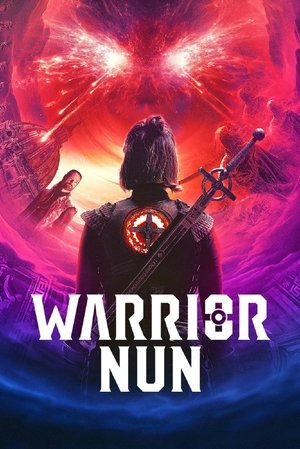
Warrior Nun isn't just a show about a resurrected orphan fighting demons with a halo embedded in her back; it's a searing exploration of identity, agency, and the search for belonging against a backdrop of divine conspiracy. Ava Silva (Alba Baptista) begins her journey as an unwilling participant, a dead girl brought back to life, instantly burdened with a sacred duty she neither understands nor desires. Her initial instinct is pure, self-preservationist hedonism – to experience life, any life, after years of paralysis and institutional confinement. She's an outcast from birth, then an outcast from death, and finally, an outcast from the very order she's meant to serve. The series masterfully portrays her skepticism, her sarcastic defiance, and her profound loneliness. She doesn't trust the church, she doesn't trust her powers, and she certainly doesn't trust the complicated, often manipulative, figures around her, from the enigmatic Father Vincent to the Machiavellian Cardinal Duretti.
What makes Ava compelling is her slow, agonizing crawl towards acceptance, not of her role, but of her own capacity for connection and purpose. Her bond with Sister Beatrice, a relationship that transcends mentorship into something deeply intimate and foundational, is the anchor for her burgeoning sense of self. It's through Beatrice’s unwavering support and quiet strength that Ava learns to trust, not just others, but the nascent sense of morality and responsibility within herself. The show posits that belonging isn't found in a pre-ordained destiny or a powerful artifact, but in the fierce, chosen connections forged in the crucible of shared adversity. Ava's journey is messy, defiant, and deeply human, making her one of the most resonant "unlikely heroes" on TV today. She continually pushes against the strictures of the ancient Order of the Cruciform Sword, not out of malice, but out of a fierce need to define her own moral compass, proving that even a divine calling can't override the human desire for authenticity and genuine connection. She's the ultimate embodiment of a character who must fight not just external threats, but the very meaning of her existence, to find her place.
Echoes of Atonement: Angel's Eternal Struggle with the Soul

Long before Ava was battling ancient evils with a halo, there was Angel, the tortured vampire with a soul, played with brooding intensity by David Boreanaz. The very premise of Angel is built on the concept of a morally compromised outcast seeking redemption. Cursed with a soul after centuries of unspeakable evil as Angelus, Angel is a perpetual outsider, haunted by his past atrocities. His existence is a self-imposed penance, a lonely crusade to "help the helpless" in the neon-noir grime of Los Angeles. He can never truly belong, not among humans, who fear him, nor among demons, who scorn his conscience. His attempts to form a family, first with Cordelia and Doyle, then Wesley and Fred, are constantly imperiled by his own nature and the brutal, unforgiving world of supernatural law. Trust is a fragile commodity in Angel Investigations, often broken, always hard-won. Angel's core conflict is not just fighting external villains, but battling the monstrous id within, knowing that one moment of true happiness could strip him of his soul and unleash Angelus once more.
What Angel so brilliantly dissects is the impossibility of true redemption without consequence. Every good deed is stained by his past, every moment of solace tempered by the knowledge of his inescapable curse. His arc through five seasons is a relentless exploration of moral ambiguity – he makes deals with devils, sacrifices friends, and descends into darkness, all in the name of a greater, often obscure, good. This series proved that audiences were ready for heroes who were irrevocably broken, whose humanity was a constant, excruciating choice rather than an innate state. Angel’s journey informs the contemporary landscape, showing that the most compelling character studies often revolve around those who are eternally out of step, forever wrestling with who they were versus who they desperately want to be. His very existence is a testament to the idea that belonging for the truly damaged isn't a comfortable embrace, but a hard-fought, often temporary, truce with a hostile world. For more on how TV shows explore characters under pressure, check out our piece on The Ties That Bind (and Break): Ranking TV's Best Ensembles Under Pressure.
Post-Apocalyptic Bonds: The Last of Us and the Burden of Imperfect Love
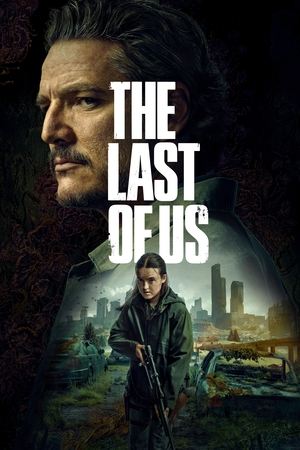
In the fungal-infested remnants of society, The Last of Us presents a masterclass in how isolation and trauma forge deeply complex, morally fraught connections. Joel Miller (Pedro Pascal) is the quintessential emotionally damaged outcast, hardened by years of unimaginable loss and the brutal calculus of survival in a post-apocalyptic world. He's a man who has lost everything, walled himself off emotionally, and now operates on a purely utilitarian, often ruthless, code. When he's tasked with escorting Ellie (Bella Ramsey), a snarky, vulnerable, and inexplicably immune teenager, across a desolate America, it's initially a transactional relationship devoid of trust. Joel is gruff, guarded, and prone to extreme violence, his past actions coloring every interaction. Ellie, equally damaged by a life lived entirely within quarantine zones and constant danger, approaches the world with a defensive wit and a deep-seated fear of abandonment.
The genius of The Last of Us lies in the slow, agonizing erosion of their initial distrust, replaced by a profound, if imperfect, bond that ultimately transcends survival. Joel becomes Ellie's protector, then her surrogate father, and in doing so, rediscovers a piece of his lost humanity. However, this redemption isn't clean; it's steeped in the very moral compromises that defined his survival. His final, devastating decision in the Firefly hospital, prioritizing Ellie's life over a potential cure for humanity, cemented him as a hero who is deeply, terrifyingly flawed. It's an act of selfish love, a primal act of belonging that sacrifices the greater good. The series forces us to confront the uncomfortable truth that in extreme circumstances, humanity can be found in morally ambiguous choices, and belonging can be forged through violence and deception just as much as through empathy. It asks whether humanity can survive the choices made to protect it. For more on how shows delve into personal journeys within harsh realities, explore Identity's Crucible: Ranking TV's Boldest Journeys of Self-Discovery.
From Riches to Rags: Schitt's Creek's Unexpected Path to Humanity
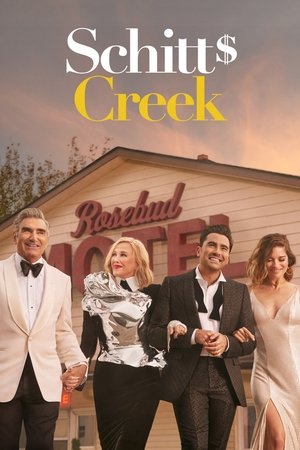
While Schitt's Creek might seem like an outlier in this discussion of high-stakes environments and moral compromise, it is, in fact, a brilliant exploration of how outcasts, stripped of their former lives, are forced to confront their damaged emotional landscapes and rebuild a sense of belonging. The Rose family—Johnny, Moira, David, and Alexis—are the ultimate parvenus, financially ruined and exiled to the eponymous small town they once bought as a joke. They are outcasts not by choice or supernatural curse, but by a sudden, brutal loss of their accustomed status and wealth. Their high-stakes environment isn't a warzone, but the crushing social awkwardness and practical indignities of small-town life, a world utterly alien to their privileged existence. Initially, they are emotionally damaged, self-absorbed, and utterly incapable of genuine connection, even with each other. They are a family in name only, a collection of individuals orbiting their own narcissism.
The profound journey of Schitt's Creek is watching these four emotionally stunted adults slowly, painfully, and hilariously learn what it means to be human. They learn humility from the townspeople, responsibility from their new circumstances, and, most importantly, how to truly love and trust each other. David's journey towards finding a partner and building a home, Alexis's growth from a shallow socialite to an independent woman, Moira's reluctant embrace of the community, and Johnny's rediscovery of his own worth as a patriarch, are all testament to the transformative power of forced belonging. Their initial distrust of everyone and everything outside their bubble gives way to genuine affection and interdependence. Schitt's Creek demonstrates that even in a seemingly mundane setting, the stakes of personal growth and the search for authentic connection can be as high as any battle against demons or zombies. The Rose family's redemption isn't about saving the world, but saving themselves and each other, proving that humanity can survive, and even thrive, when outcasts are forced to shed their defenses and embrace a new, uncomfortable, but ultimately more fulfilling reality.
The Gold Standard of Collapse: Lord of the Flies: A Grim Reflection
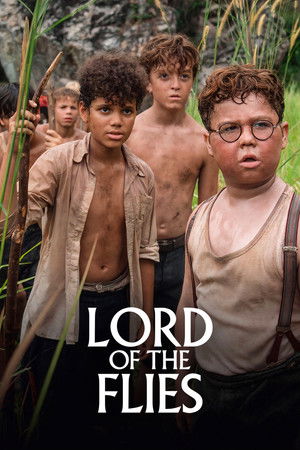
Bringing up the rear, not in quality, but in sheer bleakness, is the latest adaptation of Lord of the Flies. If the other shows demonstrate humanity's resilience or hard-won redemption, Lord of the Flies is the grim counterpoint, a cautionary tale about how easily that humanity can unravel when trust is utterly annihilated. Stranded on a deserted island, a group of schoolboys quickly devolves from an attempt at civilized society into primal savagery. Each boy is an outcast from their familiar world, and collectively, they become outcasts from civilization itself. The high-stakes environment is pure, unadulterated survival, but the real threat isn't the island; it's the darkness within themselves. Ralph, the appointed leader, struggles to maintain order and rationality, representing the fragile veneer of society. Piggy, the intellectual outsider, embodies reason and foresight but is cruelly marginalized and ultimately destroyed. Jack, the charismatic and ruthless hunter, preys on the boys' fears and desires for power, systematically dismantling any semblance of trust or shared purpose.
This adaptation, like its predecessors, serves as a chilling mirror, reflecting the fragility of human nature when societal constraints are removed. It showcases how quickly moral compromise can escalate into outright barbarity when the desire for belonging is twisted into tribal loyalty and fear-mongering. The boys become morally compromised not by choice, but by the relentless pressure of isolation and unchecked instinct. Their tragic descent into savagery highlights the fundamental importance of external structures, empathy, and mutual trust in maintaining our humanity. Without these, the series argues, we are not merely outcasts from society, but from ourselves. It's a stark reminder that while other shows find a glimmer of hope for the fractured soul, Lord of the Flies dares to suggest that sometimes, the darkness wins, and belonging simply means finding your tribe in the chaos, no matter how brutal that tribe may be.
Why We Crave the Flawed & Isolated: Audience Reflection in the Age of Ambiguity
Our collective fascination with these morally compromised outcasts isn't accidental. It speaks volumes about the current cultural zeitgeist. We live in an era of unprecedented global uncertainty, where institutions are questioned, traditional moral frameworks feel insufficient, and the very concept of "community" often feels strained. Audiences are tired of one-dimensional heroes and simplistic narratives. We crave authenticity, even if it's uncomfortable. These shows, with their complex protagonists and high-stakes moral dilemmas, resonate because they mirror our own internal struggles. We see ourselves in Ava's defiance against an inherited burden, in Angel's Sisyphean quest for atonement, in Joel's desperate, flawed love, and even in the Roses' clumsy, ultimately triumphant, journey to genuine connection. They offer a space to explore questions of trust, loyalty, and identity without the easy answers.
Furthermore, the rise of streaming platforms has allowed for more nuanced character development, favoring slow-burn psychological arcs over episodic clean-ups. This allows writers to delve deep into the psyches of these fractured individuals, showing their growth (or regression) over many hours, making their hard-won moments of connection feel genuinely earned. This isn't just entertainment; it's a form of collective therapy, a way to process the ambiguities of our own lives through the lens of heightened drama. We're not just watching characters survive; we're watching them become, often against their own worst instincts, and finding that humanity, however battered, is still worth fighting for.
The Future of the Fractured Protagonist: A Prediction
The trend of exploring morally ambiguous, outcast figures in high-stakes environments is not waning; it's intensifying. As our world continues to present complex ethical quandaries and societal divisions, audiences will increasingly seek out narratives that reflect this complexity rather than shy away from it. We'll see more shows that blur the lines between hero and villain, more protagonists who are defined by their internal conflicts as much as their external adversaries. The "chosen one" trope will continue to evolve, with characters like Ava Silva who resent their destiny and must actively choose to accept their role, or redefine it entirely. The focus will shift even further from grand, sweeping victories to intimate, often painful, moments of human connection and moral reckoning. The future of television belongs to the damaged, the defiant, and the deeply human outcasts who, against all odds, find a way to belong, even if it's just to themselves. Expect stories that delve deeper into the psychological toll of survival, the lingering shadows of past choices, and the profound, messy beauty of earned trust.
Editor's Verdict
Warrior Nun is a surprisingly rich character study masked as a supernatural action-adventure, earning its score through Alba Baptista's nuanced portrayal of Ava's internal conflict and the series' unflinching commitment to exploring her profound skepticism and hard-won emotional growth. The final moments of its second season, where Ava truly embraces her agency, stands as one of the most satisfying character developments in recent genre television. It avoids generic chosen-one tropes by making Ava constantly question her divine burden, making her eventual commitment feel genuinely earned and impactful.
FAQ
What is a 'morally compromised outcast' in TV narratives?
A morally compromised outcast is a character who exists outside societal norms or expectations, often due to past actions, personal trauma, or unique circumstances, and whose moral compass is often gray rather than purely good or evil. They struggle with belonging and trust due to their history or nature.
Why are audiences drawn to these complex characters today?
Audiences are drawn to these characters because they offer a more authentic reflection of real-world complexities and moral ambiguities. In an uncertain world, narratives that explore nuanced choices, personal growth, and the hard-won nature of connection resonate more deeply than simplistic hero archetypes.
How do 'high-stakes environments' affect these characters?
High-stakes environments (supernatural battles, dystopias, social exile) intensify the internal and external pressures on these characters, forcing them to confront their flaws, make difficult choices, and accelerate their journey towards self-discovery, redemption, or the formation of genuine, often fragile, bonds.