The Comfort Read Lie: Why 2026's Best Books Reject Cozy Connection
Modern fiction is trading healing for defiance. Here’s why isolation, not found family, is the era's real literary frontier.
It’s 2:14 a.m., and the blue light of your tablet is the only thing pushing back the darkness. You’ve just turned the page on a novel promising a "found family" epiphany, expecting the warm, fuzzy validation that has become the default setting for contemporary fiction. Instead, you hit a wall of brutal, unyielding isolation. The protagonist isn't being handed a rescue party; they're being handed a choice between surrendering their truth to the crowd or standing alone in the ruins of their own making. You feel a pang of disappointment—the promised comfort didn't arrive. But that discomfort is exactly why this book matters. We have been sold a narrative lie by the publishing industry: that literature's primary job is to soothe our modern anxieties about loneliness with tidy resolutions and affirming friendships. The most vital narratives emerging in 2026 refuse this anesthesia. They argue that true connection is not a destination we arrive at through cozy reconciliation, but a fragile, often painful byproduct of surviving the crushing weight of history, societal betrayal, and the brutal demand for self-definition.
Are You Tired of Cozy Fiction? Explore Books About Isolation and Defiance
- Now I Surrender by Álvaro Enrigue
- Island at the Edge of the World by Mike Pitts
- Trespasses by Louise Kennedy
- Heart the Lover by Lily King
- The Constant Princess by Philippa Gregory
History as an Unforgiving Warden
 When we talk about the tension between isolation and connection in contemporary narratives, we usually default to intimate character studies. But Mike Pitts's Island at the Edge of the World: The Forgotten History of Easter Island drags the conversation into the cold, hard light of geopolitical reality. Pitts systematically dismantles the romanticized myth of Rapa Nui as a tragic ecological parable of self-destruction. Instead, he presents a complex, unflinching chronicle of survival, adaptation, and brutal external exploitation. The isolation of the Rapa Nui people wasn't a noble philosophical choice; it was a geographic and political trap engineered by centuries of colonial navigation and resource extraction. The book forces readers to confront how "forgotten" histories are actively curated by powerful nations to serve modern narratives of inevitability. When outsiders finally "connect" with the island, it isn't a bridge to community—it's a demolition of existing societal structures, introducing disease, slavery, and religious erasure. Pitts proves that isolation is often the only remaining defense against assimilation, making the eventual forced connection a historical tragedy rather than a triumph.
 This brutal historical lens extends seamlessly into Philippa Gregory's The Constant Princess. Far from a standard Tudor romance, Gregory’s Elizabeth of York is a masterclass in navigating suffocating isolation within a gilded political cage. Her marriage to Henry VIII is framed not as a fairy-tale rescue, but as a calculated transaction designed to consolidate power and end civil war. Elizabeth must constantly navigate the weight of her Lancastrian past while maneuvering through a court that views her as either a pawn or a threat. Her loyalty is perpetually at war with self-preservation; every whisper of affection from the King is weighed against the threat of execution. Gregory refuses to soften the edges of historical reality. Elizabeth’s connection to Henry is fraught with manipulation, and her survival depends on her willingness to isolate herself emotionally, building walls of diplomatic silence. It’s a stark reminder that in high-stakes historical landscapes, intimacy is often a liability, and self-preservation demands a degree of emotional severance that modern readers frequently find uncomfortable.
The Architecture of Social Betrayal
 If history provides the cage, society provides the locks. Louise Kennedy's Trespasses dissects the British class system with the precision of a forensic pathologist. The "trespass" in the title operates on multiple levels: physical, legal, and deeply social. Kennedy’s characters are trapped in a rigid hierarchy where crossing boundaries doesn't lead to enlightenment—it leads to exposure of the rot beneath the polished surfaces of English society. The novel explores the complexity of loyalty versus self-preservation through characters who must choose between upholding the comforting lies of their upbringing or acknowledging the systemic violence that sustains their privilege. When the protagonist attempts to bridge the gap between her insulated world and the marginalized communities she encounters, the narrative doesn't reward her with a feel-good moment of mutual understanding. Instead, it highlights the inherent power imbalance and the inevitable betrayal that follows when privilege tries to perform solidarity. Kennedy argues that societal boundaries exist for a reason: to protect the comfortable from the discomfort of reality. Crossing those lines requires a willingness to be seen as an intruder, not a savior, making genuine connection an act of radical, often isolating defiance.
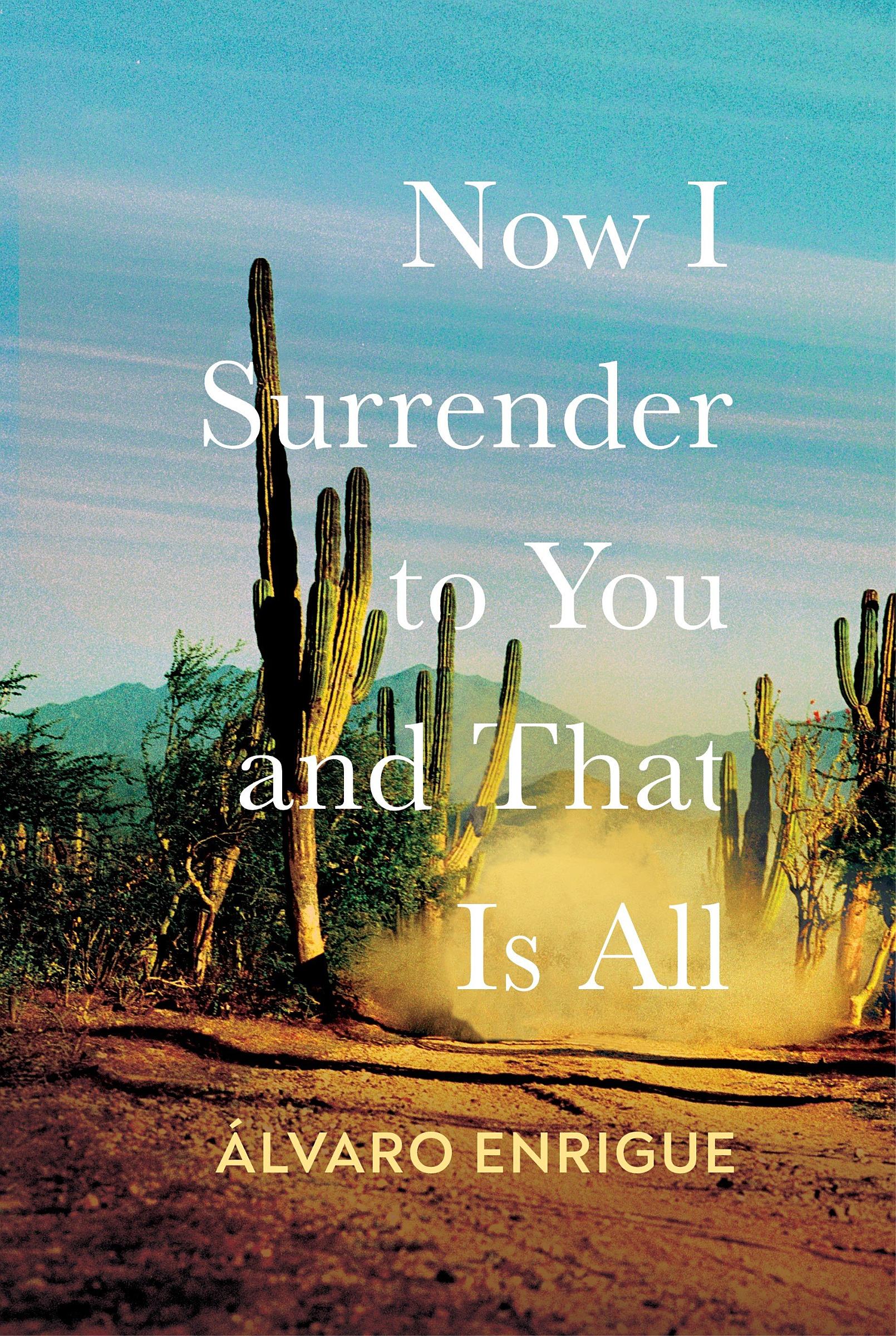
 Nowhere is the cost of crossing forbidden lines more visceral than in Álvaro Enrigue's Now I Surrender, translated by Natasha Wimmer. Enrigue takes the well-worn tropes of the Mexican Drug War thriller and plunges them into a surreal, hallucinogenic nightmare where traditional narrative logic dissolves alongside the protagonist's moral compass. In this landscape, loyalty is not a virtue; it is a death sentence. The novel is a brutal examination of how systemic violence fractures human connection, forcing characters into a state of hyper-isolation even when surrounded by bodies. The protagonist's journey is one of radical self-preservation through moral surrender. By "surrendering" to the absurdity and brutality of his environment, he paradoxically gains a clearer, albeit more detached, vision of the corruption around him. Enrigue rejects the cathartic violence of typical cartel fiction. There is no triumphant takedown of the cartel, no redemptive alliance with law enforcement. Instead, the narrative forces the reader to sit in the uncomfortable truth that sometimes the only way to survive a corrupt system is to withdraw from it entirely, embracing a lonely, unheroic survival that strips away the romance of rebellion.
The Spotlight as a Gilded Cage
 While historical and societal forces crush the individual from the outside, modern fame and creative ambition erode connection from within. Lily King's Heart the Lover continues her authorial tradition of dissecting the messy, unglamorous reality behind romantic and artistic partnerships. The "lover" in King's framework is never a savior figure; they are a mirror reflecting our deepest insecurities and ego-driven ambitions. The novel explores how the pursuit of validation—whether artistic, romantic, or social—often requires a degree of emotional isolation that masquerades as independence. Characters in King's work are constantly negotiating the tension between vulnerability and self-protection. When they finally lower their guard, the narrative doesn't reward them with seamless harmony. Instead, it highlights the friction of two完整 egos colliding. Connection here is fraught, complicated by the refusal to fully yield. King demonstrates that the courage to define oneself against the backdrop of modern ambition means accepting that some relationships will inherently fail because they are built on transactional needs rather than genuine mutual recognition.
 This paradox of visibility is further explored in Archie Bongiovanni's Leo Rising: Queer Spaces, Sexuality, and Fame. Bongiovanni cuts through the celebratory gloss of modern LGBTQ+ visibility to expose a profound psychological trap. Fame and digital prominence create a situation where the more "seen" you are, the more isolated you become. The performative nature of queer spaces in the contemporary digital age often demands conformity over genuine connection. To maintain relevance, individuals must curate their identities into digestible, marketable narratives, sacrificing private truth for public approval. Bongiovanni illustrates how this pressure forces individuals to navigate the exhausting tension between their public persona and their internal reality. The "connection" promised by online communities is frequently an illusion, a feedback loop of validation that leaves the individual profoundly alone in a crowded room. True self-definition, Bongiovanni argues, requires the courage to step away from the spotlight, to embrace obscurity, and to build connections that aren't mediated by algorithms or audience expectations.
Dismantling the Comfort-Read Industrial Complex
The prevailing counterargument to this thesis is straightforward: Isn't the point of reading to heal? In an era of digital fatigue and global instability, why would authors deliberately withhold comfort? The assumption that literature should function as emotional anesthesia is a market-driven myth, heavily amplified by algorithmic book marketing and the rise of the "comfort read" as a commodity. As we've explored in Why Modern Fiction Replaces Closure With Fracture, tidy resolutions often flatten the complexity of human experience. When books promise healing without the accompanying friction, they become complicit in the very systems that cause trauma. They suggest that if we just find the right friend, the right partner, or the right community, the structural weight of history and inequality will magically dissolve. It won't.
Caro Claire Burke's Yesteryear stands as a testament to this necessary discomfort. Burke’s narrative refuses to let its characters rest in the past. Memory is not a sanctuary; it's a battlefield. The characters must confront the forgotten corners of their own histories, acknowledging that self-preservation sometimes means abandoning the people who were supposed to know you best. This isn't pessimism; it's realism. The death of the bestseller list signals a cultural shift away from safe, predictable narratives toward stories that demand intellectual and emotional labor. We don't read to be soothed. We read to be armed. The tension between isolation and connection isn't a problem to be solved; it's a condition to be endured. The most courageous act in contemporary literature is no longer finding your people—it's standing firm when they walk away.
Editor's Verdict
Álvaro Enrigue's Now I Surrender earns an 8/10 from this desk. It gains points for its unflinching surrealism and its successful dismantling of cartel thriller tropes, forcing readers to confront systemic corruption without the safety net of heroic resolution. The prose is a controlled fever dream that perfectly mirrors the psychological fragmentation of living under institutional violence. It costs points for occasionally prioritizing stylistic bravado over character empathy; the protagonist's detachment, while thematically sound, can alienate readers seeking traditional narrative anchors, making the emotional payoff feel deliberately withheld rather than organically earned. The second chapter's courtroom sequence, where reality fractures into bureaucratic nightmare, is the most effective depiction of systemic corruption in modern fiction, outpacing even the best episodes of The Wire in its ability to convey the soul-crushing weight of institutional indifference.
The verdict is clear: Stop demanding that literature hold your hand. The books that will define this decade aren't the ones that promise you'll never be alone again. They're the ones that teach you how to stand on your own while the world burns, and why that solitude is the only honest foundation for any connection worth having.
FAQ
Why do modern books focus more on isolation than connection?
Contemporary narratives are shifting away from "found family" tropes to reflect the reality that genuine connection often requires enduring historical trauma, societal friction, and personal isolation. Authors are prioritizing emotional realism over comforting resolutions.
Is 'Now I Surrender' a traditional crime thriller?
No. While it uses the backdrop of the Mexican Drug War, Enrigue's novel is a surreal, literary work that deconstructs cartel tropes. It focuses on psychological fragmentation and moral surrender rather than action or heroic justice.
What makes a book a 'comfort read' versus a 'defiant read'?
Comfort reads typically offer predictable structures, clear moral resolutions, and affirming relationships that soothe anxiety. Defiant reads embrace ambiguity, historical complexity, and the painful necessity of self-preservation, challenging readers to sit with discomfort rather than escape it.