Drop 'Dune': Why Herbert's Masterpiece Fails as Your Book Club's Next Read
Despite its cinematic resurgence and undeniable impact, Frank Herbert's epic sci-fi isn't the discussion catalyst you think it is. Lit-Pop explains why.
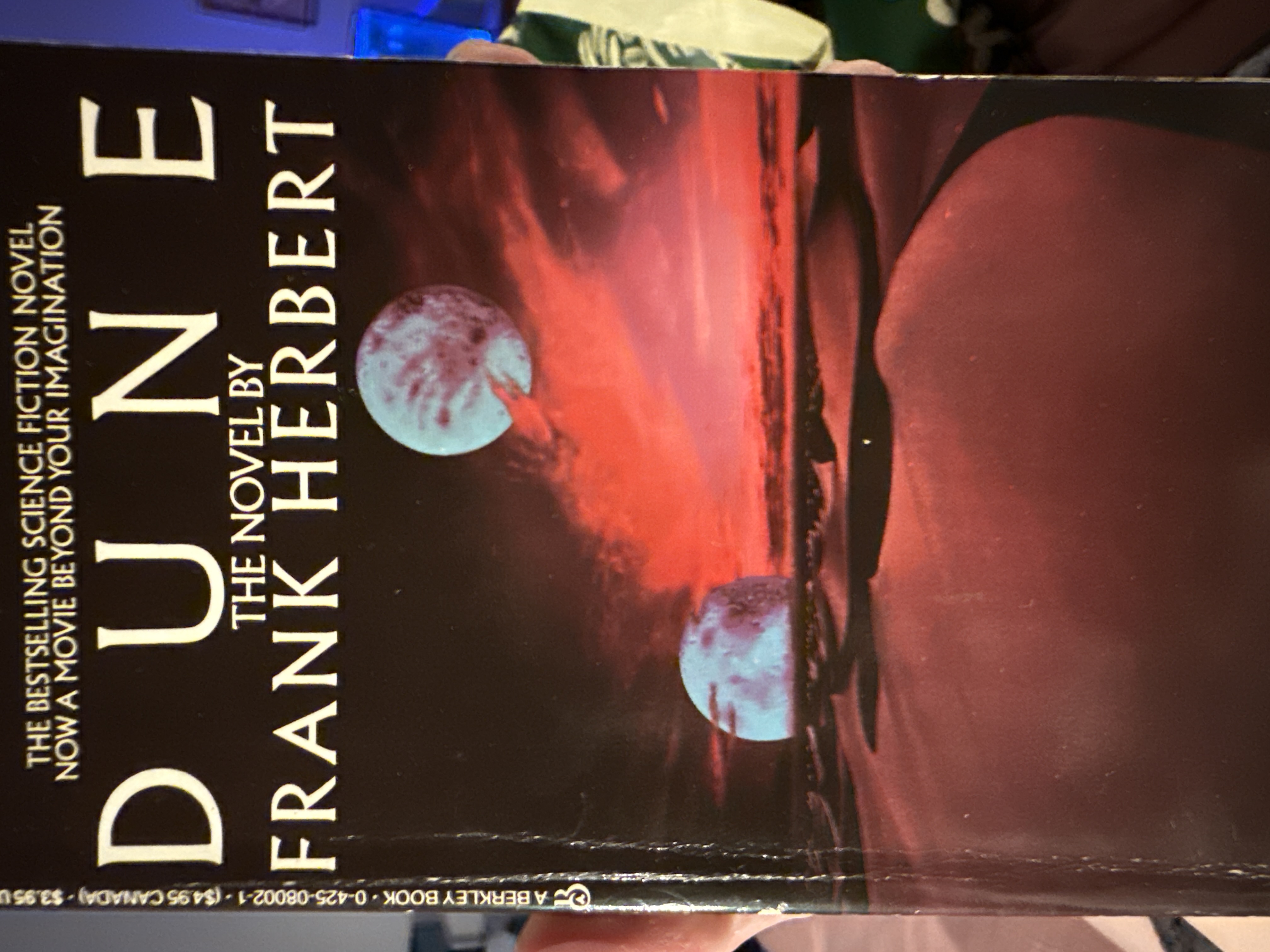
As the sands of Arrakis continue to blow through multiplexes and 'Dune-mania' reaches a fever pitch, it's inevitable that book clubs across the globe are eyeing Dune for their next meeting. The collective conscious reveres Frank Herbert's seminal work as a profound, complex, and utterly essential piece of science fiction literature—a narrative rich with ecology, politics, philosophy, and messianic prophecy. And on its own, it absolutely is. Yet, here at Lit-Pop, we're here to shatter that illusion: 'Dune' is a monumentally terrible choice for your book club.

Is Dune a Good Book Club Book? (Spoiler: No)
Let's get straight to the point. While 'Dune' is a titan of the genre, its very strengths become liabilities in a group discussion setting. Here’s what makes it a poor fit:
- Why "Dune" often stifles discussion rather than sparks it
- The inherent pitfalls of bringing canonical texts to group reads
- How ardent fanbases can inadvertently shut down fresh interpretations
- Alternative literary picks for richer, more balanced debate
The Crushing Weight of the Canon (and the Fanbase)
When you pick a book like Dune, you're not just picking a story; you're picking a cultural institution. Everyone who's read it, or even just heard of it, comes to the table with preconceived notions, established interpretations, and often, a fiercely protective love for the text. Try to discuss Paul Atreides's journey without someone launching into a dissertation on the failures of the savior complex, or debate the intricacies of the Bene Gesserit without referencing a decade-old Reddit thread. It's near impossible. This pre-loaded intellectual baggage often suffocates organic conversation, turning what should be a dynamic exchange of ideas into a series of recitations of well-worn critiques or, worse, a subtle competition of who understands the most obscure lore.
The zealous 'Dune' fanbase, while a testament to the book's enduring power, can also be a barrier. Members new to the universe might feel intimidated or their 'incorrect' interpretations quietly (or not so quietly) dismissed. A truly great book club pick invites all readers, regardless of their prior knowledge or perceived literary standing, to engage on equal footing. 'Dune,' unfortunately, often fails this crucial test.
Density, Pacing, and the Alienation Factor
Make no mistake, Herbert's world-building in 'Dune' is unparalleled. But that intricate tapestry of Fremen culture, Sardaukar legions, Guild navigators, and the complex ecology of Arrakis is dense. The prose itself, while brilliant, is not always the most accessible, and the pacing can be deliberate, to say the least. For a book club, this translates to potential drop-offs. Some members might struggle to finish, leading to uneven participation or a feeling of being overwhelmed rather than enlightened. A book club thrives on shared experience and a collective grasp of the narrative, which 'Dune's' demanding nature doesn't always facilitate. It's a magnificent feat of imagination, but it asks a lot from its reader, often more than a group with varied reading habits can comfortably provide.
Yes, 'Dune' touches on profound themes—the perils of charismatic leadership, environmental exploitation, the intersection of religion and power. These are undeniable. But the very complexity that makes it a literary masterpiece for individual study often becomes a stumbling block for spirited group debate. The 'correct' answers often seem too firmly established, the interpretations too thoroughly documented, leaving little room for fresh, spontaneous insights.
For a Better Book Club Experience: Choose Animal Farm
Instead of wrestling with the sprawling saga of 'Dune' and its accompanying academic baggage, your book club should turn to a book that, while equally profound, is far more accessible and sparks more immediate, relevant discussions: George Orwell's Animal Farm.

Orwell's searing allegory is concise, impactful, and disturbingly timeless. It’s a masterclass in political satire that never feels dated. Unlike 'Dune,' Animal Farm's narrative is straightforward enough that every member can grasp the plot, yet its thematic depth is virtually endless. It invites immediate comparisons to contemporary political landscapes and power structures, without requiring a Ph.D. in sci-fi lore. It's precisely the kind of book that will have your club debating long after the meeting concludes, sparking genuine personal connections to its universal themes of oppression, propaganda, and the corruption of idealism.
This isn't to say 'Dune' isn't brilliant. It is. But brilliance doesn't always equate to being a good book club pick. Sometimes, the most impactful discussions come from texts that leave more room for individual interpretation and don't require an encyclopedia to navigate. For more great book club suggestions, check out our Lit-Pop Scorecard: Best Book Club Books for April 2026 or explore why Backlist Books Are Your Real Literary Gold for hidden gems.
Discussion Questions for Animal Farm:
- How do the animals' initial revolutionary ideals compare to the eventual reality under Napoleon's rule? Are there specific turning points where the revolution goes awry?
- Discuss the role of propaganda and manipulation in "Animal Farm." How do Squealer's speeches and the changing commandments affect the animals' perception of reality?
- Consider the different animal characters (Snowball, Boxer, Mollie, Benjamin). What do they represent, and how do their individual responses to oppression contribute to the farm's fate?
- In what ways does "Animal Farm" remain chillingly relevant to contemporary political and social issues in April 2026?
Editor's Verdict
'Dune' (as a book club pick): 4/10
Frank Herbert's 'Dune' is an unparalleled sci-fi achievement and a must-read for any serious reader, but its formidable density and entrenched cultural status make it a surprisingly poor choice for vibrant, inclusive book club discussions. Save it for your personal deep dive, and pick something that truly sparks collective debate.
FAQ
Why is 'Dune' considered a difficult book to read?
'Dune' is known for its complex world-building, intricate political systems, philosophical depth, and unique terminology. Its slow pacing and dense prose require significant concentration and commitment, making it challenging for some readers.
What are some of the main themes in 'Dune'?
Key themes in 'Dune' include environmentalism, the perils of charismatic leadership, the nature of prophecy, human evolution, religious manipulation, and the corrupting influence of power.
Is 'Animal Farm' still relevant today?
Absolutely. George Orwell's 'Animal Farm' remains highly relevant in April 2026, serving as a powerful allegory for totalitarianism, propaganda, the abuse of power, and the corruption of revolutionary ideals, resonating with current political and social issues worldwide.