Worlds Apart: The Soul of Cinema, from Avengers to Half Nelson
How a $220 million blockbuster and a $700,000 indie drama reveal the two warring philosophies of cinematic world-building—and which one truly endures.

The house lights dimmed in a packed 2012 theater, the air thick with the smell of popcorn and a decade of anticipation. Then it happened. Onscreen, six heroes, once disparate and chaotic, finally stood together in the ruins of New York City. The camera, in a single, unbroken, triumphant shot, circled Captain America, Hawkeye, Black Widow, Thor, the Hulk, and Iron Man as they braced for an alien invasion. The audience erupted. It wasn't just applause; it was a roar of catharsis, the culmination of a multi-film, multi-million-dollar promise. In that moment, the world felt impossibly big, a universe of pure, manufactured spectacle.
Cut to a different theater, years earlier. The room is half-empty, the silence broken only by the hum of the projector. Onscreen, a middle school history teacher slumps against a bathroom stall, a crack pipe in his hand. A young student, one of his brightest, opens the door and sees him. There is no soaring score, no witty banter. Just a crushing, unbearable quiet as two worlds—one of fractured adulthood, one of burgeoning awareness—collide in a moment of profound, devastating intimacy. The world here feels impossibly small, a universe contained within a single, shared glance of shame and recognition.
These two moments, from Joss Whedon’s The Avengers and Ryan Fleck and Anna Boden’s Half Nelson, represent the two poles of modern filmmaking. They are both exercises in world-building, but they operate on fundamentally different principles. One builds outward with steel and CGI, crafting a universe. The other builds inward with raw performance and unflinching observation, crafting a soul.
How Do Movies Create Immersive Worlds?
This article explores the art of world-building by dissecting the techniques and philosophies behind vastly different films. We'll analyze what makes a cinematic reality feel compelling, whether it's through grand spectacle or intimate character study. The films covered include:
- The Avengers: The blockbuster blueprint for shared-universe spectacle.
- Half Nelson: An intimate character study built on performance and realism.
- Star Wars: The originator of the “lived-in” cinematic universe.
- The Science of Sleep: A journey into a handcrafted, internal dream world.
The Blueprint of Reality: Industrial Spectacle vs. The Human Face
At its core, world-building is about establishing the rules and texture of a film's reality. The Avengers does this through brute force and industrial precision. Its world is one of impossible physics, gleaming technology, and global stakes. The texture is found in the polished metal of Iron Man’s suit, the otherworldly architecture of Asgard glimpsed through wormholes, and the sheer scale of the Chitauri invasion.

The film’s aesthetic is clean, legible, and designed for maximum impact. Every frame is packed with information, but it’s curated information—a S.H.I.E.L.D. logo here, a familiar hero’s silhouette there. This is world-building as brand management. The success of The Avengers wasn’t just in its explosive action sequences; it was in the masterful weaving of five previous films into a single, coherent tapestry. It fulfilled the promise of the post-credit scene, proving that long-form, serialized storytelling could work on a cinematic scale. Yet, this approach has its limits. The world of the MCU, for all its detail, can feel sterile. It’s a world designed by committee, sanded down for mass appeal, where every location looks like it was shot in a parking lot in Atlanta. The stakes are apocalyptic, but the emotional reality is often thin. It's a universe you visit, not one you inhabit.
Contrast this with the world of Half Nelson. Here, the world is built not from pixels, but from pores. The film’s reality is constructed from the cramped confines of Dan Dunne’s (Ryan Gosling) apartment, the flickering fluorescent lights of his Brooklyn classroom, and the cracked pavement of the basketball court where he coaches. Directors Ryan Fleck and Anna Boden employ a handheld, vérité style that grounds us completely in Dan’s perspective. The camera often clings to Gosling’s shoulder, forcing us to experience his woozy, anxious state. The texture is in the peeling paint, the worn-out textbooks, the palpable humidity of a New York summer.
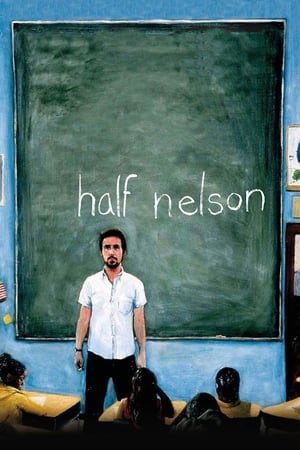
This is a world without heroes or villains, only flawed people navigating compromised systems. The stakes are not the fate of the planet, but the fate of one teacher-student relationship. The film’s power comes from its refusal to look away from the mundane, the uncomfortable, the painfully real. The world of Half Nelson feels inhabited because it is deeply, specifically human. It’s a world built from the inside out, where the environment is a direct reflection of the characters’ internal states.
The Engine of Immersion: Mythic Archetypes vs. Methodical Authenticity
How a film invites us into its world is a matter of performance. The archetypal nature of superhero cinema, perfected by The Avengers, relies on iconography. Chris Evans is Captain America, the stoic man out of time. Robert Downey Jr. is Tony Stark, the genius billionaire playboy philanthropist. The performances are excellent, but they are performances of an established idea. Whedon’s script is rightly praised for giving each character a distinct voice and moments to shine, but the actors are ultimately filling archetypal roles. We are drawn in by the fantasy of becoming these gods among men. The joy is in the recognition of established traits: Thor’s boastfulness, Hulk’s rage, Stark’s snark. It’s a charismatic, effective, and ultimately superficial form of characterization.
Half Nelson offers a different contract with the audience. Ryan Gosling’s Dan Dunne is not an archetype; he’s a bundle of exposed nerves. His performance is a masterclass in subtlety and contradiction. He is a brilliant, inspiring teacher who uses dialectics to empower his students, yet he is also a desperate addict whose life is spiraling out of control. Gosling doesn't “play” an addict; he inhabits the skin of a man constantly fighting a war with himself. Watch the way he carries his body—a coiled, anxious energy that only unwinds when he’s high or when he’s connecting with his student, Drey (a phenomenal Shareeka Epps). The performance isn’t about big emotional moments, but the accumulation of small, devastating details: the slight tremor in his hand, the way his eyes dart around, the forced casualness of his lies. It is through this radical authenticity that the film achieves its immersion. We don't want to be Dan Dunne; we are simply forced to understand him.
This divergence in approach finds its roots in the very foundation of the modern blockbuster. George Lucas’s original Star Wars (1977) was a watershed moment for world-building. Before the MCU’s polished universe, there was the grimy, “used future” of Tatooine.
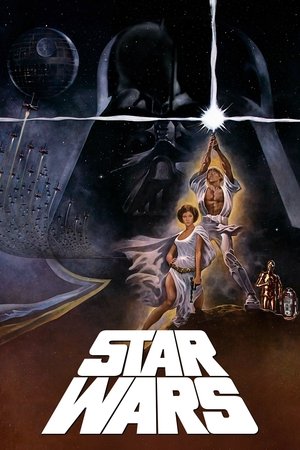
Lucas, like Whedon, relied on archetypes—the farm boy, the princess, the rogue, the wise old wizard. But the world they inhabited felt revolutionary because it felt real. The Millennium Falcon wasn’t a gleaming starship; it was a “piece of junk” that broke down. The Mos Eisley Cantina wasn’t a futuristic nightclub; it was a dusty, dangerous dive bar filled with creatures who looked like they had stories to tell. This texture was achieved through brilliant practical effects, matte paintings, and ingenious sound design. Star Wars built a universe that felt vast and ancient, a place with history beyond the edges of the frame. The Avengers, its descendant, trades that lived-in feeling for an interconnected, but ultimately more synthetic, universe. It’s the difference between a handcrafted model and a 3D-printed replica.
The Interior World: Handcrafted Dreams vs. Digital Destruction
If Half Nelson represents the world of gritty reality, there’s another kind of small-scale world-building that is just as immersive: the journey into the mind. Michel Gondry’s The Science of Sleep offers a powerful counter-narrative to the idea that spectacle requires a nine-figure budget. The film’s world is the subconscious of its protagonist, Stéphane (Gael García Bernal), a shy artist whose dreams constantly bleed into his waking life.
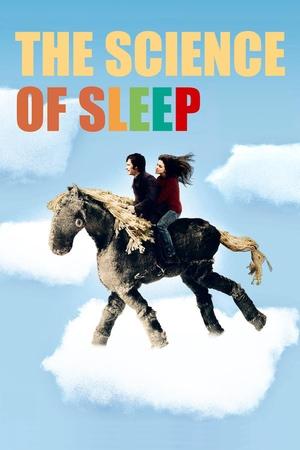
Gondry, a master of in-camera effects, builds this dreamscape not with CGI, but with cardboard, cellophane, cotton balls, and stop-motion animation. Stéphane hosts a talk show from a cardboard television studio, sails a boat across a cellophane sea, and watches his hands grow to monstrous proportions. These sequences are whimsical and visually dazzling, but they are not empty spectacle. Each handcrafted creation is a direct externalization of Stéphane’s anxieties, desires, and creative frustrations. The world of his dreams is more tangible and emotionally resonant than the sterile, green-screen landscapes of many modern blockbusters. It proves that the most compelling universes are often the most personal. Where The Avengers builds a world for millions of fans to share, Gondry builds one for a single character to inhabit, and invites us inside. The effect is intimate, strange, and unforgettable, a testament to the power of a singular artistic vision over a corporate one, a point we've explored before in the context of animation's IP obsession.
Editor's Verdict
The ultimate goal of cinema is to transport us. Both The Avengers and Half Nelson succeed in this, but their methods reveal a crucial truth. The spectacle of the blockbuster is a powerful, unifying force, a modern form of myth-making that provides catharsis on a grand scale. But it is often a fleeting high. The worlds of franchises are designed for perpetual expansion, not deep resonance. The intimate, character-driven world of a film like Half Nelson, however, lingers. It burrows into your consciousness because it reflects a recognizable, painful, and beautiful reality back at you. It reminds us that the most expansive universe isn't in the cosmos, but behind a person's eyes.
Featured Film: Half Nelson
Ryan Gosling's performance in Half Nelson is the most authentic portrayal of functional addiction in 21st-century American cinema, a raw, unvarnished triumph of character work that renders most other depictions as melodrama.
FAQ
What is the movie Half Nelson about?
Half Nelson is a 2006 drama about an inner-city middle school teacher, Dan Dunne (Ryan Gosling), who secretly struggles with a severe drug addiction. His life becomes more complicated when one of his students, Drey (Shareeka Epps), discovers his secret, and they form an unlikely, fragile friendship.
Why was The Avengers (2012) considered such a groundbreaking film?
The Avengers was groundbreaking because it was the first film to successfully unite multiple standalone superhero franchises into a single crossover event. It proved the viability of Marvel Studios' 'shared universe' concept, changing the landscape of blockbuster filmmaking and popularizing serialized, multi-film storytelling.
What is Michel Gondry's filmmaking style known for?
Michel Gondry is known for his surreal, whimsical, and highly inventive visual style. He frequently utilizes practical effects, forced perspective, and stop-motion animation to create dreamlike worlds, as seen in films like 'The Science of Sleep' and 'Eternal Sunshine of the Spotless Mind'.