Evil Dead Burn vs. Companion: The New Blockbuster Winner
Horror's bodily stakes and intimate sci-fi romance define the new event film, with Mercy and A House of Dynamite as the control group.
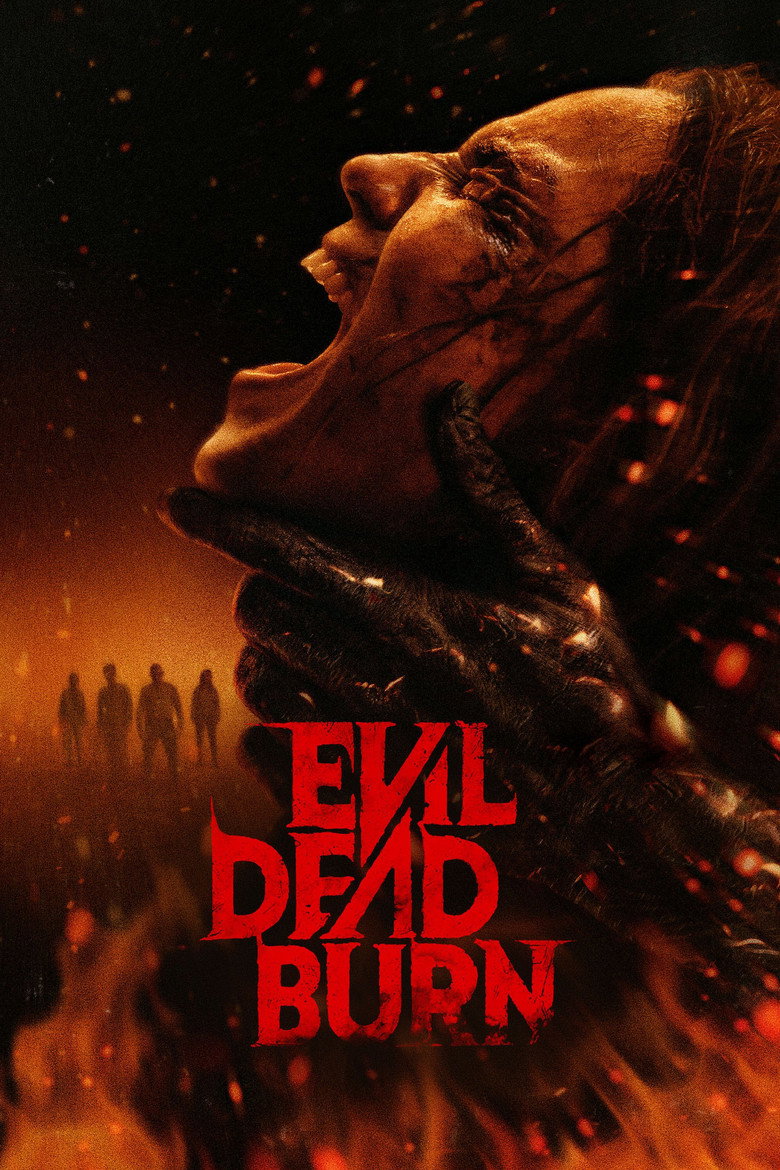
Evil Dead Burn is the most sophisticated romance of this late-summer release cycle, and Companion is the most thrilling horror film disguised as a relationship drama. That sounds like a joke until you sit through both and realize the new blockbuster spectrum is not about bigger explosions; it is about emotional specificity delivered through genre pressure. The audience no longer trusts scale alone. It trusts whether a body, a house, a machine, or a paramedic siren can carry a feeling that does not require a franchise to justify itself.
Evil Dead Burn vs. Companion: What to Know Before You Pick a Side
- How Evil Dead Burn and Companion redefine event cinema through bodily stakes and intimate sci-fi romance.
- How Mercy and A House of Dynamite test the same dimensions with action and micro-catastrophe.
- A dimension-by-dimension scorecard ranking emotional specificity, production value, and audience trust.
The Contenders: A Cabin, a Machine, and the New Event Film
 Evil Dead Burn is the louder half of this comparison, and that is not a flaw. Its whole pitch is that horror has stopped pretending to be safe entertainment. The franchise's legacy is not merely gore; it is the idea that the body is a site of violation, desire, and survival. Burn leans into that with a practical, physical approach that treats blood as an emotional language. When the film lets a body become distorted, it is not showing off. It is making an argument about agency: who gets to decide what happens to flesh? That is why the movie can feel both brutal and intimate. It asks the audience to stay present, not look away, and that is a stronger contract than most blockbusters manage.
 Companion is the quieter contender, and its power is that it treats a synthetic companion as a social mirror. The film's central tension is not whether the machine is alive; it is whether a lonely human can mistake a designed response for a soul. That question is played with domestic precision, using apartment spaces, late-night conversations, and the small negotiations of care. It is a blockbuster by proximity, not scale: it sells the promise that a two-person story can carry the weight of a cultural debate. Its risk is that intimacy can become stillness, but its reward is that the audience leaves arguing with the ending, not just about the effects.
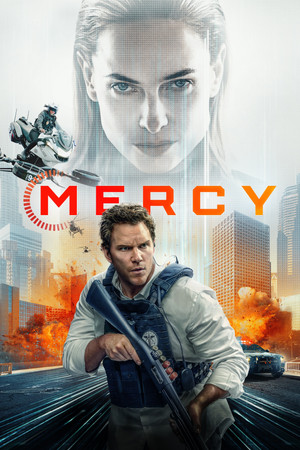
 The control group matters. Mercy brings Michael B. Jordan's physical charisma into a paramedic action thriller, while A House of Dynamite returns to the nuclear-tick clock and big-name ensemble. Together they let us ask whether the new spectrum favors bodily horror, intimate sci-fi, star-driven action, or legacy thriller mechanics.
Emotional Specificity: The Body, the Machine, and the Siren
Where Burn wins is in specificity of pain. Horror is often criticized for spectacle without feeling, but Burn uses the body to externalize a private fear: loss of control. The film's most effective moments are not the biggest kills but the small, physical details that make the audience feel the violation in their own muscles. It does not explain the emotion; it performs it. That is rare in a franchise sequel, and it is the reason the movie can be compared to a romance. Romance is also about bodies negotiating vulnerability, and Burn understands that the audience needs to see the cost.
Companion's emotional engine is different but equally specific. It isolates the feeling of being chosen, and then interrogates whether choice is possible when one party is programmed. The film is strongest when it refuses easy sentimentality. A synthetic companion can simulate patience, desire, and regret, but the audience is left with the uncomfortable question of whether the human's grief matters if the object of grief cannot truly suffer. That is a sophisticated emotional problem, and the performance carries it with micro-expressions rather than exposition.
Mercy earns its emotional stakes through professional competence. The paramedic frame does more than justify action; it makes every emergency a test of whether a person can stay human under pressure. The film's intimacy is not domestic but occupational, which is a fresh angle for action cinema. It asks whether saving lives repeatedly can hollow you out, and whether love can survive the afterimage of violence. That is a smaller question than Burn's or Companion's, but it is sharp, and it gives the action a reason to hurt.
A House of Dynamite takes a different route: institutional dread. The nuclear threat is not merely a countdown; it is a test of whether ordinary relationships can survive the assumption of annihilation. Its emotional specificity comes from family and duty, not body horror or artificial intimacy. The problem is that the scale can outpace the feeling. When the stakes are planetary, the personal stakes need to be extremely well-drawn, and the film sometimes lets the set pieces crowd out the human argument.
Scorecard: Companion 9, Evil Dead Burn 8, Mercy 7, A House of Dynamite 6. Companion edges ahead because its central dilemma is more original and less dependent on genre conventions. Burn is close behind because its emotional language is more visceral and less talky.
Spectacle Without Numbness: How Scale Becomes Feeling
In production value, Burn is the most honest event film of the group. Its spectacle is tactile: blood, bodies, sound design, and practical effects that make the violence feel present rather than digital. That matters because horror's biggest failure is numbing the audience with too much. Burn keeps the escalation earned. Even when it gets loud, it does not lose the body's specificity. It is a blockbuster that respects the audience's senses instead of overwhelming them, and that makes its big moments land harder.
Companion's production value is subtle. The film's spectacle is spatial and emotional: the way a room changes when a machine enters it, the lighting of a late-night confession, the close-ups that make a synthetic face feel uncanny and tender. It is not a spectacle of scale, but it has a strong visual grammar. Its limitation is that the same intimacy can feel repetitive if the script does not keep introducing new stakes. Still, its restraint is a form of confidence: it trusts the audience to be moved by smallness.
Mercy uses spectacle as procedure. Chase sequences, emergency calls, and physical endurance are its set pieces, and they work because they are grounded in a job. The film's production value is practical in the best sense: action that feels like work. It may not have Burn's body horror or Companion's philosophical tension, but it has momentum, and its physicality keeps the emotional stakes from becoming abstract.
A House of Dynamite is the most conventional spectacle of the four. Its set pieces are bigger and its stars more familiar, but the production value often feels like a reminder that it is a thriller, not a feeling. The nuclear stakes are impressive, yet the film can drift into familiar action rhythms when it should be sharpening its emotional argument. It is the clearest reminder that scale alone is no longer enough.
Scorecard: Evil Dead Burn 9, Mercy 7, Companion 6, A House of Dynamite 5. Burn's tactile horror is the most memorable form of spectacle. Mercy comes next because its action is motivated. Companion's restraint is effective but less event-like. A House of Dynamite is the least distinctive.
The Trust Economy: Who Is the Audience, and What Is the Movie Asking?
Burn's marketing is a masterclass in positioning. It does not ask for legacy nostalgia; it asks for trust in a new voice inside an old franchise. The audience can enter as a horror fan, a franchise follower, or a first-time viewer, and the film still works because the emotional core is not hidden behind in-jokes. That is the key to the new blockbuster: trust is built by clarity, not by requiring prior knowledge. It is the clearest case of what I argued in Why Franchise Fatigue Is a Myth: The Rise of Cinematic Serials: a franchise can be a gateway rather than a gate.
Companion positions itself as adult sci-fi romance, which is a risky lane. It is not trying to be a spectacle event; it is trying to be a conversation starter. Its audience is someone who wants emotional intelligence without losing genre. That positioning is smart, but it also limits its rewatchability as an event. People may return to argue about the ending, but they may not return for the ride. Its strength is cultural conversation, not repeated theatrical pleasure.
Mercy sells star trust. Michael B. Jordan's name does heavy lifting, and the film's positioning is straightforward: emotional action from a performer the audience believes. That is effective, but it is also less original than Burn's franchise reinvention or Companion's thematic gamble. It is a reliable event, not a new template, and its audience is likely to value the performance more than the formal innovation.
A House of Dynamite leans on legacy blockbuster mechanics: recognizable stars, a ticking nuclear clock, and a global threat. It has the broadest possible audience, but the least fresh positioning. It is a reminder that the old formula still works, but also that it can feel interchangeable when the emotional stakes are not specific enough. It asks for audience trust through familiarity, not through a new emotional argument.
Scorecard: Evil Dead Burn 9, Companion 8, Mercy 7, A House of Dynamite 5. Burn wins because it redefines franchise trust. Companion is close because it builds a new conversation. Mercy is dependable. A House of Dynamite is the most conventional.
Editor's Verdict: Blood Is the Better Argument
The winner is Evil Dead Burn, not because it is bigger, but because it makes spectacle into a moral question. Companion is the more cerebral film, and in a vacuum it may be the more refined. But the new blockbuster spectrum is about audience trust, emotional specificity, and genre reinvention, and Burn does all three with more confidence. Its practical body horror is a form of emotional clarity that Companion's dialogue cannot match. When a film can make you feel the ethics of a body on screen, it has succeeded where most event cinema merely entertains.
I rate Evil Dead Burn 9/10. It loses a point for a middle stretch where the ensemble chatters just long enough to let the body horror breathe in the wrong places, but it earns nine for reinvigorating a franchise and proving that horror can be the most intimate genre in the room. The falsifiable claim: Burn's final act is more emotionally effective than Companion's final act because it resolves its central question through physical stakes rather than verbal reconciliation, and any viewer who finds Companion's ending more persuasive is probably weighting philosophical abstraction over bodily experience more heavily than this scorecard does.
FAQ
Is Evil Dead Burn part of the original Evil Dead timeline?
It is a new entry in the Evil Dead franchise, positioned as a fresh, practical-effects driven take rather than a straightforward continuation of the original cabin saga.
Is Companion a horror movie?
No. Companion is a sci-fi romance with uncanny and suspenseful moments, but its main concern is intimacy, consent, and what people seek from artificial companions.
Which of these films is safest for a first-time viewer of the franchise?
Evil Dead Burn is the most accessible new entry because it centers on emotional stakes and bodily horror without requiring deep prior knowledge.