The Self as a Secret: Why TV Erased Who We Are
From Citadel's amnesiac spies to Rick and Morty's infinite selves, our obsession with fluid identity reveals a deep cultural anxiety about who we're supposed to be.

The modern obsession with stories about amnesia, secret identities, and hidden pasts isn't a fascination with mystery; it's a cultural admission of defeat. We crave characters with no fixed self because we've become terrified of having one. This isn't just about the thrill of a good twist. It’s a deep, pervasive artistic trend that mirrors a society exhausted by the relentless pressure to curate, perform, and maintain a singular, authentic identity. We are drowning in the expectation of selfhood, and television offers the ultimate escape: characters who are blissfully, violently, or comically untethered from who they are.
Are TV Shows About Amnesia and Secret Identities Popular?
Yes, narratives centered on fractured or hidden identities are dominating streaming platforms and audience conversations in 2026. This analysis explores the cultural significance of this trend through several key examples:
- Citadel: The blockbuster spy-fi series where identity is a rebootable piece of software.
- Imperfect Women: A domestic thriller where the terror lies in the secrets lurking beneath a perfect facade.
- Rick and Morty: The animated behemoth that treats the self as a disposable, multiversal joke.
- It's Always Sunny in Philadelphia: A comedic counterpoint that explores the horror of a pathologically fixed, transparently awful identity.
The Blockbuster Blank Slate: Citadel and Identity as IP
Nowhere is this cultural phenomenon more perfectly, and perhaps cynically, packaged than in Amazon’s globe-trotting spy thriller, Citadel. On the surface, it’s a slick, expensive action romp. But beneath the veneer of stunning set pieces and charismatic leads lies a chillingly modern concept: identity is not a core component of a person, but a piece of intellectual property to be wiped, restored, and franchised.

The premise sees elite spies Mason Kane (Richard Madden) and Nadia Sinh (Priyanka Chopra Jonas) having their memories erased by their own agency’s failsafe protocol. Eight years later, they are living mundane lives as “Kyle Conroy” and… well, Nadia’s path is more complicated. They are, for all intents and purposes, blank slates. The show’s central tension isn't just about them rediscovering their skills; it’s about having their former selves literally injected back into their brains via a syringe full of data. This isn't a journey of self-discovery; it's a software update. The series treats personality and memory as a loadout you can equip. This narrative choice is profoundly revealing. It suggests a world where the self is so burdensome that a factory reset is a feature, not a bug. Kane’s life as Kyle is stable and loving, but the show frames his return to the hyper-competent, emotionally detached Mason as an upgrade, a necessary return to his “real” self, which is, ironically, a complete fabrication built by a spy agency.
This makes Citadel the perfect franchise vehicle for the streaming age. The characters are fundamentally modular. Their lack of a concrete, unshakeable past means they can be anything the plot requires, slotted into any international spin-off (as is the explicit plan) without emotional or narrative inconsistency. They are human action figures whose backstories are accessories. Compare this to the spies of John le Carré, whose identities were a crushing weight, an accumulation of compromises and moral injuries that defined them. George Smiley was his history. Mason Kane is a collection of skills waiting for a user profile to be loaded. This is a far cry from the nuanced forgeries found in a show like Fargo Is TV’s Best Forgery, Not Its Best Show, where the imitation is the point; here, the hollowness is the product itself.
The Suburban Masquerade: Imperfect Women and the Terror of the Known
If Citadel explores the fantasy of erasing one’s identity, then a show like Imperfect Women examines the suffocating reality of being trapped by it. Shifting from the global stage to the claustrophobic confines of upper-middle-class friendships, this domestic thriller reveals the other side of our identity crisis: the desperate, exhausting performance of maintaining a stable, respectable self when the truth is anything but.

The series, centered on a group of women whose lives are upended when a dark secret from their past resurfaces, operates on the principle that the most dangerous truths are not held by clandestine organizations, but by the people who know you best. The central conflict isn't about amnesia; it's about a hyper-awareness of a past self that must be suppressed at all costs. The characters’ carefully constructed lives—the successful careers, the stable marriages, the beautiful homes—are a brittle facade built over a foundation of shared trauma and betrayal. Their hidden identity isn't a secret agent persona; it's the messy, compromised, and deeply human person they once were and, in many ways, still are.
The horror in Imperfect Women doesn’t come from assassins or global conspiracies, but from a knowing glance across a dinner party, a slip of the tongue that reveals too much, or the sudden reappearance of someone who knows the truth. The suspense is generated by the slow, agonizing erosion of the masks these characters wear. This resonates with a contemporary audience conditioned by the performative nature of social media, where life is curated into a highlight reel. The show taps into the primal fear of being truly seen—not for the idealized avatar we present to the world, but for the collection of mistakes, regrets, and moral compromises that constitute our actual history. While Citadel offers a power fantasy of a clean slate, Imperfect Women presents the nightmare of a slate that can never be wiped clean, where every past sin is permanently etched.
The Multiverse of Me: Rick and Morty and the Annihilation of Self
Taking the concept of fluid identity to its logical and most nihilistic extreme is, of course, Rick and Morty. For over a decade, the animated juggernaut has used the infinite canvas of the multiverse to systematically dismantle the very idea of a unique, stable self. In this universe, your identity is not just fluid; it's irrelevant, replicable, and ultimately meaningless. This isn't a subtext; it's the show's foundational philosophy.
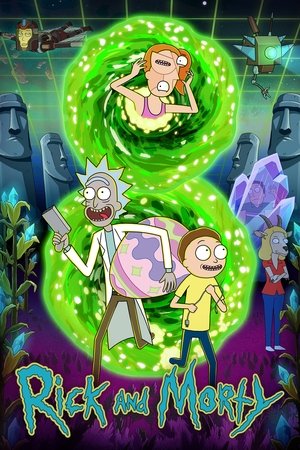
The series relentlessly bombards its characters and its audience with the terrifying truth of the Central Finite Curve: there are infinite versions of you, and most of them don't matter. The most traumatizing moment for the show’s co-protagonist comes in the first season episode “Rick Potion #9,” where Rick and Morty irreparably destroy their home dimension, travel to a nearly identical one where their counterparts have just died, and silently take their places, burying their own corpses in the backyard. Morty is left staring into the void, realizing his life, his family, and his very existence are arbitrary placeholders. This isn't a secret identity; it's the erasure of identity as a meaningful concept. The show constantly returns to this well. We meet countless Ricks, from the fascistic Citadel of Ricks to the simple baker Simple Rick, each one a slight deviation that underscores the lack of a single, “true” Rick Sanchez.
This cosmic horror is the source of the show’s surprising emotional depth. Rick’s alcoholism, god complex, and suicidal ideation are the direct result of his omniscience. He knows that nothing he does matters on a cosmic scale because there’s always another version of him, another family, another universe to flee to. His hidden past, particularly the loss of his original wife Diane, is the tragic anchor that informs his character, but the show suggests even that trauma is not unique. This resonates deeply in an era of digital saturation, where individuality feels both paramount and impossible. Rick and Morty posits that the self is not a secret to be uncovered, but a cosmic joke to be endured, a philosophical position that is as bleak as it is brilliantly funny.
The Comedy of the Void: It's Always Sunny and the Fixed, Horrifying Self
As a crucial counterpoint to these narratives of hidden depths and fluid selves, we have the glorious, stagnant cesspool that is It's Always Sunny in Philadelphia. For nearly two decades, the series has served as a powerful rebuttal to our cultural obsession with psychological complexity and redemptive arcs. The Gang at Paddy's Pub represents the terrifying alternative: what if there is no secret? What if the person you are on the surface is exactly who you are, and that person is an irredeemable monster?

The characters in Sunny have pathologically fixed identities. Dennis is a textbook narcissist and probable sociopath, a fact the show treats as an open secret. Dee is a vortex of insecurity and desperation. Mac’s identity is a chaotic swirl of performative toughness and deep-seated repression. Charlie is a creature of pure, illiterate id. And Frank is a being of unrestrained depravity. They don new personas constantly—as oil tycoons, art critics, or suburbanites—but these are paper-thin costumes that fool no one, least of all themselves. The comedy comes not from uncovering a hidden truth, but from the Gang’s complete and utter failure to be anyone other than who they are.
Their world is a refreshing antidote to the therapeutic mindset that dominates modern storytelling, which insists that every character has a core wound, a hidden trauma that explains their behavior. Sunny rejects this entirely. The Gang’s awfulness is not the result of a tragic backstory; it is their factory setting. In doing so, the show provides a strange kind of catharsis. It frees the audience from the work of psychological excavation. We don't have to wonder why they are this way; we just get to watch the chaos unfold. In an entertainment landscape saturated with characters defined by their hidden selves, It's Always Sunny makes the radical proposition that the most horrifying secret of all is that there isn't one. What you see is precisely what you get, and it is glorious.
The Audience's Role: Why We Crave the Unknowable
Our collective fascination with these narratives is not a coincidence. It’s a direct response to the anxieties of modern life. In an age where every individual is tasked with building a personal brand on social media, curating a flawless online identity, the idea of a character with amnesia like Mason Kane becomes a profound power fantasy. The ability to simply wipe the slate clean and start over is the ultimate escape from the pressure of a meticulously documented past.
Shows like Imperfect Women cater to the other side of that anxiety: the fear that our curated selves will be exposed, revealing the messy, flawed reality underneath. Meanwhile, Rick and Morty speaks to a generation grappling with a sense of cosmic insignificance in a globally connected world, where one’s unique identity can feel like a drop in an infinite ocean. And It's Always Sunny offers a release valve—a vacation from the endless, exhausting work of self-improvement and psychoanalysis.
We are drawn to these stories because they articulate a core cultural tension. We are told that our identity is our most valuable asset, something to be discovered, honed, and performed. Yet we also feel the immense weight of that task. These shows allow us to explore the edges of that anxiety—to fantasize about shedding our history, to feel the thrill of our secrets being exposed from a safe distance, and to laugh at the absurdity of it all.
Prediction: The Rise of the 'Constructed Self' Narrative
Looking ahead, this trend is poised to evolve. We are moving past stories of simply losing or hiding an identity and into narratives about intentionally constructing a new one. The next wave of prestige television will likely focus less on the mystery of “Who am I?” and more on the agency of “Who will I become?”
Expect to see more narratives rooted in bio-hacking, digital consciousness, and crafted personas that bleed into the real world. Think stories about characters who choose to edit their own memories not because of trauma, but for self-optimization. Imagine dramas set in worlds where one’s digital avatar has more legal and social standing than one’s physical body. The central conflict will no longer be the secret self versus the public self, but the original self versus the designed self. This new genre will explore the philosophical, ethical, and emotional consequences of a world where identity is not something you find, but something you build to spec. It’s a frightening and exhilarating prospect, and it’s the natural next step in our ongoing televisual obsession with the self.
Editor's Verdict
I’m evaluating Citadel as the primary avatar for this trend. It is the epitome of high-concept, low-substance television designed for maximum global reach. It’s undeniably entertaining as a series of propulsive action sequences, but it feels hollow at its core, a placeholder for a franchise rather than a story in its own right.
Editor's Rating: 6/10
The show earns points for its massive budget, which is all on screen in the form of stunning locations and well-choreographed fight scenes. The chemistry between Madden and Chopra Jonas is palpable. However, it loses significant points for its generic, trope-reliant script and characters who feel more like collections of skills than actual people. The plot twists are telegraphed miles away, and the dialogue rarely rises above functional exposition. It’s a perfectly engineered product that lacks a human soul.
FAQ
What is the main theme connecting shows like Citadel and Rick and Morty?
Both shows explore the concept of fluid or unstable identity, though in different ways. Citadel uses amnesia in the spy genre to question who we are without our memories, while Rick and Morty uses the multiverse to suggest that individual identity is ultimately meaningless.
Is the trend of secret identities in TV new?
Not at all. Secret identities are a staple of storytelling, from superheroes to classic literature. However, the modern trend seems less focused on the classic double life and more on a fundamental lack of a core self, reflecting contemporary anxieties about authenticity and purpose.
Why is 'It's Always Sunny in Philadelphia' included in an analysis of hidden identities?
It serves as a thematic counterpoint. While other shows explore characters with hidden depths or lost pasts, 'It's Always Sunny' features characters with no hidden layers at all. Their identities are pathologically fixed and transparent, which provides a comedic and critical contrast to the cultural obsession with psychological complexity.