Why 2026's Best Books Reject Self-Discovery for Survival
The modern literary obsession with 'finding yourself' is dead. Here's why the books dominating June 2026 are teaching us to build meaning from rubble instead.
The modern literary obsession with "finding yourself" is a coward's alibi for refusing to admit that identity is entirely a construct. We don't want self-discovery; we want survival manuals for a world that has systematically dismantled the scaffolding of belonging. The books dominating the charts in June 2026 prove this thesis without apology. They aren't offering the gentle, coffee-shop guidance of a bygone era's self-help canon. Instead, they present transition not as a heroic journey, but as a brutal negotiation with inherited trauma, domestic siege, and the terrifying vacuum left when old structures collapse.
What Books Explore Life Transitions and Finding Meaning?
- The psychological architecture of leaving in contemporary fiction
- How domestic thrillers are replacing traditional trauma narratives
- Why Viktor Frankl's mid-century manifesto is outpacing modern psychology
- The cultural shift from self-discovery to survival mechanics
The Great Refusal of Closure
We are living through a mass cultural rejection of tidy endings. As argued in our previous breakdown of Why Modern Fiction Replaces Closure With Fracture, audiences in 2026 are actively seeking narratives that mirror their own fractured realities. The search for purpose is no longer a linear path; it's a labyrinth. This isn't about comfort—it's about accurate diagnosis. If you're looking for the sanitized "self-discovery" tropes that littered bestseller lists a decade ago, you've already missed the train. The new literary landscape treats transition as a wound, not a milestone. Readers are done being told that every storm brings a rainbow. They want books that acknowledge the storm might last a decade, and teach them how to build a shelter in the downpour.
Julian Barnes and the Myth of the Clean Break

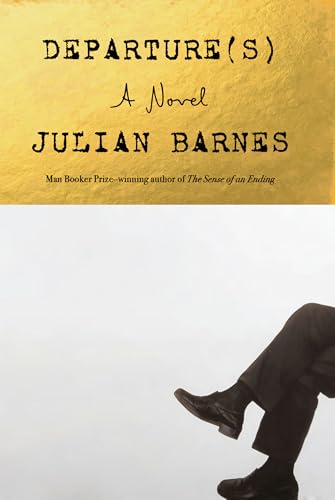
When Julian Barnes tackles the concept of leaving, he doesn't give you the romantic swansong. In Departure(s), Barnes dismantles the fantasy that walking away from a life, a relationship, or a geographical anchor grants you freedom. His prose operates with surgical precision, tracking the protagonist's realization that departure is merely the prelude to a different kind of confinement. The book's central tension doesn't stem from external obstacles, but from the paralyzing weight of the past refusing to stay buried. Barnes forces the reader to confront an uncomfortable truth: we don't leave our histories behind; we just change the scenery of our haunting.
The narrative structure itself mirrors this entrapment, looping back on previous choices with ruthless clarity. Barnes strips away the romanticism of the "fresh start" and replaces it with the psychological reality of cognitive baggage. This isn't a story about liberation; it's an autopsy of the illusion of liberation. Barnes earns his place on the 2026 zeitgeist shelf by refusing to coddle the reader's desire for a clean slate. Instead, he hands us a mirror and asks why we keep expecting different reflections just because we moved the furniture. His treatment of memory as an active, hostile force rather than a passive archive makes this essential reading for anyone who has ever tried to outrun their own biography.
Roisín O'Donnell's Architecture of Entrapment

If Barnes weaponizes the past, Roisín O'Donnell weaponizes the present. Nesting takes the universally romanticized concept of "nesting"—building a home, settling down, planting roots—and exposes it as a potential psychological trap. O'Donnell's narrative brilliantly subverts the domestic genre by showing how the very structures we build for safety can become the bars of our cage. The protagonist's journey isn't about finding a place to stay; it's about realizing that the act of settling has cost them their agency.
O'Donnell's pacing is deliberate, mirroring the slow, suffocating accumulation of domestic compromise. She captures the specific anxiety of mid-life transition: the moment you look around your carefully curated environment and realize you've traded possibility for permanence. The book's exploration of spatial psychology is particularly sharp, using the physical act of renovating and organizing as a metaphor for the desperate, failed attempt to organize a chaotic internal life. This resonates deeply because it articulates the silent panic of a generation that delayed major life milestones only to discover that "arrival" feels suspiciously like stagnation. It's a masterclass in using domestic space as a metaphor for internal paralysis, proving that sometimes the safest room is the one you're most desperate to escape.
The Thriller as a Trauma Diagnostic

We need to stop dismissing psychological thrillers as mere page-turners and start recognizing them for what they are in 2026: high-velocity trauma simulators. Dear Debbie by Freida McFadden is the perfect example. McFadden uses the epistolary format not just for cheap twists, but to create an inescapable feedback loop of anxiety. The protagonist's desperate attempts to reconstruct their identity through correspondence mirror the modern compulsive need to document and curate our lives for external validation. The book's relentless pacing forces the reader into a state of hyper-vigilance, simulating the exact neurological state of someone navigating a crisis of trust.
McFadden understands that in an era of digital surveillance and performative relationships, the ultimate horror isn't a killer in the bushes; it's the realization that your narrative has been hijacked by someone else. This is why the thriller is currently outselling literary fiction: it provides the adrenaline hit that masks the underlying existential dread, allowing readers to process fear in a controlled, paginated environment. McFadden's manipulation of perspective forces the reader to question every assumption, mirroring the disorienting experience of losing grip on one's own reality. It's not just a mystery; it's a stress test for the reader's capacity to trust their own perception.

Elaine Murphy's Look What You Made Me Do takes this diagnostic approach and injects it with generational venom. The title itself is an accusation, a shifting of blame that cuts to the core of intergenerational trauma. Murphy's protagonist doesn't just navigate a transition; she actively weaponizes her past to dismantle the people who shaped it. The narrative structure cleverly oscillates between the past's conditioning and the present's rebellion, showing how deeply parental and societal expectations are wired into our DNA.
Murphy refuses to let the protagonist off the hook, nor does she excuse the architects of her pain. The book's climax isn't a traditional resolution but a violent severing of ties, arguing that sometimes the only way to find purpose is to burn the bridge entirely. It's a brutal, unflinching look at how we use our history as both a weapon and a shield, making it essential reading for anyone trying to understand the current cultural fixation on accountability and boundary-setting. Murphy proves that domestic horror is no longer about ghosts in the attic; it's about the living people we share our lives with, and the toxic contracts we unknowingly sign at birth.
Viktor Frankl's Blueprint in a Fractured Age

While contemporary fiction dissects the mechanics of our anxiety, non-fiction provides the survival blueprint. The resurgence of Man's Search for Meaning by Viktor E. Frankl and Gordon W. Allport isn't a nostalgic trip; it's a desperate grab for foundational logic. Frankl's argument that meaning is not discovered but created through our response to suffering is more relevant now than it was in 1946. In an era defined by climate anxiety, economic instability, and digital isolation, the old frameworks for purpose have collapsed.
Frankl's logotherapy offers a stark, unvarnished alternative: you cannot control your circumstances, but you retain absolute sovereignty over your attitude toward them. The book's enduring power lies in its refusal to offer comfort. It doesn't promise that your pain will end or that the universe owes you happiness. It simply demands that you extract purpose from the rubble. This is why it consistently tops reading lists alongside modern thrillers. Audiences are done with gentle guidance; they want the hardened, battle-tested philosophy of someone who stared into the abyss and chose to build a ladder anyway. Frankl's work serves as the philosophical bedrock for the entire 2026 literary conversation, proving that meaning is a verb, not a destination.
The 2026 Verdict: We Are Done With Self-Discovery
The convergence of these texts reveals a stark cultural shift. We have abandoned the search for a pre-existing "true self" and embraced the grueling work of self-construction. As explored in The Comfort Read Lie: Why 2026's Best Books Reject Cozy Connection, the modern reader craves friction. They want books that challenge their assumptions, simulate high-stakes emotional scenarios, and provide philosophical armor for a volatile world. The transition from youth to adulthood, from stability to upheaval, is no longer framed as a rite of passage but as a continuous negotiation with chaos.
Looking ahead to the latter half of 2026, I predict the complete collapse of the "self-help" category as we know it. It will be absorbed into fiction and narrative non-fiction. Readers will stop buying books that tell them how to be happy and start buying books that teach them how to endure. The market will reward authors who treat resilience not as a personality trait, but as a learned, brutal skill set. If you want to understand where literature is heading, stop looking for mirrors that flatter you. Start looking for hammers.
Editor's Verdict
I'm rating Departure(s) an 8/10. It loses two points because Barnes occasionally indulges in academic detachment that distances the reader from the protagonist's raw emotional core, but it earns an 8 for its uncompromising deconstruction of the "clean break" fantasy and its masterful use of recursive narrative structure to mirror psychological entrapment. The book's central thesis—that leaving only changes the geography of your haunting—is the most accurate diagnosis of modern transition I've encountered this year. If you think walking away from your problems solves them, Barnes will dismantle that delusion by page fifty.
FAQ
Why are psychological thrillers replacing traditional literary fiction in 2026?
Psychological thrillers like Dear Debbie and Look What You Made Me Do offer high-velocity trauma simulation, allowing readers to process existential anxiety and trust crises in a controlled, paginated environment that mirrors modern hyper-vigilance.
Is Man's Search for Meaning still relevant for modern readers?
Yes, its resurgence is driven by a collapse of traditional purpose frameworks. Frankl's logotherapy provides a battle-tested philosophy that meaning is created through our response to suffering, appealing to readers seeking endurance over comfort.
What defines the shift from self-discovery to survival in contemporary books?
Readers are rejecting the fantasy of a pre-existing 'true self' in favor of narratives that treat identity as a constructed, often brutal process of navigating inherited trauma, domestic entrapment, and fractured timelines.