The Friday Night Movie Is a Lie
We've been sold a myth that the perfect weekend movie is an escape. The truth is, the films that truly satisfy us after a long week are the ones that force a confrontation.

The perfect Friday night movie isn't an escape; it’s an emotional tune-up. We’ve been fed a cinematic lie for decades: that after a grueling week of deadlines and drudgery, the ideal unwind is a film that demands nothing of us—a cinematic warm bath to soak our tired brains in. This philosophy has given us a glut of serviceable, forgettable action flicks and nostalgia-bait blockbusters designed for maximum distraction and minimum retention. But this is a fundamental misreading of what we actually crave. We don’t want to simply numb ourselves; we want to feel something, to connect, to achieve a catharsis that the mundane reality of our 9-to-5s rarely provides. The best Friday night films don’t help you forget your life; they provide a lens through which to understand it, offering emotional resonance that recharges you for the week ahead. It’s not about turning your brain off; it’s about turning your heart on.
What Defines the Ultimate Friday Night Film?
This analysis explores the myth of cinematic escapism and argues for a new definition of the perfect weekend watch. We'll examine:
- How the modern romantic comedy, exemplified by Office Romance, uses emotional realism to create a superior viewing experience.
- The hollow promise of nostalgia-driven blockbusters like Masters of the Universe.
- The limitations of the brain-off action-thriller, using In the Grey as a case study.
- How ambitious science fiction like Disclosure Day offers intellectual confrontation as a more satisfying form of escape.
The New Anatomy of the 'Date Night' Movie: Why Office Romance Works
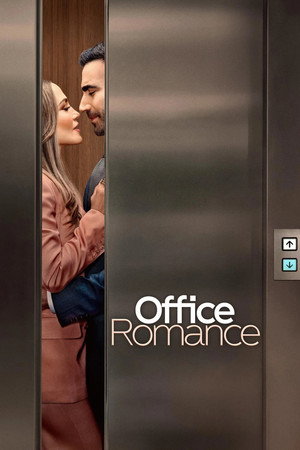
Let’s start with the genre most synonymous with Friday night viewing: the romantic comedy. For years, the rom-com has been a factory for aspirational fantasy—impossibly charming protagonists in cavernous apartments quipping their way to a foregone conclusion. But a film like Office Romance understands that the genre’s real power lies not in fantasy, but in recognition. It’s a film that earns its high rating not by inventing a perfect relationship, but by dissecting an imperfect one with excruciating, and often hilarious, honesty. The central plot, involving two mid-level marketing executives competing for the same promotion while navigating a clandestine affair, is merely the scaffolding for a story about the messy collision of professional ambition and personal vulnerability.
The film’s brilliance is located in its specificity. There's a scene midway through where the two leads, played with career-best vulnerability by Anya Sharma and Leo Chen, argue over a botched presentation. The argument isn’t about the presentation; it’s about whose career takes precedence, who is sacrificing more, and the quiet resentment that has been building over months of hiding their relationship from HR. The dialogue is a masterclass in subtext, mirroring the way real couples fight—with loaded history, coded language, and accusations buried inside seemingly innocuous statements. This isn't the witty, polished banter of a 90s classic; it’s awkward, painful, and deeply, uncomfortably real. This is the confrontation we crave. We see our own struggles with work-life balance, our own petty jealousies, our own fears of being outpaced by our partners, reflected on screen. The catharsis comes not from seeing them achieve a fairy-tale ending, but from watching them navigate the same emotional minefield we do. The film trusts its audience to handle complexity, a trust that is a damning indictment of Hollywood's broader creative crisis.
The Siren Song of Simplicity: Deconstructing Masters of the Universe
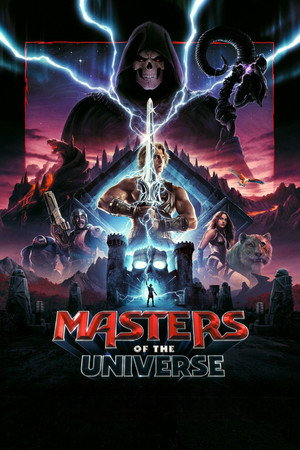
On the opposite end of the spectrum lies Masters of the Universe, a film that is the poster child for pure, unadulterated escapism. It’s built on a foundation of nostalgia, designed to activate dormant synapses in the brains of adults who grew up with the action figures and cartoons. The film’s entire purpose is to deliver a simplified, high-gloss version of a childhood memory. He-Man is unambiguously good. Skeletor is deliciously, cartoonishly evil. The stakes are cosmic, yet the emotional landscape is as flat as a board game. Every beat is predictable, every line of dialogue feels focus-grouped to elicit a specific, pre-approved nostalgic response. It’s cinematic comfort food, a warm blanket of intellectual and emotional safety.
And there's a place for that. But let’s not mistake comfort for fulfillment. Watching Masters of the Universe is a passive experience. It asks nothing of you beyond simple pattern recognition: “I remember that character,” “I remember that catchphrase.” The conflict is entirely external—it’s about laser blasts and sword fights, not internal struggles or complex moral choices. Compare He-Man’s stoic, one-dimensional heroism with the tangled mess of ambition, love, and insecurity driving the characters in Office Romance. He-Man’s challenge is to defeat a skull-faced wizard; Leo Chen’s challenge in Office Romance is to admit to his partner that he’s terrified she’s more talented than he is. Which of these provides a more potent and lasting emotional experience? The former is a distraction, a pleasant enough way to pass two hours. The latter is an engagement, a story that lingers because it taps into something true about the human condition. The problem with pure escapism is that once the credits roll, you’re left with nothing. The emotional tune-up from a confrontational film, however, stays with you.
The Adrenaline Fallacy: In the Grey and the Limits of Action

If Masters of the Universe is comfort food, then a film like In the Grey is cinematic caffeine. It’s a jolt to the system, a relentless barrage of expertly choreographed violence, tactical maneuvers, and grim-faced operatives. It’s designed to overwhelm the senses and short-circuit critical thought. The plot is functional, a mere delivery system for set pieces: an extraction goes wrong, a team is betrayed, a lone wolf must fight his way out. The characters are archetypes, defined by their skills and their weapons, not their personalities or internal lives. The film operates on a purely visceral level. The tension comes from immediate physical threats, not from psychological or emotional stakes.
This isn't a knock on its craft; the action sequences in In the Grey are likely technically impressive. But it’s a critique of its purpose as a Friday night film. The adrenaline it provides is fleeting. It’s a sugar rush. Once the heart rate returns to normal, what remains? The story doesn’t provoke thought or conversation. It doesn't illuminate any aspect of our lives. It simply occupies time with loud noises and kinetic imagery. Contrast this with the tension in Office Romance. The 25-minute, single-take argument in the second act is more suspenseful than any shootout in In the Grey. The stakes—the potential implosion of a career and a relationship—feel infinitely higher because they are relatable and emotionally grounded. One provides a cheap thrill; the other provides genuine, gut-wrenching drama. For a truly satisfying experience, we need more than just spectacle. We need stakes that matter, which is often the dividing line between a decent thriller and a masterclass in suspense, like those found in the best bottle-thrillers.
Escaping Into Ideas: The Intellectual Promise of Disclosure Day

This isn't to say all forms of escape are created equal. If the escapism of nostalgia and mindless action offers a hollow retreat, the escapism of great science fiction offers a door into a larger world. A film like Disclosure Day promises a different kind of Friday night experience. Instead of asking us to turn off our brains, it demands we turn them up to eleven. The premise—the global reaction to the undeniable proof of extraterrestrial intelligence—isn’t just a setup for spectacle; it’s a launchpad for a series of profound and challenging questions. How would society react? Would it unite us or tear us apart? How would it affect religion, politics, and our very sense of self?
This is a confrontational film, but the confrontation is intellectual rather than emotional. It engages with big ideas and forces the audience to consider complex hypotheticals. This is an escape, yes, but it’s an escape into something, not away from everything. It’s a journey into a world of ideas that is more stimulating and ultimately more rewarding than the simple, regressive comfort of Masters of the Universe or the empty adrenaline of In the Grey. A film like Disclosure Day respects its audience. It assumes we are capable of and interested in grappling with complex themes. In doing so, it provides a brand of entertainment that is both spectacular and substantive. It offers a conversation starter, a film that you and your friends or partner will debate long after the credits have rolled. This is the kind of mental workout that feels invigorating after a week of mental drudgery, a far cry from the cinematic sedation we're so often offered.
Editor's Verdict
The lie of the Friday night movie is the belief that we want to feel less. The truth is we want to feel more, but with purpose and clarity. We want films that don't just distract us from our lives but give us the tools to better understand them. While nostalgic fantasies and action-packed spectacles provide a temporary reprieve, it is the emotionally and intellectually confrontational films that offer true, lasting satisfaction. They are the ones that resonate, the ones that stick, the ones that perform the vital function of art: to hold a mirror up to our messy, complicated, and beautiful lives.
I'm giving my highest recommendation of this crop to Office Romance. The 25-minute single-take sequence in the second act of Office Romance is the most honest and technically impressive depiction of a workplace argument in any romantic comedy this decade.
FAQ
What is the central argument of this article?
The article argues that the most satisfying 'Friday night movies' are not mindless escapism, but films that offer emotional or intellectual confrontation. It posits that movies like 'Office Romance' provide a deeper catharsis than nostalgia-driven blockbusters or generic action films.
Are you saying escapist movies are bad?
Not necessarily bad, but often unfulfilling. The piece differentiates between 'hollow' escapism (like mindless action or pure nostalgia) and 'substantive' escapism (like idea-driven science fiction), arguing that the latter is far more rewarding for an audience seeking true engagement after a long week.
Why is 'Office Romance' highlighted as the top pick?
The author praises 'Office Romance' for its emotional realism, sharp writing, and willingness to tackle the complexities of a modern relationship where personal and professional lives intersect. It's presented as a film that engages the viewer's heart and mind, rather than encouraging them to 'turn their brain off.'