Why Ronin and Clue Define Cinematic Craft Over Hype
Ronin's grounded action, Clue's narrative anarchy, Novocaine's genre experiment, and Tommy Boy's chemistry reveal why craft beats gimmicks in 2026.
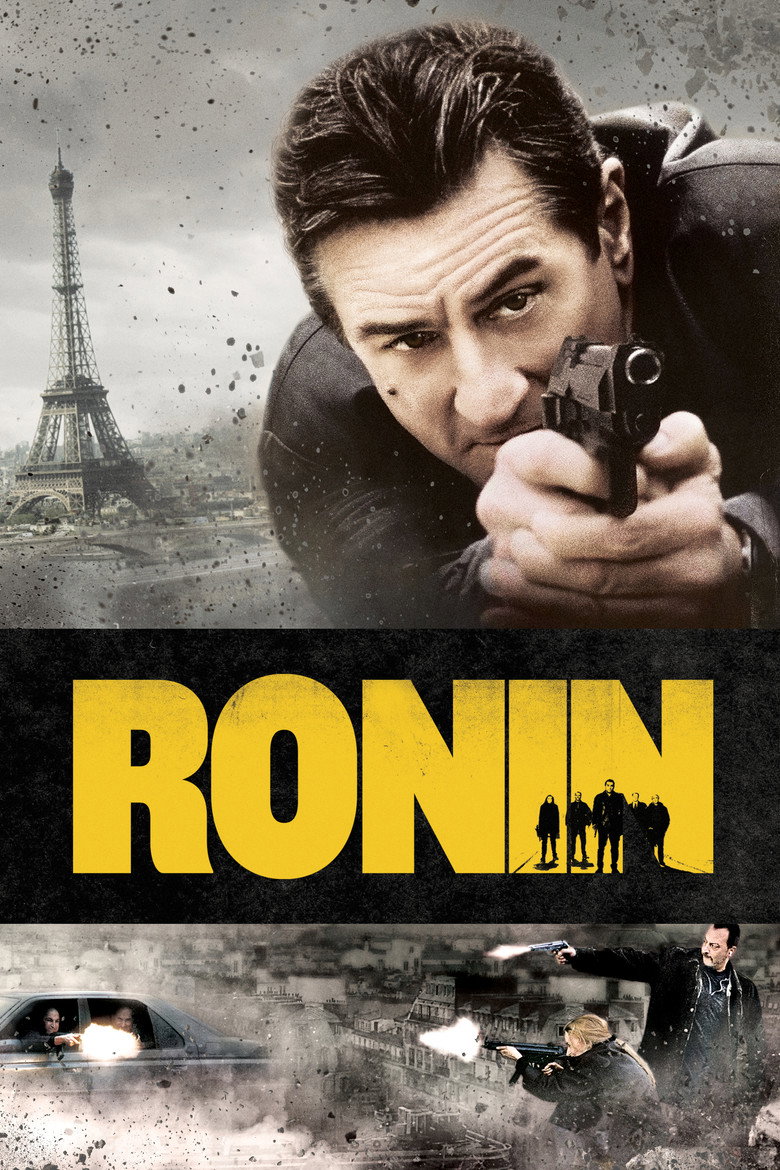
It's 2:14 AM. The only light in the apartment comes from the television, washing over a coffee table scattered with empty takeout containers and a half-charged phone. You're watching Ronin for the third time this week, not to solve the mystery—who really cares about the briefcase?—but to witness the Dublin car chase. You lean in as the Citroën AX skids across the cobblestones. The camera, mounted in the passenger seat, shudders with every pothole. Glass shatters. Metal crumples. There's no digital stabilization, no invincible hero posture, just the visceral terror of physics in motion. In a year where blockbusters feel like video game cutscenes and every protagonist pauses to explain their emotional arc mid-combat, this sequence hits like a slap of cold water. It's a reminder that cinema doesn't need to hold your hand; it just needs to make you believe the world is real.
This isn't just nostalgia. It's a reaction to the hollowing out of genre filmmaking. When Ronin, Clue, Novocaine, and Tommy Boy trend simultaneously, they aren't random algorithmic ghosts. They represent a collective audience hunger for films that trust the viewer, prioritize craft over exposition, and understand that tone is a weapon, not a suggestion. Let's dissect why these four titles are the antidote to the current cinematic malaise.
Why These Films Are Dominating the 2026 Cinematic Conversation
- Ronin: How John Frankenheimer's grounded tactical thriller redefined the car chase and why its refusal to explain the MacGuffin remains the gold standard for audience trust.
- Clue: The farce that weaponized multiple endings and narrative chaos, proving that structure can be a playground rather than a cage.
- Novocaine: Jack Quaid's pain-free action-comedy and the genre's ongoing struggle to balance high-concept hooks with emotional stakes.
- Tommy Boy: Why the chemistry between Chris Farley and David Spade remains the definitive blueprint for the unlikely duo dynamic, decades later.
The Briefcase of Ambiguity: Ronin's Masterclass in Grounded Tension
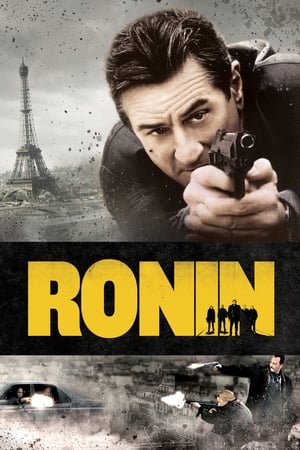
Ronin is often mislabeled as a "spy thriller," but that's a category error. It's a film about the psychology of professional mercenaries operating in the vacuum left by the collapse of the Cold War. John Frankenheimer, working from a script by Richard Rutowski and David Ambrosio, crafted a world where ideology has been replaced by cash, but the characters are still haunted by the ghosts of former allegiances. Sean Connery's Vincent isn't just a grizzled vet; he's a man trying to reconcile his past with a present that no longer has a flag to fight for. Robert De Niro's Spence and Jean Reno's Sam are not heroes; they are contractors. The film's brilliance lies in its refusal to moralize. When betrayal happens, it's not a dramatic monologue; it's a cold calculation. The famous scene where De Niro's character is beaten into submission isn't about heroism; it's about the brutal economics of survival. This ambiguity is why Ronin resonates so fiercely in 2026. Modern thrilleries are obsessed with explaining the villain's motivation, usually tracing it back to a single trauma event. Ronin understands that in the world of black-market tactics, motivation is often just greed wrapped in the language of necessity. The film doesn't judge; it observes. This connects directly to the argument in Why the Best Films Sabotage Closure, where the most enduring films leave the audience with questions rather than neat bows. The briefcase remains closed, not because the filmmakers forgot, but because the audience's engagement is the point. You are a Ronin too, piecing together a puzzle that was never meant to be solved.
Kinetic Reality vs. The Digital Drift
The Dublin car chase is the structural heart of the film, and it remains the benchmark against which all practical action is measured. Sam Mendes's direction, utilizing camera cars and practical rigs, creates a sense of spatial continuity that CGI-heavy sequences struggle to replicate. When the Citroën AX and the BMW collide, you feel the weight transfer. The editing respects geography; you always know where the drivers are relative to the landmarks. Contrast this with the "digital drift" of modern action, where rapid cutting and floating physics disorient the viewer. Ronin demands your attention; modern blockbusters often assume they have it on autopilot. The chase isn't just a set piece; it's a character beat. It establishes the stakes of the world: these are skilled professionals, but they are still mortal. One mistake, one patch of oil, and the career ends. This grounded reality gives the action emotional weight. When the car finally crashes, it's not a transition to the next scene; it's a devastating loss of control that echoes the characters' psychological state.
The Anti-Hero's Code vs. Novocaine's Numbness
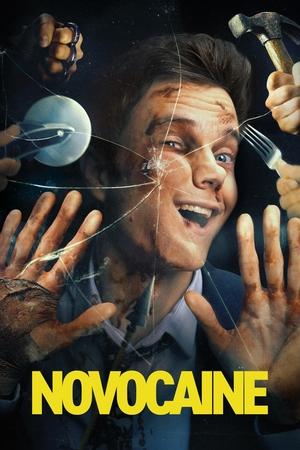
Here, Ronin provides a sharp critique of contemporary action-comedy hybrids like Novocaine. Novocaine features Jack Quaid as a man who feels no pain, a high-concept premise that allows for a different kind of action sequence. Quaid brings a charming, everyman energy to the role, and the film successfully uses the "no pain" gimmick to subvert expectations in fight scenes. However, the premise inherently removes the stakes. If pain is the body's alarm system, a pain-free protagonist is narratively numb. Novocaine works as a fun, pulpy romp, but it struggles to generate genuine tension because the audience knows the hero cannot be hurt in the traditional sense. Compare this to Ronin, where every punch carries the threat of consequence. Vincent's limp, Spence's exhaustion, and the crew's paranoia are constant reminders that violence costs something. Ronin argues that the thrill of action comes from the danger, not the invincibility. Novocaine represents the 2026 trend of "superpower-lite" premises applied to grounded settings, but it lacks the thematic backbone of a film that understands the weight of the body. Ronin is a masterclass in using physical vulnerability to drive psychological depth, a lesson Novocaine would do well to study.
Narrative Fracture: Clue's Weaponization of Chaos
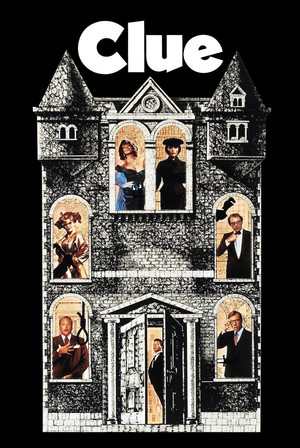
If Ronin is about the tension of order, Clue is a celebration of chaos. Jonathan Lynn's adaptation of the board game is often dismissed as a goofy comedy, but that's a superficial read. Clue is a structural marvel that weaponizes farce to deconstruct the mystery genre. The film's most famous feature—the multiple endings—isn't a gimmick; it's a meta-commentary on the artificiality of narrative resolution. By releasing different endings in different theaters, the film forced audiences to confront the fact that the "solution" to a story is often arbitrary. In 2026, where streaming platforms demand binge-able consistency and algorithmic predictability, Clue feels radically subversive. It trusts the audience to handle nonsense. The casting is impeccable: Tim Curry's Wadsworth is the only sane man in a world of madwomen and madmen, yet his sanity is the source of the chaos. Eileen Brennan's Mrs. Peacock and Madeline Kahn's Mrs. White are forces of nature, their performances escalating the tonal volatility with every scene.
Multiple Endings as Audience Trust
The multiple endings of Clue serve a deeper purpose than novelty. They demonstrate that the characters exist independently of the plot's resolution. Whether Wadsworth is the mastermind, Mrs. Peacock is the killer, or everyone is involved, the personalities remain consistent. This is a profound insight into character-driven storytelling. The film argues that the journey of the farce is more important than the destination of the reveal. Compare this to modern mystery thrillers that often contort their logic to ensure a "surprise" twist, sacrificing character integrity for plot mechanics. Clue never sacrifices character for plot; the chaos emerges organically from the personalities clashing. The scene where the characters split up to search the house, only to end up in the same room screaming past each other, is a perfect example of ensemble blocking used for comedic gold. It's a scene that relies on timing, pacing, and the actors' willingness to commit to the absurdity. In an era of solo-hero blockbusters, Clue reminds us that ensemble dynamics can generate more energy than any single protagonist.
Order in Chaos vs. Chaos in Order
Ronin and Clue are mirror images. Ronin uses a serious, grounded tone to depict a world where the rules are chaotic and shifting. The characters try to impose order through tactics and codes, but the world resists. Clue uses a chaotic, farcical tone to depict a world where the structure is rigid (the board game rules, the mansion layout), but the characters break it apart. Ronin is about the failure of control; Clue is about the joy of losing control. Both films reject the standard three-act emotional arc in favor of a more complex engagement with the audience. Ronin leaves you thinking; Clue leaves you laughing and questioning the nature of the story you just watched. Together, they represent the两端 of cinematic sophistication: the intellectual rigor of the thriller and the structural playfulness of the farce.
The Chemistry of Incompetence: Tommy Boy's Enduring Heart
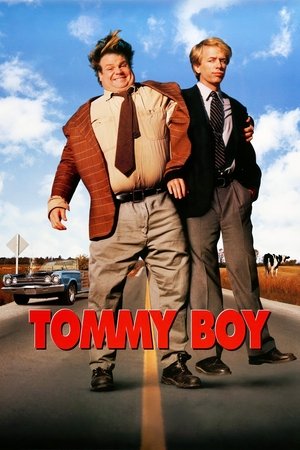
Tommy Boy is often remembered for its quotable lines and Chris Farley's physical comedy, but its enduring power lies in the chemistry between Farley's Tommy Callahan and David Spade's Richardayn White. This is the gold standard for the "unlikely duo" dynamic, a template that countless films have tried and failed to replicate. The relationship works because it's not just about opposites attracting; it's about mutual salvation. Tommy is all heart and no discipline; Richard is all discipline and no heart. Their journey from adversaries to brothers is earned through shared adversity, not just comedic proximity. The road trip structure of Tommy Boy allows for incremental bonding, culminating in the emotional climax where they confront the corporate villain not with guns, but with a fax machine and a heartfelt plea. This contrasts sharply with the professional crew of Ronin. In Ronin, the crew is bound by money and code; in Tommy Boy, the duo is bound by necessity and ultimately by love. Tommy Boy proves that comedy can carry emotional weight without becoming saccharine. Farley's performance is a masterclass in commitment; he throws his entire body into the comedy, yet he never undercuts the scene's emotional stakes. When Tommy breaks down over his father's disapproval, it's devastating because we've seen his vulnerability throughout the film. This connects to the analysis in Kiss Kiss Bang Bang vs. Nothing to Lose: A Comedy Showdown, where the best comedies use the fish-out-of-water premise to explore character growth.
The Accidental Duo vs. The Professional Crew
Comparing Tommy Boy to Ronin highlights two different approaches to ensemble dynamics. Ronin features a group of professionals who are misfits in the broader world but experts in their field. Their interactions are terse, coded, and efficient. Trust is a liability. Tommy Boy features two amateurs who are misfits in their corporate world and in the world of crime. Their interactions are verbose, chaotic, and emotional. Trust is the goal. Both films use the road trip structure to force character development. In Ronin, the road trip is a death march; the characters are moving toward an inevitable confrontation. In Tommy Boy, the road trip is a salvation march; the characters are moving toward redemption. Tommy Boy also excels in its use of mundane objects as plot devices. The fax machine isn't just a prop; it's the MacGuffin that drives the climax. This parallels Ronin's briefcase, but with a crucial difference: the briefcase's contents are irrelevant to the theme, while the fax machine's message is the emotional core of the resolution. Tommy Boy understands that the object matters because of what it represents, not what it is.
Editor's Verdict
Rating: 9/10
Ronin earns a 9 because it is a nearly flawless execution of its vision. The practical effects, the performances, the score by Michael Kamen, and the screenplay's refusal to over-explain all coalesce into a film that feels lived-in and urgent. It loses a single point because the middle act occasionally drags with repetitive negotiations, and some of the dialogue leans heavily on genre clichés that the performances must work overtime to elevate. However, these are minor quibbles in a film that remains a masterclass in atmospheric tension and action choreography. The Dublin car chase is not just a sequence; it is a thesis statement on the power of practical filmmaking. It proves that camera work, physics, and actor commitment can generate more terror and excitement than any amount of CGI. In 2026, Ronin stands as a corrective to the digital drift of modern action, reminding us that the best special effect is reality, captured with precision and soul. The film's ambiguity is its greatest strength; it trusts the audience to engage with the world it creates, rather than spoon-feeding explanations. That trust is rare, and it is why Ronin endures.
Verdict: Ronin's Dublin car chase remains the definitive benchmark for practical action choreography in cinema history, surpassing the spatial coherence and visceral impact of every CGI-heavy sequence in the modern blockbuster era.
FAQ
Why is Ronin still relevant in 2026?
Ronin remains relevant because it exemplifies grounded, practical action and narrative ambiguity, qualities that stand in stark contrast to the CGI-heavy, over-explained blockbusters dominating modern cinema. Its focus on professional mercenaries and tactical realism offers a refreshing counterpoint to superhero fatigue.
What makes Clue's multiple endings significant?
Clue's multiple endings are significant because they subvert the traditional mystery structure and demonstrate that character consistency matters more than plot resolution. This approach trusts the audience to handle narrative chaos and highlights the film's structural playfulness.
How does Tommy Boy compare to modern buddy comedies?
Tommy Boy sets a high bar for buddy comedies with its authentic chemistry between Chris Farley and David Spade, their gradual character development, and the emotional weight behind the humor. Many modern attempts lack the genuine rapport and emotional stakes that make Tommy Boy endure.