The End of the Global Blockbuster: Niche TV Is Winning the Streaming Wars
The era of one-size-fits-all television is over. A look at this week's trending shows reveals that cultural specificity, not generic appeal, is the new key to global domination.
Have we finally reached the end of the “global blockbuster” model for television? The current streaming charts suggest that the future of television isn't one big tent, but a thousand vibrant, specific, and unapologetically local campfires drawing global crowds.
For decades, the guiding principle of television production was scale. The goal was to create a four-quadrant hit, a show so broad in its appeal that it could anchor a network's entire primetime lineup, sell syndication rights across the globe, and offend virtually no one. It gave us masterpieces of the form, but it also gave us an ocean of beige, risk-averse programming. The streaming revolution, with its promise of infinite choice, was supposed to change that. Yet for years, the major players still seemed to be chasing the same white whale: the next Game of Thrones, the next Stranger Things—a monolithic cultural event built on a universally accessible (and marketable) premise. But a funny thing happened on the way to global homogenization. Audiences, armed with more choice than ever, started choosing specificity.
What Makes a TV Show Trend Globally in 2026?
This week's trending list is a testament to a profound shift in audience appetite. Viewers are no longer settling for watered-down stories and are instead seeking out content with a distinct point of view and a deeply realized world. Here’s what we’re exploring:
- The rise of culturally specific storytelling as a path to global success.
- An in-depth analysis of the Singaporean noir hit,
Archives: The Nanyang Mystery. - How the webtoon adaptation
Viral Hitshowcases the power of hyper-niche genres. - Why an American niche show like
The Polygamistcan fail where others succeed. - The lasting power of iconoclastic shows like
Rick and Morty.
The Slow Death of the Four-Quadrant Formula
The old network model was built on scarcity. With only a few channels to choose from, a show had to appeal to the widest possible demographic to justify its existence. This led to the dominance of the workplace sitcom, the medical drama, and the police procedural—formats that provided familiar structures and archetypes that could be easily digested by a mass audience. Character arcs were sanded down, regional dialects were neutralized, and culturally specific references were often limited to establishing shots of New York or Los Angeles. The product was reliable, often comforting, but rarely challenging or transportive.
Streaming shattered this model. The financial incentive was no longer just about attracting the largest possible live audience, but about retaining subscribers. A platform doesn't need every user to love every show; it just needs every user to love one show enough to not cancel their subscription. This simple economic shift created the perfect environment for niche storytelling to flourish. A show could now be unapologetically itself—deeply rooted in a specific culture, subculture, or genre—and find its dedicated audience across the globe. The algorithm would do the work, connecting a historical noir set in 1930s Singapore with a curious viewer in Ohio. This isn't just about diversity as a buzzword; it's a fundamental restructuring of what constitutes a valuable creative asset.
The Singaporean Noir That Proves the Point: Archives: The Nanyang Mystery
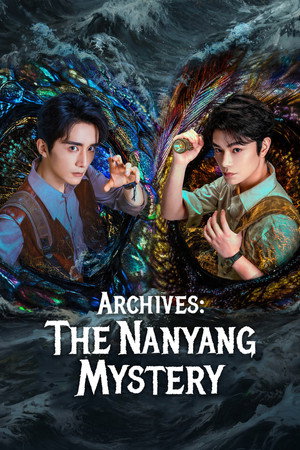
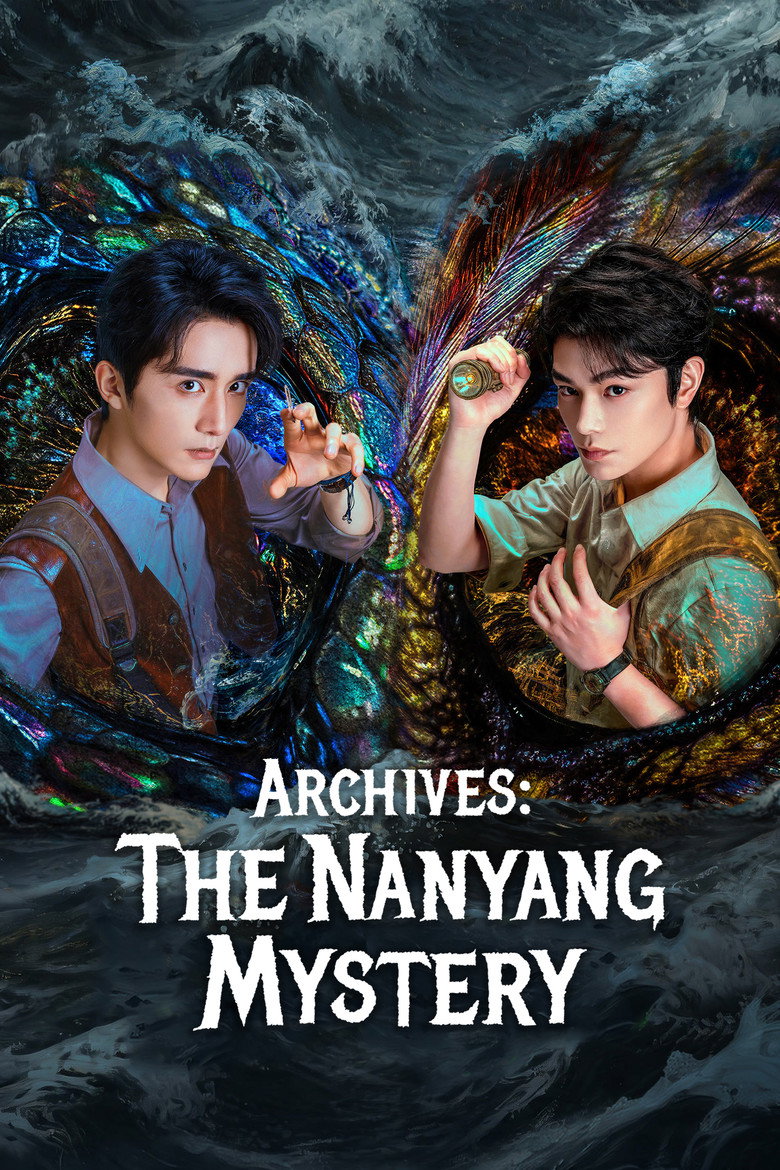
Nowhere is this trend more apparent than in the breakout success of Archives: The Nanyang Mystery. This is not a show that was reverse-engineered by a committee to appeal to Western audiences. Its very soul is its specificity. Set in the humid, politically charged Straits Settlements of the 1930s, the series follows a disgraced former detective from mainland China navigating the complex social strata of Singapore's Chinese diaspora—the 'Nanyang'. The show's central mystery, involving a murdered British official and a series of cryptic threats tied to a local trade guild, is merely the engine for a stunningly realized exploration of a time and place rarely seen on screen.
The show's power lies in its refusal to hold the viewer's hand. The dialogue fluidly switches between Mandarin, Hokkien, Malay, and English, often without subtitles for the ancillary conversations, immersing the audience in the multilingual chaos of the port city. The central conflict isn't just about catching a killer; it’s about the tension between colonial rule and local identity, between tradition and modernity, and between different migrant communities. A key interrogation scene in the third episode doesn't take place in a sterile police station but in the back room of a bustling teahouse, where the exchange of glances and the specific way tea is poured carry more weight than the spoken words. This is a world built with the confidence of authenticity, and it’s precisely why it’s so compelling. It succeeds because it trusts its audience to appreciate a story on its own terms, proving that a deeply specific world is far more universal than a deliberately generic one. It's a perfect example of why Plot Is Overrated: The Real Secret to a Binge-Worthy Show—the world of 'Nanyang' is the true star.
From Webtoon to World Stage: The Hyper-Niche Appeal of Viral Hit

If Archives represents the power of historical and cultural specificity, the anime Viral Hit demonstrates the global appeal of the hyper-modern subculture. Adapted from a wildly popular South Korean webtoon, the series centers on Yoo Hobin, a scrawny, bullied high school student who, out of desperation, starts a NewTube (a YouTube analog) channel based on fighting tutorials from a mysterious online personality. Each episode sees him taking on a new, tougher opponent, with the fights broadcast live for his growing subscriber base.
On the surface, this could be a generic underdog story. But its success is rooted in its laser-focused critique of contemporary online culture, viewed through a distinctly Korean lens. The series brilliantly satirizes the absurdities of influencer culture, the mechanics of viral content, and the toxic parasocial relationships that form between creators and fans. The pressure Hobin feels isn't just from his physical opponents but from the ever-present tyranny of his view count, his like-to-dislike ratio, and a comments section filled with vitriol and impossible demands. The animation style itself mimics the vertical scroll of a webtoon, with dynamic paneling and explosive action that feels native to the digital world it portrays. It’s a story that couldn't exist ten years ago, steeped in a specific technological and social moment. Its global appeal comes not from erasing its Korean high-school setting, but from showing how these universal anxieties about online identity and validation manifest within that specific, high-pressure environment.
The American Niche: When Specificity Fails to Connect in The Polygamist
Of course, specificity alone is not a guarantee of quality. Case in point: the tepidly received drama The Polygamist. With a 6.4 rating, the show is clearly struggling to connect, and it serves as a crucial counterpoint. The series, which follows the internal power struggles of a family in a fundamentalist polygamous community in rural Utah, certainly has a specific, niche premise. It’s a world rich with potential for compelling drama about faith, autonomy, and rebellion. So why did it fail where Archives and Viral Hit soared?
The answer lies in execution. Where the other shows use their specific settings to tell nuanced, authentic stories, The Polygamist appears to use its setting as a cheap, exotic backdrop for generic melodrama. The characters feel less like individuals shaped by a unique belief system and more like stock soap opera archetypes—the scheming young wife, the tyrannical patriarch, the rebellious daughter—draped in prairie dresses. The dialogue is laden with exposition, explaining the rules of their society rather than letting the drama emerge organically from them. It commits the cardinal sin of treating its subject as a curiosity for outsiders to gawk at, rather than as a complex human world to be understood from within. It’s a niche premise executed with a broad, uninspired, four-quadrant sensibility. It proves that audiences in 2026 have a sophisticated palate; they can tell the difference between a story that genuinely inhabits its world and one that’s merely wearing it as a costume.
The Lingering Giant: Rick and Morty and the Anomaly of 'Smart' Mass Appeal
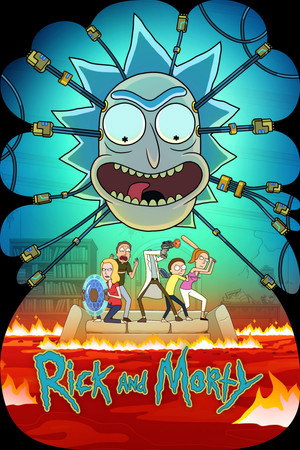
Finally, we have the enduring popularity of a show like Rick and Morty. It's a global phenomenon, but one that was never designed to be. The show is a dense, chaotic, and often nihilistic barrage of high-concept science fiction, gross-out humor, and surprisingly potent emotional drama. It is the antithesis of broad appeal. The jokes require a working knowledge of sci-fi tropes, philosophical concepts, and cinematic language. The show relentlessly challenges its audience, wrapping its most profound statements on family and free will in layers of absurdity and meta-commentary.
Its success reinforces the core argument: Rick and Morty became a hit not by compromising its vision, but by being aggressively, unapologetically itself. It started as a cult show and built its massive audience over time, attracting viewers who were hungry for something that didn't talk down to them. Much like the current trend of amnesiac spies and fluid identities reflects a cultural anxiety about selfhood, as seen in shows like Citadel and detailed in The Self as a Secret: Why TV Erased Who We Are, Rick and Morty's multiverse-hopping antics tap into a modern sense of existential dread and the overwhelming nature of infinite choice. It is the ultimate niche show that broke into the mainstream, proving that a unique, challenging vision can create a bigger tent than any focus-grouped blockbuster ever could.
A Prediction: The Balkanization of Binge-Watching
The evidence is clear. The monolithic streaming wars, where platforms battled for one definitive hit to rule them all, are over. The new battlefield is one of curation and cultivation. The platforms that thrive in the coming years will not be the ones that produce the most generic content, but the ones that become trusted homes for specific global communities. We are witnessing the great balkanization of television, where success is measured not in total viewers, but in the passion of dedicated fanbases.
Netflix will continue to solidify its position as the premier importer of global hits, from Korean dramas to Japanese anime and Singaporean noir. Max will lean into its brand of American prestige, while services like Apple TV+ may focus on high-concept sci-fi and character-driven thrillers. The winner will be the service that understands its identity and serves its audience with conviction. For viewers, this is an unmitigated good. It means more diverse, interesting, and personal stories from every corner of the globe, all available at the click of a button. The future of television is not one big story. It’s a million different ones, and it has never been more exciting.
Editor's Verdict
Featured Show: Archives: The Nanyang Mystery
By refusing to sand down its cultural edges for a global audience, Archives: The Nanyang Mystery delivers a historical noir more compelling and universal than any generic procedural; its third episode's teahouse interrogation scene is a masterclass in subtext-driven tension. It demonstrates that the most transportive stories are not the ones that try to be from everywhere, but the ones that are deeply and confidently from somewhere.
FAQ
What does 'Nanyang' mean in 'Archives: The Nanyang Mystery'?
'Nanyang' is a Mandarin term that translates to 'Southern Ocean.' Historically, it was used to refer to the regions of Southeast Asia south of China, and it is strongly associated with the large communities of the Chinese diaspora who settled in countries like Singapore, Malaysia, and Indonesia.
Why are webtoon adaptations like 'Viral Hit' becoming so popular globally?
Webtoon adaptations are gaining popularity due to their unique, mobile-first storytelling formats, diverse genres that go beyond traditional comics, and their ability to tap into contemporary youth culture and social issues. Platforms like Crunchyroll and Netflix have made them highly accessible to a global audience already primed for Korean cultural content like K-pop and K-dramas.
Which streaming service is winning the 'content war' in mid-2026?
There's no single winner. The 'war' has shifted from a battle for mass appeal to a competition for valuable niches. Netflix is excelling at global content acquisition (K-dramas, anime), Max maintains its hold on prestige American drama, and others are finding success by curating specific genres. The winning platform is the one that best serves its target audience's specific tastes.