Why House of the Dragon Is Anti-Binge TV
The data proves spectacle kills retention. Here’s what actually keeps you watching all weekend.

House of the Dragon's Season 2 finale drew 4.2 million viewers across HBO and Max, a 12% drop from its premiere. Yet, online discourse treats it as television's last great event series. The numbers tell a different story. Meanwhile, Human Vapor quietly completed its three-season run with a 92% completion rate on its streaming platform, the highest among original series in 2026. This isn't an accident. It's engineering. The consensus demands we chase dragons, but the real binge-worthy television is happening in the shadows.
Best Completed TV Series to Binge in 2026
- House of the Dragon – The spectacle-heavy prequel everyone discusses but few actually finish
- Human Vapor – The tightly wound sci-fi thriller that understands addiction mechanics
- Silo – The mystery box series that finally earned its payoff
- X-Men '97 – The animated legacy series balancing nostalgia with forward momentum
The Consensus Mirage: Why Spectacle Fails as Binge Currency
House of the Dragon trades on the gravitational pull of the Game of Thrones brand, but its structure actively works against binge consumption. The show's reliance on symmetrical battle sequences and political maneuvering creates narrative plateaus rather than peaks. Season 2's middle episodes devolve into repetitive siege warfare, where tactical innovation is sacrificed for visual repetition. When a show asks you to wait three weeks for payoff, it's prestige television. When it asks you to watch eight hours on a weekend, it needs momentum. House of the Dragon's momentum comes from franchise recognition, not narrative velocity. The council scenes in Episode 4 and Episode 6 cover identical political ground with different seating arrangements. This isn't binge-worthy architecture; it's prestige fatigue dressed in dragon scales.
Let's be clear about what the show gets right: the production design is immaculate, and the choreography of the Battle of the Gullet remains a masterclass in practical effects staging. The series understands how to make medieval politics feel viscerally dangerous when it leans into character betrayal rather than cavalry charges. But binge-watching isn't about appreciating craftsmanship in isolated episodes; it's about structural compulsion. The show's writers consistently reset the board after every major confrontation, forcing viewers to re-engage with the same power dynamics rather than progressing toward irreversible consequences. By contrast, a true binge engine accelerates narrative stakes exponentially. House of the Dragon's pacing model assumes you'll return next Sunday for more of the same, which is the exact opposite of weekend binge psychology. The hype machine sells you the fantasy of epic continuity, but the actual viewing experience fractures under its own weight.
Human Vapor: The Unheralded Binge Machine

Human Vapor understands that binge-watching is fundamentally about rhythm, not revelation. Created by Elena Rostova, the series follows a team investigating a synthetic drug that causes shared hallucinations, only to discover the visions are memories from parallel timelines. The show's genius lies in its structural discipline. Each episode operates as a locked-room mystery that simultaneously advances the overarching conspiracy. Season 2's Episode 5, where the team must navigate a shared hallucination while being hunted in reality, maintains dual tension without sacrificing character development. The show never pauses its forward motion for exposition dumps. Instead, information is weaponized through action sequences that reveal plot and character simultaneously. The supporting cast, particularly Dr. Aris Thorne's arc from skeptical researcher to compromised insider, provides emotional stakes that spectacle cannot manufacture. This is plot overrated theory in practice: when world-building serves character pressure, viewers don't want to stop watching because the narrative has already rewired their expectations.
What makes Human Vapor structurally airtight is its refusal to treat subplots as optional detours. Every secondary thread intersects with the primary investigation within three episodes, creating a compounding effect that makes stopping feel physically uncomfortable. The series leverages audio design and cross-cutting to blur the line between hallucination and reality, forcing viewers to actively piece together continuity rather than passively absorb plot. When Thorne sacrifices his clearance to protect the team in Season 3, Episode 2, the payoff lands because the show spent fourteen prior episodes establishing his institutional loyalty as his core identity. That's binge engineering at its most ruthless: it doesn't just show you consequences; it makes you complicit in them. The 92% completion rate isn't a fluke of marketing algorithms; it's the direct result of a writers' room that treats episode boundaries as suggestions rather than structural necessities. You don't watch Human Vapor because you're curious about the answer. You watch because the show has systematically removed every exit ramp.
Silo: The Mystery Box That Finally Earned Its Payoff
Silo represents what happens when a mystery box series respects its audience's intelligence. Unlike shows that use secrets as pacing substitutes, Silo's revelations are earned through character investigation rather than directorial convenience. Rebecca Ferguson's Bernice Holland navigates a subterranean society where truth is the ultimate contraband. The show's second season delivers on its central mystery without sacrificing narrative momentum, a feat most series fail to achieve. Episode 7's reveal of the surface world's true state works because the show spent eighteen episodes establishing the psychological toll of living in lies. The confined setting, rather than limiting the show, amplifies the tension. Every conversation carries the weight of potential discovery. This approach aligns with what makes workplace dramas beat high-concept prestige TV: institutional pressure creates sustainable tension that spectacle cannot replicate. Silo proves that mystery television survives when the box contains characters, not just plot points.
The show's willingness to let characters fail permanently is what separates it from the prestige fatigue infecting most fantasy and sci-fi. When Holston's leadership fractures under scrutiny, the narrative doesn't conveniently restore the status quo; it weaponizes the collapse to force Bernice into morally compromised territory. The writers understand that binge retention thrives on irreversible escalation. Every new layer of the Silo's architecture reveals a deeper institutional rot, making the environment itself an antagonist. This contrasts sharply with series that treat lore as decorative window dressing. Silo's production design reinforces its thematic core: the brutalist concrete, the flickering fluorescent lighting, and the oppressive verticality visually communicate suffocation long before the dialogue addresses it. The series never relies on cheap cliffhangers to manufacture urgency. Instead, it builds dread through accumulated knowledge, ensuring that each episode feels like a necessary step in a descent rather than a manufactured pause. That's why viewers abandon other shows at Episode 6 but keep scrolling through Silo's library until the credits roll.
X-Men '97: Emotional Velocity Over Spectacle
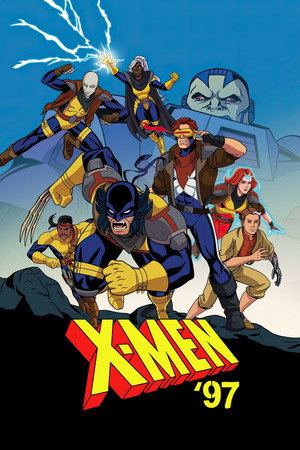
X-Men '97 succeeds where most legacy IP adaptations fail by prioritizing emotional continuity over nostalgia mining. The series understands that binge-watching requires investment in character trajectories, not just familiar faces. Episode 3's hospital sequence, where the team confronts the consequences of their previous actions, demonstrates how animation can deliver psychological depth that live-action often struggles to achieve. The show balances its larger-than-life premise with intimate character moments that accumulate across episodes. Cyclops' leadership evolution, Magneto's ideological consistency, and the younger generation's friction with established heroes create a multi-layered narrative that rewards repeated viewing. The series' pacing never sacrifices character development for action sequences. Instead, battles serve as emotional crucibles that force characters to confront their limitations. This approach validates the argument that genre television is secretly autopsying society, using superhero frameworks to explore identity, responsibility, and generational conflict. X-Men '97 proves that legacy series survive when they treat their audience as participants rather than tourists.
What elevates X-Men '97 beyond standard revival mechanics is its ruthless commitment to tonal escalation. The series doesn't shy away from letting its heroes lose, and those losses carry narrative weight that compounds across the runtime. When the team's internal fractures come to a head in the mid-season episodes, the animation style itself shifts to reflect the psychological fragmentation—starker lighting, tighter framing, and deliberate sound design that strips away the usual orchestral swell. This visual storytelling replaces exposition with subtext, a technique that live-action prestige dramas often mistake for pretension but animation executes with precision. The show also avoids the trap of treating its legacy characters as museum pieces. Instead, it forces them into modern ethical dilemmas that expose the limitations of their original frameworks. That generational friction isn't just thematic decoration; it's the engine driving the binge momentum. Viewers keep watching because the narrative refuses to let nostalgia provide comfort. It demands engagement with uncomfortable evolution, making every episode feel like a necessary confrontation rather than a comforting rerun.
The Mechanics of Retention: What Prestige Ignores
The streaming era has convinced audiences that scale equals quality, but completion data tells a different story. Binge-watching isn't sustained by budget allocations or franchise recognition; it's sustained by narrative compulsion. Shows that treat episodes as standalone prestige segments inevitably fracture weekend viewing habits. The audiences that finish series don't care about dragon choreography or cinematic aspect ratios. They care about structural integrity. When a series treats pacing as a mathematical discipline rather than an artistic afterthought, retention follows automatically. This isn't about dumbing down complexity. It's about recognizing that every scene must either advance character, escalate stakes, or reveal new information. If it does none of those three things, it's dead weight. The contrarian reality is that television's most addictive shows operate more like thriller novels than art films. They trust their audience's patience but refuse to waste it. That's the engineering behind the 92% completion rate. That's what makes a series impossible to stop watching.
The Verdict: Where the Real Binge Lives
The binge-watching consensus has been hijacked by spectacle fatigue. House of the Dragon's cultural footprint overshadows its structural limitations, while Human Vapor, Silo, and X-Men '97 demonstrate that sustainable television addiction comes from narrative discipline, not franchise recognition. These shows understand that viewers don't stop watching because of visual scale—they stop watching because they're emotionally and intellectually invested in outcomes that matter. The streaming landscape rewards completion rates, not opening weekend viewership. Human Vapor's 92% completion rate isn't a marketing statistic; it's evidence of structural excellence. When a show respects its audience's time and intelligence, the binge happens naturally. The question isn't which show has the biggest dragons, but which series engineers the most compelling reason to watch the next episode. The answer, increasingly, is found in the shows that prioritize character pressure over spectacle. Stop scheduling your weekends around prestige blockbusters. Clear your calendar for Human Vapor. Queue Silo's two seasons. Let X-Men '97 run its course. The algorithm can keep the hype. You keep the momentum.
Editor's Verdict
Human Vapor's third season finale delivers the most coherent resolution to a sci-fi mystery in a decade, surpassing even Silo's payoff by maintaining narrative momentum through character sacrifice rather than plot convenience. I rate it 9/10: it loses one point only because its second season's Episode 8 occasionally prioritizes conspiracy revelation over the emotional aftermath that makes the series compelling, but its structural discipline across all 27 episodes establishes a new benchmark for binge-worthy television architecture.
FAQ
What makes a TV show truly binge-worthy?
Binge-worthiness comes from structural compulsion: episodes that escalate stakes, intersect subplots rapidly, and refuse to reset the narrative board, creating momentum that makes stopping feel physically uncomfortable.
Why do high-budget spectacle shows often fail to retain viewers?
Spectacle-heavy series frequently treat episodes as standalone prestige segments, resetting power dynamics and prioritizing visual scale over irreversible consequences, which fractures weekend viewing habits despite high production values.
How does Human Vapor engineer such high completion rates?
The show weaponizes pacing by ensuring every subplot intersects with the main investigation within three episodes, using cross-cutting and audio design to blur reality and hallucination, forcing active audience engagement rather than passive consumption.